

In the USA, signs of hormone imbalance usually show up as changes in energy, mood, periods, skin, sleep, weight, or sex drive. Hormones are chemical messengers, and problems in the thyroid, ovaries, testes, pituitary gland, adrenal glands, stress system, or sleep pattern can shift them.
One symptom alone does not prove a hormone problem. A cluster of changes, such as tiredness, weight change, acne, irregular cycles, or low libido, deserves attention. That is where common causes of hormone imbalance matter most.
10 Symptoms of Hormonal Imbalance
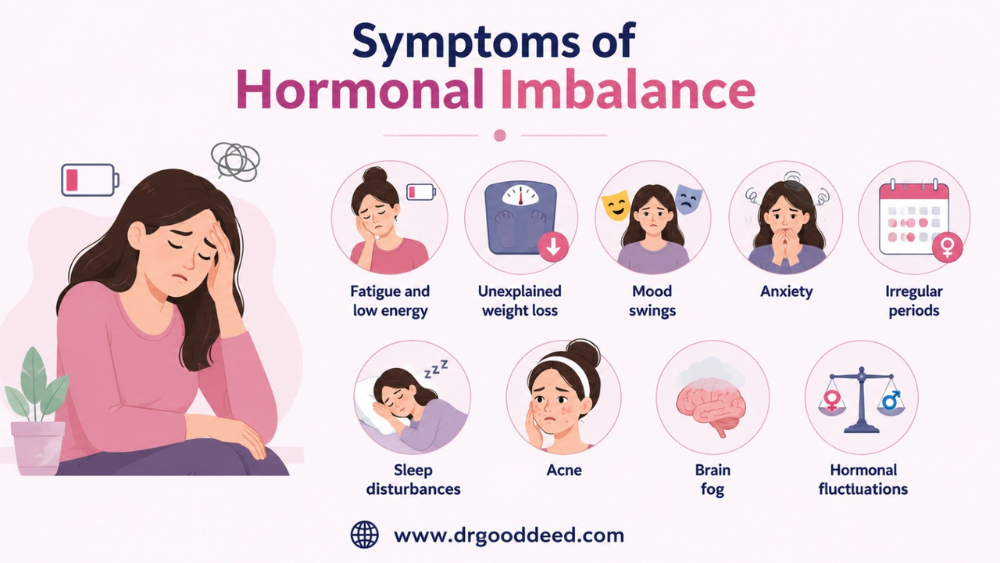
These 10 symptoms of hormonal imbalance are easy to miss because they often look like stress, poor sleep, aging, or diet problems. When several signs happen together, hormone testing or a medical review becomes more useful.
Fatigue and low energy
Ongoing fatigue can point to thyroid problems, low testosterone, cortisol issues, anemia, or poor sleep. If rest does not fix it, the symptom needs a workup.
Weight gain or unexplained weight loss
Slow weight gain fits hypothyroidism and PCOS. Fast weight loss fits hyperthyroidism. Sudden change without a clear reason is a red flag.
Mood swings, anxiety, or irritability
Hormone shifts can affect mood, focus, and sleep. Thyroid issues , PMS, PMDD, menopause, low testosterone, and chronic stress all link to this pattern.
Irregular periods or fertility changes
Missed periods, cycles shorter than 21 days, cycles longer than 35 days, or trouble getting pregnant can point to PCOS, thyroid disease, menopause transition, or pituitary problems.
Sleep disturbances and insomnia
Hormone shifts can make it hard to fall asleep, stay asleep, or wake refreshed. Stress, menopause, and thyroid disease are common links
Acne and oily skin changes
Adult acne, oily skin, or sudden skin flare-ups often point to higher androgen activity. PCOS is one of the most common reasons.
Hair thinning or hair growth changes
Thinning hair on the scalp, more facial hair, or new coarse hair on the body often appears with PCOS, thyroid disease, or low testosterone.
Brain fog and concentration problems
Brain fog means slower thinking, weaker memory, and trouble focusing. It often travels with poor sleep, thyroid imbalance, stress overload, or low sex hormones.
Digestive changes and bloating
Constipation fits hypothyroidism. Frequent stools or loose bowel movements fit hyperthyroidism. Bloating also shows up in insulin resistance and menstrual hormone shifts.
Reduced libido and hormonal fluctuations
Low sex drive can come from low testosterone, menopause, stress, poor sleep, or pituitary disease. When libido drops with fatigue or mood change, the pattern matters.
Common Causes of Hormone Imbalance
The main common causes of hormone imbalance usually come from gland problems, life stage shifts, sleep loss, stress, medicines, or insulin resistance. In the USA, the most common medical checks usually look at thyroid, ovarian, and testosterone-related causes first.
- Thyroid disease, especially hypothyroidism or hyperthyroidism.
- PCOS diet, which affects ovulation and androgen levels.
- Menopause or perimenopause.
- Low testosterone in men.
- Chronic stress and long-term high cortisol output.
- Poor sleep or sleep deprivation.
- Pituitary or adrenal gland disorders.
- Certain medicines, including steroids and hormone drugs.
- Insulin resistance and excess body weight.
Thyroid Disorders Causing Hormone Imbalance
Thyroid disorders causing hormone imbalance are common because the thyroid controls energy use, heart rate, digestion, weight, and mood. Underactive thyroid slows body systems. Overactive thyroid speeds them up. Both can look like stress, fatigue, or anxiety at first.
Hypothyroidism and slowed metabolism
Hypothyroidism means the thyroid makes too little hormone. Common signs include tiredness, weight gain, constipation, dry skin, and feeling cold.
Hyperthyroidism and increased metabolism
Hyperthyroidism means the thyroid makes too much hormone. Common signs include weight loss, nervousness, heat intolerance, frequent stools, and a fast heartbeat.
Fatigue, hair changes, and weight symptoms
Both thyroid problems can cause fatigue and hair changes. That is why hair loss plus weight change plus energy loss deserves thyroid testing, not guesswork.
Hormonal Imbalance in Women
Hormonal imbalance in women usually shows up through periods, fertility, skin, hair, sleep, and mood. PCOS and perimenopause are two of the most common patterns in adults. Pregnancy, postpartum shifts, thyroid disease, and ovarian failure also matter.
- PCOS often causes irregular cycles, acne, hair thinning, and extra facial hair.
- Perimenopause can bring hot flashes, night sweats, vaginal dryness, and sleep problems.
- Postpartum hormone shifts can affect mood and sleep.
- Thyroid disease can disturb periods and fertility.
- Primary ovarian insufficiency can stop periods early.
Hormonal Imbalance in Men
Hormonal imbalance in men usually centers on testosterone, but pituitary and testicular disorders also matter. Low testosterone can affect sex drive, erections, muscle mass, mood, and fertility. Symptoms often creep in slowly, so men dismiss them as aging.
- Low sex drive is a key clue.
- Erectile problems can appear with low testosterone.
- Fatigue and loss of muscle mass matter.
- Fertility problems can point to a hormone issue.
- Pituitary disease can cause broader hormone changes.
How Stress and Sleep Affect Hormones
Stress and sleep loss change hormone signals fast. That is why signs of hormone imbalance often get worse during busy work periods, caregiving strain, or long nights with poor rest. The body does not separate emotional stress from physical stress. It reacts to both.
Cortisol and chronic stress response
Cortisol helps the body handle stress. When stress stays high, cortisol patterns can stay abnormal and energy, sleep, and appetite can shift.
Sleep deprivation affecting hormone regulation
Poor sleep raises hunger signals and lowers fullness signals. It also worsens fatigue, mood, and blood sugar control.
Burnout and nervous system imbalance
Burnout often brings poor sleep, irritability, brain fog, and low drive. Those signs overlap with thyroid and sex hormone issues, so both need thought.
Foods That Support Hormone Health
Foods that support hormone health work best when they steady blood sugar, support fiber intake, and reduce ultra-processed eating. No single food fixes hormones. A simple plate plan helps more than extreme diets.
- Protein at each meal, such as eggs, yogurt, fish, chicken, tofu, or beans.
- High fiber foods, such as vegetables, fruit, oats, beans, and lentils.
- Healthy fats, such as nuts, seeds, olive oil, avocado, and fatty fish.
- Water and unsweetened drinks instead of sugar-heavy beverages.
- Fewer ultra-processed snacks, sweets, and fried fast food.
How to Balance Hormones Naturally
Balance hormones naturally by fixing the basics first. Sleep, movement, stress control, food quality, and steady blood sugar matter more than trendy supplements. These steps do not replace care for thyroid disease, PCOS, or low testosterone.
Prioritizing quality sleep
Keep a regular sleep time. Cut late caffeine. Make the room dark and cool. Good sleep supports appetite control, stress control, and daytime energy.
Managing stress consistently
Use one steady method, such as walking, prayer, breathing practice, journaling, or counseling. Short daily use works better than random effort.
Regular physical activity and movement
Move most days. Even light walking helps insulin control, weight control, and sleep quality. Sitting all day works against hormone stability.
Reducing ultra processed foods
Cut back on food that is packed with sugar, salt, and refined starch. These foods make blood sugar swing harder and can worsen cravings.
Maintaining stable blood sugar levels
Eat protein and fiber together. Do not skip meals if it leads to binge eating later. Stable blood sugar helps with energy, mood, and appetite.
Lifestyle Habits That May Worsen Hormonal Imbalance
The habits that most often worsen signs of hormone imbalance include bad sleep, heavy stress, skipped meals, no movement, and excess ultra processed food. These habits do not cause every hormone disorder, but they can make symptoms louder and harder to control.
- Sleeping too little or sleeping at random times.
- Long sitting with little physical activity.
- High sugar drinks and frequent snack foods.
- Alcohol heavy routines and late night eating.
- Ignoring irregular periods, libido change, or ongoing fatigue.
FAQs
What are the most common signs of hormone imbalance?
The most common signs of hormone imbalance are tiredness, weight change, irregular periods, acne, hair thinning, poor sleep, mood swings, and low libido. When three or more happen together, the pattern matters more than one symptom.
How does chronic stress affect hormone levels?
Chronic stress keeps cortisol signaling active for too long. That can worsen sleep, appetite, mood, and belly fat gain. It also makes other hormone symptoms harder to read.
Can thyroid disorders cause fatigue and weight changes?
Yes. Thyroid disorders causing hormone imbalance can cause both. Hypothyroidism usually brings fatigue and weight gain. Hyperthyroidism usually brings weight loss, nervousness, and a fast heart rate.
Which foods may help support hormone health naturally?
Foods that support hormone health include protein foods, beans, lentils, vegetables, fruit, nuts, seeds, and fatty fish. These choices help blood sugar stay steadier, which matters most when insulin resistance or PCOS is part of the problem.
How do sleep problems interfere with hormone balance?
Poor sleep raises hunger signals and lowers fullness signals. It also worsens stress, focus, and energy. That mix can mimic or intensify hormone problems.
Can hormonal imbalance affect mood and mental clarity?
Yes. Mood changes and brain fog are common with thyroid disease, low testosterone, PMS, PMDD, menopause, and chronic stress. When mood change comes with physical symptoms, it needs medical review.
Why do hormonal changes sometimes cause acne and hair thinning?
Higher androgen activity can trigger acne and scalp hair loss. PCOS is a common reason in women, while low testosterone or thyroid disease can also shift hair growth patterns.
How are PCOS and hormonal imbalance connected?
PCOS is one of the clearest examples of hormonal imbalance. It affects ovulation, raises androgen-related symptoms, and often links with insulin resistance, irregular cycles, acne, and hair changes.
When should hormonal symptoms be medically evaluated?
Get checked when symptoms last more than a few weeks, worsen, or affect periods, fertility, sleep, or daily function. Seek care faster for rapid weight change, missed periods, severe mood change, or a major drop in libido.
What lifestyle habits commonly worsen hormone imbalance?
The main ones are poor sleep, chronic stress, inactivity, skipped meals, and heavy ultra processed food intake. These habits do not explain every case, but they often magnify symptoms.