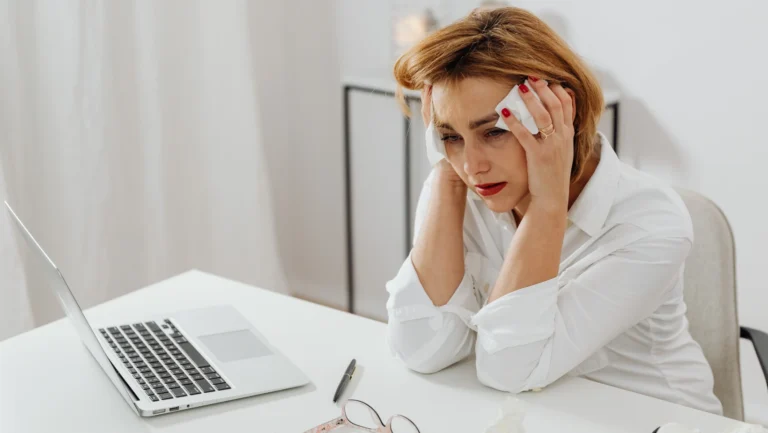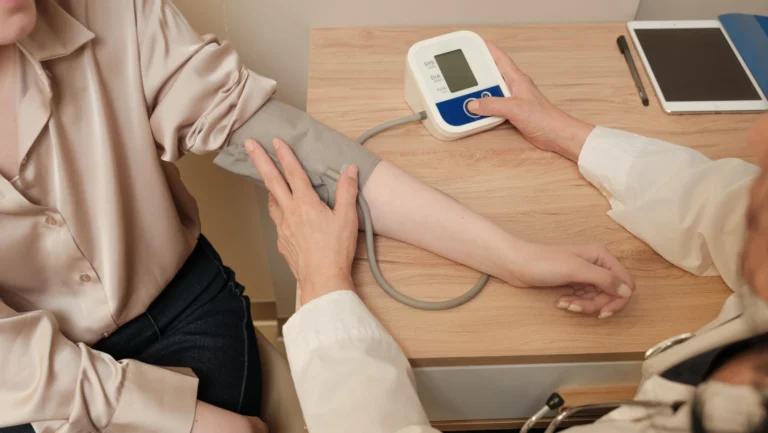

Essential oils for anxiety are not a cure, but clinical research confirms they reduce cortisol levels, heart rate and heart attack, and activate the parasympathetic nervous system within minutes of inhalation. For millions of Americans seeking drug-free, low-risk complementary support, aromatherapy has moved from a wellness trend into peer-reviewed territory.
This guide covers the best oils, the science behind how they work, safe usage methods, who should avoid certain oils, and how to combine aromatherapy with proven anxiety management strategies.
Can Essential Oils Help Anxiety?
Essential oils do not treat anxiety disorders clinically. But they activate measurable physiological responses that reduce acute stress and nervous system arousal. The key is understanding the mechanism, not overstating the benefit.
The Science Behind Aromatherapy
When inhaled, volatile aromatic compounds from essential oils travel through the nasal passages to the olfactory bulb. The olfactory bulb connects directly to the limbic system, which controls emotion, memory, and stress response.
This is the only sensory system with a direct anatomical pathway to the amygdala, the brain’s fear-processing center. That direct connection explains why a scent shifts emotional state within seconds.
Relaxation Response From Aromatherapy
The relaxation response from aromatherapy is a measurable physiological shift. A 2017 randomized controlled trial published in Frontiers in Behavioral Neuroscience found that inhaling linalool, the primary active compound in lavender oil, reduced anxiety-related behavior in mice by activating GABA receptors, the same receptors targeted by anti-anxiety medications like benzodiazepines, but without the sedation risk.
How Scents May Influence Mood and Stress
Scent signals trigger the hypothalamus to regulate cortisol secretion. Chronically elevated cortisol drives anxiety and poor sleep. A 2014 study in the Journal of Alternative and Complementary Medicine measured salivary cortisol in 40 participants before and after lavender inhalation. Cortisol dropped significantly in the lavender group.
What Research Says About Essential Oils for Anxiety
Research is still limited to small trials. A 2015 systematic review in the Journal of Evidence-Based Complementary and Alternative Medicine analyzed 16 studies on aromatherapy and anxiety. Fourteen of the sixteen showed significant anxiety reduction. The reviewers noted lavender, bergamot, and chamomile had the strongest and most consistent evidence.
Best Essential Oils for Anxiety
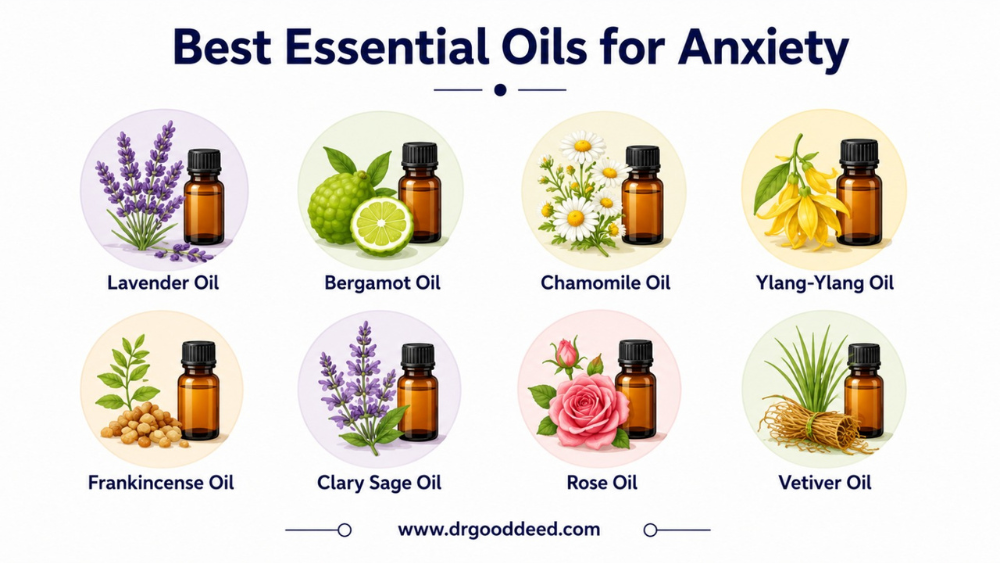
The below best essential oils for anxiety are backed by at least one peer-reviewed human trial showing measurable anxiety score reductions.
Lavender Oil
Lavender (Lavandula angustifolia) is the most studied essential oil in anxiety research. Its primary active compound, linalool, accounts for roughly 25 to 38% of its chemical composition.
Bergamot Oil
Bergamot (Citrus bergamia) contains linalool and linalyl acetate. A 2015 study at Srinakharinwirot University in Thailand found that bergamot aromatherapy reduced anxiety and fatigue in mental health center staff within four weeks of daily 15-minute inhalation sessions. It also shows promising effects on dopamine and serotonin in animal models.
Chamomile Oil
Roman chamomile (Chamaemelum nobile) contains alpha-bisabolol and apigenin. Apigenin binds to benzodiazepine receptors in the brain, per a 1994 study in Pharmacology Biochemistry and Behavior, explaining chamomile’s calming effect.
A 2009 randomized trial from the University of Pennsylvania confirmed chamomile extract reduced GAD symptoms over eight weeks versus placebo.
Ylang-Ylang Oil
Ylang-ylang (Cananga odorata) significantly reduces blood pressure and heart rate within 5 minutes of inhalation, per a 2006 study in the Journal of the Korean Society of Food Science and Nutrition. It also reduced self-reported anxiety scores. Its effect on heart rate makes it particularly useful for panic-related physical symptoms.
Frankincense Oil
Frankincense (Boswellia sacra) contains incensole acetate, a compound that activates TRPV3 channels in the brain, producing anxiolytic effects. A 2008 study in the FASEB Journal confirmed this mechanism in animal models. It promotes focused calm without drowsiness, making it common in meditation settings.
Clary Sage Oil
Clary sage (Salvia sclarea) reduces cortisol and produces antidepressant-like effects by influencing dopamine pathways. A 2014 Korean study in Phytotherapy Research found inhaling clary sage lowered cortisol by 36% in menopausal women, a group with elevated anxiety and cortisol dysregulation.
Rose Oil
Rose (Rosa damascena) oil inhalation reduced anxiety and pain perception in a 2014 controlled study from Shahid Sadoughi University of Medical Sciences, Iran, involving women in labor. Anxiety scores on the Spielberger State-Trait Anxiety Inventory dropped significantly in the rose group. Its mechanism involves serotonin and dopamine modulation.
Vetiver Oil
Vetiver (Chrysopogon zizanioides) is lesser known but has solid preclinical data. A 2015 study in Natural Product Communications showed vetiver oil reduced anxiety-related behaviors in rats comparably to diazepam, without sedation. It has a deep, earthy scent that works best for grounding during high-stress episodes.
Calming Scents for Anxiety Symptoms
Calming scents for anxiety symptoms fall into three categories based on their aromatic profile and the type of anxiety response they target.
Floral Aromas
Lavender, rose, and ylang-ylang work best for social anxiety, sleep-related anxiety, and general nervous tension. Floral aromas tend to slow racing thoughts and reduce emotional reactivity.
Citrus-Based Scents
Bergamot, sweet orange, and lemon are stimulating but anxiety-reducing simultaneously. They improve mood without causing sedation, making them ideal for work-related stress and daytime use.
Woody and Earthy Fragrances
Frankincense, vetiver, and cedarwood produce a grounding effect. These symptoms of anxiety that manifest as dissociation, restlessness, or feeling physically unmoored. They are widely used in mindfulness and meditation practices.
Choosing the Right Scent for Your Needs
Match the scent to your anxiety pattern. Panic attacks respond better to ylang-ylang and lavender. Chronic worry responds better to bergamot and chamomile. Evening anxiety and sleep disruption respond best to lavender and vetiver.
How Essential Oils May Support Anxiety Relief
Essential oils for anxiety support relief through three overlapping mechanisms: olfactory-limbic activation, cortisol modulation, and autonomic nervous system regulation. These are measurable physiological events documented in human and animal trials. They work fastest when inhaled and take longer via topical or bath routes.
- Olfactory-limbic activation begins within 10 to 30 seconds of inhalation
- Cortisol reduction takes 15 to 30 minutes of sustained exposure
- Heart rate and blood pressure effects appear within 5 minutes for ylang-ylang and lavender
- Consistent daily use produces cumulative benefit over two to four weeks
How to Use Essential Oils for Anxiety
Knowing how to use essential oils for anxiety correctly determines whether you get a genuine physiological effect or just a pleasant smell.
Diffusers and Aromatherapy Devices
Ultrasonic diffusers disperse micro-droplets of oil into the air without heat, preserving chemical integrity. Use 3 to 5 drops per 100 ml of water. Run for 30 to 60 minutes in a ventilated room. Heat-based diffusers (candles, warmers) degrade linalool and other active compounds through oxidation.
Steam Inhalation
Add 2 to 3 drops to a bowl of hot (not boiling) water. Cover your head with a towel and inhale for 5 to 10 minutes. This delivers a high concentration of aromatic compounds quickly. Effective for acute anxiety episodes.
Topical Application
Essential oils absorb through skin, but they require dilution. Pure essential oil applied directly causes chemical burns and sensitization.
Importance of Carrier Oils
Carrier oils, including jojoba, sweet almond, and fractionated coconut oil, dilute essential oils without affecting their aromatic compounds. They also slow absorption, extending the duration of effect.
Safe Dilution Practices
| Application Type | Dilution Ratio | Example |
| Adult body massage | 2 to 3% | 12 drops per 1 oz carrier oil |
| Facial application | 0.5 to 1% | 3 drops per 1 oz carrier oil |
| Children (6 to 12 years) | 0.5 to 1% | 3 drops per 1 oz carrier oil |
| Acute pulse point use | 1 to 2% | 6 drops per 1 oz carrier oil |
Aromatherapy Massage
Massage combined with essential oils produces synergistic anxiety reduction. A 2016 meta-analysis in Evidence-Based Complementary and Alternative Medicine reviewing 16 studies found aromatherapy massage reduced anxiety scores more than massage alone, with lavender as the most effective oil.
Bath and Relaxation Rituals
Add 8 to 10 drops of essential oil mixed into 1 tablespoon of carrier oil or unscented bath salts before adding to warm bath water. Plain oil in water does not disperse and causes skin irritation.
Oils for Stress and Daily Relaxation
Bergamot and sweet orange work well during work hours. A 2014 study from the University of Arizona found bergamot aromatherapy in a waiting room reduced anxiety and improved positive mood in patients awaiting mental health appointments.
Essential Oils for Travel Anxiety
Lavender inhalation via a personal inhaler stick is portable and discreet. A 2012 study in the Journal of PeriAnesthesia Nursing found inhaling lavender via nasal inhaler reduced preoperative anxiety significantly. The same principle applies to travel-related anxiety.
Essential Oils Before Bedtime
Vetiver and lavender combined (2:1 ratio) in a diffuser 30 minutes before sleep reduces sleep onset time and nighttime waking. Avoid stimulating oils like peppermint or rosemary at night.
Essential Oils for Relaxation Routines
Consistency matters more than dose. Daily 15 to 30-minute aromatherapy sessions produce more durable anxiety reduction than occasional use, based on the 2015 systematic review in the Journal of Evidence-Based Complementary and Alternative Medicine.
How Aromatherapy Helped Maria Manage Daily Anxiety
Maria, a 34-year-old marketing manager from Chicago, had been experiencing daily anxiety for two years before her therapist suggested complementary approaches alongside her ongoing CBT sessions.
She began diffusing lavender oil each evening for 30 minutes and applying a 2% bergamot and jojoba blend to her wrists each morning before work. Within three weeks, she reported falling asleep faster and feeling less chest tightness during morning meetings. Her GAD-7 score dropped from 14 to 9 over six weeks. She continued using both oils alongside therapy, not as a replacement for it.
Name altered for patient privacy.
Combining Essential Oils With Other Anxiety Management Strategies
Essential oils for anxiety work best as one layer in a broader plan, not as a standalone solution.
Deep Breathing Exercises
Pairing lavender inhalation with diaphragmatic breathing amplifies the parasympathetic response. The 4-7-8 breathing pattern (inhale 4 counts, hold 7, exhale 8) combined with lavender diffusion reduces acute anxiety faster than either method alone.
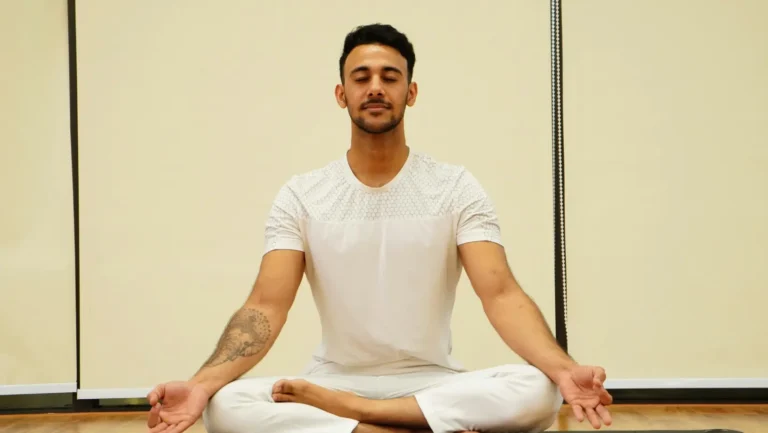
Meditation and Mindfulness
Frankincense and sandalwood are the most used oils for stress in meditation contexts because they promote focused awareness without mental cloudiness.
Yoga and Relaxation Techniques
Diluted clary sage or chamomile oil applied to the temples before yoga reduces anticipatory anxiety.
Cognitive Behavioral Therapy (CBT)
CBT is the gold-standard treatment for anxiety disorders, per the American Psychological Association (APA). Essential oils do not replace CBT. They can reduce acute physiological arousal before or during sessions, making CBT techniques easier to engage with.
Healthy Lifestyle Habits
Sleep, exercise, and reduced caffeine intake remain the foundation. Essential oils for anxiety cannot compensate for chronic sleep deprivation or sustained caffeine overconsumption, both of which keep cortisol chronically high.
Who Should Avoid Certain Essential Oils?
Not all essential oils for anxiety are safe for every person. Specific populations face genuine risks that most aromatherapy articles skip entirely.
- Pregnant women: Clary sage stimulates uterine contractions and must be avoided during pregnancy. Rosemary and sage carry similar risks. Lavender and chamomile at low dilution are generally considered safe but require physician clearance
- Infants under 2 years: Eucalyptus and peppermint contain compounds that can trigger respiratory distress in infants. Even diffused quantities pose risk
- People with estrogen-sensitive conditions: Lavender and tea tree oil show weak estrogenic activity in vitro, per a 2007 study in the New England Journal of Medicine. Those with estrogen receptor-positive cancers should consult an oncologist
- People on blood thinners: Clove and cinnamon oils have anticoagulant properties. Combined with warfarin or aspirin therapy, they may increase bleeding risk
- People with asthma: Strong aromatherapy in enclosed spaces can trigger bronchospasm. Use only in well-ventilated rooms and at low concentrations
Prevention and Long-Term Stress Management
Long-term anxiety management with essential oils for anxiety requires a structured daily routine, not occasional use. Use calming scents for anxiety symptoms at the same time each day. Over time, the scent becomes a conditioned cue for relaxation, a phenomenon documented in olfactory memory research.
- Choose one to two oils and use them consistently for four weeks before evaluating
- Rotate oils every four to six weeks to prevent olfactory fatigue and receptor desensitization
- Combine with one behavioral strategy (breathing, meditation, or CBT) for durable results
- Store oils in dark glass bottles away from heat to preserve active compounds for up to two years
FAQs
Do essential oils really help with anxiety?
Yes. Peer-reviewed trials confirm lavender, bergamot, and chamomile reduce cortisol, heart rate, and HAM-A anxiety scores. They activate the parasympathetic nervous system via olfactory-limbic pathways. They are not a treatment for clinical anxiety disorders but are proven, measurable complementary tools.
What are the best essential oils for anxiety?
The best essential oils for anxiety backed by human clinical trials are lavender (strongest evidence), bergamot, Roman chamomile, ylang-ylang, and clary sage. Lavender’s active compound linalool was shown in a 2010 Phytomedicine trial to match lorazepam for HAM-A score reduction.
How do calming scents for anxiety symptoms work?
Calming scents for anxiety symptoms work by sending aromatic molecules through the olfactory bulb directly to the limbic system. The amygdala receives the signal within seconds, triggering a parasympathetic response. Cortisol drops within 15 to 30 minutes of sustained inhalation.
What is the relaxation response from aromatherapy?
The relaxation response from aromatherapy is a measurable drop in heart rate, blood pressure, and cortisol following aromatherapy inhalation. It activates the parasympathetic branch of the autonomic nervous system, counteracting the fight-or-flight stress response triggered by the amygdala.
How should I use essential oils for anxiety?
The fastest method to use essential oils for anxiety is direct inhalation or diffusion for 15 to 30 minutes. Topical use requires 1 to 3% dilution in a carrier oil. Steam inhalation at 2 to 3 drops per bowl gives high concentration quickly for acute episodes.
Which essential oils are best for stress relief?
The most effective oils for stress by mechanism are bergamot (dopamine and serotonin modulation), clary sage (36% cortisol reduction in clinical trial), and lavender (GABA receptor activation). For daytime use, bergamot. For evening use, lavender or vetiver.
Can lavender oil help reduce anxiety symptoms?
Yes. A 2010 double-blind Phytomedicine trial showed oral lavender (Silexan 80 mg) matched lorazepam for anxiety reduction. Inhaled lavender reduces cortisol measurably within 30 minutes. It is the single most clinically validated essential oil for anxiety.
Are essential oils a replacement for anxiety medication?
No. Essential oils for anxiety are complementary, not pharmaceutical replacements. They do not treat diagnosed anxiety disorders (GAD, panic disorder, PTSD) on their own. Never stop prescribed medication to use essential oils without physician supervision.
How often can I use aromatherapy for anxiety?
Daily use for 15 to 30 minutes produces the most consistent benefit. Rotate oils every four to six weeks to prevent olfactory fatigue, where the brain stops responding to the same scent after prolonged, unchanging exposure.
Are essential oils safe for children with anxiety?
Children aged 6 to 12 can use lavender or chamomile at 0.5 to 1% dilution. Avoid eucalyptus, peppermint, and clary sage under age 10. Never apply undiluted oil to a child’s skin. Consult a pediatrician before starting aromatherapy for a child with a diagnosed anxiety condition.
Sources
- Anxiety and Depression Association of America (ADAA): https://adaa.org
- Frontiers in Behavioral Neuroscience, Linalool and GABA Receptors Study (2017): https://www.frontiersin.org/journals/behavioral-neuroscience
- Phytomedicine, Silexan vs. Lorazepam Double-Blind Trial (2010): https://www.sciencedirect.com/journal/phytomedicine
- Journal of Alternative and Complementary Medicine, Cortisol and Lavender Study (2014): https://www.liebertpub.com/journal/acm
- Journal of Evidence-Based Complementary and Alternative Medicine, Aromatherapy Systematic Review (2015): https://journals.sagepub.com/home/cam
- FASEB Journal, Incensole Acetate and TRPV3 Channels Study (2008): https://faseb.onlinelibrary.wiley.com/journal/15306860
- Evidence-Based Complementary and Alternative Medicine, Aromatherapy Massage Meta-Analysis (2016): https://www.hindawi.com/journals/ecam
DISCLAIMER: This article is for informational purposes only and does not constitute medical advice, diagnosis, or treatment. Essential oils are complementary tools and are not a substitute for professional mental health care. Always consult a licensed healthcare provider before using essential oils, especially if you are pregnant, nursing, on medication, or managing a diagnosed anxiety disorder.