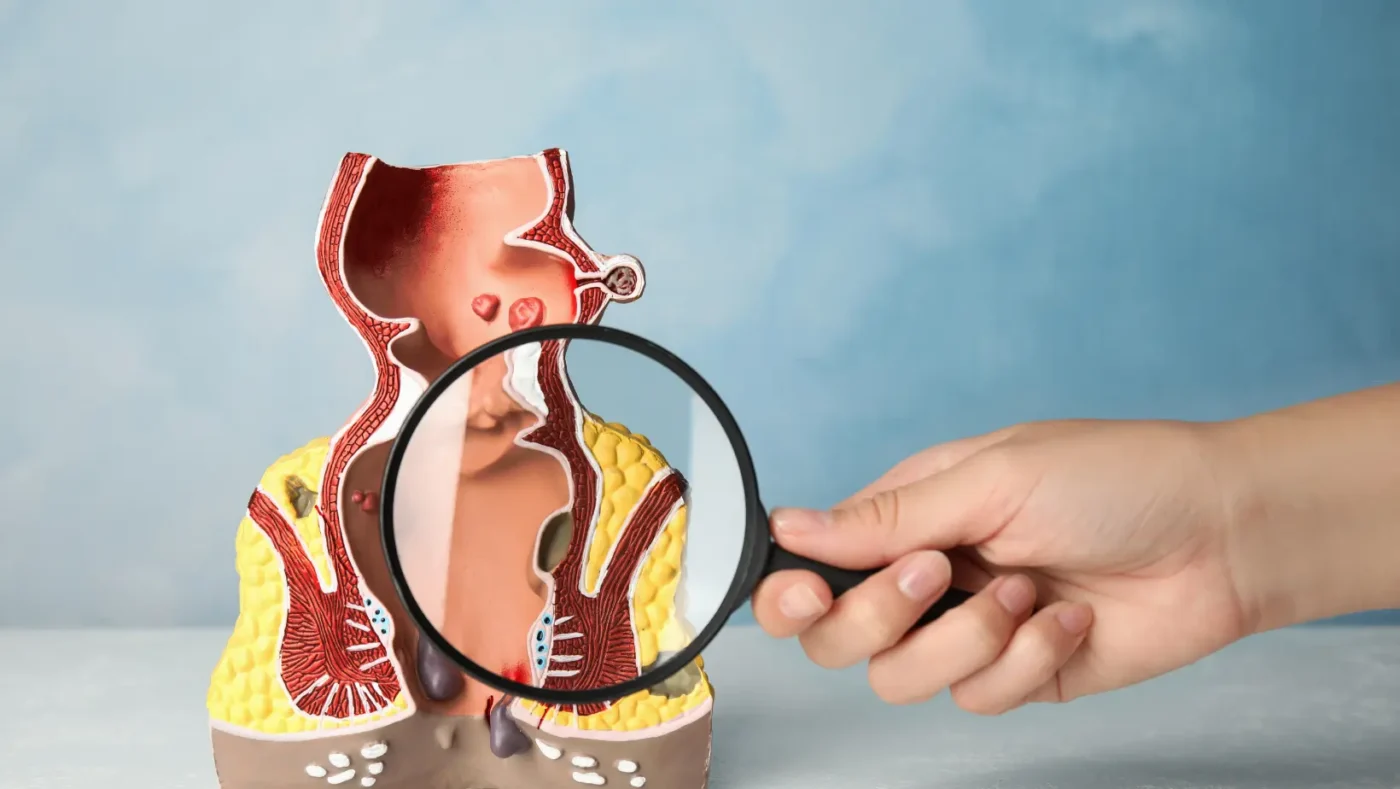

This guide explains why hemorrhoids can cause cancer stays a common search after rectal bleeding, how doctors tell the two conditions apart, the real risk factors for colorectal cancer, and when bleeding needs same-week medical attention.
Hemorrhoids vs Colon Cancer Symptoms
Hemorrhoids vs colon cancer symptoms look alike on the surface because both involve rectal bleeding near the same area of the body. The real difference shows up in timing, blood color, and whether body-wide symptoms like weight loss or fatigue appear alongside the bleeding.
Symptoms Commonly Seen With Hemorrhoids
Hemorrhoids usually cause bright red blood during or right after a bowel movement. Itching, a small lump near the anus, and mild burning are common. Symptoms typically come and go with flare-ups tied to straining or constipation.
Symptoms Commonly Seen With Colon Cancer
Colorectal cancer can cause rectal bleeding that is bright or dark red, sometimes without any bowel movement at all. Unexplained weight loss, ongoing fatigue, and a feeling that the bowel never fully empties often appear together.
When Symptoms Overlap
Hemorrhoids vs colon cancer symptoms overlap most around four specific signs doctors check first, since each one can point either way depending on small details in how it shows up.
Blood on Toilet Paper
Both conditions can leave blood on toilet paper. Hemorrhoid blood stays bright red and isolated to wiping. Cancer-related blood sometimes mixes directly into the stool itself.
Blood in Stool
Blood mixed into the stool, rather than sitting only on its surface, points doctors toward a source higher in the colon, which raises concern for cancer.
Rectal Discomfort
Hemorrhoid discomfort, burns or itches and eases between flares. Cancer-related rectal discomfort tends to feel like constant pressure or a sense of incomplete emptying.
Changes in Bowel Habits
Hemorrhoids rarely change stool shape or frequency. New diarrhea, constipation, or pencil-thin stools lasting more than a week deserve medical evaluation.
Signs of Colorectal Cancer vs Hemorrhoids
Signs of colorectal cancer vs hemorrhoids become clear once you stop guessing and start comparing them side by side. This comparison also answers the real worry behind can hemorrhoids cause cancer: the two conditions share a symptom, not a cause. The table below lists the exact differences doctors check first.
| Sign | Hemorrhoids | Colorectal Cancer |
| Blood color | Usually bright red | Bright, dark red, or tarry |
| Timing of bleeding | During or right after a bowel movement | Can happen between bowel movements |
| Pain pattern | Itching or burning, comes and goes | Painless, or steady cramping |
| Stool shape | Normal | Sometimes thin or ribbon-like |
| Body-wide signs | None | Weight loss, fatigue, low iron |
- Do hemorrhoids increase cancer risk? A 2021 Taiwan cohort study of 36,864 hemorrhoid patients found an adjusted 2.18 times higher colorectal cancer rate, though researchers note this likely reflects shared risk factors like low fiber and inactivity rather than a direct cause
- A 2023 National Cancer Institute-funded study found that having three or more red flags from the signs of colorectal cancer vs hemorrhoids table above raised early-onset cancer risk more than 6.5 times compared with having none of them
How a Routine Colonoscopy Changed Jennifer Marsh’s Screening Plan at Age 38
Jennifer Marsh, a 38-year-old teacher from Columbus, Ohio, noticed bright red blood on her toilet paper for nearly three weeks. She had hemorrhoids diagnosed five years earlier and assumed they were back. Her doctor still ordered a colonoscopy, partly because her father had colorectal cancer at 58. The exam confirmed two small external hemorrhoids as the bleeding source, exactly as Jennifer expected. But the same procedure also found a 6-millimeter adenomatous polyp in her sigmoid colon, removed on the spot before it could ever progress.
Her gastroenterologist now schedules her colonoscopies every five years instead of the standard ten, based on her family history. Jennifer’s case gives a clear answer to the question of whether hemorrhoids can cause cancer: her bleeding came from hemorrhoids exactly as she guessed, yet the same exam caught a real cancer risk years before it could grow into anything serious.
Name and identifying details have been altered to protect patient privacy.
Risk Factors for Colorectal Cancer
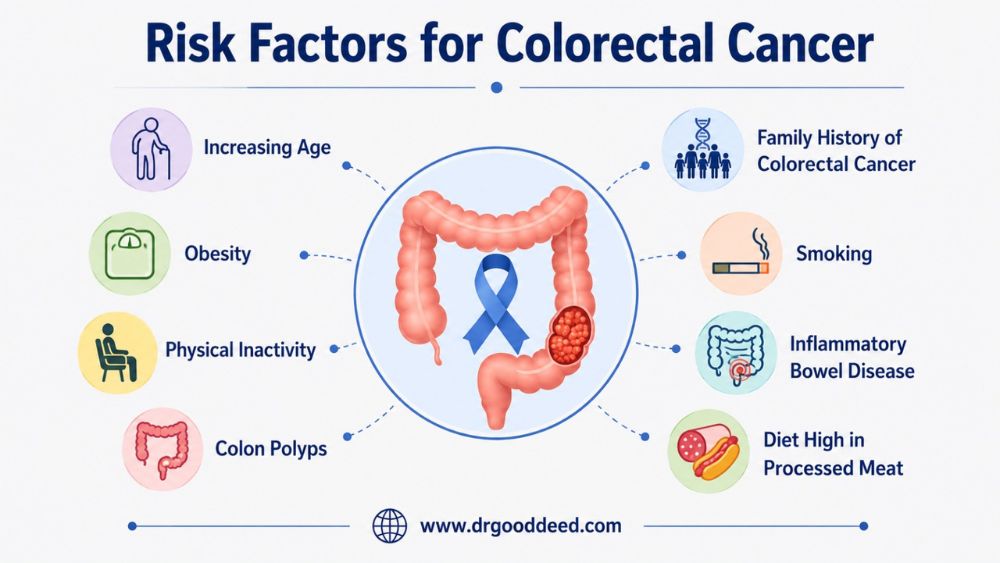
Risk factors for colorectal cancer combine traits you cannot change, like age and genetics, with daily habits you can control. None of these factors involve hemorrhoids directly.
Increasing Age
Colorectal cancer risk rises steadily after age 45. Most cases still occur in people over 50, though younger cases are climbing fast.
Family History of Colorectal Cancer
A parent or sibling with colorectal cancer roughly doubles your own risk. Doctors usually recommend starting colonoscopies 10 years before that relative’s diagnosis age.
Colon Polyps
Adenomatous polyps can slowly turn into cancer over about 10 years. Removing them during a colonoscopy stops that process completely.
Inflammatory Bowel Disease
Long-standing ulcerative colitis or Crohn’s disease raises colorectal cancer risk. Doctors recommend colonoscopies starting about 8 years after an IBD diagnosis.
Smoking
Long-term smoking raises colorectal cancer risk and increases the chance of developing colon polyps in the first place.
Obesity
Excess body weight raises colorectal cancer risk in both men and women, with a stronger link documented in men.
Physical Inactivity
A sedentary lifestyle raises colorectal cancer risk. Regular moderate activity, even brisk walking, measurably lowers that risk.
Diet High in Processed Meat
Diet ranks among the most controllable risk factors for colorectal cancer. The IARC classifies processed meat as a confirmed cancer-causing agent, and eating one hot dog daily raises risk by about 16 percent.
When Rectal Bleeding Requires Medical Attention
Most rectal bleeding traces back to hemorrhoids, not cancer. Bleeding itself is a signal worth checking, regardless of the cause, because only an exam tells you which one applies to you.
Bleeding That Does Not Improve
Hemorrhoid bleeding usually settles within a week of home care like fiber and sitz baths. Bleeding that continues past two weeks needs a medical exam.
Frequent Episodes of Blood in Stool
One bleeding episode rarely signals cancer. Repeated episodes across several weeks, especially without a clear hemorrhoid flare trigger, warrant a colonoscopy referral.
Associated Weight Loss
Losing weight without trying, alongside any rectal bleeding, is never a hemorrhoid symptom. This combination always deserves prompt evaluation.
New Bowel Habit Changes
New diarrhea, constipation, or stool that suddenly looks thinner than usual can signal a blockage. Hemorrhoids do not change stool shape or frequency.
Family History of Colon Cancer
Anyone with a parent or sibling who had colorectal cancer should mention rectal bleeding to a doctor right away, regardless of age.
Screening for Colorectal Cancer
Screening answers can determine whether hemorrhoids cause cancer with hard data instead of guesswork, since a colonoscopy can directly see whether bleeding comes from hemorrhoids and polyps, or a tumor. The right test and timing depend mostly on age and personal risk factors.
Colonoscopy Screening
A colonoscopy examines the entire colon and rectum and removes polyps during the same visit. The USPSTF recommends it every 10 years starting at age 45 for average-risk adults.
Stool-Based Screening Tests
FIT tests check for hidden blood yearly, and stool DNA tests check for blood and abnormal DNA every three years. Either positive result requires a follow-up colonoscopy.
Who Should Get Screened?
Everyone at average risk should start at 45. People with family history, inflammatory bowel disease, or genetic syndromes often need to start sooner.
Screening Recommendations by Risk Level
Average risk: colonoscopy starting at 45. Family history: colonoscopy 10 years before the relative’s diagnosis age. Lynch syndrome: colonoscopy starting in the early 20s, repeated every 1 to 2 years.
What to Do if It Really Is Hemorrhoids?
Once a doctor rules out cancer, treatment options for hemorrhoids become straightforward. Most mild cases improve with more fiber, more water, and warm sitz baths within a week. Over-the-counter creams with witch hazel or hydrocortisone calm itching and swelling short-term.
Hemorrhoids that keep coming back pain respond well to in-office rubber band ligation, which cuts off blood flow to the swollen tissue with minimal downtime. Severe or repeatedly prolapsing hemorrhoids sometimes need surgical removal, the least common of all treatment options for hemorrhoids used today.
FAQs
Can hemorrhoids turn into colon cancer?
No. Hemorrhoid tissue cannot transform into cancer cells. Hemorrhoids and colon cancer develop through completely different processes, even though they often appear in the same patients.
How can I tell if rectal bleeding is from hemorrhoids or cancer?
Hemorrhoids vs colon cancer symptoms differ mainly in blood color and timing. Hemorrhoid bleeding is bright red and tied to bowel movements. Cancer bleeding can be darker, happen between bowel movements, or include weight loss.
Are hemorrhoids a warning sign of colon cancer?
No. Hemorrhoids themselves are not a warning sign. Hemorrhoids and colon cancer are treated as separate conditions that simply share one symptom.
Should I get a colonoscopy if I have hemorrhoids?
Yes, if you are 45 or older, or younger with rectal bleeding, family history, or anemia. A colonoscopy confirms the bleeding source and removes any polyps found along the way.
Can hemorrhoids and colon cancer occur at the same time?
Yes. A 2021 Taiwan cohort study found a 2.18 times higher colorectal cancer rate among hemorrhoid patients, most likely from shared risk factors like low fiber and inactivity, not a direct cause.
When should I worry about blood in my stool?
Worry if bleeding lasts more than two weeks, appears without a bowel movement, turns dark or tarry, or comes with weight loss, fatigue, or stomach pain.
What tests help distinguish hemorrhoids from cancer?
A digital rectal exam and anoscopy check the signs of colorectal cancer vs hemorrhoids directly. Only a colonoscopy examines the full colon and rectum lining to confirm or rule out polyps and cancer.
What are the treatment options for hemorrhoids?
Treatment options for hemorrhoids include fiber, sitz baths, and topical creams for mild cases. Persistent ones respond to in-office rubber band ligation, while surgery is reserved for severe, repeatedly prolapsing cases.
How can I reduce my risk of colorectal cancer?
Get screened starting at 45, eat more fiber, limit red and processed meat, stay active, and avoid smoking. These steps target the exact risk factors for colorectal cancer that researchers have confirmed repeatedly.
When should I see a doctor for hemorrhoid symptoms?
See a doctor if symptoms last beyond a week of home care, bleeding increases, a lump grows painful, or you are over 45 and have never been screened for colorectal cancer.
Sources
NIDDK – Symptoms and Causes of Hemorrhoids
American Cancer Society – Colorectal Cancer Statistics, 2026
American Cancer Society – Colorectal Cancer Risk Factors
American Cancer Society – Red and Processed Meat and Cancer
American Cancer Society – Colorectal Cancer Screening Guideline
Dana-Farber Cancer Institute – Are Hemorrhoids and Colon Cancer Related?
Disclaimer: This article is for general education only. It does not replace medical advice, diagnosis, or treatment from a licensed healthcare provider. If you have rectal bleeding or any symptom described here, talk to a doctor for a proper evaluation.
Hemorrhoids do not turn into colorectal cancer, and they do not directly raise your cancer risk. Colorectal cancer is now the leading cause of cancer death in US adults under 50, according to the American Cancer Society’s 2026 statistics report. Rectal bleeding from hemorrhoids and from cancer can look almost identical.