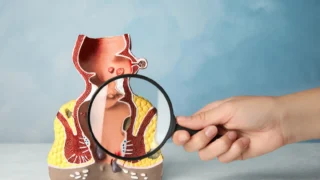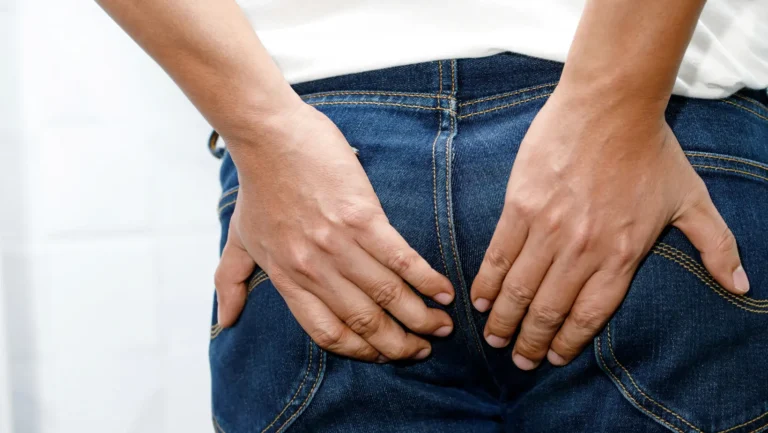

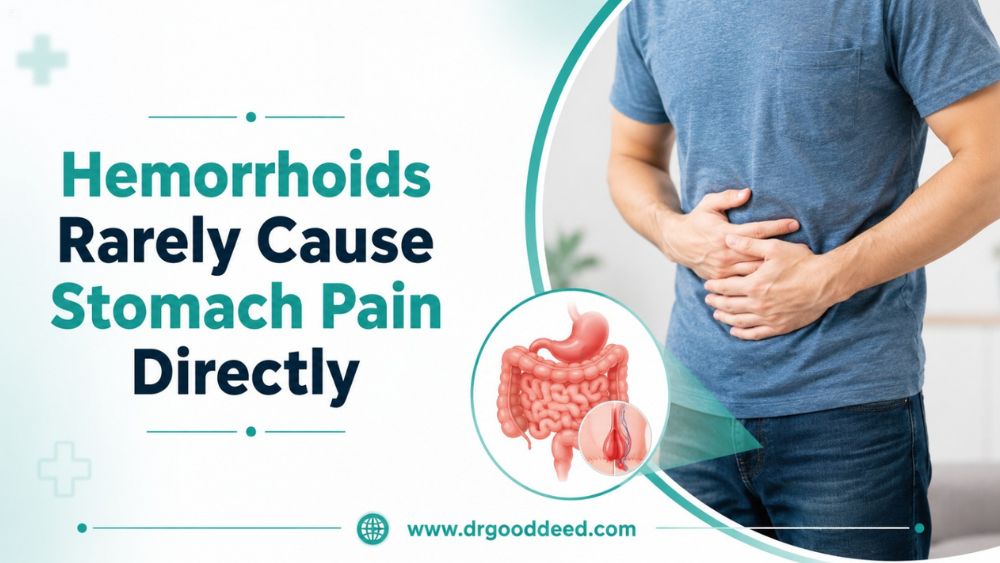
Hemorrhoids rarely cause stomach pain, and rarely do so directly. Hemorrhoids are swollen veins in the lower rectum or around the anus. Their symptoms stay localized: anal pain, itching, swelling, and rectal bleeding. When hemorrhoids and stomach pain appear together, the stomach pain almost always comes from a separate digestive condition, not the hemorrhoid itself. Pinpointing the true cause leads to faster relief and prevents missed diagnoses.
Hemorrhoids Rarely Cause Stomach Pain Directly
Hemorrhoids never cause stomach pain on their own. Here is why.
What Hemorrhoids Actually Affect
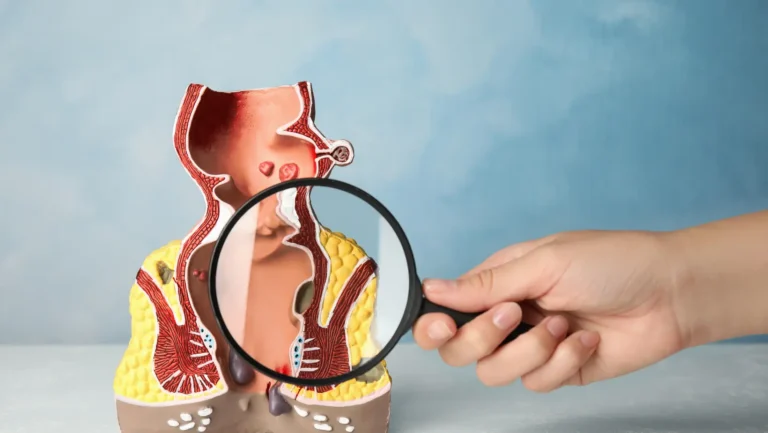
Hemorrhoids form at the lowest point of your digestive tract, inside or around the anus and lower rectum. Their effects stay local. Classic symptoms include bright red rectal bleeding, anal itching, swelling near the anus, and pain or pressure during bowel movements. Gastroenterology guidelines do not list abdominal pain as a primary hemorrhoid symptom.
Why Stomach Pain Is Not a Classic Hemorrhoid Symptom
Your stomach sits in the upper abdomen. Your hemorrhoids sit at the very end of the large intestine. These two areas are anatomically separated by the entire length of the colon.
Key Takeaway: If you have both hemorrhoids and stomach pain, the stomach pain is almost certainly coming from a related digestive condition, not from the hemorrhoid itself.
Situations Where Hemorrhoids and Stomach Pain Can Appear Together
Hemorrhoids and stomach pain do co-exist regularly. Hemorrhoids can not cause stomach pain in these cases, but the same underlying condition causes both symptoms simultaneously.
Chronic Constipation
Constipation is the most common shared cause of both conditions. Hard stool straining creates hemorrhoids. Stool building up in the colon creates cramping, bloating, and lower abdominal pressure before a bowel movement.
Abdominal cramps with hemorrhoid symptoms occurring together almost always mean constipation is the root issue. Eating foods to eat for hemorrhoids and digestive health, such as high-fiber vegetables, beans, oats, and whole grains, directly improves both conditions by softening stool and reducing straining.
Diarrhea and Frequent Bowel Movements
Frequent diarrhea irritates and inflames existing hemorrhoids through repeated friction and pressure. Diarrhea also causes abdominal cramping throughout the day. This creates abdominal discomfort during hemorrhoid flare-ups that many people incorrectly blame on the hemorrhoid rather than on the diarrhea driving both problems.
Irritable Bowel Syndrome (IBS)
IBS causes colon spasms, alternating constipation and diarrhea, abdominal cramping, bloating and hemorrhoids symptoms occurring together. IBS-related straining damages hemorrhoidal veins over time, which is why IBS patients develop hemorrhoids at higher rates. The abdominal pain in IBS comes from colon muscle spasms, not from the hemorrhoid. Tracking foods to eat for hemorrhoids and digestive health, such as soluble fiber sources (psyllium, oats, bananas) reduces IBS-related straining and lowers hemorrhoid pressure simultaneously.
Pregnancy
Pregnancy increases abdominal pressure on rectal veins, causing hemorrhoids. It also causes abdominal discomfort from the growing uterus, round ligament stretching, and gas. Both sets of symptoms occur at the same time, making pregnant women frequently report stomach pain alongside hemorrhoid problems. The two are coinciding, not causally linked.
Can Severe Hemorrhoids Ever Cause Pain That Feels Like Stomach Pain?
Thrombosed Hemorrhoids
A thrombosed hemorrhoid is a blood clot inside the hemorrhoid tissue. It causes sudden, severe anal pain. The intensity is sometimes high enough that patients describe the pain as radiating into the lower pelvis or abdomen. In isolated cases, the severity of localized thrombosis pain creates an upward sensation. But the source is the anus, not the abdomen. True abdominal organ pain is not part of the thrombosis picture.
Prolapsed Internal Hemorrhoids
A prolapsed hemorrhoid slides outside the anal canal. Large prolapsed hemorrhoids create significant pelvic and rectal pressure. Some people interpret this deep pelvic pressure as low abdominal pain. It is pressure from position, not true abdominal organ pain. Abdominal discomfort during hemorrhoid flare-ups in prolapsed cases is almost always pelvic in origin. Treating the prolapse with rubber band ligation or surgical hemorrhoidectomy removes this pressure entirely.
Pain Referral: What It Is and What It Isn’t
Pain referral means a pain felt in a different place than its origin. True pain referral requires connected nerve pathways. Hemorrhoidal tissue shares some nerve supply with pelvic structures, but it does not reliably refer pain to the stomach. Hemorrhoids causing abdominal pain is not supported by clinical evidence. Do not attribute stomach pain to hemorrhoids without a doctor confirming this.
Warning Signs That Suggest Something Other Than Hemorrhoids
These symptom combinations indicate a potentially serious condition that goes far beyond hemorrhoids.
Stomach Pain With Rectal Bleeding
Bright red blood on toilet paper after a bowel movement fits hemorrhoids. Dark, maroon, or blood mixed into stool along with stomach pain does not. This combination can indicate inflammatory bowel disease (IBD), diverticular disease, or colorectal cancer. Get medical evaluation promptly.
Stomach Pain With Changes in Bowel Habits
A sudden change in bowel frequency, stool shape (especially pencil-thin stools), or a persistent feeling of incomplete emptying, combined with stomach pain, points beyond hemorrhoids. These patterns are associated with colorectal cancer and IBD.
Stomach Pain With Systemic Symptoms
Fever, unexplained weight loss, fatigue, or night sweats combined with stomach pain are not caused by hemorrhoids. These systemic symptoms point to infection, inflammation, or serious disease. Do not wait to see a doctor if these appear.
How Daniel Reeves Got His Correct Diagnosis After Being Told It Was “Just Hemorrhoids”
Daniel Reeves, a 51-year-old high school principal from Columbus, Ohio, had diagnosed hemorrhoids for three years. When he developed persistent lower left abdominal pain, his doctor reassured him it was the hemorrhoids again. He treated them with over-the-counter cream for six weeks. No improvement.
A gastroenterologist ordered a colonoscopy. Daniel had diverticulitis (infected pouches in the colon wall), a separate condition entirely unrelated to his hemorrhoids. The two conditions shared no causal link. They were simply coexisting in the same digestive system.
Treating the diverticulitis with a targeted antibiotic course and a high-fiber dietary change cleared the abdominal pain within two weeks. His hemorrhoids continued to be managed separately. Daniel’s case is a clear example of why assuming a single cause for multiple digestive symptoms delays the right treatment significantly.
The name in this case history has been changed to protect privacy.
Conditions Commonly Mistaken for Hemorrhoid-Related Stomach Pain
Use this comparison to identify whether your symptoms fit a hemorrhoid pattern or something that needs further evaluation.
| Condition | Stomach Pain | Rectal Symptoms |
| Hemorrhoids | Rare | Bleeding, itching, swelling |
| Anal fissure | Rare | Sharp pain during bowel movements |
| IBS | Common | Possible hemorrhoids from straining |
| Diverticulitis | Common (left side) | May include rectal symptoms |
| Inflammatory bowel disease | Common | Bleeding and diarrhea |
| Colorectal cancer | Possible | Bleeding and bowel habit changes |
How to Tell Whether Your Pain Is Coming From Hemorrhoids or the Digestive Tract
Use these questions to narrow down the source of your pain:
- Where exactly is the pain? Hemorrhoid pain stays at the anus or very low rectum. Pain higher than the pelvic region is not caused by hemorrhoids.
- Does it worsen before bowel movements? Pre-movement cramping in the abdomen suggests a colon issue, not a hemorrhoid.
- Is it linked to eating? Stomach pain after meals points to the digestive tract, not hemorrhoidal tissue.
- Is there bloating? Bloating and hemorrhoids symptoms together typically point to IBS or constipation as the primary driver.
- Is there anal pain, itching, or swelling? These confirm a hemorrhoid component is present, though it may not be causing the abdominal pain.
Symptom Pattern Checklist
Use this simple framework:
- Mostly anal symptoms (anal pain, itching, bright red bleeding, visible swelling): Likely hemorrhoid-related. Focus treatment directly on the hemorrhoid.
- Mostly abdominal symptoms (cramping, bloating, pain above the pelvis, linked to eating): Investigate digestive causes. Hemorrhoids may be present but are not the pain source.
- Both types together: A shared underlying condition like IBS, constipation, or IBD is likely driving both. Treating only the hemorrhoid will not stop the abdominal pain. Incorporating foods to eat for hemorrhoids and digestive health like prunes, flaxseed, and leafy greens helps both simultaneously.
FAQs
Can hemorrhoids cause stomach pain?
Rarely and almost never directly. Hemorrhoids do not cause stomach pain on their own. Hemorrhoidal tissue sits in the lower rectum, far from the stomach. When both appear together, constipation, IBS, or another digestive condition is almost always the shared cause.
Do internal hemorrhoids cause abdominal pain?
No. Hemorrhoids causing abdominal pain is not a recognized clinical symptom. Internal hemorrhoids cause rectal pressure, mucus discharge, and rectal bleeding. Abdominal pain from internal hemorrhoids alone is not listed in any established hemorrhoid guideline as a standard symptom.
Can piles cause lower abdominal pain?
Rarely. Large prolapsed piles create pelvic pressure that can feel like low abdominal pain. But true lower abdominal pain alongside piles almost always comes from constipation, IBS, or another colon-level condition causing both at the same time.
Why do I have hemorrhoids and stomach cramps at the same time?
Abdominal cramps with hemorrhoid symptoms together almost always mean constipation is the shared root cause. Straining from constipation creates hemorrhoids, while stool buildup in the colon simultaneously creates abdominal cramping.
Can constipation cause both hemorrhoids and stomach pain?
Yes. Constipation is the most common cause of both conditions at once. Hard stool straining creates hemorrhoids. Stool accumulation creates abdominal cramping and pressure. Fixing constipation with fiber and adequate water intake resolves both problems together.
Can IBS cause hemorrhoids and abdominal pain together?
Yes. IBS causes alternating constipation and diarrhea, both of which stress hemorrhoidal veins. Bloating and hemorrhoid symptoms appear together in IBS patients because colon dysfunction drives both. Treating IBS through diet and stress management reduces both sets of symptoms.
Can thrombosed hemorrhoids cause stomach pain?
Rarely. Hemorrhoids rarely cause stomach pain from thrombosis. The intense pain of a thrombosed hemorrhoid stays at the anus. Some patients feel it radiating into the lower pelvis, but the origin is anal tissue, not abdominal organs. Pain above the lower pelvis is not caused by thrombosis.
Can severe hemorrhoids cause pelvic pressure that feels like abdominal pain?
Yes. Grade 3 and Grade 4 prolapsed hemorrhoids create deep pelvic pressure. Abdominal discomfort during hemorrhoid flare-ups with prolapse is pelvic in origin, not truly abdominal. Treating the prolapse with rubber band ligation or surgery eliminates this pressure.
What is the difference between hemorrhoid pain and stomach pain?
Hemorrhoid pain is localized at the anus, sharp, and worsens during or after bowel movements, with bleeding or swelling nearby. Stomach pain is higher in the body, often cramping or aching, and may relate to eating, gas, or bloating. They feel and behave distinctly differently.
How can I tell if my abdominal pain is related to hemorrhoids or another condition?
If the pain sits above the pelvis, is linked to eating, or arrives with fever and weight loss, it is not from hemorrhoids. Abdominal discomfort during hemorrhoid flare-ups that extends beyond the anal area always needs separate evaluation. See a doctor rather than assuming hemorrhoids explain all your symptoms.
Sources
- American Society of Colon and Rectal Surgeons (ASCRS): Hemorrhoid Disease: fascrs.org
- National Institute of Diabetes and Digestive and Kidney Diseases (NIDDK): Hemorrhoids and Digestive Overview: niddk.nih.gov
- American College of Gastroenterology (ACG): IBS and Functional GI Disorders Guidelines: gi.org
DISCLAIMER: This article is for educational purposes only. It does not replace professional medical advice, diagnosis, or treatment. Always consult a qualified healthcare provider before making any health decisions.