
You can live without a pancreas. Total pancreatectomy, the complete surgical removal of the pancreas, treats pancreatic cancer, severe chronic pancreatitis, and certain tumors, and patients do survive long-term. Survival depends heavily on why the organ was removed, and life after surgery requires two lifelong replacement treatments most people have never heard of.
This guide covers what the pancreas does, what changes once it’s gone, and the treatment plan that makes survival possible, in the US and everywhere else.
What Does the Pancreas Do?
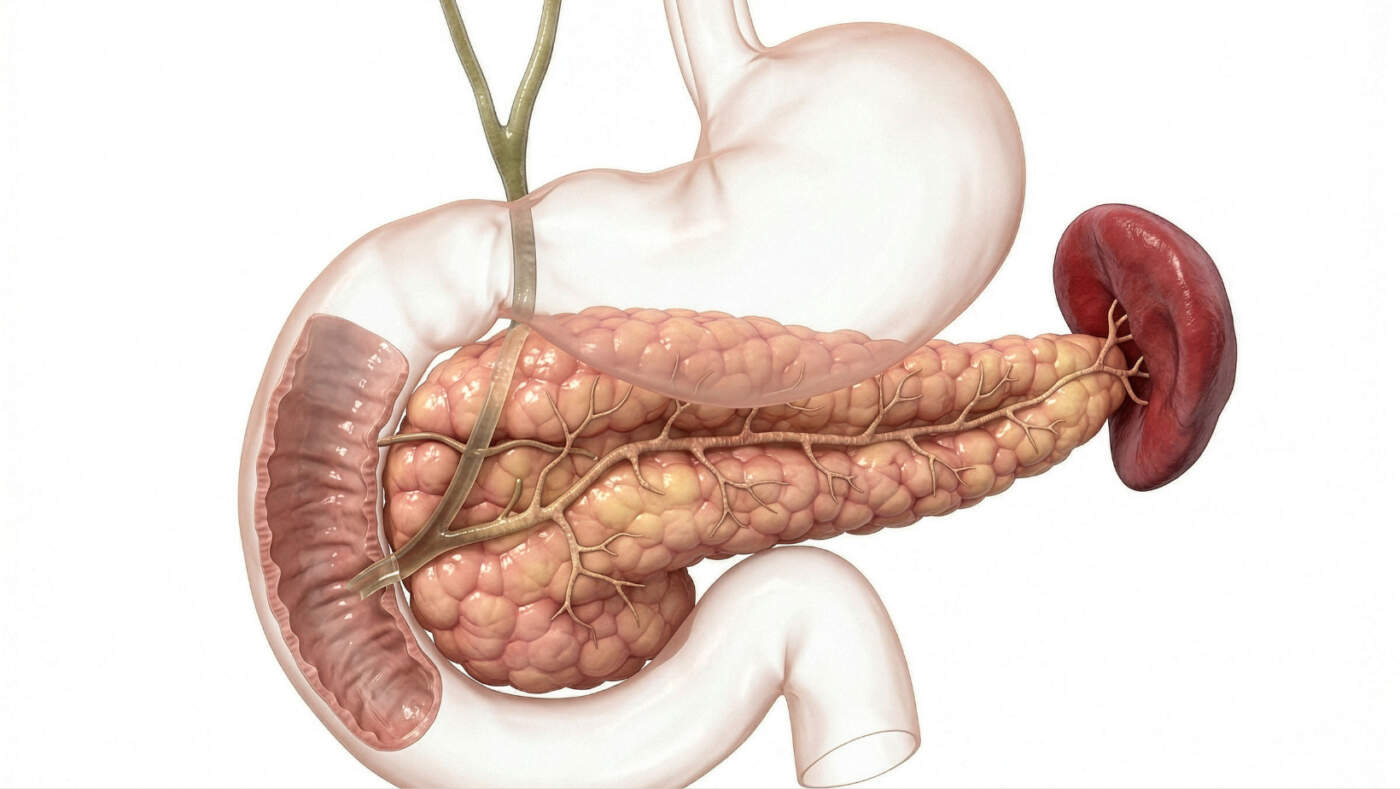
The pancreas sits behind the stomach and runs two separate jobs most people lump together as one.
Digestive Functions of the Pancreas
About 80% of pancreatic tissue handles digestion, the exocrine function. It produces enzymes, lipase for fat, protease for protein, amylase for carbs, that travel through a duct into the small intestine. A healthy pancreas releases roughly 720,000 units of lipase per meal, an amount no pill fully replicates.
Insulin Production and Blood Sugar Control
The remaining 20% forms clusters called islets of Langerhans, the endocrine function. These produce insulin, which lowers blood sugar, and glucagon, which raises it when levels drop too low. This dual loss is central to what happens if your pancreas is removed, and it’s harder to manage than losing insulin alone, a detail most articles skip entirely.
Hormones Produced by the Pancreas
Beyond insulin and glucagon, the pancreas makes somatostatin, which regulates the other two hormones, and pancreatic polypeptide, which affects appetite and digestion. You can live without a pancreas, since removing the organ wipes out this entire signaling system, not just blood sugar control.
Why the Organ Is Essential for Health
Without it, the body can’t digest fat or protein properly, and can’t regulate blood sugar through its normal feedback loop. You can live without a pancreas; and both functions are replaceable through medication, but neither comes back on its own.
What Happens if Your Pancreas Is Removed?
What happens if your pancreas is removed depends on timing as much as biology. The body adjusts to some changes within weeks; others take months to stabilize, and a few never fully normalize.
Loss of Insulin Production
Without islet cells, the body produces zero insulin. This creates a diabetes type doctors call Type 3c, or pancreatogenic diabetes, distinct from Type 1 and 2 diabetes. You can live without a pancreas but you cannot avoid diabetes. Insulin dependence is immediate and permanent after total removal.
Loss of Digestive Enzyme Production
Fat and protein pass through the gut undigested without enzyme support, causing pale, oily, foul-smelling stools called steatorrhea. This starts within days of surgery and doesn’t resolve without pancreatic enzyme replacement therapy started early and dosed correctly.
Effects on Blood Sugar Regulation
Type 3c diabetes is harder to manage than typical Type 1, since missing glucagon means the body can’t naturally counter low blood sugar. Patients face higher hypoglycemia risk on standard doses, and current ADA guidelines don’t set specific targets for this type.
Changes in Digestion and Nutrient Absorption
Vitamins A, D, E, and K need fat for absorption, so undigested fat blocks their uptake too. If your pancreas is removed, the original digestive problem compounds into a broader nutrition deficiency if enzymes aren’t dosed correctly.
Reasons for Pancreas Removal Surgery
Reasons for pancreas removal surgery fall into five categories, and the underlying reason changes the entire survival outlook, not just the surgery itself.
- Pancreatic cancer: the most common reason, with the steepest survival curve.
- Severe chronic pancreatitis: repeated inflammation destroying pancreatic tissue and causing unmanageable pain.
- Pancreatic tumors: including insulinomas, rare tumors that overproduce insulin and cause dangerous low blood sugar, one of the less common reasons for pancreas removal surgery.
- Traumatic pancreatic injury: severe abdominal trauma damaging the organ beyond repair.
- Rare genetic conditions: hereditary pancreatitis linked to PRSS1 or CFTR gene mutations, sometimes treated this way before cancer risk rises.
A 2022 study of 693 patients with total pancreatectomy and islet autotransplant, mostly for chronic pancreatitis, found 93.1% alive at 5 years and 85.2% at 10 years. Compare that to pancreatic cancer: a separate study found just 63% survival at one year and 34% at three years.
Symptoms After Pancreas Removal
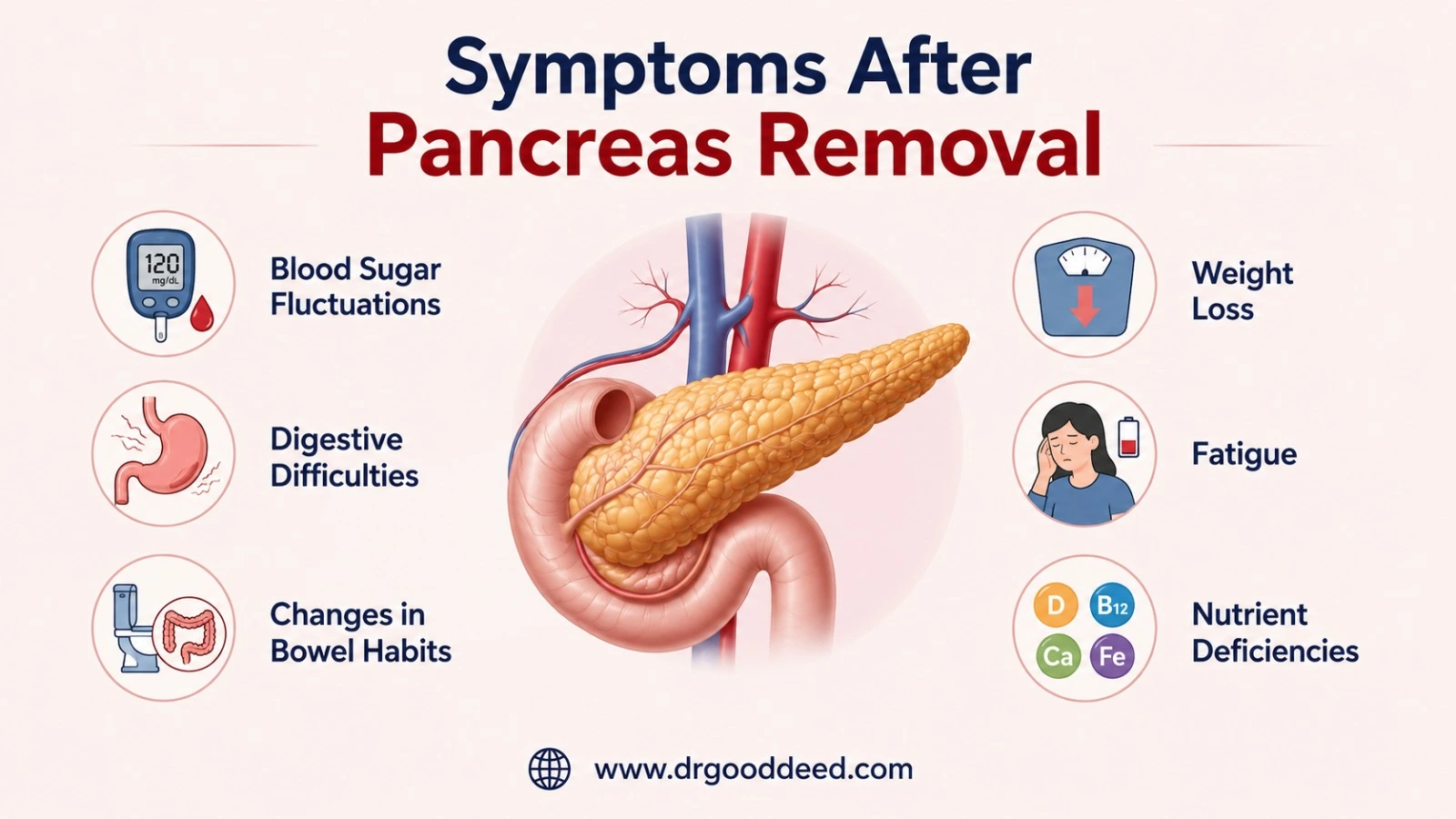
Symptoms after pancreas removal show up in a predictable pattern, though severity varies by person and by how well the two replacement treatments are managed.
| Symptom | Cause | Typical timing |
| Blood sugar swings | No insulin or glucagon | Immediate |
| Digestive difficulty | No enzymes | Days after surgery |
| Weight loss | Poor nutrient absorption | Weeks to months |
| Fatigue | Blood sugar instability, malnutrition | Weeks to months |
| Nutrient deficiencies | Fat-soluble vitamin malabsorption | Months |
| Bowel habit changes | Undigested fat in stool | Immediate |
Blood Sugar Fluctuations
Glucose can swing from too high to dangerously low within hours, especially before enzyme and insulin doses are fully calibrated. Among all symptoms after pancreas removal, this instability is the single hardest part of early recovery for most patients.
Digestive Difficulties
Bloating, cramping, and urgent diarrhea are common until enzyme dosing catches up with what the body needs per meal.
Weight Loss
Malabsorption burns calories the body never uses. Weight loss often continues despite normal or increased eating, until enzyme therapy is dosed correctly.
Fatigue
Unstable blood sugar combined with poor nutrient absorption drains energy fast, often feeling like full-body depletion rather than ordinary tiredness.
Nutrient Deficiencies
Vitamin D and calcium deficiencies are especially common, raising bone health concerns often overlooked in early recovery.
Changes in Bowel Habits
Oily, floating, hard-to-flush stools point directly to enzyme insufficiency. Among symptoms after pancreas removal, this one usually improves fastest once dosing is adjusted.
The Two Lifelong Treatments That Make Survival Possible After Pancreas Removal
You can live without a pancreas but you have to take these wo treatments for life.
Replacing Insulin
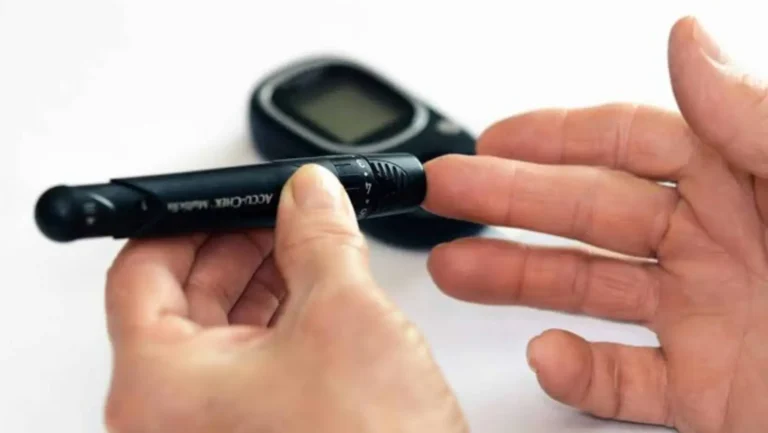
Patients move to multiple daily insulin injections or an insulin pump right after surgery. Because glucagon is gone too, blood sugar can crash fast without the usual hormonal safety net. Closed-loop systems combining insulin and glucagon, bihormonal artificial pancreas devices, are now in trials for total pancreatectomy patients and show real promise for smoothing these swings.
Replacing Digestive Enzymes
Pancreatic enzyme replacement therapy, or PERT, uses capsules dosed in lipase units. Post-pancreatectomy patients typically start around 500 lipase units per kilogram of body weight per meal, far higher than doses for milder enzyme insufficiency. Capsules go down with the first bite of food, not before or after, since timing affects how well they work.
Foods Recommended After Pancreas Removal
A practical diet after total pancreatectomy doesn’t replace enzymes or insulin, but the right food choices reduce digestive strain and support more stable blood sugar.
- Lean protein sources: chicken, fish, eggs, and tofu digest more easily than fatty meat cuts.
- Whole grains: steady, slow-digesting carbs that don’t spike blood sugar like refined grains do.
- Cooked vegetables: gentler on digestion than raw vegetables, especially soon after surgery.
- Low-fat dairy options: easier to digest with reduced enzyme capacity than full-fat versions.
- Nutrient-dense snacks: small, frequent meals are a core principle of any diet after total pancreatectomy, since they reduce digestive load.
Can the Pancreas Be Replaced?
The pancreas can’t be fully replaced for most people, but whether you can live without a pancreas isn’t an outright “no” anymore either. A handful of real options exist, each solving part of the puzzle.
- Pancreas transplantation: usually paired with a kidney transplant, mostly offered to Type 1 diabetics with kidney failure, not total pancreatectomy patients.
- Islet cell transplantation: transplanting just the insulin-producing cells, sometimes from the patient’s own pancreas during surgery (autotransplant), preserving some natural insulin production.
- Artificial pancreas technology: closed-loop insulin and glucagon delivery, currently in randomized trials, aiming to mimic natural blood sugar regulation more closely than manual dosing.
- Why none fully replace pancreatic function: transplants carry rejection risk and lifelong immunosuppression, and artificial pancreas tech still can’t replicate the digestive enzyme role. For most patients, replacement therapy, not replacement organs, is the realistic path.
FAQ
Why would someone need a total pancreatectomy?
Pancreatic cancer, severe chronic pancreatitis, large tumors like insulinomas, traumatic injury, or hereditary pancreatitis linked to PRSS1 or CFTR gene mutations are the five main reasons surgeons remove the entire organ.
Can you digest food without a pancreas?
Not without enzyme replacement. Pancreatic enzyme replacement therapy supplies the lipase, protease, and amylase the body can no longer produce, taken with every meal and snack for life.
Do you become diabetic after pancreas removal?
Yes, always. Total removal eliminates all insulin and glucagon production, causing Type 3c diabetes immediately. This differs from Type 1 or 2 diabetes and requires lifelong insulin therapy.
What is pancreatic enzyme replacement therapy?
PERT is lipase-based capsules taken with food to replace missing digestive enzymes. Post-pancreatectomy patients typically need around 500 lipase units per kilogram of body weight per meal.
How long can someone live without a pancreas?
It depends on the surgery’s cause. Chronic pancreatitis patients show 93.1% survival at 5 years and 85.2% at 10 years; pancreatic cancer patients show roughly 34% survival at 3 years.
Is life expectancy reduced after pancreas removal?
For chronic pancreatitis or trauma, life expectancy stays close to normal with proper insulin and enzyme management. For pancreatic cancer, life expectancy reflects the cancer’s stage, not the surgery itself.
What foods should be avoided after pancreas surgery?
High-fat fried foods, fatty red meat, and large heavy meals strain enzyme capacity most in a typical diet after total pancreatectomy. Alcohol is avoided entirely since it stresses blood sugar control and remaining digestive function.
Can people live a normal life after pancreas removal?
Yes, for most non-cancer cases. You can live without a pancreas and keep a normal routine. Most patients work, travel, and maintain daily life once insulin and enzyme doses stabilize, typically within 3 to 6 months after surgery.
How is blood sugar controlled after a pancreatectomy?
Through multiple daily insulin injections or an insulin pump, since glucagon is also missing. Bihormonal artificial pancreas systems delivering both insulin and glucagon are in clinical trials for this exact group.
Sources
- Addressing Long-Term Mortality Risk in Patients Undergoing Total Pancreatectomy with Islet Autotransplant (TPIAT) – PMC
- Can You Live Without a Pancreas? – INTEGRIS Health
- Pancreatic Enzyme Replacement Therapy in Pancreatic Exocrine Insufficiency: Real-World Dosing and Effectiveness – Digestive Diseases and Sciences
- Pancreatic Enzyme Supplementation for Patients with Pancreatic Cancer – Palliative Care Network of Wisconsin
- Brittle Diabetes Following Partial Pancreatectomy: A Case of Type 3c Diabetes Mellitus – PMC
- Approach to the Patient With Pancreatogenic Diabetes – Journal of Clinical Endocrinology & Metabolism
- Glucose Control Through a Bihormonal Artificial Pancreas in Patients After Total Pancreatectomy – ClinicalTrials.gov