
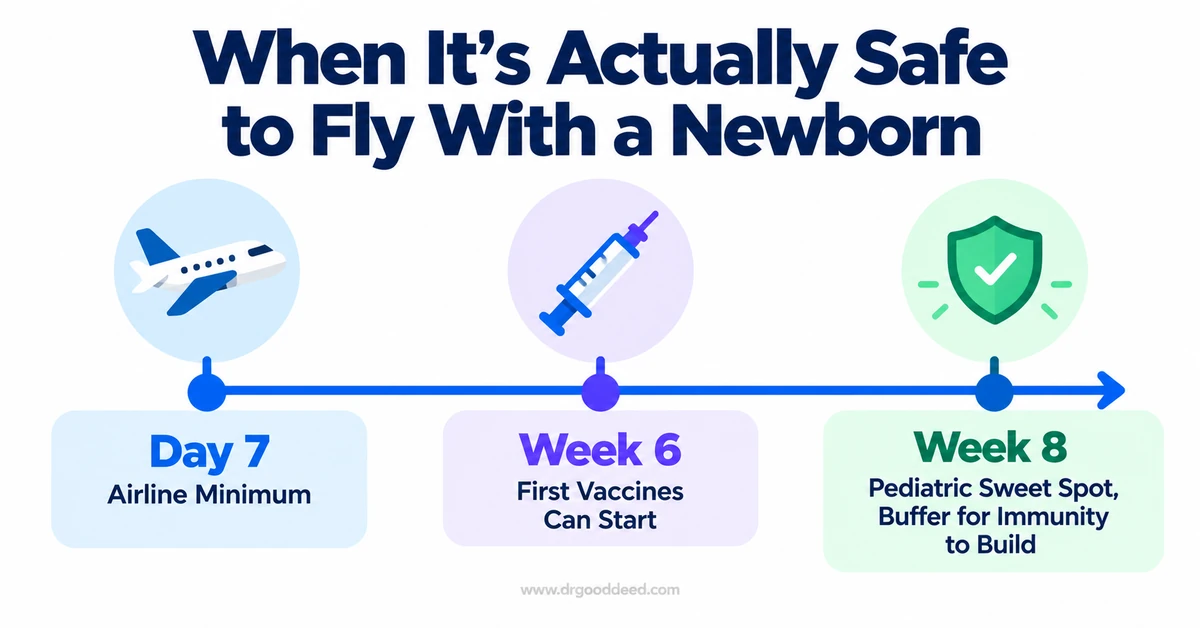
Traveling with newborn babies is allowed by most US airlines from 7 days of age, but many pediatricians prefer waiting until about 8 weeks. The first vaccines can be given as early as 6 weeks, and immunity needs a short buffer to build.
Choose an FAA-approved car seat over a lap ticket when you can. Feed your baby during descent to ease ear pressure. For wider basics, read our guide on how to stay healthy while traveling.
Key Takeaways
- Many airlines allow newborns to fly from around 7–14 days old, but pediatricians often recommend waiting longer when possible, particularly for premature babies or those with medical concerns.
- If you must travel, use a properly installed rear-facing car seat for road journeys, keep the baby well-fed and hydrated, limit exposure to crowded places, and practice good hand hygiene.
- For air travel, feeding or breastfeeding during takeoff and landing may help with ear pressure.
- Premature birth, or a heart or lung condition, means medical clearance comes first.
- A rectal temperature of 100.4°F (38°C) or higher in a baby under 3 months needs urgent care, even mid-trip.
- When traveling with newborn babies, confirm your plan with your own pediatrician before booking.
How Old Does a Baby Need to Be to Fly? The Real Timeline
Most airlines allow infants to fly starting at 7 days old, but many pediatricians recommend waiting longer. Avoid flying in the first week, and premature babies or those with heart or lung problems need clearance first.
- The airline minimum: Rules vary by carrier. United, for example, does not carry infants under 7 days, and some airlines ask for a doctor’s note for very young babies. Check your airline’s own policy.
- The 8-week pediatric framework: The 2-month vaccines can be given as early as 6 weeks, and immunity benefits from a 2-week buffer afterward. That lands at roughly 8 weeks, giving your baby some early protection before sharing space with hundreds of strangers.
- Why the first weeks get extra caution: A newborn’s immune system is still immature, so an infection that looks minor in an adult can be serious in a baby. Most modern jets use HEPA filters (very fine air filters), so close contact in terminals and nearby seats is the bigger worry than cabin air.
- Emergency exceptions: Travel before 8 weeks is sometimes medically acceptable, such as for a family emergency or a required move, when the pediatrician judges the baby healthy and the trip necessary.
- Flexible fares: A fever or feeding problem can force a last-minute change, so check change and refund rules before you pay.
The airline minimum is 7 days, but the medical sweet spot for a healthy full-term baby is closer to 8 weeks. For traveling with newborn plans, your pediatrician makes the final call. Once timing is set, seating is the next decision.
Why a Car Seat Is Safer Than Holding Your Baby on Your Lap
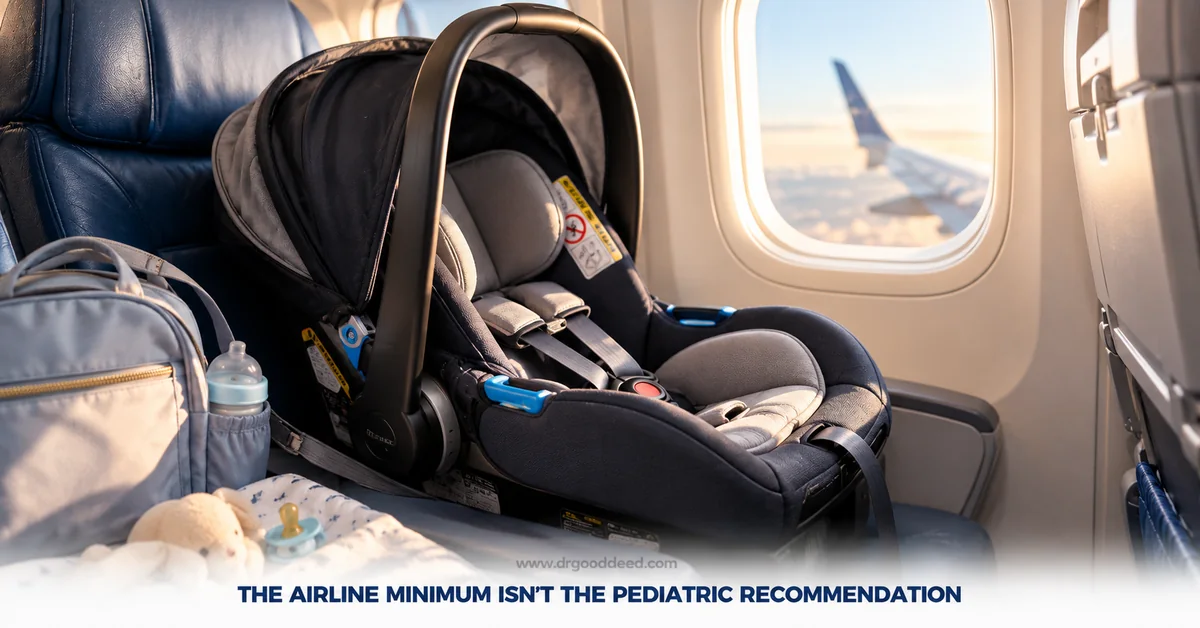
An FAA-approved car seat protects your baby during turbulence in a way that holding them on your lap cannot. Airlines do permit lap infants under age 2, so the car seat vs lap infant question is about safety. Most flights are smooth, and lap travel is not unsafe in every case. The seat is simply the better option when it is feasible.
- The mechanics: In sudden turbulence or deceleration, adult arms cannot reliably hold a baby’s weight against the forces involved. Your lap belt restrains you, not your baby. A harnessed seat holds your baby in place.
- What the FAA says: The agency strongly urges families to secure young children in an approved child restraint rather than carrying them as lap infants.
- How to recognize an approved seat: Look for the label stating the seat is certified for use in motor vehicles and aircraft.
- Placement rules: Newborns ride rear-facing, in a window seat so the seat does not block other passengers’ exit. Exit rows are not allowed.
- Harness gadgets do not count: The CARES harness, an FAA-approved belt-style device, is only for children of about 22 pounds and up, so it does not work for newborns.
- The cost trade-off: A lap infant flies free on domestic US flights, while a seat means buying a ticket. That cost is the main reason most families choose the lap.
Pro Tip:
Check your car seat’s width against your airline’s seat dimensions before you fly, since some wider models will not fit and cannot be used onboard. Airlines often list seat widths on their websites, commonly around 16 to 18 inches.
Why Newborns Struggle With Ear Pressure (and How to Help)
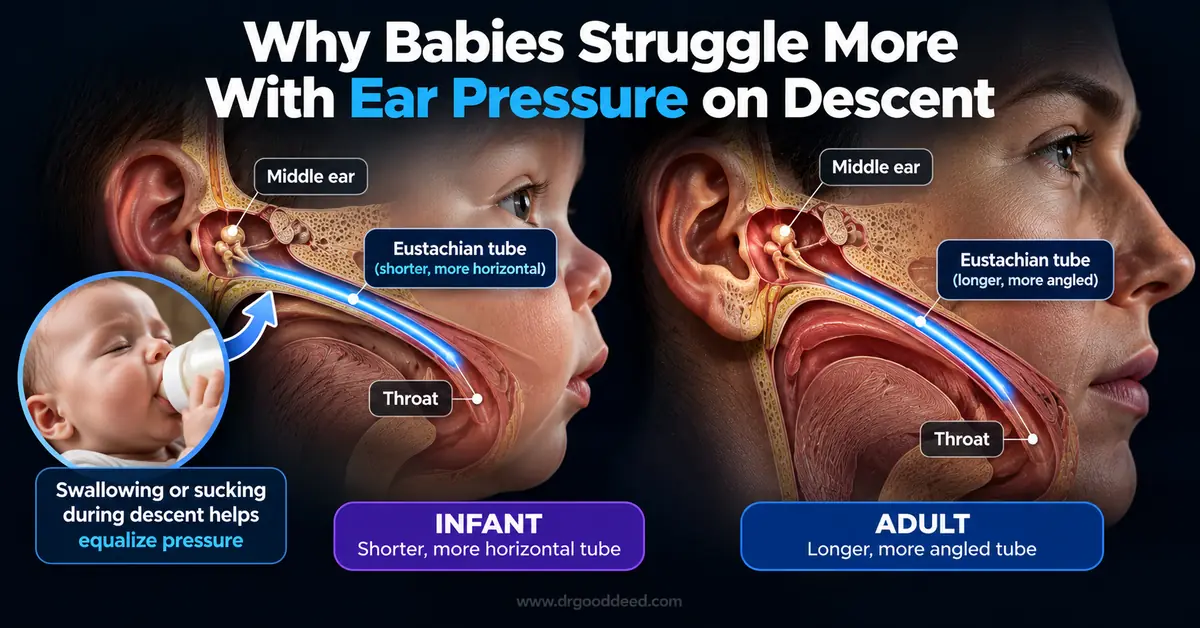
Newborns have shorter, more horizontal Eustachian tubes than adults, making it harder for them to equalize cabin pressure changes. The Eustachian tube is the small channel linking the middle ear to the back of the throat, and it opens when you swallow. Newborn ear pressure flying is really a swallowing problem, because adults chew gum or yawn on purpose, and babies cannot.
- Feed during descent: Breast, bottle, or pacifier makes your baby suck and swallow, which helps open the tubes so air can pass. Descent is the harder phase because pressure builds outside the ear while the tube tends to stay shut.
- Start early: Begin when the plane starts descending, not after your baby is already crying.
- Sleeping babies swallow less: If your baby wakes and fusses during descent, offer a feed or pacifier.
- Expect brief fussiness: Crying and ear-pulling around landing are common and usually settle soon after.
- Know the warning signs: Fever, ear drainage, or crying that continues for a day after landing needs a call to your pediatrician.
Research on infant ear pressure techniques is limited. The feeding advice rests on how the ear works and on clinical practice, not on large trials.
What to Pack for a Newborn’s First Flight
Packing for traveling with newborn babies is mostly about covering delays, since flights, layovers, and security lines all run longer than planned. Pack for twice the trip time.
- Bring one diaper per flight hour, plus extras for delays.
- Pack a full change of clothes for baby and for you.
- Bring extra formula or pumped milk, since TSA allows reasonable amounts over 3.4 ounces.
- Carry a baby sling or carrier, but remove it for takeoff and landing.
- Keep the birth certificate handy, and a passport for international trips.
- Include a digital thermometer and your pediatrician’s phone number.
- Add a light blanket, since cabins run cool.
- Pack spare pacifiers, wipes, and bags for soiled clothes.
For everything else you should carry alongside baby supplies, see our travel pharmacy checklist.
When Your Baby Needs Medical Clearance Before Booking
If they were born early or have a health condition, only after their doctor says they should be boarded on the plane. Premature infants and babies with heart or lung problems need clearance first.
- A history of premature birth (birth before 37 weeks).
- Infant respiratory distress syndrome, or IRDS (a breathing problem caused by underdeveloped lungs), or other lung immaturity.
- A diagnosed congenital heart condition (a heart problem present from birth).
- Any illness or fever in the days before the planned flight.
Cabin air holds less oxygen than air at sea level, so for some babies with lung or heart problems, specialists may order an altitude simulation test. Ask your pediatrician or family doctor before traveling with newborn babies if any of these apply.
Vaccines, RSV, and Germs: Protecting a Baby Who Isn’t Fully Immunized
Newborns fly with very little vaccine protection, so germ planning matters as much as the flight. Most routine vaccines start at 2 months, which leaves a gap that adults around your baby can help cover.
- Measles: Babies under 6 months cannot get the MMR vaccine. The CDC recommends an early dose from 6 months for international trips, so an outbreak destination is a real concern for a younger baby.
- RSV: Respiratory syncytial virus is a common virus that can cause serious breathing trouble in young babies. Ask whether your baby is covered through a maternal vaccine given late in pregnancy or an antibody injection, especially in RSV season.
- Adult vaccines: Ask everyone who will hold your baby to be current on Tdap (whooping cough) and flu shots.
- Hand hygiene: Wash or sanitize hands before touching your baby, and ask visitors not to kiss their face.
Expert Insight:
In babies under 3 months, a rectal temperature of 100.4°F (38°C) or higher is treated as urgent regardless of how well the baby looks, because a young infant’s immune system can mask serious infection behind mild symptoms. That is why a fever in an unfamiliar city matters more than the flight itself.
FAQs
What is the earliest age a pediatrician will typically allow a healthy newborn to fly?
Airlines allow travel from about 7 days, but many pediatricians prefer 8 weeks. Earlier trips are sometimes approved for emergencies or relocations, case by case. For traveling with newborn babies, ask your own pediatrician.
Can travel stress affect a nursing newborn’s digestion?
Yes, indirectly, though evidence is limited. When traveling with newborn babies, rushed feeds, swallowed air, and shifted schedules more plausibly cause extra gas or spit-up. Burp often, and call your pediatrician if wet diapers drop.
Is it safe to use over-the-counter ear drops for a baby before a flight without asking a pediatrician?
No. Ear drops do not prevent pressure problems, and an infant’s ear pain can signal infection. For newborn ear pressure flying, feeding during descent is the safer approach.
Sources
- Premier Pediatrics: Flying With an Infant link
- FAA: Child Safety on Airplanes link
- TSA: Traveling With Children link
- CDC Travel Health link
- CDC: RSV Prevention link
- American Academy of Pediatrics: HealthyChildren.org link
Medical Disclaimer: This article is for general information only and is not medical advice. It does not replace a diagnosis, treatment plan, or guidance from a qualified healthcare professional. Always talk to your doctor about your own symptoms and before starting, stopping, or changing any treatment. If you think you may be having a medical emergency, call 911 or go to your nearest emergency room.