
Constipation during the menstrual period is a hormonally driven event that affects more than 73% of women with regular bowel movements, according to peer-reviewed data. If you ask, can periods cause constipation, the answer is yes, and the mechanism is well-documented in gastroenterology research.
This guide covers the exact mechanisms behind digestive changes during menstruation, who is most at risk, which foods help period-related constipation, and what actually works for relief.
Digestive Changes During Menstruation
Digestive changes during menstruation are driven by three hormones: progesterone, estrogen, and prostaglandins. Each one hits your gut differently depending on where you are in your cycle. Bowel movements can shift from slow and hard before your period to looser once bleeding starts.
The Role of Progesterone
Progesterone relaxes smooth muscle tissue. Your intestines are made of smooth muscle. When progesterone rises after ovulation, gut motility slows, food sits in the colon longer, and water is pulled from stool, making it harder and drier.
A 2022 review by Alqudah et al. in Physiologia Researchia confirmed progesterone’s inhibitory role on gastrointestinal motility. A study by Wald et al., referenced in a 2021 Cureus review by Pati et al. (Cureus 13(1): e12692), found significantly longer gut transit during the luteal phase, directly linking high progesterone to constipation during menstrual period.
The Effects of Estrogen Fluctuations
Estrogen affects gut motility through receptor-dependent and receptor-independent pathways, activating potassium channels and inhibiting calcium channels in intestinal muscle cells.
A study in Korean Journal of Internal Medicine by Jung HK, Kim DY, and Moon IH (2003) found colonic transit time was measurably longer when estrogen and progesterone both fluctuate.
Prostaglandins and Gut Motility
When your period starts, progesterone drops. Simultaneously, the uterine lining releases prostaglandins (specifically PGF2a). Those same prostaglandins hit your intestines. Pati et al. (2021, Cureus) confirms PGF2a stimulates GI motility directly, explaining why many women shift from constipation during menstrual period to loose stools on Day 1 or 2 of bleeding.
Why Some Women Experience Bloating and Constipation
Progesterone receptors exist throughout the gastrointestinal tract. When progesterone binds to them in the luteal phase, it also shifts gut microbiome composition, increasing gas production and worsening bloating even when transit is only mildly delayed.
How the Menstrual Cycle Influences Digestion
A 2020 study in BMC Women’s Health measured stool form using the Bristol Stool Form Scale in 78 healthy women across a full cycle. Bristol Stool Scores were lowest on Day -2, confirming transit was slowest in the 2 days before bleeding.
| Cycle Phase | Dominant Hormone | Gut Effect |
| Follicular (Days 1–13) | Estrogen rising | Transit normalizes |
| Luteal (Days 15–28) | Progesterone high | Transit slows, stools harden |
| Menstruation (Days 1–5) | Progesterone drops; PGF2a rises | Looser stools or urgency |
Symptoms of Period-Related Constipation
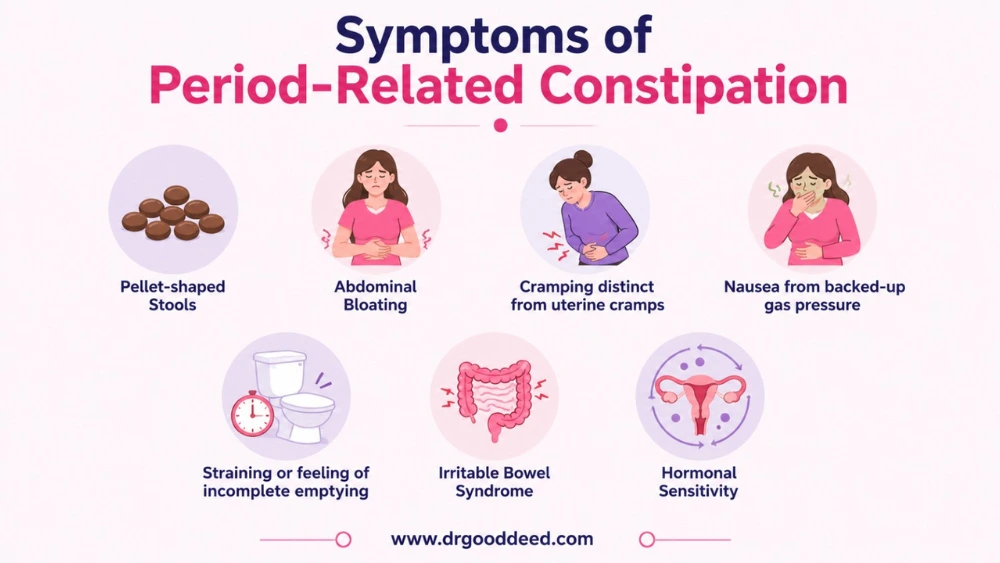
Constipation during menstrual period peaks 2–3 days before bleeding and typically resolves within the first 24–48 hours of the period itself. Recognizing the full symptom profile separates normal cycle-related changes from signs of something more serious.
Common symptoms include:
- Fewer than 3 bowel movements per week in the week before your period
- Hard, dry, or pellet-shaped stools
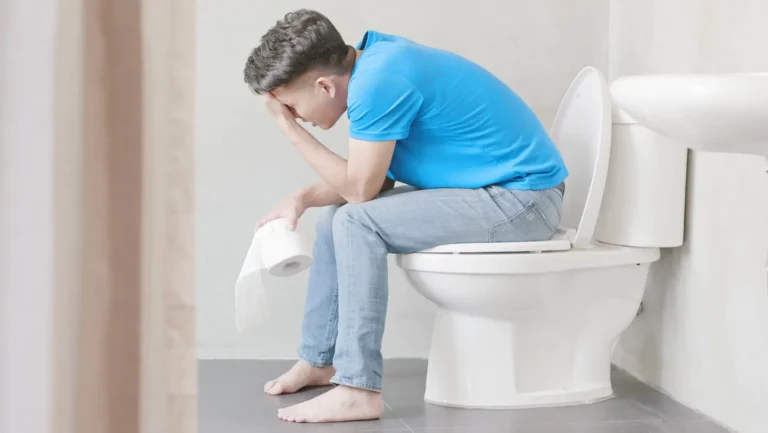
- Straining or feeling of incomplete emptying
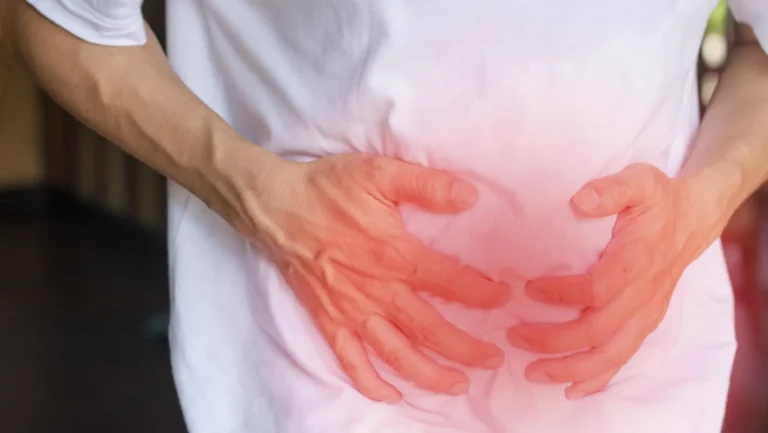
- Abdominal bloating or visible distension
- Cramping distinct from uterine cramps (lower, central)
- Nausea from backed-up gas pressure
Research from the Clue app team found 58% of women with normally regular bowel movements experience period-related bowel changes before, during, or after menstruation.
Risk Factors for Constipation During Menstruation
Not every woman experiences constipation during menstrual period at the same intensity. Several factors determine how strongly hormonal shifts affect the bowels.
Hormonal Sensitivity
Some women have higher concentrations of progesterone receptors in their colon wall. They experience transit slowing more intensely during the luteal phase. This is a biological variation, not a disorder.
Low Fiber Intake
Women in the USA average 10–15 grams of fiber daily, well below the recommended 25 grams. Low fiber means stools have less bulk, so any hormonal slowing hits harder.
Inadequate Hydration
The colon absorbs water from stool. When total body water is low and transit is already slowed by progesterone, stool becomes harder faster.
Sedentary Lifestyle
Physical movement stimulates peristalsis. Sitting most of the day removes that mechanical stimulation. Combined with premenstrual fatigue, inactivity worsens stool transit measurably.
Irritable Bowel Syndrome (IBS)
Women with IBS are disproportionately affected. The 2021 Cureus meta-analysis confirmed IBS patients report more GI symptoms during the menstrual phase than at any other point in their cycle.
Existing Digestive Disorders
Hypothyroidism, pelvic floor dysfunction, and celiac disease already slow gut transit. Luteal-phase progesterone on top of an already sluggish system intensifies constipation during menstrual period significantly.
How to Relieve Constipation During Your Period
Knowing how to relieve constipation during your period works best when you start before symptoms peak. Beginning around Day 18–20 of the cycle is more effective than waiting.
Increasing Daily Water Intake
Target 2.5–3 liters of total fluid daily during the luteal phase. Warm water first thing in the morning activates the gastrocolic reflex, triggering colon contractions that initiate bowel movement.
Eating More Fiber Gradually
Add fiber slowly to avoid gas. The best foods that help period-related constipation are high in soluble fiber: oats, flaxseed, and pears. A 2020 Nutrients review identified psyllium husk and kiwifruits as the most clinically effective for improving stool frequency.
Maintaining Regular Meal Times
Eating at consistent times reinforces the gastrocolic reflex. Irregular eating delays the colon’s natural post-meal contraction signal.
Using Heat for Abdominal Comfort
A heating pad on the lower abdomen relaxes abdominal muscles and reduces backed-up gas pressure. It does not directly speed transit but reduces enough discomfort to let the defecation reflex work.
Establishing Healthy Bathroom Habits
Sitting with feet raised 6–8 inches (a step stool) changes the anorectal angle from roughly 90 degrees to about 35 degrees, straightening the passage and reducing strain.
Natural Remedies for Period Constipation
Several natural options have evidence behind them, each working through a different mechanism.
Magnesium citrate (250 mg nightly, starting Day 18): Draws water into the colon osmotically, softening stool. A Nutrients journal review confirmed it improves spontaneous bowel movements and stool formation versus placebo.
Triphala (750 mg before bed): A blend of amla, haritaki, and bibhitaki. A 2011 clinical trial in Journal of Alternative and Complementary Medicine by Tarabar et al. found significant improvement in constipation frequency and stool consistency.
Kefir and fermented foods: Progesterone disrupts gut microbiome composition during the luteal phase. Daily kefir or kimchi replenishes beneficial bacteria and buffers that disruption.
Ginger tea (2 cups daily): Gingerols stimulate gastric emptying and reduce nausea. A 2019 study in Evidence-Based Complementary and Alternative Medicine confirmed accelerated gastric emptying with ginger supplementation.
Exercise for menstrual constipation: 30 minutes of brisk walking daily stimulates peristalsis mechanically and reduces cortisol, which suppresses gut motility when high.
Yoga’s supine twist (supta matsyendrasana) compresses the colon directly. Timing matters: exercise for menstrual constipation is most effective started consistently around Day 15 of the cycle.
When Period Constipation May Signal Another Condition
Constipation during menstrual period that worsens every cycle, or that does not resolve when bleeding starts, may not be hormone-related alone. Specific conditions that mimic or amplify menstrual constipation require clinical evaluation.
Key conditions to consider:
- Bowel endometriosis: Lesions on or near the bowel cause cyclical constipation tracking tightly with menstruation. A 2023 study in BMC Women’s Health found bowel endometriosis symptoms overlap IBS symptoms so closely that diagnosis is delayed an average of 7–10 years in the USA.
- Pelvic floor dysfunction: A too-tight pelvic floor physically blocks defecation and worsens during menstruation because of increased pelvic muscle tension.
- Hypothyroidism: Slow thyroid function slows whole-body metabolic rate, including gut motility. Period-related slowing compounds an existing baseline deficit.
- Celiac disease: Gluten-related intestinal inflammation disrupts normal transit and is worsened by hormonal fluctuations.
When to See a Doctor
Most constipation during menstrual period resolves once bleeding begins. See a doctor when that pattern breaks.
Seek evaluation if:
- Constipation lasts longer than 5–7 days without relief
- Blood appears in stool unrelated to menstrual flow
- Rectal pain or pressure worsens with each cycle
- Unexplained weight loss accompanies digestive changes
- Two full cycles pass without improvement from fiber and hydration changes
A gastroenterologist or gynecologist can screen for endometriosis, pelvic floor dysfunction, IBS, or thyroid disease, all conditions requiring specific treatment rather than lifestyle management alone.
FAQs
1. Can periods cause constipation?
Yes. Can periods cause constipation? Absolutely, and the mechanism is clear: progesterone rises after ovulation and slows gut transit. A 2020 BMC Women’s Health study of 78 women confirmed Bristol Stool Scores hit their lowest point two days before menstruation.
2. Why do I get constipated during my menstrual period?
The luteal phase (Days 15–28) produces high progesterone, which relaxes intestinal smooth muscle and cuts contraction frequency. Food moves slower, water is over-absorbed from stool, and stools harden. The effect reverses once bleeding begins.
3. What digestive changes occur during menstruation?
Constipation peaks 2–3 days pre-period. Once bleeding starts, PGF2a prostaglandins stimulate intestinal contractions, causing loose stools or urgency in the first 1–2 days. Bloating is highest during the luteal phase.
4. How can I relieve constipation during your period?
Knowing how to relieve constipation during your period starts with timing: magnesium citrate (250 mg nightly) from Day 18, warm water each morning to trigger the gastrocolic reflex, and psyllium husk at meals.
5. What foods help period-related constipation?
Two kiwifruits daily and 4–6 prunes are the strongest single-food options. A 2020 Nutrients review named kiwifruits and psyllium husk as most effective for stool frequency. The foods that help period-related constipation most reliably are soluble fiber sources.
6. What exercise is best for menstrual constipation?
Brisk walking for 30 minutes daily. Exercise for menstrual constipation stimulates peristalsis mechanically and lowers cortisol, which suppresses gut motility when high. Yoga’s supine twist (supta matsyendrasana) compresses the colon directly and helps gas expulsion.
7. Is constipation more common before or during a period?
Before. Progesterone peaks 2–5 days pre-period, which is when constipation during menstrual period is worst. Most women shift to looser stools within 24–48 hours of bleeding starting.
8. Can hormonal changes slow bowel movements?
Yes, specifically progesterone. Alqudah et al. (2022) in Physiologia Researchia confirmed progesterone binds colon receptors and suppresses smooth muscle contraction frequency as a direct mechanism, not a side effect.
9. Does PMS contribute to constipation?
Yes. PMS and luteal-phase constipation share the same driver: high progesterone. PMS also raises cortisol, which independently suppresses gut motility. The mood symptoms and bowel slowdown happen simultaneously for the same reason.
10. Can dehydration make period constipation worse?
Yes. The colon has more time to pull water from stool when transit is already slowed by progesterone. Minimum 2.5 liters of fluid daily during the luteal phase keeps stools softer and prevents the hardening cycle.
Sources:
- Pati et al. “Irritable Bowel Syndrome and the Menstrual Cycle.” Cureus 13(1): e12692. 2021.
- Alqudah M et al. “Progesterone inhibitory role on gastrointestinal motility.” Physiologia Researchia. 2022;71(2):193-198.
- “Stool frequency and form by day of menstrual cycle.” BMC Women’s Health. 2020.
- Jung HK, Kim DY, Moon IH. “Effects of gender and menstrual cycle on colonic transit time.” Korean J Intern Med. 2003;18:181–186.