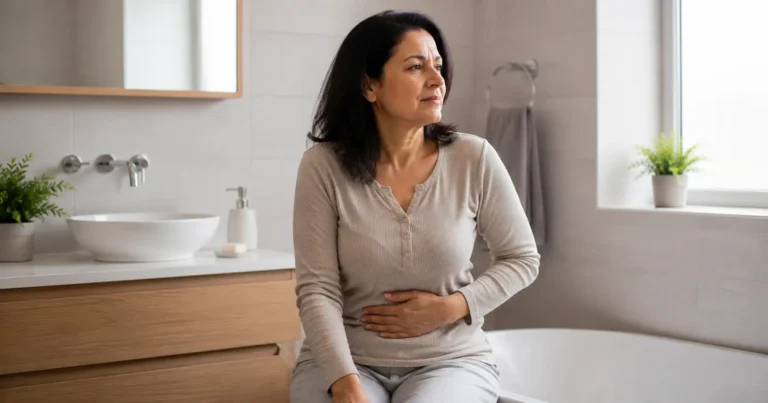

Most women ask how long does menopause last, but menopause itself lasts a single day, the day marking 12 consecutive months since your last period. What people usually mean by the question is the whole transition, and that runs far longer. Perimenopause alone averages four to eight years, and symptoms can continue well into postmenopause.
What “Menopause” Actually Means
Menopause is a single point in time, not a phase you live through for years. Doctors confirm it only in hindsight, after 12 consecutive months without a period, with no other medical explanation. That one date marks the permanent end of ovulation and menstrual cycles. Your ovaries have essentially stopped releasing eggs and producing meaningful amounts of estrogen and progesterone.
Everything people commonly call “menopause symptoms,” including hot flashes, mood swings, and irregular bleeding, actually happens during the years before that date (perimenopause) or the years after it (postmenopause). The word menopause describes a moment. The lived experience spans years, which is the real answer behind how long does menopause last.
Menopause vs. Perimenopause vs. Postmenopause
People say “I’m going through menopause” when they mean perimenopause, the transition where hormones fluctuate unpredictably. Perimenopause starts first, often in the 40s, and brings the irregular periods and hot flashes people associate with “menopause.” Menopause is the single date 12 months after your last period. Postmenopause is everything after that date, for the rest of your life. Estrogen stays low permanently once you reach postmenopause, but the sharpest symptoms usually fade over time. Perimenopause is the buildup. Menopause is the turning page. Postmenopause is the chapter that follows. Only one of these three stages is a moment. The other two last for years, and that distinction is exactly why menopause length is so often misunderstood.
How Long Does the Full Transition Take?
Add perimenopause and the early postmenopause years together, and the full menopausal transition typically runs eight to ten years. Some women move through it in four years. Others take fifteen. Genetics, smoking status, and even the age your mother reached menopause all shape your personal menopause duration.
Perimenopause: the Longest Phase
Perimenopause duration averages four years, according to the American College of Obstetricians and Gynecologists, though it commonly ranges from two to ten years. Most women enter perimenopause in their mid-40s, though it can start as early as the mid-30s or as late as the early 50s. Estrogen does not decline in a straight line during this stage. It surges and dips unevenly from month to month, which is why periods become unpredictable and symptoms come and go instead of building steadily. The final one to two years of perimenopause usually bring the sharpest hormone swings and the most noticeable symptoms.
Menopause Itself: a Single Point in Time
Menopause is confirmed retroactively. You will not know you have reached it until a full year has passed with zero periods or spotting. No blood test reliably pinpoints the exact day for most women over 45. Once you hit that 12-month mark, the diagnosis is official and you are now postmenopausal. This single-day definition matters clinically, since it is the reference point doctors use to track symptom duration and calculate long-term risks such as bone loss and heart disease.
Postmenopause: What Comes After
Postmenopause begins immediately after that 12-month mark and lasts for the rest of your life. Estrogen stays low permanently, but that does not mean symptoms last forever. Hot flashes and night sweats typically continue for several more years before easing, while effects like vaginal dryness and bone density loss tend to persist or worsen without treatment. The first four to eight years after menopause carry the fastest rate of bone loss, according to ACOG, which is why bone health screening matters most in early postmenopause.
How Long Do Menopause Symptoms Last?
Symptom duration and transition duration are not the same question. The transition technically ends once you hit 12 months without a period, yet hot flashes duration commonly outlasts that milestone by years. Sleep problems, mood changes, and vaginal dryness follow separate timelines of their own, and some only show up after periods have already stopped.
Hot Flashes and Night Sweats
This is where most people underestimate the timeline. The Study of Women’s Health Across the Nation, a large NIH-funded cohort that tracked over 1,400 women with frequent hot flashes across 17 years, found a median total duration of 7.4 years. Roughly half of women dealt with symptoms longer than that, some for 14 years or more.
Timing matters more than almost anything else. Women whose hot flashes started while periods were still regular, during early perimenopause, had a median total duration of 11.8 years, with about nine of those years falling after their final period. Women whose hot flashes waited until after periods had already stopped had a much shorter median duration of 3.4 years.
So can symptoms last more than 10 years? Yes. About one in three women in the SWAN study experienced hot flashes for over a decade, and Black women in the cohort had the longest median duration, at 10.1 years, compared with 6.5 years among white women.
Symptoms Before vs. After Your Final Period
Symptoms do not divide neatly at the 12-month mark. Hot flashes, night sweats, and mood swings often peak in late perimenopause, in the year or two right before your final period, then continue at lower intensity into early postmenopause. Vaginal dryness and urinary symptoms tend to follow the opposite pattern. They are usually mild during perimenopause and worsen gradually afterward, since they stem from sustained low estrogen rather than fluctuating hormones.
Sleep disruption can trace back to either pattern, tied to night sweats early on and to independent aging changes later. Knowing which symptoms belong to which phase helps you and your doctor decide what actually needs treatment.
Factors That Make Symptoms Last Longer
A handful of factors reliably predict a longer symptomatic stretch. Starting hot flashes early, during regular cycles or early perimenopause, is the single strongest predictor. Higher body weight, smoking, and higher baseline stress or anxiety are all linked to longer, more severe vasomotor symptoms in SWAN data. Race and ethnicity also play a documented role, with Black women experiencing the longest median duration and Japanese women in the SWAN cohort the shortest.
Average Age When Menopause Starts
The average age of menopause in the United States falls between 51 and 52, according to ACOG and the National Institute on Aging. Most women reach it somewhere between 45 and 55. Genetics is the strongest predictor of your own timing, so your mother’s and sisters’ experiences offer a reasonable clue.
Smoking can push menopause earlier, sometimes by a year or two, since chemicals in cigarette smoke accelerate the loss of ovarian follicles. Surgical removal of both ovaries causes surgical menopause, an immediate and often more intense onset, since estrogen drops abruptly instead of gradually.
Early and Premature Menopause
Menopause before age 45 is classified as early menopause. Menopause before age 40 is classified as premature menopause, sometimes called primary ovarian insufficiency, and it affects roughly 1% of women, according to the Federal Office on Women’s Health.
Causes include genetics, autoimmune conditions, chemotherapy, pelvic radiation, and surgical removal of the ovaries. Because estrogen loss happens decades earlier than average, women with early or premature menopause face a longer stretch of low-estrogen years and a higher long-term risk of osteoporosis and cardiovascular disease.
What Helps Manage or Shorten Symptoms
No treatment shortens the biological transition itself, but several options reduce how disruptive symptoms feel while your body moves through it. The right approach depends on symptom severity, personal health history, and how much daily relief you actually need.
Lifestyle Approaches
Simple changes help many women, even without eliminating symptoms entirely. Cutting back on caffeine, alcohol, and spicy food reduces hot flash triggers for some. Regular exercise supports sleep quality, bone density, and mood, all of which take a hit during this transition. Layered clothing and a cool bedroom make night sweats more manageable.
Mind-body practices, including cognitive behavioral therapy and mindfulness training, have shown measurable benefit for hot flash bother in NIH-supported research, even when they do not reduce how often flashes occur. Maintaining a healthy weight matters too, since women with higher body mass index tend to report more frequent, more severe hot flashes.
Hormone Therapy and Medical Options
Hormone therapy remains the most effective treatment for hot flashes, night sweats, and vaginal dryness, according to both ACOG and the Menopause Society. It replaces the estrogen your ovaries no longer produce, and progesterone is added if you still have a uterus, to protect against uterine cancer.
For women under 60 or within ten years of their final period, benefits generally outweigh risks for most healthy candidates. Nonhormonal prescription options exist too, including certain antidepressants originally developed for depression and anxiety, along with newer nonhormonal drugs approved specifically for moderate to severe hot flashes. None of these decisions are one-size-fits-all.
Personal health history, including any history of blood clots, breast cancer, or heart disease, determines which options are appropriate, so this conversation belongs with a doctor who knows your full history.
When to See a Doctor
Talk to a healthcare provider if hot flashes or night sweats disrupt sleep or daily functioning, if periods become unusually heavy or frequent, or if you notice any bleeding after you have already gone 12 consecutive months without a period, since postmenopausal bleeding always warrants evaluation.
Seek care sooner if symptoms start before age 45, since that timing changes both the diagnostic workup and the long-term health plan. A doctor can also rule out thyroid conditions, which mimic hot flashes and mood changes closely enough to cause real diagnostic confusion. Symptoms that affect quality of life do not have to just be waited out.
Sources
- American College of Obstetricians and Gynecologists. The Menopause Years.
(https://www.acog.org/womens-health/faqs/the-menopause-years) - National Institute on Aging (NIH). What Is Menopause?
(https://www.nia.nih.gov/health/menopause/what-menopause) - National Institute on Aging (NIH). Hot Flashes: What Can I Do?
(https://www.nia.nih.gov/health/menopause/hot-flashes-what-can-i-do) - Avis NE, et al. Duration of Menopausal Vasomotor Symptoms Over the Menopause Transition. Study of Women’s Health Across the Nation (SWAN), PubMed.
(https://pubmed.ncbi.nlm.nih.gov/25686030/) - Mayo Clinic Press. Explaining the Stages of Menopause.
(https://mcpress.mayoclinic.org/menopause/explaining-the-stages-of-menopause/) - Cleveland Clinic. Perimenopause.
(https://my.clevelandclinic.org/health/diseases/21608-perimenopause) - Office on Women’s Health, U.S. Department of Health and Human Services. Menopause Basics.
(https://womenshealth.gov/menopause/menopause-basics) - Office on Women’s Health, U.S. Department of Health and Human Services. Early or Premature Menopause.
(https://womenshealth.gov/menopause/early-or-premature-menopause) - Office on Women’s Health, U.S. Department of Health and Human Services. Menopause Treatment.
(https://womenshealth.gov/menopause/menopause-treatment) - Mayo Clinic News Network. Perimenopause Transitions and Concerns.
(https://newsnetwork.mayoclinic.org/discussion/mayo-clinic-q-and-a-perimenopause-transitions-and-concerns/)