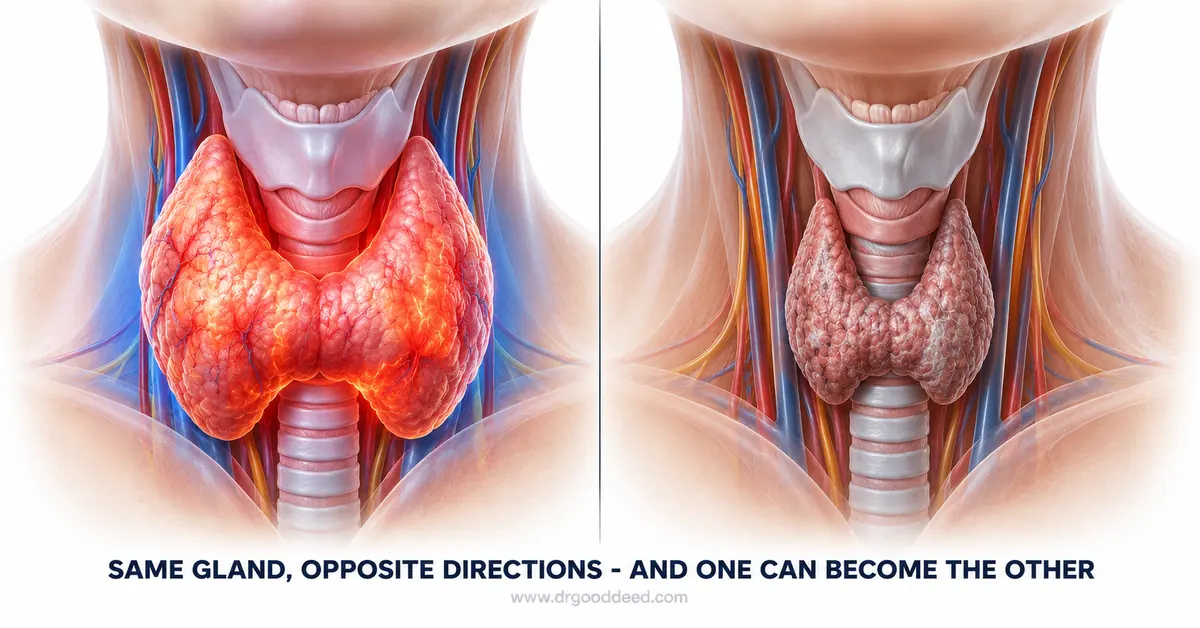

Both Graves’ disease and Hashimoto’s disease are autoimmune conditions that attack the thyroid, but they push it in opposite directions. Graves’ disease speeds the thyroid up and causes hyperthyroidism. Hashimoto’s disease slows it down and causes hypothyroidism.
In the United States, Graves’ disease is the leading cause of hyperthyroidism, and Hashimoto’s is the leading cause of hypothyroidism. This guide covers Graves’ disease vs. Hashimoto’s disease causes, symptoms, diagnosis, treatment, and the lesser-known fact that one condition can sometimes turn into the other.
Key Takeaways
- Understanding hyperthyroidism vs hypothyroidism causes starts here: Graves’ disease causes an overactive thyroid, while Hashimoto’s causes an underactive thyroid.
- Both fall under autoimmune thyroid disease, meaning the immune system mistakenly targets thyroid tissue.
- A blood test for thyroid antibodies, not symptoms alone, confirms which condition a person has.
- Symptoms rarely overlap directly. Graves’ brings weight loss and a racing heart. Hashimoto’s brings weight gain and fatigue.
- You can have Graves and Hashimoto’s at the same time. Some patients test positive for both antibody types, though this remains uncommon.
- Documented case reports confirm a person can develop one condition after already having the other, though this is uncommon.
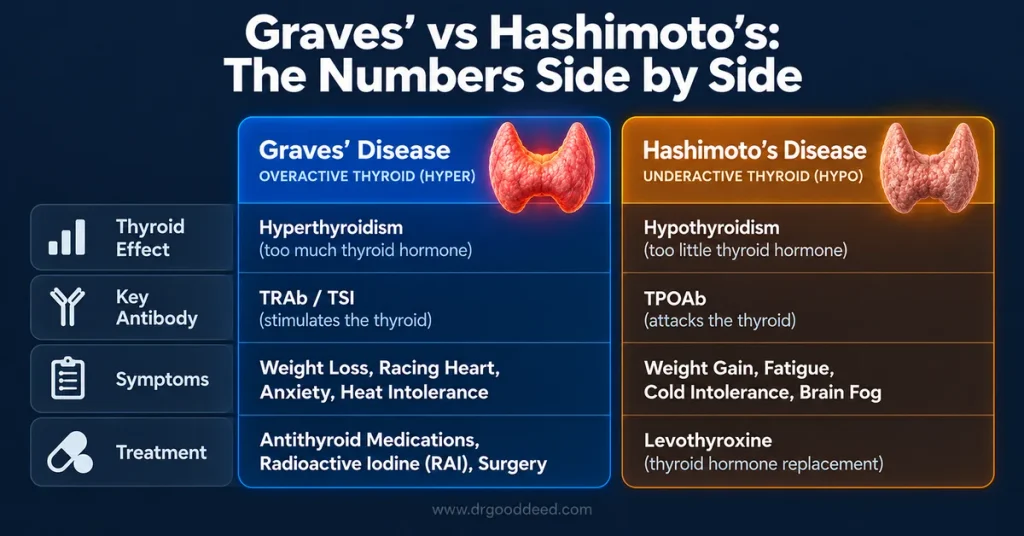
Graves’ vs Hashimoto’s at a Glance (Comparison Table)
Both Graves’ disease and Hashimoto’s disease start with an immune system malfunction, but the antibodies involved, the thyroid hormone output, and the standard treatment path differ sharply between them.
| Feature | Graves’ Disease | Hashimoto’s Thyroiditis |
| Thyroid effect | Hyperthyroidism (overactive) | Hypothyroidism (underactive) |
| Key antibodies | TSH receptor antibodies (TRAb/TSI) | Thyroid peroxidase antibodies (TPOAb) |
| Common symptoms | Weight loss, rapid heartbeat, anxiety, heat intolerance, bulging eyes | Weight gain, fatigue, cold intolerance, constipation, dry skin |
| Typical treatment | Antithyroid medication, radioactive iodine, or surgery | Levothyroxine replacement |
What Causes Each Condition
Graves’ disease vs Hashimoto’s disease starts with the immune system producing antibodies against the thyroid gland instead of protecting the body from real threats. What those antibodies actually do to the gland is where the two conditions split apart completely.
- Graves’ disease is driven by TSH receptor antibodies that bind to the thyroid and mimic thyroid-stimulating hormone. Instead of regulating hormone output, these antibodies push the gland into overdrive, causing it to release far more thyroid hormone than the body needs.
- Hashimoto’s disease works through a slower, destructive process. Antibodies, mainly against thyroid peroxidase, gradually damage thyroid tissue over months or years, which reduces the gland’s ability to produce hormone until hypothyroidism develops.
- Family history matters for both. A relative with any autoimmune thyroid condition raises a person’s risk of developing either one.
- Neither condition is caused by diet alone, though iodine intake can influence disease activity once a person already has Graves’ disease. People managing symptoms alongside Graves’ disease and hyperthyroidism diet plan should track iodine sources carefully, since excess iodine can worsen hyperthyroidism.
- Both conditions are more common in women, and both can appear at any age, though Hashimoto’s most often surfaces in middle adulthood.
Neither Graves’ nor Hashimoto’s develops overnight. The antibody activity behind each condition typically builds for months before symptoms become noticeable, which is one reason routine bloodwork catches cases that symptoms alone would miss.
Symptoms: How to Tell Them Apart
Because Graves’ disease and Hashimoto’s disease pull thyroid hormone levels in opposite directions, their symptoms rarely look alike. Recognizing which cluster you are experiencing is the first practical step toward getting the right blood test ordered.
- Graves’ disease symptoms reflect a sped-up metabolism: unintentional weight loss, a rapid or irregular heartbeat, hand tremors, anxiety, heat intolerance, and heavier sweating than usual.
- A distinct feature of Graves’ disease is eye involvement. NIDDK reports that more than one in three people with Graves’ develop Graves’ ophthalmopathy, which can cause bulging eyes, double vision, or eye pain.
- Hashimoto’s disease symptoms reflect a slowed metabolism: gradual weight gain, persistent fatigue, cold intolerance, constipation, dry skin, and thinning hair.
- Both conditions can enlarge the thyroid gland into a visible goiter, though it usually is not painful. Some people notice thyroid pain in Hashimoto’s flares, which typically points to a related condition called subacute thyroiditis rather than classic Hashimoto’s itself.
- Some people with Hashimoto’s report lightheadedness tied to fluctuating thyroid hormone; if you’re wondering about the connection between thyroid and dizziness, an antibody panel plus a TSH test is the appropriate next step.
- Mood changes appear in both conditions but present differently. Graves’ tends to cause anxiety and irritability, while Hashimoto’s more often causes low mood, brain fog, and mental sluggishness.
Symptom overlap is minimal by design, since one condition speeds metabolism up and the other slows it down. The exception is fatigue, which shows up in both conditions and is not useful on its own for telling them apart.
Can You Have Both, or Can One Turn Into the Other?
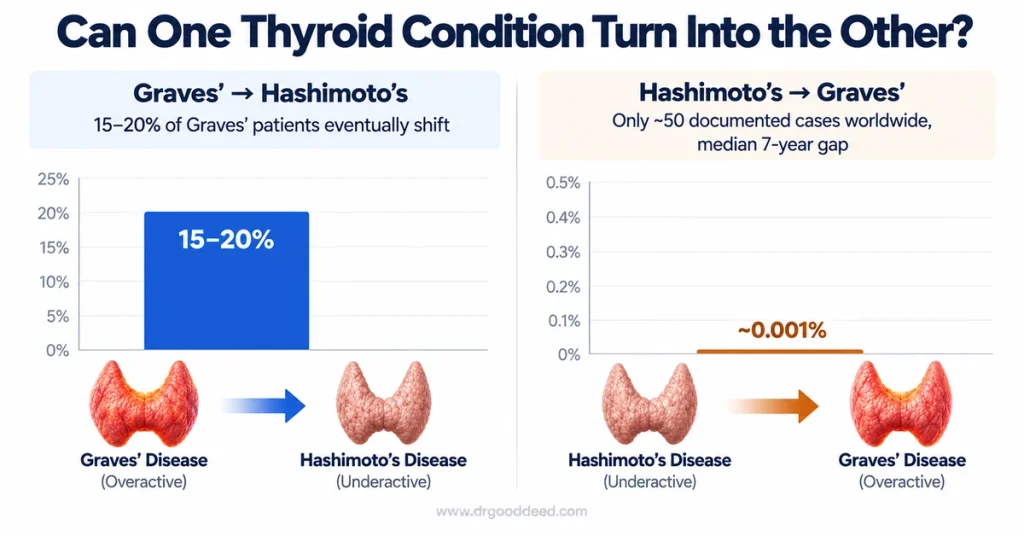
A person diagnosed with one of the Graves’ disease vs. Hashimoto’s disease conditions can later develop the other, and yes, you can have Graves’ and Hashimoto’s at the same time.
- The more common shift runs from Graves’ to Hashimoto’s. A 2023 case review published in the peer-reviewed literature found that roughly 15 to 20 percent of people with Graves’ disease eventually shift toward Hashimoto’s, especially after antithyroid drug treatment changes antibody activity.
- The reverse shift, Graves’ disease turning into hashimoto’s patients developing Graves’ disease afterward, is far rarer. The same literature review identified only about 50 documented cases worldwide, with a median gap of seven years between the original Hashimoto’s diagnosis and the later Graves’ diagnosis.
- Researchers believe the switch happens because the antibodies attacking the TSH receptor can change function over time, shifting from blocking antibodies that suppress the thyroid to stimulating antibodies that overactivate it, or the reverse.
- A person can also carry markers of both conditions simultaneously. Some patients test positive for thyroid peroxidase antibodies and TSH receptor antibodies at once, a pattern sometimes called Hashitoxicosis.
Expert Insight: A single antibody panel taken years after the original diagnosis can miss a slow antibody shift entirely. Clinicians who see a Hashimoto’s patient’s levothyroxine dose suddenly become too high, or a Graves’ patient relapse into unexpected hypothyroidism, should recheck TRAb and TPOAb together rather than assuming treatment failure.
How Each Is Diagnosed
Diagnosis of Graves’ disease vs Hashimoto’s disease depends on a small set of blood tests and, when needed, imaging that shows how the thyroid is behaving in real time.
- TSH test: a low TSH usually points toward Graves’ disease, while a high TSH usually points toward Hashimoto’s, though early-stage cases can show borderline results.
- A thyroid antibody test is the deciding factor. TSH receptor antibodies (TRAb or TSI) confirm Graves’ disease, while thyroid peroxidase antibodies (TPOAb) confirm Hashimoto’s.
- Radioactive iodine uptake scanning shows increased, diffuse iodine uptake across the thyroid in Graves’ disease, a pattern that helps distinguish it from other causes of hyperthyroidism.
- Free T4 and free T3 levels round out the picture, showing whether hormone output is genuinely elevated or suppressed rather than relying on TSH in isolation.
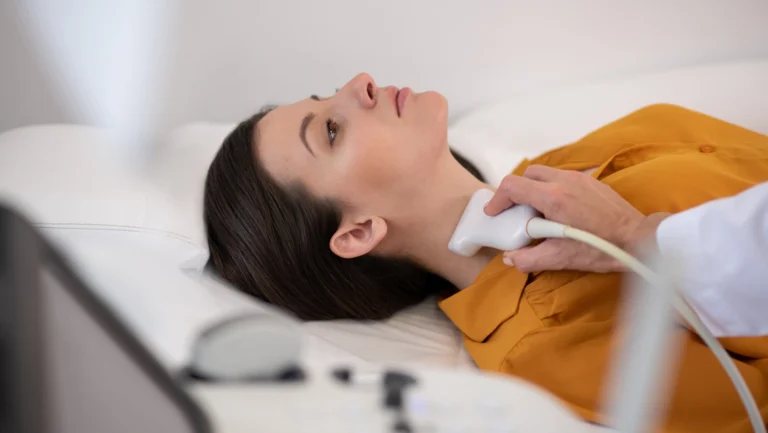
- Ultrasound is sometimes used to check thyroid size, texture, and blood flow, particularly when a thyroid antibody test result is ambiguous or a nodule is suspected.
Because antibody status can shift over the years, doctors managing a known thyroid condition typically repeat testing whenever symptoms change unexpectedly.
How Treatment Differs
Treatment for Graves’ disease vs Hashimoto’s disease aims at slowing an overactive thyroid down or replacing what an underactive thyroid can no longer produce on its own.
- Graves’ disease is generally managed with antithyroid medication to reduce hormone production, radioactive iodine therapy to shrink overactive thyroid tissue, or surgical removal of the thyroid in select cases.
- Beta-blockers are commonly added early in Graves’ disease treatment to control rapid heart rate and tremor while antithyroid medication takes effect.
- Hashimoto’s disease is managed with levothyroxine, a synthetic thyroid hormone that replaces what the damaged gland can no longer produce in adequate amounts.
- Dosing for either condition is never one-size-fits-all; it depends on lab values, body weight, age, and how the person responds, which is why self-adjusting thyroid medication is discouraged.
- Some patients pair their medical treatment with home remedies for thyroid issues such as stress management and consistent sleep, though these support overall wellbeing and do not replace antibody-targeted or hormone-replacement treatment.
Pro Tip: If antibody status has ever shifted between TPOAb-dominant and TRAb-dominant, mention this at every follow-up visit, even years later, since it changes how a clinician interprets a sudden dose change or new hyperthyroid or hypothyroid symptoms.
When to See a Doctor
Anyone with new, persistent thyroid symptoms should ask for a TSH and antibody panel rather than waiting for symptoms to resolve on their own.
- Get evaluated promptly for a racing heart, unexplained weight loss, hand tremors, or eye changes, since these can signal Graves’ disease.
- Get evaluated for persistent fatigue, unexplained weight gain, or cold intolerance, since these often point toward Hashimoto’s.
- Seek care if you already have one diagnosed thyroid condition and develop symptoms that contradict it, such as new heat intolerance in someone with known Hashimoto’s.
- Review the broader list of signs of thyroid problems with your doctor if symptoms are vague or mixed, since thyroid disease often presents subtly at first.
- Pregnant women with any personal or family history of thyroid disease should request thyroid testing early, since untreated thyroid dysfunction during pregnancy carries real risk to both mother and baby.
Sources
- Graves’ Disease – NIDDK link
- Hashimoto’s Disease – NIDDK link
- Hyperthyroidism (Overactive Thyroid) – NIDDK link
- Thyroid Tests – NIDDK link
- Thyroid Disease & Pregnancy – NIDDK link
- Thyrotropin Receptor Antibody, Serum – Mayo Clinic Laboratories link
- Autoimmune Thyroiditis Shifting from Hashimoto’s Thyroiditis to Graves’ Disease – PMC link
- Conversion to Graves Disease from Hashimoto Thyroiditis: A Study of 24 Patients – PMC link
- New-Onset Graves’ Disease in the Background of Hashimoto’s Thyroiditis – PMC link
- A Rare and Unusual Evolution of Hypothyroidism in Hashimoto’s Thyroiditis to Graves’ Disease – PMC link