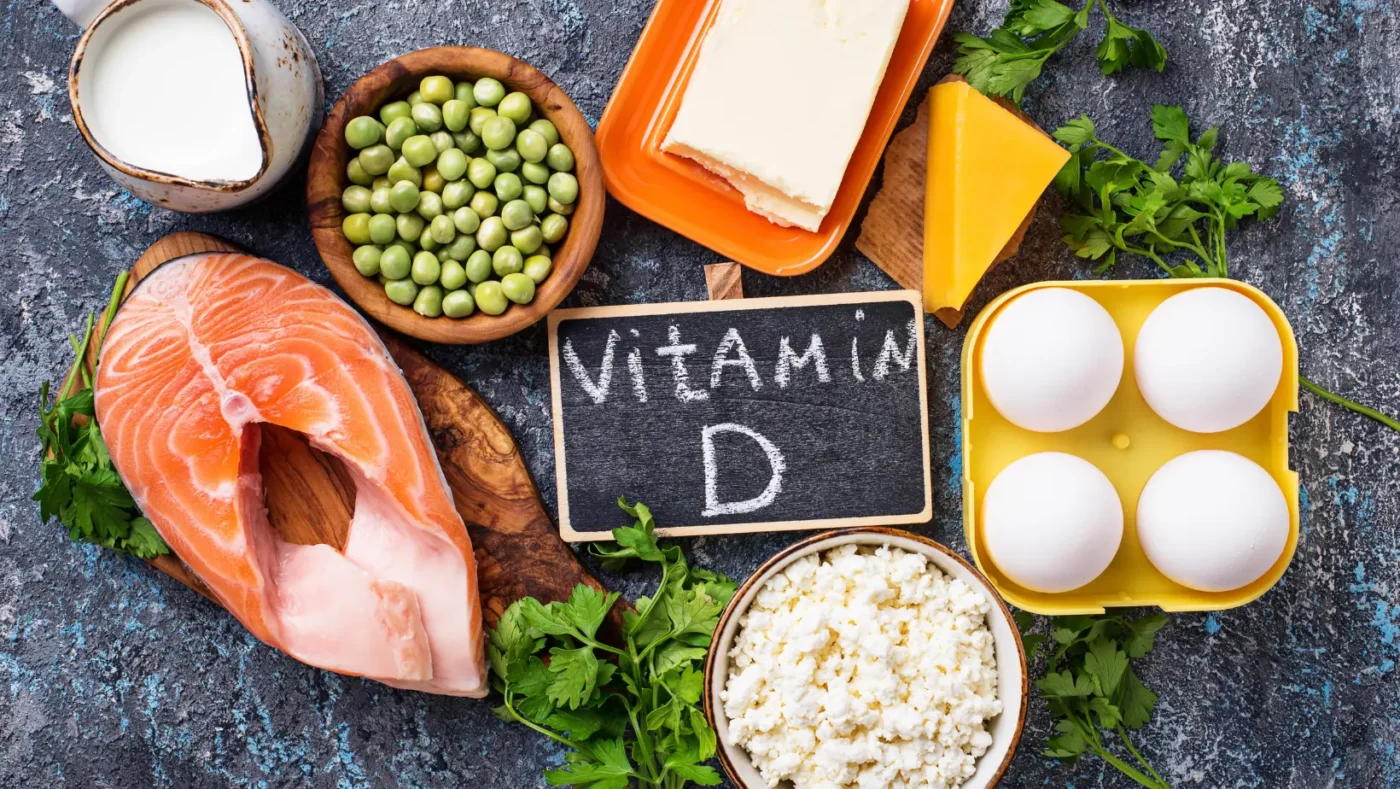

Vitamin D3 foods are the most direct dietary strategy for correcting vitamin D deficiency, which affects 42% of American adults according to data published in Nutrition Research (Forrest & Stuhldreher, 2011).
Unlike vitamin D2 (found in plants), vitamin D3 (cholecalciferol) raises serum 25-hydroxyvitamin D levels roughly 87% more effectively, per a 2012 randomized trial in the American Journal of Clinical Nutrition. Most Americans fall short not because they ignore supplements, but because they don’t know which foods actually deliver meaningful D3 amounts.
Foods Rich in Vitamin D3
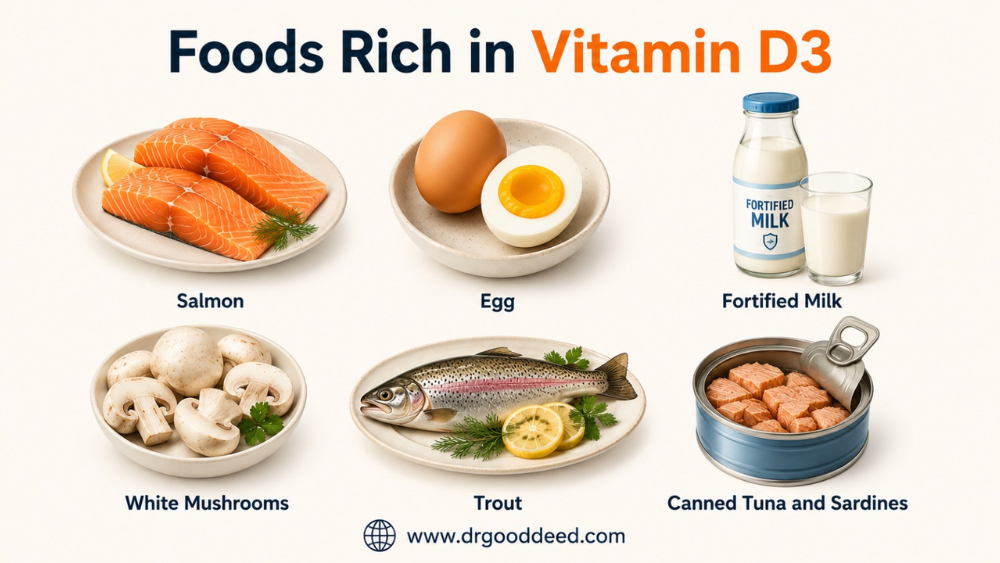
Foods rich in vitamin D3 are almost exclusively animal-based. That’s a nutritional reality that often gets buried under generic “eat more fish” advice. The specific amounts matter, and most blogs don’t give them.
Salmon, Sardines, and Fatty Fish
Wild-caught salmon delivers 988 IU of vitamin D3 per 3.5-ounce serving. Farmed salmon provides roughly 250 IU from the same portion, a 75% difference, because wild fish eat D3-rich plankton. That distinction matters if you’re relying on salmon as a primary source.
Sardines (canned in oil) provide 177 IU per two sardines. Mackerel offers 360 IU per 3.5 oz. Herring averages 214 IU per 3.5 oz. These fatty fish work because D3 is a fat-soluble vitamin and binds to the lipid content during digestion.
Egg Yolks and Dairy Products
One egg yolk from a pasture-raised chicken contains 41 IU of vitamin D3. Conventionally raised chicken eggs average 6 IU. That gap exists because outdoor chickens produce D3 in their skin through sunlight exposure, which transfers into the yolk. The label won’t always tell you this.
Whole milk contains 3 to 4 IU per cup naturally, before fortification. Butter from grass-fed cows averages 60 IU per tablespoon.
Fortified Milk and Cereals
Most Americans get their D3 from fortified vitamin D3 foods like milk and ready-to-eat cereals. U.S. regulations allow dairy manufacturers to add 400 IU per quart of milk. One cup of fortified milk delivers about 100 IU. Some orange juice brands add 100 IU per cup as well.
Fortified cereals range from 40 to 100 IU per serving depending on the brand. Check the Nutrition Facts panel for “Vitamin D” and look for at least 10% of the Daily Value (equal to 80 IU based on the 800 IU DV).
Cod Liver Oil and Liver Sources
Cod liver oil is the most concentrated source of vitamin D3 available without a prescription. One tablespoon contains 1,360 IU of vitamin D3. This exceeds the recommended daily intake (600 to 800 IU for adults) in a single dose. Beef liver provides 42 IU per 3.5 oz, modest but useful as part of a varied diet.
Best Dietary Sources of Vitamin D3
The best dietary sources of vitamin D3 ranked by IU per serving:
| Food | Serving Size | Vitamin D3 (IU) |
| Cod liver oil | 1 tbsp | 1,360 |
| Wild salmon | 3.5 oz | 988 |
| Swordfish | 3.5 oz | 706 |
| Rainbow trout | 3.5 oz | 645 |
| Canned tuna | 3 oz | 268 |
| Mackerel | 3.5 oz | 360 |
| Sardines (canned) | 2 sardines | 177 |
| Fortified milk | 1 cup | 100 |
| Egg yolk (pasture-raised) | 1 yolk | 41 |
| Beef liver | 3.5 oz | 42 |
Animal-Based Vitamin D3 Foods
Animal-based sources provide pre-formed D3, which the body absorbs and converts more readily than plant-derived D2. The liver converts D3 into 25-hydroxyvitamin D (calcidiol), and the kidneys then activate it into calcitriol, the form your bones and immune cells actually use.
Fortified Vegetarian Options
No whole plant food naturally contains vitamin D3. Lichen-derived D3 is now used in some vegan supplements and fortified products. Certain mushrooms (UV-exposed portobello, maitake) provide vitamin D2, not D3. UV-exposed maitake mushrooms offer up to 942 IU of D2 per 3.5 oz, but D2 raises blood levels less efficiently.
Comparing Natural vs Fortified Sources
Natural D3 from fish and eggs comes packaged with fat, which is required for absorption. Fortified vitamin D3 foods like skim milk or low-fat cereals may deliver less effective absorption because fat-soluble vitamins need dietary fat to cross the intestinal wall. Eating fortified cereal with whole milk or adding avocado improves uptake.
Nutrient Density and Meal Planning
Aim for two servings of fatty fish per week (as recommended by the American Heart Association) alongside daily fortified foods. That combination realistically delivers 500 to 700 IU per day from diet alone, still short of optimal for most adults, but a meaningful foundation.
How to Increase Vitamin D3 Naturally
Increasing vitamin D3 naturally involves three inputs: diet, sunlight, and absorption conditions. Diet alone rarely achieves the 1,500 to 2,000 IU that many endocrinologists consider optimal for adults with baseline deficiency.
- Get 10 to 30 minutes of midday sun (10 a.m. to 3 p.m.) on arms and legs, 3 to 4 times per week. SPF 15 sunscreen reduces D3 skin synthesis by 99%.
- Eat fatty fish at least twice weekly. Choose wild-caught when possible.
- Add a tablespoon of cod liver oil if your serum 25(OH)D level is below 30 ng/mL.
- Pair all vitamin D3 foods with a source of healthy fat (olive oil, avocado, nuts) to improve fat-soluble absorption.
- Test your serum 25-hydroxyvitamin D annually. Deficiency is defined as below 20 ng/mL. Insufficiency is 20 to 29 ng/mL.
Calcium Absorption and Vitamin D3
Calcium absorption and vitamin D3 operate as a direct physiological partnership. Without adequate vitamin D3, the intestine absorbs only 10 to 15% of dietary calcium. With sufficient D3 (serum levels above 30 ng/mL), absorption increases to 30 to 40%.
D3 triggers production of calbindin, a calcium-binding protein in intestinal cells. Calbindin physically carries calcium from the gut lumen into the bloodstream. Without it, calcium passes through unused, regardless of how much dairy you eat.
- Adults need 1,000 to 1,200 mg of calcium daily (National Institutes of Health)
- Vitamin D3 deficiency is the leading driver of calcium malabsorption in older adults
- Bone loss (osteopenia, osteoporosis) accelerates when serum D3 stays below 20 ng/mL
- Calcium absorption and vitamin D3 together reduce fracture risk by 15 to 25%, per a 2005 meta-analysis in the New England Journal of Medicine
Pairing calcium-rich foods (dairy, leafy greens, fortified foods) with vitamin D3 foods at the same meal produces the highest absorption rates.
Best Meals for Vitamin D3 Intake
Best meals for vitamin D3 intake combine D3 sources with dietary fat and calcium to maximize both absorption and co-nutrient synergy.
High-Protein Breakfast Ideas
- Scrambled eggs (3 pasture-raised eggs) with cheese and whole milk: 150 to 200 IU D3
- Fortified cereal with whole milk and a glass of fortified orange juice: 200 to 250 IU D3
- Smoked salmon on whole-grain toast with cream cheese: 300 to 400 IU D3
Fish-Based Lunch and Dinner Meals
- Baked wild salmon with roasted vegetables and olive oil drizzle: 700 to 900 IU D3
- Sardine and avocado salad on greens: 150 to 200 IU D3
- Tuna casserole made with whole milk and cheese: 200 to 300 IU D3
Balanced Vitamin D and Calcium Combinations
Salmon with broccoli and a glass of fortified milk hits both D3 and calcium targets in one meal. That combination delivers approximately 700 IU D3 and 500 mg calcium from a single dinner plate.
Easy Vitamin D3-Rich Snack Options
- Hard-boiled pasture-raised eggs (2 eggs): 80 IU D3
- Canned sardines on crackers: 177 IU D3
- Fortified yogurt (check label for at least 15% DV): 120 IU D3
Signs of Low Vitamin D Levels
Fatigue and Low Energy
Low vitamin D reduces mitochondrial efficiency in muscle cells. Adults with serum 25(OH)D below 20 ng/mL report 67% higher rates of fatigue compared to those with sufficient levels, per a 2015 study in the North American Journal of Medical Sciences.
Bone Pain and Muscle Weakness
D3 deficiency causes secondary hyperparathyroidism, where the parathyroid gland pulls calcium from bones to maintain blood calcium levels. This produces aching pain in the lower back, hips, and legs, often misdiagnosed as fibromyalgia.
Frequent Illness and Immunity Concerns
Vitamin D3 activates T-cells and macrophages. Adults with levels below 20 ng/mL have 36% higher respiratory infection rates (Berry et al., BMJ, 2017). This is why D3 deficiency became a significant clinical concern during the COVID-19 pandemic.
Mood Changes and Low Vitamin D
Vitamin D receptors exist throughout the brain, including the prefrontal cortex. Low D3 reduces serotonin synthesis. A 2013 meta-analysis in the British Journal of Psychiatry found people with depression had significantly lower serum vitamin D than controls.
People at Higher Risk of Vitamin D Deficiency
Limited Sun Exposure
People who work indoors during daylight hours, live in northern U.S. states (above 37 degrees latitude), or consistently cover skin for cultural or medical reasons get very little UV-B. Above 37 degrees latitude (a line running through San Francisco and Philadelphia), UV-B is too weak to produce D3 in skin from November through March.
Older Adults and Reduced Absorption
Adults over 65 produce 75% less D3 in skin per unit of sun exposure compared to 25-year-olds. The kidneys also become less efficient at converting calcidiol to calcitriol. This makes vitamin D3 food consumption more critical with age.
Darker Skin Tones and Vitamin D Production
Melanin acts as a natural UV filter. People with darker skin tones require 3 to 5 times more sun exposure to produce the same D3 as lighter-skinned individuals. In the U.S., Black Americans have a 76% rate of vitamin D deficiency, compared to 41% in the general population (Forrest & Stuhldreher, Nutrition Research, 2011).
Digestive Disorders Affecting Nutrient Absorption
Crohn’s disease, celiac disease, and short bowel syndrome impair fat absorption in the small intestine. Since D3 is fat-soluble, these conditions block its absorption even when vitamin D3 food intake is adequate. These patients often need high-dose supplementation under medical supervision.
Lifestyle Habits That Affect Vitamin D Levels
Indoor Lifestyle and Lack of Sunlight
Glass blocks UV-B completely. Sitting near a sunny window does not produce vitamin D3. Working from home without outdoor breaks removes a significant natural D3 source.
Poor Dietary Diversity
Diets without fatty fish, eggs, or fortified foods eliminate most natural D3 sources. Vegan and vegetarian diets without fortified products or UV-exposed mushrooms carry the highest dietary deficiency risk.
Obesity and Vitamin D Storage
Body fat sequesters vitamin D3. Obese adults (BMI above 30) have 35% lower serum D3 despite identical dietary intake compared to normal-weight adults. They require 2 to 3 times the supplemental dose to reach equivalent blood levels.
Smoking and Metabolic Health Effects
Smoking increases oxidative stress and reduces the activity of vitamin D-activating enzymes in the liver and kidneys. Smokers have measurably lower serum D3 than non-smokers on equivalent intake.
FAQs
Which foods are naturally highest in vitamin D3?
Wild-caught salmon tops the list at 988 IU per 3.5 oz. Cod liver oil delivers 1,360 IU per tablespoon, the highest of any vitamin D3 food source. Swordfish provides 706 IU per serving. All three surpass the 600 IU daily recommendation in a single serving.
What is the difference between vitamin D2 and vitamin D3?
D3 raises serum 25-hydroxyvitamin D 87% more effectively than D2, per a 2012 American Journal of Clinical Nutrition trial. D2 comes from plants and fungi. D3 comes from animal sources and skin synthesis. Your liver processes both, but D3 stays active in the bloodstream roughly twice as long.
How does vitamin D3 help calcium absorption?
D3 triggers intestinal cells to produce calbindin, a protein that carries calcium into the bloodstream. Without D3, you absorb only 10 to 15% of dietary calcium. With sufficient D3 (above 30 ng/mL), absorption increases to 30 to 40%. Calcium absorption and vitamin D3 together determine whether your bones actually receive what you eat.
Can sunlight alone provide enough vitamin D naturally?
Yes, but only under specific conditions. You need 10 to 30 minutes of direct midday sun on arms and legs, without sunscreen, at least 3 times per week. This is impossible in northern states from November through March. For most Americans, sunlight alone is insufficient year-round.
Why are fatty fish considered the best vitamin D3 foods?
Fatty fish combine high D3 content with dietary fat in one food. Since D3 is fat-soluble, eating it alongside fat dramatically improves absorption. Wild salmon at 988 IU per serving delivers more D3 than 9 cups of fortified milk.
Which vegetarian foods may help increase vitamin D intake?
UV-exposed maitake mushrooms provide up to 942 IU of D2 per 3.5 oz. Fortified plant milks deliver 100 IU per cup. Fortified cereals add 40 to 100 IU per serving. No whole plant food contains natural D3. Lichen-derived D3 supplements are the only vegan D3 option.
What symptoms may suggest low vitamin D levels?
Bone pain in the lower back and hips, persistent fatigue despite adequate sleep, frequent colds and respiratory infections, and unexplained low mood. These four symptoms together strongly suggest testing serum 25-hydroxyvitamin D levels, not just adding more vitamin D3 foods.
How do healthy fats help vitamin D absorption?
D3 dissolves in fat, not water. It crosses the intestinal wall packaged inside fat droplets called micelles. Without fat in the same meal, most D3 passes through unabsorbed. Adding 10 to 15 grams of fat (olive oil, avocado, nuts) to fortified or natural vitamin D3 foods increases absorption by up to 32%, per a 2015 Journal of the Academy of Nutrition and Dietetics study.
Who is most at risk for vitamin D deficiency?
Black Americans (76% deficiency rate), adults over 65 (75% reduced skin synthesis), people with Crohn’s disease or celiac disease, obese individuals (BMI above 30), indoor workers in northern U.S. states, and strict vegans without fortified food intake.
When should vitamin D deficiency be medically evaluated?
Get tested when you have two or more deficiency symptoms persisting longer than 4 weeks, especially bone pain combined with fatigue. Also, get tested if you have a malabsorption condition, are over 65, or are pregnant. Deficiency below 12 ng/mL requires prescription-strength supplementation, not just dietary adjustment.