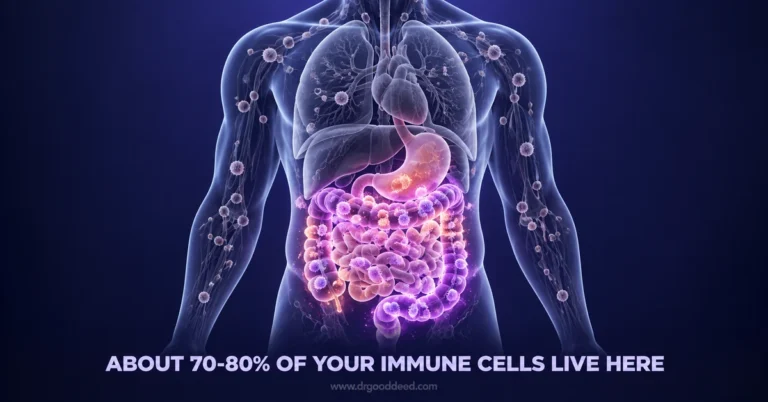


Feeling sick after dairy isn’t always about lactose. Lactose intolerance is one possibility, but symptoms can also come from a milk-protein allergy, sensitivity to the fat or additives in certain dairy products, difficulty digesting large amounts of dairy, or conditions such as IBS that make the gut more reactive to dairy.
The type and amount of dairy matter too, which is why someone might tolerate yogurt or hard cheese but feel awful after a glass of milk. This guide also lines up with the broader signs of digestive problems worth tracking beyond dairy alone.
Key Takeaways
- Lactose intolerance is the most common cause of dairy trouble, driven by low lactase enzyme activity rather than an allergy.
- A true milk allergy involves the immune system and can become dangerous within minutes of exposure.
- A1 beta-casein protein sensitivity is a lesser-known trigger that mimics classic lactose symptoms.
- Histamine buildup in aged cheese, not milk sugar, causes a separate set of reactions.
- A stomach virus can trigger temporary dairy intolerance that usually resolves within weeks.
The 5 Real Reasons Dairy Makes You Feel Sick
Gastroenterologists sort dairy reactions into five separate categories, each with its own trigger, timeline, and severity. Here are the full 5 reasons why people fall sick after eating dairy, in the order clinicians typically work through them.
1. Lactase Enzyme Insufficiency (Classic Lactose Intolerance)
Lactase is the enzyme your small intestine uses to break lactose, the natural sugar in milk, into digestible sugars. When lactase activity drops, undigested lactose travels into the colon, where bacteria ferment it and produce gas.
- Symptoms include bloating, cramping, gas, and watery diarrhea within 30 minutes to two hours of consuming dairy.
- Severity depends on how much lactase activity remains, so some people tolerate small amounts of milk fine.
For step-by-step management, see home remedies for lactose malabsorption.
2. True IgE-Mediated Milk Allergy
An IgE-mediated milk allergy is fundamentally different from an intolerance. Here, the immune system misidentifies casein or whey protein as a threat and produces IgE antibodies against it. On re-exposure, those antibodies trigger mast cells to release histamine within minutes, not hours.
- Reactions often involve the skin, airway, or whole body: hives, swelling, wheezing, vomiting, or a drop in blood pressure.
- Severe cases progress to anaphylaxis, a life-threatening reaction requiring immediate epinephrine and emergency care.
3. A1 Beta-Casein Protein Sensitivity
Most Western cow’s milk contains a mix of A1 and A2 beta-casein protein variants. Digestion of A1 beta-casein releases a peptide called beta-casomorphin-7, which several randomized crossover trials link to more bloating, softer stools, and abdominal pain than A2-only milk. A 2017 systematic review in Advances in Nutrition confirmed the pattern but called for more human research before drawing firm conclusions.
- People who react to regular milk but tolerate A2 milk, goat milk, or sheep milk may be reacting to this protein difference.
- This sensitivity can coexist with lactose intolerance, which sometimes muddies self-diagnosis.

4. Histamine in Aged Cheeses and Cultured Dairy
This mechanism is specific to aged and fermented dairy, not milk broadly. As cheese ripens, bacteria break down the amino acid histidine into histamine, and levels climb dramatically the longer a cheese ages. People with reduced diamine oxidase enzyme activity cannot clear that histamine efficiently.
- Aged cheddar, parmesan, gouda, and blue cheese carry the highest histamine loads, while fresh cheeses like ricotta and mozzarella stay low.
- Reactions include flushing, headache, hives, or digestive upset within two hours, and they resolve within a day.
5. Secondary Lactose Intolerance After a Stomach Virus
A bout of viral gastroenteritis, most often rotavirus or norovirus, can damage the intestinal brush border where lactase is present. Because lactase is the first enzyme lost and the last to recover during gut injury, temporary lactose intolerance often follows even after the infection clears.
- Watch for renewed bloating, gas, or diarrhea with dairy roughly one to two weeks after a stomach bug resolves.
- Clinical sources note this secondary lactase deficiency typically resolves within two to six weeks as the gut lining heals.
For the infection timeline itself, see how long does food poisoning last.
How to Tell a Milk Allergy Apart From an Intolerance
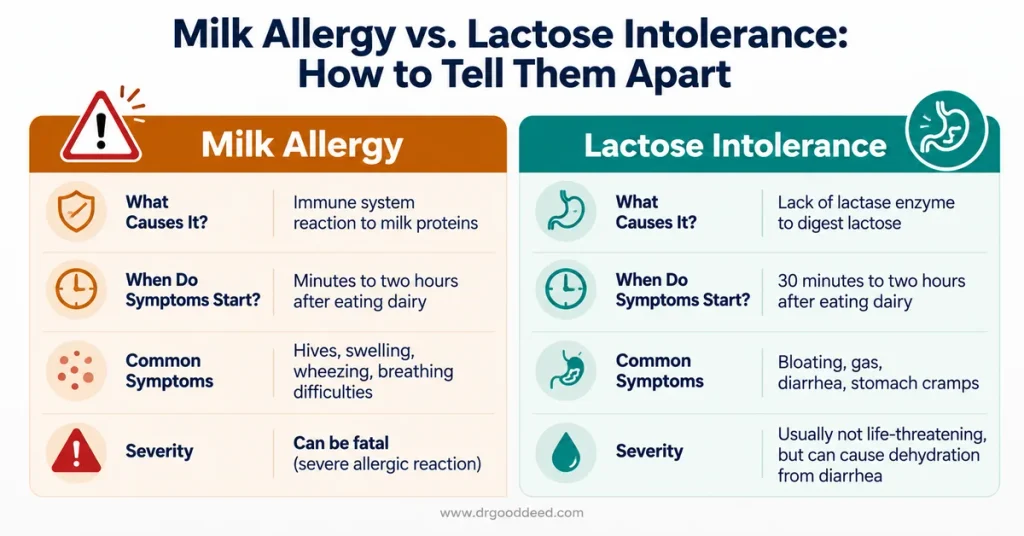
The clearest signal is which body systems react and how fast symptoms start. Intolerance symptoms stay confined to the gut and build slowly, while allergy symptoms often spread beyond digestion and strike within minutes.
| Feature | Milk Allergy | Lactose Intolerance |
| System involved | Immune system, IgE antibodies | Digestive enzyme (lactase) |
| Onset | Minutes to two hours | 30 minutes to two hours |
| Typical symptoms | Hives, swelling, wheezing, vomiting | Bloating, gas, diarrhea, cramps |
| Worst-case outcome | Anaphylaxis, potentially fatal | Dehydration from prolonged diarrhea |
| Amount that triggers it | Even trace exposure can react | Dose-dependent, varies by person |
If reactions ever involve your throat, breathing, or a sudden drop in energy along with diarrhea after eating, treat it as a possible allergy, not simple intolerance.
What Happens If You Keep Eating Dairy Despite Symptoms?
Pushing through dairy symptoms without adjusting your diet carries real, documented risks, even though the popular claim about chronic gut inflammation from lactose intolerance remains unproven and is still under research. The two consequences below are well established in clinical literature.
- Calcium and vitamin D deficiency: Long-term dairy avoidance without substituting other calcium sources raises the risk of weakened bones and osteoporosis over time.
- Dehydration and nutrient malabsorption: Chronic, unmanaged diarrhea from repeated lactose exposure can deplete fluids, electrolytes, and nutrients faster than the body replaces them.
If you avoid dairy entirely, check labels for calcium-fortified plant milks and leafy greens, since many people under-replace calcium after cutting dairy and only discover the gap years later on a bone density scan.
When Should You See a Doctor?
Most dairy discomfort is manageable at home, but certain patterns warrant a real evaluation. Book an appointment if home changes do not resolve things or if any allergy-type symptom appears.
- Any swelling of the lips, tongue, or throat, or trouble breathing after dairy, needs emergency care immediately.
- Persistent diarrhea, unexplained weight loss, or blood in your stool should prompt a gastroenterologist visit.
- Symptoms that started after a stomach virus and have not improved after six weeks deserve a follow-up.
FAQs
Can you develop dairy intolerance suddenly as an adult?
Yes. Lactase production naturally declines with age in most adults worldwide, so intolerance often first appears in the teens, twenties, or thirties rather than childhood.
Is goat or sheep milk actually easier to digest?
Sometimes. Goat and sheep milk contain mostly A2 beta-casein and slightly less lactose than cow’s milk, which reduces symptoms for some, though not all, sensitive individuals.
Can you outgrow a dairy allergy?
Yes, often. Most children outgrow milk allergy by adolescence, but adult-onset milk allergy is less common and tends to persist rather than resolve.
Do lactase supplements work for everyone?
No. Lactase pills help many people digest lactose better, but they do not treat milk allergy, A1 protein sensitivity, or histamine reactions, since those involve different mechanisms entirely.
Can dairy sensitivity come and go over time?
Yes. Secondary lactose intolerance after illness, antibiotics, or gut inflammation is often temporary, while primary age-related lactase decline is usually permanent and gradual.
Sources
- National Institute of Diabetes and Digestive and Kidney Diseases: Definition & Facts for Lactose Intolerance link
- Cleveland Clinic: Milk Allergy link
- Allergy & Asthma Network: Milk Allergy Causes, Symptoms, Diagnosis & Treatment link
- Advances in Nutrition: Systematic Review of the Gastrointestinal Effects of A1 Compared with A2 Beta-Casein link
- BMC Nutrition Journal: A1 and A2 Beta-Casein Effects in Chinese Adults with Self-Reported Lactose Intolerance link
- Molecules (2024): Review of BCM-7 and A1 Milk-Related Health Outcomes link
- American Journal of Clinical Nutrition: Histamine and Histamine Intolerance (Maintz & Novak, 2007) link
- University of Maryland School of Medicine: Lactose Intolerance After Gastroenteritis link
- American Academy of Allergy, Asthma & Immunology: Video Journal Club on Histamine Intolerance Evidence link
- Kids With Food Allergies (FARE-affiliated): IgE-Mediated vs Non-IgE-Mediated Milk Allergy link
Medical Disclaimer: This article is for general information only and is not medical advice. It does not replace a diagnosis, treatment plan, or guidance from a qualified healthcare professional. Always talk to your doctor about your own symptoms and before starting, stopping, or changing any treatment. If you think you may be having a medical emergency, call 911 or go to your nearest emergency room.