
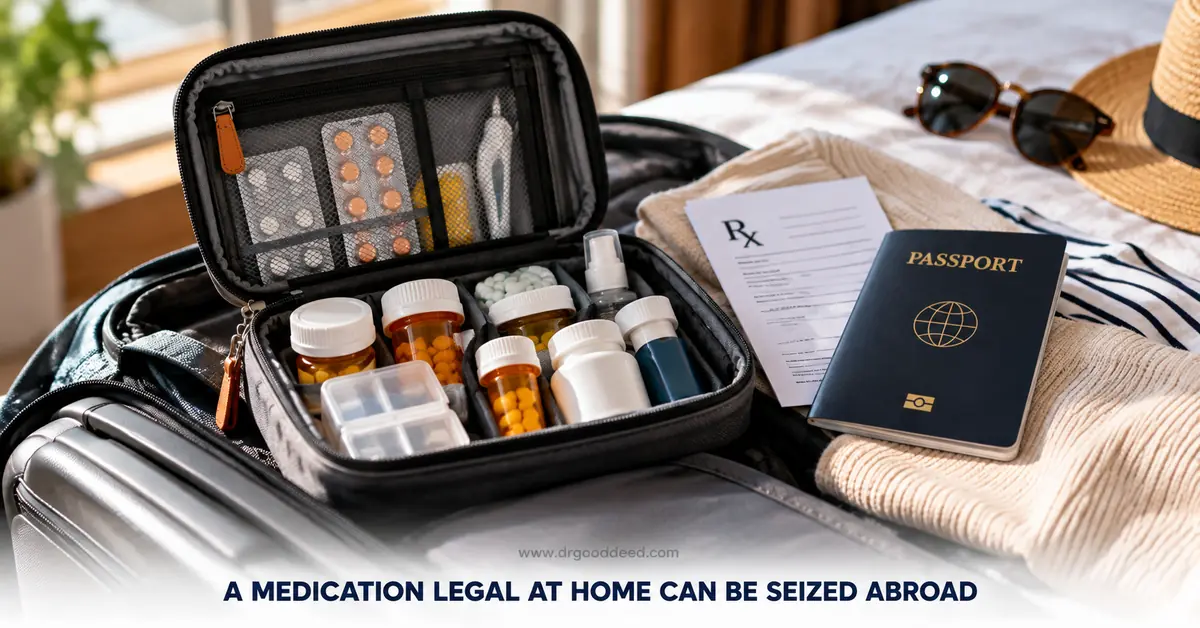

A travel pharmacy checklist only works if it clears customs and fits your destination. Few mention import limits, translated letters, or drug interactions. It may include prescription medications, basic pain and fever relief, allergy medicine, motion-sickness tablets, digestive remedies, bandages, antiseptic wipes, a thermometer, sunscreen, insect repellent, and any condition-specific supplies you may need.
This guide covers all three for US travelers on how to stay healthy while traveling. It also explains kit tiers, item-by-item essentials, and when to see a doctor before packing.
Key Takeaways
- Keep medications in original labeled containers, not pillboxes, for customs officials.
- Controlled substances and injectables need a translated letter from the prescriber.
- Some medications legal in the US are banned abroad, so verify before packing.
- Antacids can weaken certain antibiotics, so space the doses.
- For international travel, check your destination’s medication rules and carry a copy of your prescriptions when appropriate.
The Legal Packing Rules Most People Get Wrong
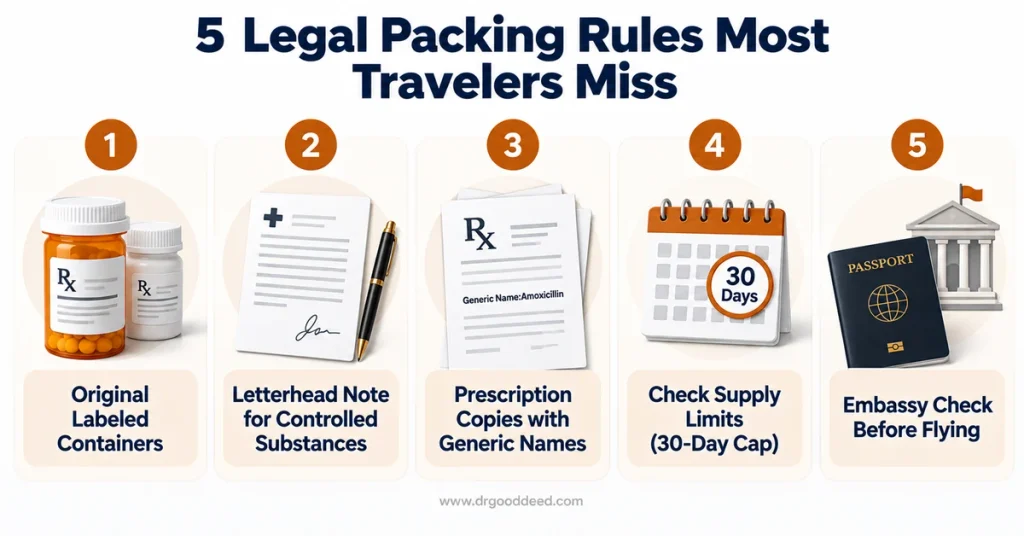
International travelers should carry medications in original, labeled containers because officials at ports of entry may require them. Controlled substances and injectables also need a letterhead note from the prescribing clinician, ideally translated into the destination’s language.
- Original containers. The label should show the drug, the patient’s name, and the dosing regimen. Pillboxes save space but can trigger questions at ports of entry.
- Letterhead note. For controlled substances and injectables, the prescriber or travel clinic writes it. Attach a translation to the original.
- Prescription copies. List generic names, since brand names change across borders.
- Supply limits. Many countries cap narcotics and psychoactive drugs at a 30-day supply or less, according to the Yellow Book.
- Embassy check. For controlled substances, contact the destination country’s embassy or consulate before you fly.
TSA Rules and Customs Rules Are Not the Same
For traveling with medications through US airports, the TSA does not require prescription bottles, though state labeling laws apply. It allows pills in unlimited amounts and exempts medically necessary liquids from the 3-1-1 limit. Declare those liquids at the checkpoint. Foreign customs officers can ask for far more documentation.
One Pill, Two Legal Statuses
Japan bans amphetamine-based drugs such as Adderall and pseudoephedrine cold products such as Sudafed. Travelers may bring up to one month of allowable prescription medicine. More than that, or any syringes, requires an import certificate (Yunyu Kakunin-sho) applied for in advance through Japan’s health ministry.
A Basic Kit vs an Extended Kit: What You Actually Need Depends on Where You’re Going
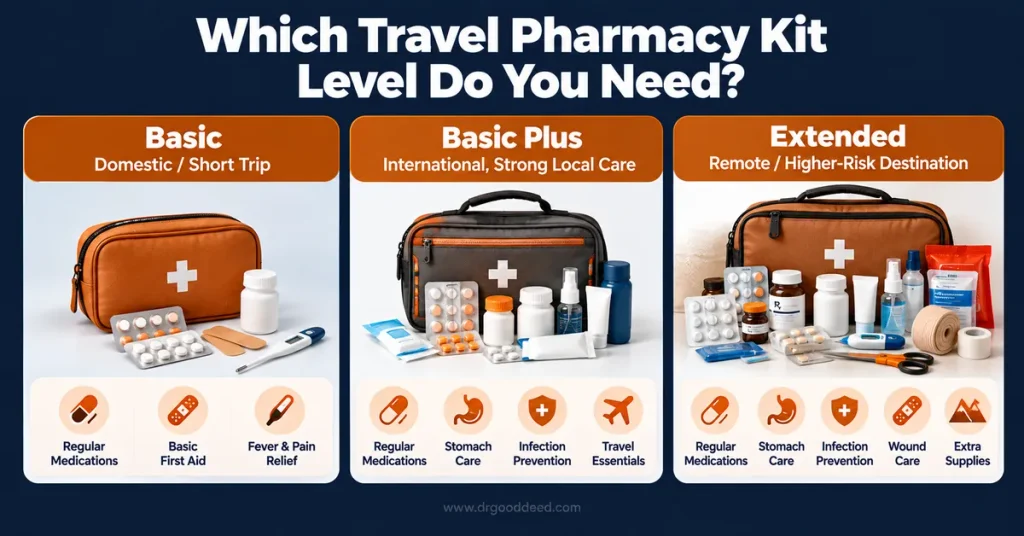
Local medical access, evacuation options, itinerary, and trip length decide which one fits.
| Trip type | Kit level | What to add |
| Domestic or short city trip | Basic | Personal prescriptions, pain reliever, antihistamine, bandages |
| International, strong local care | Basic plus | Oral rehydration salts, loperamide, prescription copies, letters |
| Remote or higher-risk destination | Extended | Prescribed antibiotic for travelers’ diarrhea, malaria or altitude prevention if a clinician advises it, extra supplies |
Risk justifies the extra weight. The Yellow Book reports travelers’ diarrhea attack rates of 30% to 70% over two weeks, depending on destination and season.
What Should Be in Every Travel Pharmacy Kit
A travel pharmacy checklist covers pain and fever, allergy, digestive illness, and wound care. Keep it in your carry-on and match each item to the destination.
Pain, Fever, and Allergy Basics
- Acetaminophen (paracetamol abroad). Acetaminophen for dengue fever; avoid aspirin and NSAIDs such as ibuprofen because of their anticoagulant effects. Count acetaminophen inside combination cold products toward the daily label limit.
- Ibuprofen. It eases muscle and tendon inflammation after hiking. Skip it when a fever appears in a dengue region until a clinician weighs in.
- Antihistamines. Diphenhydramine sedates. Cetirizine or loratadine suits daytime. Travelers with severe allergies should carry epinephrine auto-injectors at all times.
Digestive and Stomach Illness Essentials
- Oral rehydration salts. They replace fluid and electrolytes, which is the real danger in diarrhea.
- Loperamide. The OTC maximum is 8 mg daily, and higher doses can cause serious heart rhythm problems. Labels warn against use with fever or bloody stool.
- Bismuth subsalicylate. It blackens the tongue and stool. Aspirin allergy, gout, kidney insufficiency, anticoagulants, methotrexate, and probenecid rule it out.
Some travelers also start probiotics for diarrhea a few days before departure, giving the microbes time to establish.
Wound Care and First Aid Items
- Bandages and blister care. Pack several sizes plus moleskin or hydrocolloid patches. Blisters open the skin to infection on long walking days.
- Antibiotic ointment and antiseptic wipes. They cover scrapes and small cuts.
- Tweezers and a digital thermometer. Tweezers remove splinters and ticks. A thermometer turns “I feel hot” into data a clinician can use.
A Drug Interaction Most Travelers Don’t Know About
Dr. Richard Wenzel, an infectious disease expert at Virginia Commonwealth University, has noted in an NBC News interview that mixing antacids with antibiotics can reduce the antibiotic’s effectiveness.
- Mechanism. Aluminum, magnesium, and calcium in antacids can bind certain antibiotics in the gut and cut absorption. UK prescribing information from the electronic medicines compendium lists tetracyclines, fluoroquinolones, cephalosporins, and azithromycin among affected drugs.
- Spacing. That same source advises keeping antacids two to four hours away from other medicines. Exact spacing varies by antibiotic, so ask a pharmacist.
- Related products. Iron and calcium supplements can also bind some antibiotics.
- Why travelers face it. Azithromycin is the preferred antibiotic for dysentery or febrile diarrhea. Rich meals and heartburn tablets often arrive at the same time.
Personal and Prescription Medications: What to Carry and How
Carry every prescription in your carry-on, in original labeled containers, with enough supply for the trip plus delays. Checked bags can arrive late or not at all.
- Extra supply. Add a few days beyond the itinerary. If the insurer blocks an early refill, ask about a vacation override.
- Copies kept apart. Store prescription copies and letters separately from the medicines, and photograph each label.
- Injectables. Needles and syringes can be hard to buy abroad, so bring extras, plus the prescriber’s letter. TSA accepts frozen gel packs for cooling.
- Chronic conditions. A medical alert bracelet or necklace helps responders, according to the Yellow Book.
Pro Tip: List the active ingredient on your medication sheet. Brands differ by country. Sudafed hides pseudoephedrine, while acetaminophen becomes paracetamol abroad. Ingredient names let a foreign pharmacist or customs officer confirm what you carry.
When to See a Doctor Before You Even Pack
Book a travel medicine visit four to six weeks before departure. Vaccines, malaria prevention, altitude medication, and prescription antibiotics all need clinician input, and some start days or weeks before travel.
- Ask about bismuth subsalicylate if you take anticoagulants or aspirin, or have gout or kidney disease.
- Bring your full travel health kit list and request a prescribed antibiotic plan for remote trips.
- Ask for letters, weight-based doses for children, and import paperwork early. Japan’s certificate needs about two weeks. Review the finished travel pharmacy checklist with the clinician.
FAQs
Can you bring prescription medication through airport security?
Yes. TSA allows pills in unlimited amounts in carry-on or checked bags and exempts medically necessary liquids from the 3-1-1 limit. Declare liquids at the checkpoint. State labeling laws apply.
Do you need a doctor’s note for over-the-counter medication?
Usually no. Carry a note for anything containing codeine or pseudoephedrine, and for injectables, because countries such as Japan restrict them.
What happens if a medication you need is illegal at your destination?
Customs can seize it, detain you, or prosecute you, even with a US prescription. Ask your prescriber for an alternative, and email the destination’s embassy before booking.
Should children’s travel kits be different from an adult’s?
Yes. Use weight-based liquid or chewable doses, skip aspirin and bismuth subsalicylate, add oral rehydration solution, and pack a dosing syringe. Get doses from the pediatrician.
How early before a trip should you start packing your kit?
Start four to six weeks out. Doctor visits, refills, insurance overrides, and import certificates take longer than shopping. Japan’s certificate alone needs about two weeks.
Sources
- CDC Yellow Book 2026: Travel Health Kits link
- CDC Yellow Book 2026: Travelers’ Diarrhea link
- TSA: Medications link
- CDC: Clinical Care of Dengue link
- CDC: Manage Dengue link
- FDA Drug Safety Communication: Loperamide (Imodium) link
- NBC News: The Traveler’s Medicine Cabinet (Dr. Richard Wenzel) link
- electronic medicines compendium: Antacid interaction guidance link
- Japan Ministry of Health, Labour and Welfare: Bringing medicines into Japan link
- International Society of Travel Medicine: Prevention and Treatment of Traveler’s Diarrhea (summary) link
Medical Disclaimer: This article is for general information only and is not medical advice. It does not replace a diagnosis, treatment plan, or guidance from a qualified healthcare professional. Always talk to your doctor about your own symptoms and before starting, stopping, or changing any treatment. If you think you may be having a medical emergency, call 911 or go to your nearest emergency room.