

A first flight feels strange for physical reasons, not only because of nerves. Cabin air is thinner and drier than air at ground level, your ears have to cope with pressure shifts on the way up and down, and adrenaline adds effects of its own.
These travel tips for first-time flyers explain what happens in your body at cruising altitude and what helps. They cover cabin pressure, ear pain, flight anxiety and when to see a doctor in the USA or UK. For wider trip health, see our guide on how to stay healthy while traveling.
Key Takeaways
- Cabin pressure feels like an altitude of 6,000 to 8,000 feet, not sea level.
- Ear pain on a plane comes from slow pressure equalization, not altitude sickness.
- Flying with significant congestion raises your risk of ear pain.
- Flight anxiety is common and often eases with simple techniques such as paced breathing.
- Most first-flight discomfort is normal and fades without treatment.
- Ear symptoms that linger, or chest pain and fainting in the air, need medical attention.
Why Flying Feels Strange the First Time
The plane cruises near 35,000 feet, but your body only senses the cabin, which is pressurized to feel like roughly 6,000 to 8,000 feet. Federal rules cap cabin pressure altitude at 8,000 feet when the aircraft is at its maximum operating altitude (14 CFR 25.841).
Lower pressure means less oxygen reaches your blood with each breath, and several effects follow:
- Mild breathlessness: You may breathe a little faster, especially when you walk the aisle.
- Gas expansion: Gas in body cavities expands as cabin pressure drops, which causes bloating and ear and sinus pressure.
- Dryness: Low humidity dries the mouth, nose and eyes. Contact lens wearers tend to notice it first.
- Fatigue: Noise, dry air and lower oxygen pressure add up, so you feel more tired than the flight time suggests.
So is it normal to feel odd the first time you fly? Yes. Mild lightheadedness, ear fullness, dry skin and tiredness all fall within normal cabin effects. They are much milder than true altitude sickness. If you have heart or lung disease, ask your doctor before you book.
Why Your Ears Hurt on a Plane and How to Stop It
Any list of travel tips for first-time flyers should start with the ears, because ear pain is the most common complaint.
What causes airplane ear
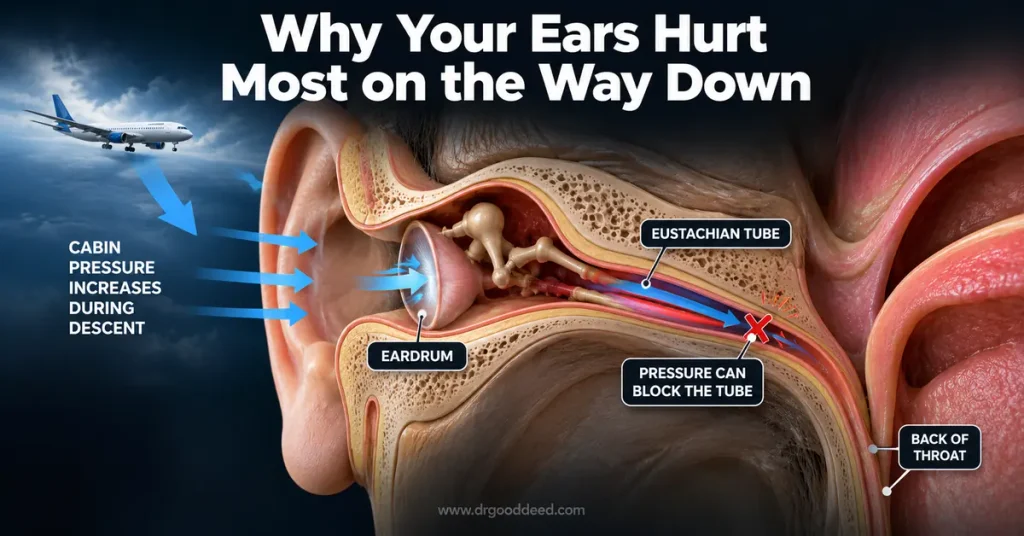
Pain happens when the Eustachian tubes can’t equalize pressure fast enough, a condition called ear barotrauma.
The Eustachian tube is a narrow channel linking the middle ear to the back of the nose and throat, and it opens when you swallow or yawn. When it stays shut, the air pressure behind the eardrum differs from the cabin pressure. The eardrum stretches, causing pain, fullness and muffled hearing.
Descent usually hurts most. As cabin pressure rises, it presses the tube shut and pushes the eardrum inward. That is why it pays to equalize early and often as the plane comes down, before pain starts. Once the tube locks, blowing harder adds injury risk without guaranteeing relief.
This is a different problem from airplane headache, which is a separate, recognized disorder linked to sinus barotrauma rather than the middle ear. Our guide to airplane headache causes and treatment covers it.
Ways to equalize
- Swallow, yawn or chew gum. These open the tube without any special skill. Begin at takeoff and keep going throughout descent.
- Valsalva maneuver. Pinch your nose, close your mouth and blow gently. Never blow hard, because forced pressure can injure the eardrum.
- Toynbee maneuver. Pinch your nose closed and swallow. It relies on the tube’s own muscles rather than forced air, which makes it the gentler option.
- Stay awake during descent. Sleeping means fewer swallows, and napping during pressure changes is a listed risk factor for airplane ear.
Who is more likely to get it
A cold, sinus infection or allergic rhinitis swells the lining of the tube and blocks it, so flying with significant congestion raises your risk. Infants and toddlers are more prone still. Their Eustachian tubes are smaller, so they develop ear barotrauma more easily than adults.
Managing Flight Anxiety on Your First Flight
Flight anxiety is common, particularly before a first flight.
Breathing rate is the one stress signal you can control directly, so start there. Box breathing is a simple method: inhale through your nose for 4 counts, hold for 4, exhale for 4 and hold for 4, then repeat for five minutes. Slow, paced breathing with brief holds is thought to activate the vagus nerve and the parasympathetic nervous system, which slows the heart rate and loosens tense muscles.
Some evidence supports the habit. A 2023 Stanford randomized trial in Cell Reports Medicine (Balban et al.) followed 111 adults who practiced breathwork for five minutes a day over 28 days, and their mood improved. Cyclic sighing, which stresses a long exhale, did slightly better than box breathing. If the holds feel uncomfortable, lengthen your exhale instead.
A practiced pattern also works faster under stress than one you learn at the gate, so rehearse at home for a few minutes a day in the week before you fly.
A few practical steps help too:
- Tell a flight attendant early that you’re nervous, so crew know to check on you.
- Pick an aisle seat if feeling trapped is part of the problem, since it makes moving around easier.
- Put on music or an audiobook before takeoff.
- Ask your doctor about options if anxiety limits your travel.
What to Do Before, During and After Your First Flight
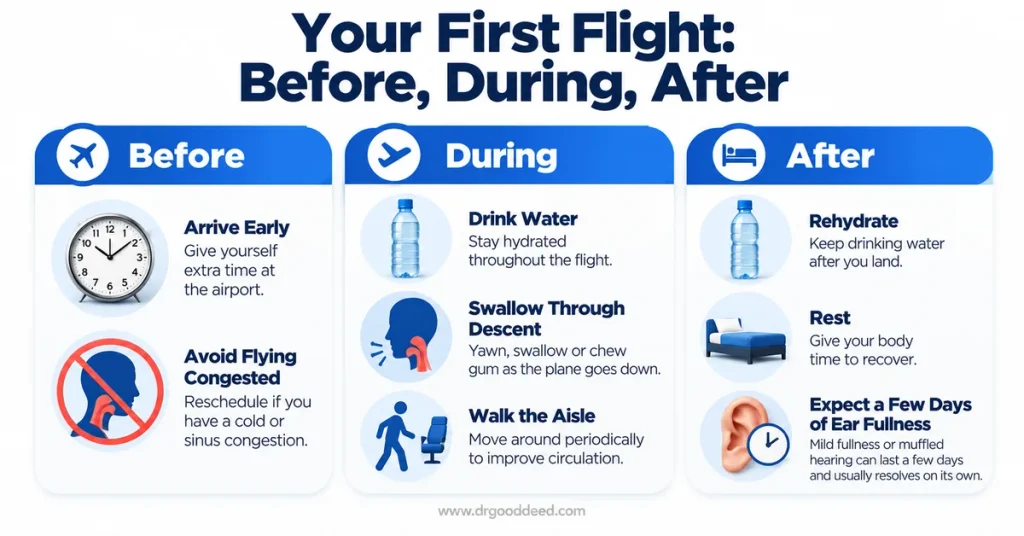
Expect a long security line, thinner cabin air, ear pressure on descent and some tiredness afterward. Most first-timers feel fine within a day. A short routine heads off the usual problems.
Before the flight
- Arrive at least two hours early for domestic flights, and check in online to skip counter lines.
- Avoid flying with significant congestion when you can.
- If you’ve been scuba diving, ask your doctor how long to wait before flying.
During the flight
- Drink water regularly, more than feels necessary.
- Swallow or chew through descent, and stay awake for it.
- Walk the aisle every 60 to 90 minutes on long flights.
- Wear glasses instead of contacts if dry air irritates your eyes.
After the flight
- Mild ear fullness can last up to a few days, and dry skin and tiredness are common.
- Rehydrate and rest if you feel unusually drained.
- Before your next trip, work through this travel pharmacy checklist.
When to See a Doctor
Ear pain, fullness or muffled hearing that lasts more than a few days deserves a professional look, and severe pain deserves one sooner. In the USA, call your primary care doctor or visit urgent care. In the UK, contact your GP or call NHS 111.
Seek care if you have:
- Ear pain, fullness or muffled hearing lasting more than a few days
- Severe ear pain, drainage or dizziness during or after a flight
- Flight anxiety that significantly limits your ability to travel
Chest pain, severe shortness of breath or fainting during a flight is an in-flight emergency, so alert the crew at once.
Talk to a doctor before flying if you have heart or lung disease, recent surgery or a recent scuba dive. The Aerospace Medical Association also advises against flying with newborns under seven days old.
FAQs
Is it normal to feel short of breath or lightheaded on a plane?
Mild breathlessness or lightheadedness is expected, because the cabin air holds less oxygen pressure than air at sea level. What isn’t normal is chest pain, fainting or severe breathlessness. Tell the crew immediately if any of those happen.
Can children fly with ear infections or congestion?
They should see a doctor first. Smaller Eustachian tubes make children prone to barotrauma, so ask a pediatrician or GP before you book. Giving a drink or a pacifier during descent encourages swallowing.
Does altitude sickness happen on commercial flights?
Not in the usual sense. Pressurization keeps the effect far smaller than the altitude sickness people get at genuinely high destinations. You may still notice fatigue, dryness or mild breathlessness.
Why do my ears hurt more when I fly with a cold?
A cold swells the lining of the Eustachian tube and blocks air from getting in. The pressure behind the eardrum then can’t balance against the cabin.
Sources
- Northwestern Medicine, 15 Tips for Plane Travel link
- Mayo Clinic, Airplane Ear: Symptoms and Causes link
- Mayo Clinic, Airplane Ear: Diagnosis and Treatment link
- Aerospace Medical Association, Health Tips for Airline Travel link
- Electronic Code of Federal Regulations, 14 CFR 25.841 Pressurized Cabins link
- AIMS Public Health, “Airplane ear”: A neglected yet preventable problem (2019) link
- World Health Organization, Anxiety Disorders Fact Sheet link
- Cleveland Clinic, Box Breathing Benefits link
- Balban et al., Cell Reports Medicine (2023), Brief structured respiration practices enhance mood link
- PubMed Central, Therapeutic potential of slow pranayama in anxiety link
Medical Disclaimer: This article is for general information only and is not medical advice. It does not replace a diagnosis, treatment plan, or guidance from a qualified healthcare professional. Always talk to your doctor about your own symptoms and before starting, stopping, or changing any treatment. If you think you may be having a medical emergency, call 911 or go to your nearest emergency room.