
Healthy eating while traveling can help prevent the tired, sluggish feeling that often hits after long journeys. Choose balanced meals with protein, fiber, and healthy fats, such as eggs, grilled chicken, nuts, fruits, yogurt, or whole-grain options, and avoid relying heavily on fried foods, sugary snacks, and energy drinks. Stay hydrated with water throughout the trip, eat at regular intervals, and carry simple snacks so you are not forced to make unhealthy choices when hunger strikes.
This guide extends our plan for how to stay healthy while traveling. It covers the crash, what to pack and buy, why cabins bloat you, and when to call a doctor.
Key Takeaways
- Travel meals drain energy when refined carbohydrates arrive without protein or fiber. Eat a full meal before you leave.
- A protein and fiber snack and steady fluids keep healthy eating on the go realistic, even during delays.
- Airport food can spike blood sugar, then let it fall within hours.
- Reported mayo-heavy airport sandwiches run 700 to 800 calories with 20+ grams of fat.
- Healthy airport food pairs grilled protein with fiber, and a home meal prevents impulse buys.
- Protein plus fiber steadies energy better than sugar-heavy snacks.
- Fluids and fiber together lower travel constipation risk.
Why Airport Food Crashes Your Energy, Not Just Your Diet
The food is mostly refined, salty carbohydrates with little protein or fiber. Glucose rises quickly, insulin follows, and a slump can arrive within hours. Delays, skipped meals, and coffee on an empty stomach deepen the dip.
- Reported figures: food media coverage lists mayo-heavy airport sandwiches at 700 to 800 calories with 20+ grams of fat. It lists airport cinnamon rolls at 730 to 813 calories with 24 to 55 grams of sugar. Values shift by vendor, so treat them as ranges, not constants.
- The mechanism: refined carbohydrates digest fast, glucose spikes, and the pancreas releases extra insulin to pull it back down. This describes a normal response to a high-glycemic meal. It does not signal insulin resistance or diabetes risk.
- Mayo Clinic defines reactive hypoglycemia as low blood sugar that appears within four hours after a meal. In people without diabetes, the cause often stays unclear, so a slump does not always mean a crash.
- Other drivers of travel fatigue include sleep loss, time-zone shifts, caffeine timing, and long gaps between meals. Food fixes will not erase them.
- The CDC notes that delayed meals, new foods, time zones, and activity changes shift blood sugar in people with diabetes.
Eat a full meal before leaving, then pair protein with fiber about every three hours. Avoid sugar alone on an empty stomach.
What to Pack Before You Leave Home
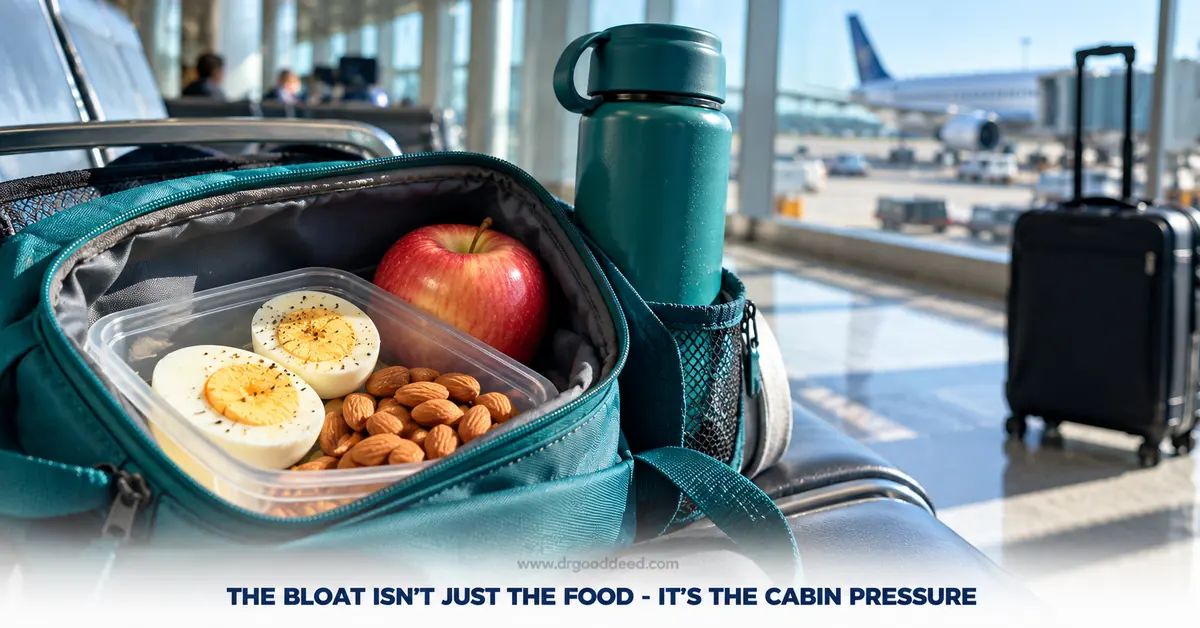
The best healthy travel snacks pair protein with fiber and survive a carry-on without refrigeration. Pack them at home, because gate options are thin and pricey. Packing also settles what to eat before a flight: a real meal first, then snacks for delays.
- Whole nuts or chocolate almonds in single-serving bags.
- Hard-boiled eggs in an insulated bag. Eat them within two hours.
- Protein bars where protein and fiber outweigh added sugar on the label.
- Whole fruit with the skin on, such as apples or pears.
- Raw carrots or cucumber slices in a sealed container.
- An empty refillable bottle to fill after security.
- An optional probiotic capsule. For a strain-by-strain comparison and when to start, see probiotics for diarrhea.
Pro Tip: TSA treats spreadable foods like peanut butter, hummus, and yogurt as liquids, so carry-ons allow 3.4 ounces or less. Whole nuts and solid cheese skip that rule. Travelers with diabetes can carry medically necessary liquids above that limit, per the CDC.
Smarter Choices If You’re Buying at the Airport
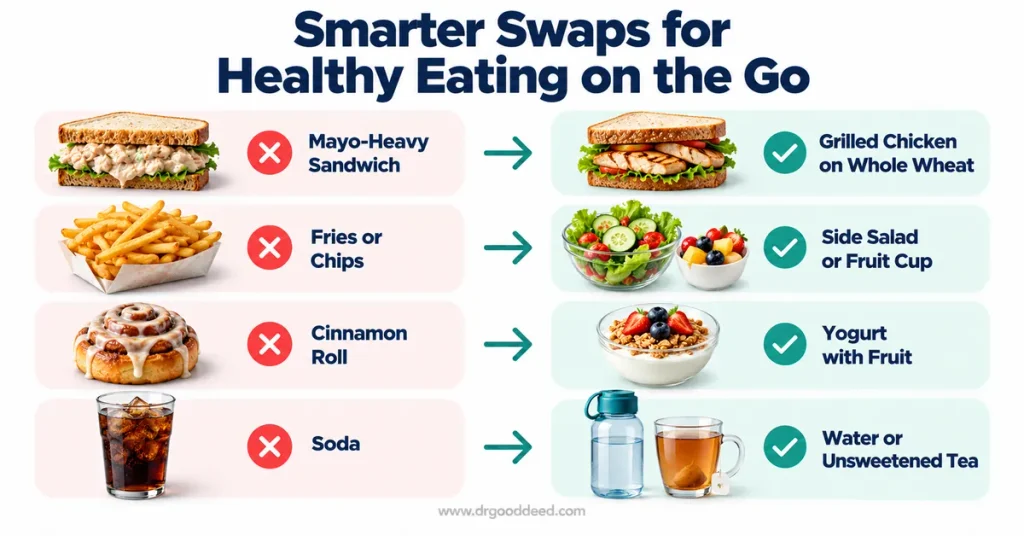
Healthy airport food means grilled protein, a fibrous side, and sauces on the side. Eat a full meal before flying. That way, terminal stands never steer your choices. For a delayed or late flight, eat that meal before you leave for the airport.
| Instead of | Choose | Why it helps |
| Mayo-heavy fried sandwich | Grilled chicken on whole-wheat bread, sauce on the side | Less fat, slower digestion |
| Fries or chips | Side salad or fruit cup | Adds fiber |
| Cinnamon roll or muffin | Yogurt with fruit, or eggs | Protein slows sugar absorption |
| Soda or sweetened coffee | Water or unsweetened tea | Skips the sugar-only hit |
- The CDC lists eggs, fruit with nuts, and salads with grilled chicken or fish as airport options. Limit cheese and creamy dressings.
- Ask for dressings and sauces on the side, a tip Banner Health also gives.
- Swaps like these keep healthy eating on the go possible at a crowded gate.
What to eat before a flight? A full meal with protein, a vegetable or whole grain, and water. Eat it before you leave home.
Eating on the Plane Itself
Bring your own healthy travel snacks and treat cabin service as backup. Eat on a schedule, keep caffeine and alcohol modest, and sip water. Steady intake beats one big meal after a long gap.
- Banner Health advises never drinking alcohol on an empty stomach and having water after each drink. Alcohol is a possible trigger for low blood sugar after meals.
- Pair coffee with food rather than replacing a meal with it.
- Velazquez notes that thirst without water on hand sends people toward sugary drinks. Keep water within reach.
- Cleveland Clinic’s Emma Rueth, RD, advises treating blood sugar under 70 mg/dL with 15 grams of carbohydrate. Four glucose tablets or 4 ounces of juice work. Keep them in your carry-on.
Packing food next to medication? Use our travel pharmacy checklist to keep both organized.
Why Cabin Pressure Causes Bloating (It’s Not What You Think)
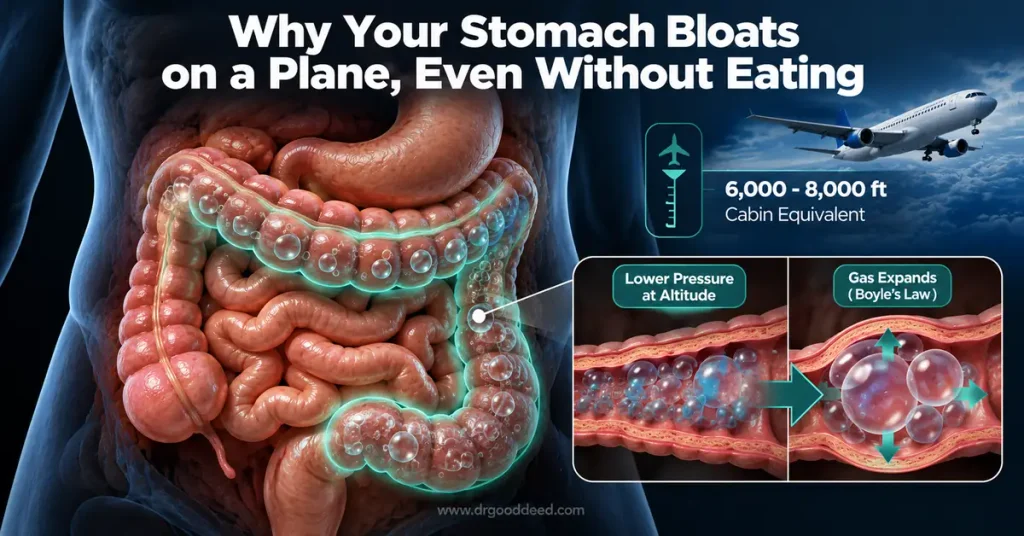
Most people blame food for airplane bloating, but reduced cabin pressure itself makes intestinal gas expand. Cabins are at 6,000 to 8,000 feet equivalent, so gas swells roughly 25 to 30 percent under Boyle’s law. That stretch on the bowel wall creates the tight, bloated feeling.
- The FAA caps cabin altitude at 8,000 feet. Cabins typically hold 6,000 to 8,000 feet.
- UK fitness-to-fly guidance puts gas expansion at about 30 percent on climb, with gas shrinking again on descent.
- Gas-producing foods and carbonated drinks add more gas to expand, so they amplify the effect.
- Slower digestion is a separate effect. Hours of sitting, drinking less, alcohol, and caffeine slow gut movement. The pressure drop does not.
- Cabin humidity of 10 to 20 percent dries the mouth and triggers thirst. Yet measured extra fluid loss is only about 150 ml over eight hours, so dry lips do not prove dehydration.
These steps support healthy eating on the go before boarding:
- Skip carbonated drinks and heavy beans or cabbage at your pre-flight meal.
- Drink water steadily through the flight.
- Stand or walk the aisle about once an hour when seat belt signs allow.
How Food Choices Affect Digestion During Travel
What you eat while traveling also affects your digestion, not just your energy. Low-fiber terminal meals plus little fluid slow stools. 22 to 34 grams of fiber daily for adults, depending on age and sex, plus plenty of liquids.
- Fiber sources include whole grains, legumes, berries, apples with the skin on, pears, carrots, and nuts. Most of them pack easily.
- Chips, fast food, and processed foods are low-fiber choices to limit. That describes most terminal menus.
- Liquids help fiber work. A 1998 randomized trial enrolled 117 adults with functional constipation on about 25 grams of fiber daily. One group drank 2 liters of mineral water, and the other drank freely. The authors reported that water enhanced the fiber effect on stool frequency and laxative use.
- Add fiber gradually, because a sudden jump with little water worsens gas and cramping.
Fiber and fluids make healthy eating on the go easier on your gut. For the full explanation of why travel disrupts digestion and what actually helps, see travel constipation.
When to See a Doctor
Persistent symptoms outweigh any rule about healthy eating on the go. Use a primary care doctor or urgent care clinic for symptoms that persist after you return home. Choose emergency care for severe ones. People with diabetes should act sooner.
- Persistent nausea or vomiting, or abdominal pain that keeps worsening.
- Blood in stool, black stools, or unexplained weight loss.
- With diabetes, lows under 70 mg/dL that return after 15 grams of carbohydrate need prompt care. So do confusion or fainting.
FAQs
Is it bad to skip meals while traveling instead of eating airport food?
Yes, for most travelers. Long gaps invite impulse buying and, in people with diabetes, blood sugar swings. Eat a full meal before leaving, then carry a protein and fiber snack for delays.
Do protein bars actually help with travel fatigue?
Yes, for hunger-driven dips, not sleep loss or jet lag. Choose bars where protein and fiber outweigh added sugar, or the bar behaves like candy. Pair one with water.
Is it normal to feel hungrier than usual while traveling?
Yes. Extra walking, broken sleep, and shifted meal times raise hunger. Mayo Clinic suggests small meals about three hours apart for post-meal blood sugar dips. That spacing prevents the worst of it.
Sources
- Banner Health: Travel Smart, Tips for Maintaining a Healthy Diet Away from Home link
- CDC: Tips for Traveling With Diabetes link
- CDC Yellow Book: Air Travel link
- NIDDK: Eating, Diet, and Nutrition for Constipation link
- NIDDK: Constipation link
- Cleveland Clinic: Tips for Traveling With Type 2 Diabetes link
- GPnotebook: Air travel, fitness to fly guidance link
- Scientific American: Why Do Airplane Flights Cause Digestive Problems? link
- PubMed: Water supplementation enhances the effect of high-fiber diet on stool frequency and laxative consumption (Hepatogastroenterology, 1998) link
Medical Disclaimer: This article is for general information only and is not medical advice. It does not replace a diagnosis, treatment plan, or guidance from a qualified healthcare professional. Always talk to your doctor about your own symptoms and before starting, stopping, or changing any treatment. If you think you may be having a medical emergency, call 911 or go to your nearest emergency room.