

Anxiety can cause weight loss, and it does so through at least four distinct biological mechanisms. The American Psychological Association (APA) recognizes unintentional weight loss as a physical symptom of chronic anxiety disorders.
Some people with anxiety gain weight. Others lose it. The outcome depends on which mechanisms dominate, specifically whether the nervous system suppresses appetite, speeds up metabolism, or disrupts digestion.
How Anxiety Causes Weight Loss
Does anxiety make you lose weight? Yes, and anxiety can cause weight loss through four separate pathways: appetite suppression, increased metabolic rate, digestive disruption, and physical restlessness. Most articles cover one or two. All four need to be understood to manage the weight loss effectively.
Loss of Hunger Signals
The hypothalamus regulates both anxiety responses and hunger signals. When anxiety activates the sympathetic nervous system, it suppresses the hypothalamus’s hunger-signaling function.
Ghrelin (the hormone that triggers hunger) drops during acute anxiety. People stop feeling hungry, not because they have eaten enough, but because the body’s threat response overrides the hunger circuit entirely.
Emotional Distress and Eating Habits
Chronic emotional distress narrows attention. People with anxiety fixate on the source of worry and forget to eat. A 2020 study published in Appetite journal found that participants with high trait anxiety consumed 300 to 500 fewer calories per day on high-stress days compared to low-stress days, without intentionally restricting intake.
Increased Metabolism From Chronic Anxiety
Adrenaline and Energy Expenditure
Increased metabolism from chronic anxiety is a direct result of sustained adrenaline activity. Adrenaline signals cells to burn glucose and fat for immediate energy. In short bursts, this is efficient. In people with chronic anxiety, adrenaline stays elevated for hours per day. The body burns calories continuously without any physical exertion to justify it.
Cortisol and Metabolic Changes
Cortisol raises blood glucose and simultaneously increases the rate at which the body breaks down muscle tissue for fuel (gluconeogenesis). A 2018 study in Psychoneuroendocrinology found that sustained cortisol above 20 mcg/dL for more than 6 weeks produced measurable reductions in lean body mass in otherwise healthy adults.
Less muscle mass means the body burns fewer calories at rest long-term, but the initial phase of cortisol elevation burns more.
Long-Term Effects on Body Weight
Increased metabolism from chronic anxiety does not produce linear weight loss indefinitely. After months of cortisol-driven muscle breakdown, resting metabolic rate actually drops. Sustaining it without treating the anxiety eventually plateaus and shifts to muscle wasting rather than fat loss.
Digestive Issues Caused by Anxiety
Digestive issues caused by anxiety are among the most overlooked contributors to weight loss. The gut has its own nervous system, the enteric nervous system, which communicates directly with the brain via the vagus nerve. When anxiety disrupts vagal signaling, digestion becomes unreliable.
Nausea and Stomach Discomfort
Anxiety triggers the release of corticotropin-releasing factor (CRF) in the gut, which slows gastric emptying and produces nausea. People with frequent anxiety-related nausea avoid eating preemptively because they associate eating with feeling sick. This behavioral avoidance reduces caloric intake beyond what the nausea alone would cause.
Diarrhea and Frequent Bowel Movements
Anxiety accelerates gut motility through excess acetylcholine release. The result is diarrhea or urgent, frequent bowel movements. Nutrients do not have adequate time for absorption when gut transit is this fast. People lose calories through accelerated transit even when they eat normal quantities.
Changes in Nutrient Absorption
Beyond transit speed, chronic anxiety reduces secretory IgA (an immune protein in the gut lining) and alters the gut microbiome. A 2021 review in Neurogastroenterology and Motility confirmed that anxiety-associated dysbiosis (microbiome imbalance) reduces the absorption efficiency of fat-soluble vitamins and certain amino acids, producing nutritional deficits even in people eating adequate calories.
Increased Physical Restlessness
Pacing and Fidgeting
Non-exercise activity thermogenesis (NEAT) covers all movement outside of formal exercise. Anxious people pace, fidget, bounce their legs, and engage in repetitive physical behaviors constantly.
A study published in the American Journal of Clinical Nutrition found that high-anxiety individuals burned 300 to 400 more calories per day through NEAT compared to low-anxiety counterparts, without any structured exercise.
Sleep Disturbances and Energy Use
Anxiety disrupts sleep architecture, specifically reducing slow-wave sleep (SWS). SWS is when the body does most of its cellular repair and growth hormone release. Without adequate SWS, the body cannot rebuild muscle tissue efficiently.
Combined with cortisol-driven muscle breakdown during the day, the net result is progressive lean mass loss even in people eating enough total calories.
Symptoms That May Accompany Anxiety-Related Weight Loss
Anxiety can cause weight loss alongside a recognizable symptom cluster. These symptoms help clinicians identify anxiety as the source rather than a gastrointestinal or oncological cause.
Common accompanying symptoms include:
- Persistent fatigue despite adequate sleep hours
- Muscle weakness or reduced physical stamina
- Bloating, gas, or irritable bowel-type symptoms
- Brain fog and difficulty concentrating
- Increased heart rate at rest
- Cold hands and feet (peripheral vasoconstriction)
- Hair thinning from nutritional deficit
- Stress menstrual cycles in women (due to cortisol interference with estrogen)
- Frequent headaches from muscle tension and dehydration
- Heightened sensitivity to cold temperatures (reduced metabolic insulation from fat loss)
Foods to Maintain Weight With Anxiety
Foods to maintain weight with anxiety must be calorie-dense enough to offset the metabolic increase, and they must be easy enough on the digestive system that anxiety-triggered nausea does not prevent eating them.
Nutrient-Dense Foods
Avocados, nuts, seeds, and olive oil provide high caloric density per gram with low digestive burden. A single avocado adds 250 to 320 calories without requiring a large stomach volume to consume, which matters when anxiety suppresses appetite.
Healthy High-Calorie Options
Full-fat Greek yogurt, nut butters, whole eggs, and oily fish (salmon, sardines) combine high calories with protein and omega-3 fatty acids. Omega-3s specifically reduce inflammatory markers associated with chronic cortisol elevation, per research published in Brain, Behavior, and Immunity (2011).
Protein-Rich Foods
Protein counteracts cortisol-driven muscle breakdown directly. The Recommended Dietary Allowance (RDA) for protein is 0.8g per kilogram of body weight, but people with chronic anxiety losing muscle mass need 1.2 to 1.6g per kilogram to compensate, per the American College of Sports Medicine. Eggs, legumes, cottage cheese, and lean poultry are practical options.
Easy-to-Digest Meal Choices
When digestive issues caused by anxiety make eating difficult, low-fiber, low-fat foods reduce gut transit irritation: white rice, bananas, cooked carrots, chicken broth-based soups, and oatmeal. These are gentle on an already dysregulated gut while providing adequate energy.
Hydration and Nutritional Support
Anxiety-related diarrhea and sweating deplete electrolytes fast. Sodium, potassium, and magnesium losses worsen fatigue and muscle weakness. Coconut water (high in potassium), electrolyte supplements, and magnesium-rich foods (spinach, pumpkin seeds) address this deficit specifically.
Risk Factors for Anxiety-Related Weight Loss
Specific conditions and behaviors increase the likelihood that anxiety can cause weight loss severe enough to need medical attention.
Generalized Anxiety Disorder
GAD produces chronic, low-level autonomic activation that sustains cortisol and adrenaline around the clock. The NIMH reports that adults with untreated GAD lose an average of 3 to 8% of body weight over 6 months during active disorder phases.
Panic Disorder
Panic attacks produce acute hypermetabolic states lasting 10 to 30 minutes each. Frequent panic attacks (more than 4 per week) create a cumulative caloric deficit from the metabolic cost of each episode.
Chronic Stress Exposure
Workplace or caregiving chronic stress sustains cortisol elevation for months. Unlike episodic anxiety, chronic stress does not give the body recovery time between cortisol spikes, making sustained weight loss more likely.
Existing Digestive Conditions
People with irritable bowel syndrome (IBS) or inflammatory bowel disease (IBD) have already-compromised nutrient absorption. Anxiety worsens both conditions dramatically, compounding the absorption deficits and accelerating weight loss.
Depression and Mental Health Disorders
Depression co-occurs with anxiety in 50% of diagnosed cases, per the ADAA. Depression independently reduces appetite and motivation to eat. The combined effect on caloric intake is greater than either condition alone.
Poor Dietary Habits
People who already eat irregularly before developing anxiety have less nutritional reserve to draw on. When anxiety suppresses appetite, their baseline diet provides no buffer against caloric deficits.
Other Medical Causes of Unexplained Weight Loss
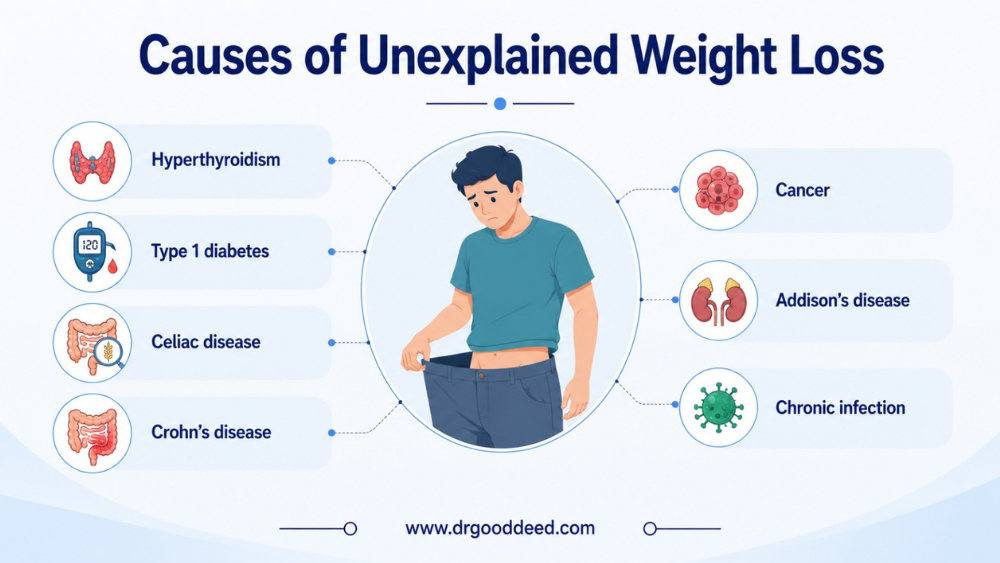
Unexplained weight loss of more than 5% of body weight within 6 to 12 months requires medical evaluation. Anxiety can cause weight loss of that magnitude, but several conditions produce near-identical presentations and must be ruled out first.
Conditions that must be ruled out before attributing weight loss to anxiety:
- Hyperthyroidism: Overactive thyroid gland accelerates metabolism independently. Measured by TSH, T3, and T4 blood tests.
- Type 1 diabetes: Weight loss occurs when the body cannot use glucose for fuel and breaks down fat and muscle instead. Diagnosed via fasting blood glucose and HbA1c.
- Celiac disease: Autoimmune intestinal damage prevents nutrient absorption. Confirmed by anti-tTG antibody test and small bowel biopsy.
- Crohn’s disease: Causes malabsorption and reduces appetite through pain and nausea. Diagnosed via colonoscopy and imaging.
- Cancer: Tumor necrosis factor (TNF) and interleukin-6 released by tumors increase basal metabolic rate and suppress appetite simultaneously.
- Addison’s disease: Adrenal insufficiency reduces cortisol production, causing nausea, weight loss, and fatigue that closely mimics anxiety symptoms.
- Chronic infection: HIV, tuberculosis, and certain fungal infections cause persistent inflammatory weight loss.
Treatment for Anxiety-Related Weight Loss
Treating weight loss from anxiety without treating the anxiety produces temporary results. Anxiety can cause weight loss through metabolic, digestive, and behavioral mechanisms that all remain active until the disorder itself receives appropriate care.
Cognitive Behavioral Therapy (CBT)
CBT is the first-line treatment for anxiety disorders per the APA. A 2020 meta-analysis in JAMA Psychiatry found CBT reduced anxiety severity by 50 to 60% across GAD and panic disorder. This is the most effective way that anxiety can cause weight loss to reverse, because as anxiety reduces, appetite normalizes, cortisol drops, and gut motility stabilizes.
SSRIs
Sertraline, escitalopram, and fluoxetine are FDA-approved for anxiety disorders. They do not directly cause weight gain at standard doses but reduce the anxiety mechanisms driving weight loss. Weight regain happens as anxiety-driven caloric deficits normalize over 4 to 8 weeks of medication effect.
Anti-Anxiety Medications
Buspirone reduces chronic anxiety without the appetite-suppressing effects of some SSRIs. Mirtazapine, an atypical antidepressant, is used in low-weight anxious patients specifically because it increases appetite as a side effect while also reducing anxiety.
Nutrition Counseling
A registered dietitian (RD) can calculate the exact caloric surplus needed to offset the metabolic increase and rebuild lost lean mass. This is not guesswork. Indirect calorimetry testing measures actual metabolic rate. Most people with chronic anxiety need 200 to 500 extra calories daily above their calculated maintenance needs.
Stress Reduction Techniques
Progressive muscle relaxation (PMR) reduces cortisol levels by an average of 15 to 20% with consistent daily practice, per research from the International Journal of Stress Management. Lower cortisol reduces muscle breakdown and improves gut motility, which directly reduces the rate of anxiety-related weight loss.
Prevention Strategies
Understanding how to stop anxiety-related weight loss early, before it exceeds 5% of body weight, is the difference between a dietary fix and a medical intervention. A 2% body weight loss over 2 weeks in an anxious person warrants dietary intervention immediately, before the deficit becomes harder to reverse.
Evidence-backed prevention steps:
- Set meal alarms: Anxiety suppresses hunger cues. Scheduled eating at fixed times replaces missing appetite signals.
- Liquid calories when appetite fails: Smoothies with protein powder, nut butter, and full-fat milk deliver 400 to 600 calories with minimal digestive effort when solid food triggers nausea.
- Daily weight logging: Catching a 2 to 3 lb drop early prevents a 10 to 15 lb loss from compounding over months.
- Magnesium supplementation: 310 to 420mg daily (NIH recommended dose by sex) reduces anxiety-related gut motility and supports sleep quality simultaneously.
- Weekly CBT check-ins during high-stress periods: Maintaining therapy access during predictably stressful periods (job changes, bereavement, health scares) prevents the anxiety from escalating to the point where weight loss becomes clinically significant.
- Treat comorbid IBS proactively: Managing gut symptoms with a low-FODMAP diet reduces the nutrient absorption losses that accelerate anxiety-related weight loss.
FAQs
Can anxiety cause weight loss even if I eat regularly?
Yes. Anxiety can cause weight loss even with regular meals because cortisol accelerates muscle breakdown, gut motility reduces nutrient absorption efficiency, and NEAT from fidgeting burns 300 to 400 extra calories daily. Caloric intake alone does not offset all three mechanisms.
Does anxiety make you lose weight without trying?
Yes. Does anxiety make you lose weight without intentional restriction? Absolutely. The autonomic nervous system suppresses ghrelin, accelerates gut transit, and burns stored energy through sustained adrenaline activity, all without requiring any conscious behavioral change.
How much weight loss is considered concerning?
A loss of 5% of body weight within 6 months without dietary change warrants medical evaluation. For a 150 lb person, that is 7.5 lbs. At that threshold, nutritional deficits and muscle wasting become clinically significant.
Why does anxiety reduce appetite in some people?
Anxiety suppresses ghrelin release through hypothalamic activation. Ghrelin is the hormone that signals hunger. When the sympathetic nervous system activates, it directly interrupts this hormonal signal, making hunger physically undetectable even when the body needs calories.
Can increased metabolism from chronic anxiety lead to weight loss?
Yes. Increased metabolism from chronic anxiety burns 200 to 500 extra calories daily through sustained adrenaline activity and NEAT. Over 30 days, that deficit equals 1 to 4.5 lbs of weight loss even without any change in appetite or food intake.
What digestive issues caused by anxiety can affect body weight?
Digestive issues caused by anxiety that reduce body weight include accelerated gut transit (reducing nutrient absorption time), anxiety-related nausea (reducing food intake), and dysbiosis (reducing fat-soluble vitamin absorption). All three operate simultaneously in people with chronic anxiety.
Can panic attacks contribute to weight loss?
Yes. Each panic attack burns 100 to 200 extra calories through hyperventilation, increased heart rate, and muscle tension. Four or more panic attacks per week creates a consistent caloric deficit of 400 to 800 calories weekly without any dietary change.
What foods help maintain weight during periods of anxiety?
The best foods to maintain weight with anxiety are calorie-dense and gut-gentle: avocados (250 to 320 calories each), full-fat Greek yogurt, nut butters, and oily fish. These provide high calories with low digestive burden during periods when appetite is suppressed.
How can I stop anxiety-related weight loss naturally?
To stop anxiety-related weight loss naturally: eat on a fixed schedule every 3 to 4 hours regardless of hunger, add 200 to 400 liquid calories daily via smoothies, supplement with magnesium (310 to 420mg), start CBT to reduce the anxiety driving the metabolic acceleration, and get weekly weight checks to catch losses before they compound.
Is anxiety-related weight loss reversible?
Yes. Most people fully reverse anxiety-related weight loss within 3 to 6 months of starting effective anxiety treatment. Muscle mass takes longer to rebuild than fat; resistance training combined with 1.2 to 1.6g of protein per kilogram of body weight accelerates lean mass recovery.
Sources
- National Institute of Mental Health – Generalized Anxiety Disorder
- Psychoneuroendocrinology – Cortisol and Lean Body Mass (2018)
- Neurogastroenterology and Motility – Anxiety, Dysbiosis, and Nutrient Absorption (2021)
- American Journal of Clinical Nutrition – NEAT and Anxiety
- Brain, Behavior, and Immunity – Omega-3 and Cortisol Inflammation (2011)
- JAMA Psychiatry – CBT Meta-Analysis for Anxiety (2020)
- Appetite Journal – Caloric Intake and Trait Anxiety (2020)
- American College of Sports Medicine – Protein Requirements
- National Institutes of Health – Magnesium Fact Sheet