
Yes, COPD can stay mild for some patients for years, sometimes decades. But it requires quitting smoking early, following treatment consistently, annual vaccinations, and avoiding the environmental triggers that accelerate damage. Without them, COPD advances on its own timeline, and that timeline rarely favors waiting.
Does COPD Always Get Worse
COPD does not always get worse automatically. COPD is progressive by nature, but progression speed is not fixed. Some patients maintain Stage 1 FEV1 levels for 10–15 years. Others move from Stage 2 to Stage 4 in under 5 years. The difference is largely behavioral and environmental, not biological fate.
Progressive Nature of COPD Explained
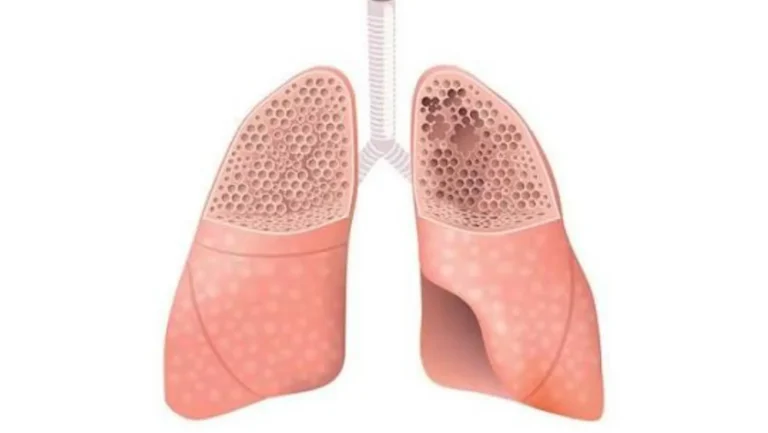
COPD causes permanent structural damage to airways and alveoli. That damage does not reverse. But further damage can be slowed significantly. The disease progresses when ongoing irritants, infections, and inflammation continue attacking already weakened lung tissue.
Why Progression Varies Between People
Two people with identical Stage 1 COPD diagnoses can have completely different outcomes at the 10-year mark. The one who quits smoking, completes pulmonary rehab, and takes inhalers consistently may still be at Stage 1. The one who continues smoking and misses treatment may be at Stage 3. Same disease. Opposite trajectories.
Slow vs Rapid Progression Patterns
Slow progressors typically have fewer than one exacerbation per year, avoid ongoing smoke and pollutant exposure, and maintain a BMI above 21. Rapid progressors have two or more exacerbations annually, continue smoking or live with significant indoor air pollution, and often have untreated comorbid conditions like heart failure or diabetes.
Role of Early Diagnosis
Diagnosing COPD at Stage 1 changes outcomes more than diagnosing it at Stage 3. A Stage 1 patient who quits smoking immediately can reduce annual FEV1 decline to 20–30 ml per year, near the normal aging rate. A Stage 3 patient who quits still benefits, but cannot recover the lung function already lost.
Mild COPD Symptoms Long-Term
Mild COPD symptoms long-term are manageable in patients who act on their diagnosis. They don’t disappear, but they don’t escalate into daily disability either.
Common Symptoms in Early-Stage COPD
- Morning cough with clear or white mucus
- Mild breathlessness during strenuous activity
- Slight wheeze after exercise or cold air exposure
- Longer recovery time after physical effort
How Symptoms Change Over Time
In patients who quit smoking and follow treatment, symptoms often plateau. The morning cough reduces within 3–4 months of quitting. Breathlessness on exertion stabilizes rather than worsening year on year. In patients who continue smoking, each symptom category worsens predictably.
Can Symptoms Remain Stable for Years
Yes. The Lung Health Study, a major U.S. clinical trial following 5,887. what is early-stage COPD patients, showed that sustained quitters maintained near-stable spirometry values for up to 11 years post-intervention. Stability is achievable. It is not guaranteed without action.
Warning Signs of Worsening Disease
- Breathlessness now triggered by activities that were easy 6 months ago
- Cough producing yellow or green mucus more than occasionally
- Waking at night unable to breathe comfortably
- Needing a rescue inhaler more than twice per week
Any of these signals that the disease is advancing beyond Stage 1.
What Determines COPD Progression Speed
COPD can stay mild long-term, depending heavily on which progression factors are present and how many of them a patient controls. Some factors are fixed. Most are not.
Smoking History and Lung Damage
Every additional pack-year of smoking adds measurable FEV1 decline. Patients with 30 pack-years of smoking history who continue after diagnosis lose 60–80 ml of FEV1 per year. Those who quit drop to 20–30 ml per year. That 40–50 ml per year difference compounds significantly over a decade.
Frequency of Flare-Ups (Exacerbations)
Each moderate-to-severe exacerbation accelerates FEV1 decline by 30–40 ml above baseline. A patient with three hospitalizations for COPD within 2 years loses lung function at double the expected rate. Preventing exacerbations is a primary treatment goal from diagnosis onward.
Age and Overall Health
Older patients lose FEV1 faster than younger patients with equivalent COPD severity. Comorbid conditions, including heart failure, diabetes, and obstructive sleep apnea all worsen COPD outcomes independently. Each untreated comorbidity adds to the disease burden.
Access to Treatment and Care
Patients with regular pulmonary specialist follow-up have significantly better outcomes than those managed in primary care alone. A 2020 Respiratory Medicine study found that specialist-managed COPD patients had 35% fewer hospitalizations over 5 years compared to GP-managed patients with the same baseline FEV1.
Environmental Exposure and COPD Worsening
Environmental exposure and COPD worsening form a direct, dose-dependent relationship. Every hour spent in high-pollution environments adds to the cumulative damage driving progression.
Air Pollution and Indoor Smoke
Outdoor PM2.5 above 35 µg/m³ (the U.S. EPA’s 24-hour limit) triggers airway inflammation in COPD patients within hours of exposure. Indoor sources including gas stoves, wood fireplaces, and scented candles contribute meaningfully to indoor PM2.5. Switching from gas to electric cooking reduces indoor pollutant load by up to 50%.
Workplace Dust and Chemical Exposure
Continued occupational dust exposure after COPD diagnosis accelerates FEV1 decline at rates comparable to ongoing smoking. NIOSH-approved P100 respirators provide effective protection in high-dust environments. Patients who work in construction, agriculture, or manufacturing need specific respiratory protection plans, not just inhalers.
Seasonal Triggers and Infections
Winter months drive the most COPD exacerbations in the northern hemisphere. Cold dry air constricts airways. Rhinovirus and influenza peak between October and February. COPD patients who get their flu vaccine before October reduce winter exacerbation risk by 30–40%.
Long-Term Impact of Continued Exposure
Environmental exposure and COPD worsening compound over time. A patient moving from a high-pollution city to a low-pollution area experiences a measurably slower FEV1 decline within 2–3 years, according to epidemiological data from the ESCAPE study covering 11 European cohorts.
Lifestyle Changes to Keep COPD Mild
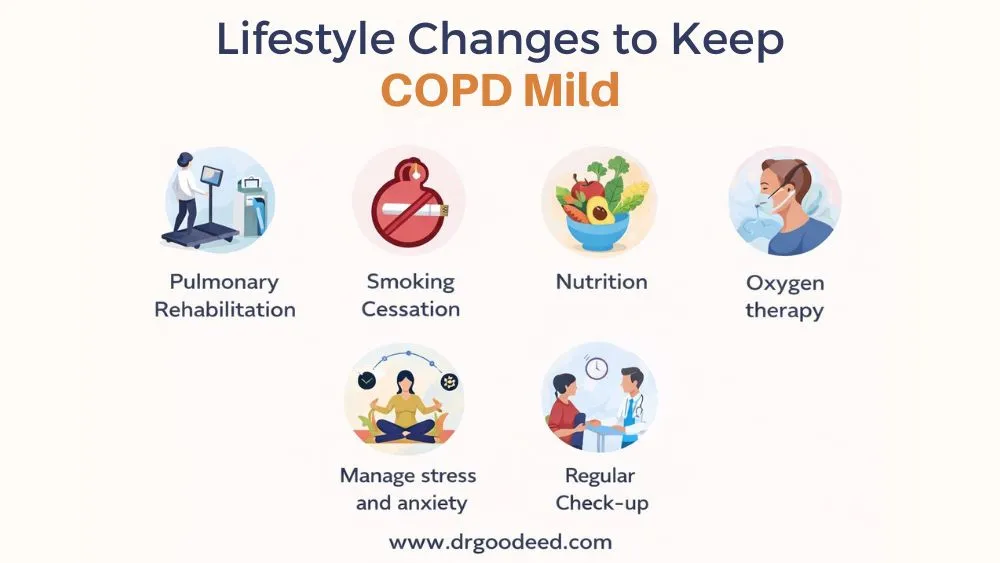
Lifestyle changes to keep COPD mild produce the biggest long-term impact of any intervention category. Medication helps. Lifestyle determines the ceiling.
Smoking Cessation (Critical Step)
Quitting smoking at Stage 1 COPD reduces annual FEV1 decline to near-normal aging rates within 2–3 years of quitting. Varenicline (sold as Chantix) combined with behavioral support achieves 12-month abstinence rates of 25–35%. This is the single highest-impact action available to any COPD patient.
Exercise and Pulmonary Rehabilitation
Lifestyle changes to keep COPD mild include structured exercise, which doesn’t improve FEV1 directly but improves how efficiently the body uses existing lung capacity. Pulmonary rehab participants report 38% fewer hospitalizations (Cochrane 2022 review) and walk measurably further on 6-minute walk tests within 8 weeks.
Nutrition and Weight Management
A BMI below 21 in COPD patients correlates with accelerated muscle wasting and worse survival odds. A BMI above 30 increases the oxygen demand of every physical task, worsening breathlessness. Small frequent meals prevent the diaphragm from being pushed upward by a full stomach, reducing post-meal breathlessness significantly.
Avoiding Respiratory Irritants
Beyond smoking, strong chemical fumes from cleaning products, paint, and pesticides trigger acute airway constriction in COPD patients. Switching to fragrance-free, low-VOC household products reduces daily airway irritation. HEPA air purifiers rated for the room size reduce indoor PM2.5 by 50–70%.
Medications for Early-Stage COPD
Medications for early-stage COPD are straightforward at Stage 1 but become more complex if progression occurs. Starting the right medication early prevents exacerbations that cause permanent additional damage.
Short-Acting Bronchodilators
SABAs (short-acting beta-agonists) like salbutamol provide relief within 5 minutes and last 4–6 hours. At Stage 1, patients use them as needed during breathlessness episodes. Using a SABA more than twice per week signals that long-acting maintenance therapy is needed.
Long-Acting Inhalers
LAMAs (long-acting muscarinic antagonists) like tiotropium open airways for 24 hours per dose. They reduce exacerbation frequency by 17–22% compared to placebo in early-stage patients. LABAs (long-acting beta-agonists) like salmeterol improve exercise tolerance and reduce dynamic hyperinflation during physical activity.
Role of Inhaled Corticosteroids
Medications for early-stage COPD do not routinely include inhaled corticosteroids (ICS) at Stage 1. GOLD guidelines reserve ICS for patients with frequent exacerbations or blood eosinophil counts above 300 cells per µL. Adding ICS without clear indication increases pneumonia risk by 50–70% without proven benefit.
Preventive Treatments and Vaccines
Annual influenza vaccination reduces COPD exacerbations by 30–40%. PCV20 pneumococcal vaccination reduces pneumonia risk. Azithromycin taken three times per week reduces exacerbation frequency by 27% in ex-smokers with Stage 2–3 COPD, per the MACRO trial data, though it’s not standard for Stage 1.
Can Lung Function Stay Stable Over Time
COPD can stay mild in terms of measurable lung function in ex-smokers with low exacerbation frequency. FEV1 stabilization is documented in multiple long-term cohort studies. It is not the norm for active smokers.
Understanding FEV1 Decline Rate
Normal aging causes FEV1 to drop 20–30 ml per year after age 35. Active smokers with COPD lose 60–80 ml per year. Ex-smokers with COPD who follow treatment lose 25–35 ml per year. The gap between these trajectories represents years of preserved lung function.
When Lung Function Stabilizes
Stabilization typically occurs 2–5 years after confirmed smoking cessation in Stage 1 patients. Spirometry repeated annually tracks whether FEV1 is holding or declining. Three consecutive years of less than 30 ml annual decline signals successful stabilization.
Impact of Treatment Adherence
Patients who use long-acting inhalers correctly and consistently maintain better FEV1 values than those who use inhalers incorrectly. Up to 60% of COPD patients use inhalers with poor technique, reducing drug delivery significantly. Device-specific training from a respiratory nurse or pharmacist corrects this directly.
Realistic Expectations for Patients
A Stage 1 patient who quits smoking and follows treatment should expect: stable or very slowly declining FEV1, reduced cough frequency within 6 months, and near-normal physical capacity for 10–15 years or longer. This is not a guarantee. It is the documented outcome for patients who follow evidence-based management.
What Causes COPD to Suddenly Worsen
- Respiratory infections: Rhinovirus, influenza, and Haemophilus influenzae are the three most common acute exacerbation triggers.
- Poor medication adherence: Missing long-acting bronchodilator doses for 3 or more consecutive days raises airway inflammation measurably.
- Continued smoking or vaping: Both maintain the inflammatory state that drives COPD progression without interruption.
- Untreated comorbid conditions: Uncontrolled acid reflux causes micro-aspiration of stomach acid into the airway. Obstructive sleep apnea drops nighttime oxygen levels below safe thresholds. Both independently worsen COPD outcomes.
Can You Live Normally With Mild COPD
COPD can stay mild enough to allow normal daily life. Stage 1 patients who manage their disease actively work full-time, exercise regularly, and travel without oxygen support. The diagnosis changes daily habits; it doesn’t end them.
Daily Life Expectations
Stage 1 patients manage well with minor adjustments: taking morning inhalers before activity, avoiding outdoor exercise during high-pollution days, and getting annual vaccinations. These are low-burden changes with significant protective impact.
Physical Activity and Work Capacity
Most Stage 1 and early Stage 2 patients maintain full work capacity, including physically demanding jobs, with appropriate respiratory protection and consistent medication use. Reducing activity out of fear of breathlessness accelerates muscle deconditioning and worsens the disease faster than activity itself would.
Mental Health Considerations
Anxiety affects 36% of COPD patients across all stages, per American Thoracic Society data. Anxiety worsens perceived breathlessness and reduces treatment adherence. Cognitive behavioral therapy (CBT) specifically reduces COPD-related anxiety scores in clinical trials. Ignoring the mental health component of COPD management slows physical recovery.
Long-Term Outlook
Mild COPD symptoms long-term remain manageable in patients who treat the disease as seriously at Stage 1 as others treat it at Stage 3. The 10-year outlook for a Stage 1 patient who quits smoking immediately is near-normal life expectancy.
When Mild COPD Becomes Serious
Mild COPD symptoms long-term can shift to serious within weeks if warning signs are ignored. Exacerbations that go untreated for 48+ hours cause significantly more permanent lung damage than those treated within 24 hours.
Signs that mild COPD has moved into serious territory:
- Breathlessness now happens at rest, not just during activity
- Using a rescue inhaler 3 or more times per day without lasting relief
- SpO2 (blood oxygen) drops below 92% on a pulse oximeter at rest
- Two or more courses of antibiotics for chest infections within 6 months
- Ankle swelling appears, which signals possible right heart strain from low oxygen
- Weight loss of more than 5% body weight over 3 months without trying
When to See a Doctor
In most active smokers, COPD always gets worse without medical input. Regular medical review catches disease acceleration before it becomes severe.
See your doctor within 2 weeks if:
- Daily cough with mucus has lasted more than 8 weeks
- Breathlessness occurs on flat ground at a normal walking pace
- Your rescue inhaler stops providing full relief
Seek same-day medical help if:
- Breathlessness is severe and doesn’t improve after using a rescue inhaler
- Mucus turns green with fever above 38°C
- Lips or fingernails develop a bluish or grayish color
- Chest pain accompanies any breathing difficulty
- Confusion or sudden drowsiness develops alongside breathlessness
Frequently Asked Questions
Can COPD stay mild for life?
Yes. COPD can stay mild for life for Stage 1 patients who quit smoking immediately and remain exacerbation-free. The Lung Health Study followed sustained quitters for 11 years with near-stable FEV1. Continued smoking makes long-term stability essentially impossible.
How fast does mild COPD progress?
Active smokers with Stage 1 COPD lose 60–80 ml of FEV1 per year. Ex-smokers drop to 20–30 ml per year. At that slower rate, a Stage 1 patient takes 15–20 years to reach Stage 3, compared to 7–10 years in an active smoker.
What is the life expectancy with mild COPD?
Stage 1 COPD patients who quit smoking have near-normal life expectancy, statistically comparable to age-matched non-smokers. Continuing to smoke at Stage 1 reduces life expectancy by 5–10 years on average, based on UK Biobank respiratory cohort data.
Can exercise stop COPD progression?
No. Exercise doesn’t stop FEV1 decline. It improves how efficiently the body uses remaining lung capacity. Pulmonary rehab participants walk 35–50 meters further on 6-minute walk tests after 8 weeks and report significantly less breathlessness during daily activities.
Do inhalers prevent worsening?
Yes, partially. LAMA inhalers (like tiotropium) reduce exacerbation frequency by 17–22%, which directly slows the extra FEV1 decline caused by each flare-up. Inhalers don’t rebuild damaged lung tissue, but they reduce the rate of further damage.
What triggers COPD flare-ups?
Rhinovirus triggers 40% of COPD exacerbations. Influenza and Haemophilus influenzae bacteria account for another 30% combined. Air pollution spikes, cold dry air, and missing inhaler doses for 3 or more days trigger the remaining cases.
Can mild COPD go undiagnosed for years?
Yes. The average gap between first symptoms and diagnosis is 4–7 years, per a 2021 Lancet Respiratory Medicine analysis. At Stage 1, symptoms are subtle enough that most patients and even some GPs miss them without spirometry testing.
Is mild COPD reversible?
No. Structural lung damage is permanent. But COPD can stay mild without progressing further in ex-smokers with consistent treatment. “Reversible” is the wrong target. “Stable” is achievable and clinically meaningful.
How do I keep COPD from getting worse?
Quit smoking. This reduces FEV1 decline from 70 ml per year to 25 ml per year. Get vaccinated annually against influenza and pneumococcal disease. Use long-acting inhalers correctly every day. Treat exacerbations within 24 hours of onset.
Can non-smokers have mild COPD long-term?
Yes. Non-smokers with COPD from occupational dust or alpha-1 antitrypsin deficiency often stay at Stage 1–2 for longer than smokers, provided they remove the causative exposure. AAT-deficient patients who receive augmentation therapy show 34% slower emphysema progression on CT imaging.