
Making your period end faster is not something home care can do instantly. Some steps can make bleeding lighter and help a period stay within a normal range. In the U.S., a normal period usually lasts 2 to 7 days. Bleeding beyond 7 days, or soaking pads fast, needs medical review.
To make your period end faster, start by knowing what controls the clock. Period length depends on hormone signals, how thick the uterine lining is, and the body’s normal rhythm. This guide explains safe ways to manage flow, ease cramps, reduce bloating, and spot warning signs.
What Determines How Long a Period Lasts?
Making your period end faster becomes easier to understand once the menstrual cycle is clear. A period starts when hormone imbalance and the uterus sheds its lining. Most periods last 2 to 7 days, and the first 2 days usually bleed the heaviest.
Hormonal cycle regulation
Estrogen and progesterone rise and fall each month. When ovulation does not happen, or hormones swing hard, bleeding can last longer or arrive at odd times. To make your period end faster often means treating the hormone pattern, not just the bleeding day.
Uterine lining shedding process
Period blood is mostly the womb lining leaving the body. A thicker lining usually means more bleeding at the start. That is why some cycles feel short and light, while others take longer to finish.
Natural variation in menstrual duration
Some variation is normal. Teens, people near menopause, and people with PCOS, fibroids, endometriosis, or bleeding disorders can have longer bleeding. If a period lasts more than 7 days, that is no longer routine.
How to Reduce Period Duration Safely
The safest way to reduce period duration safely is to keep the body steady, avoid dehydration, and use hormone treatment only with medical guidance. These steps do not force a fast stop. They can make the flow lighter and more regular over time.
Staying physically active
Light and regular movement can ease cramps and help the body feel less stiff. It does not usually stop bleeding the same day. But exercise to help period end faster can reduce pain, improve mood, and support better cycle control over time.
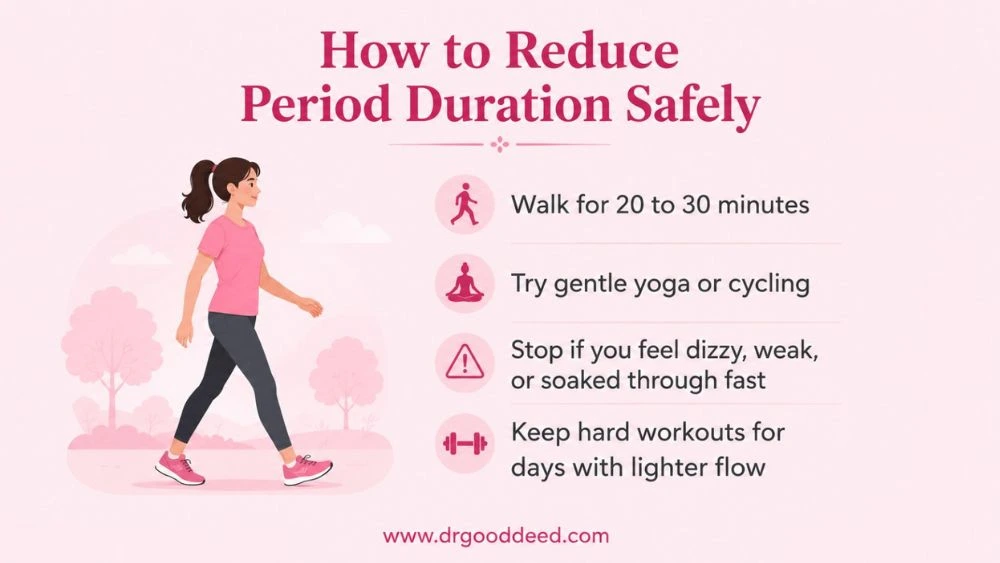
- Walk for 20 to 30 minutes.
- Try gentle yoga or cycling.
- Stop if you feel dizzy, weak, or soaked through fast.
- Keep hard workouts for days with lighter flow.
Maintaining hydration and nutrition
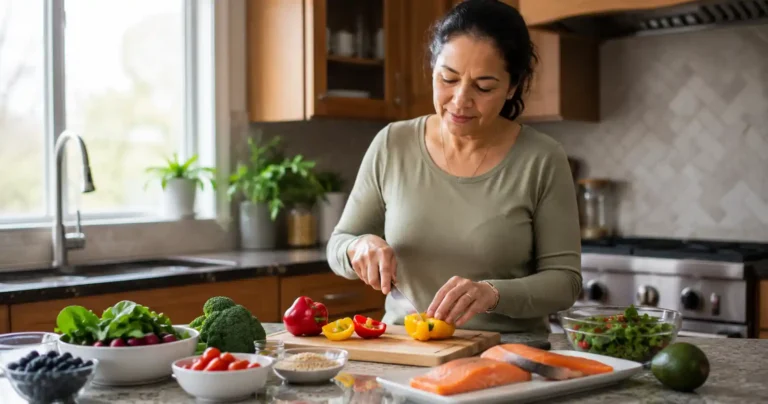
Water will not cut days from a period by itself. It does help with constipation, headache, and bloating. Iron-rich foods, protein, and fruits with potassium support energy when blood loss is higher.
Using hormonal birth control under medical guidance
Combined pills, progestin-only pills, shots, implants, and hormonal IUDs can make periods lighter. Some people stop bleeding. ACOG says menstrual suppression with hormonal methods does not harm future fertility.
Exercise to Help Period End Faster
For exercise to help period end faster, the real goal is less pain and steadier flow, not a same-day cure. Movement lowers cramps and improves blood flow. Short, regular sessions work better than one hard workout.
- Best choices: walking, stretching, yoga, easy cycling.
- Best timing: first 2 to 3 days, when cramps and heaviness are common.
- Avoid very hard training if you feel faint or bleed through fast.
- Use movement as support, not as the only fix.
Why exercise helps
Exercise can lower pain signals and reduce tension in the pelvis. It also helps constipation and mood swings, which often make periods feel worse. This approach is better seen as symptom control than flow control.
Methods to Lighten Periods Quickly
The methods to lighten periods quickly reduce flow, not miracle cures. Hormonal methods can lower bleeding faster than lifestyle steps. Some prescription medicines help when bleeding is heavy. Heat helps pain, but it does not shrink the period itself.
Hormonal contraceptive options
Birth control pills, progestin-only pills, the shot, the implant, and hormonal IUDs can make bleeding lighter. Some people stop bleeding completely. To make your period end faster, these are the strongest long-term options when a clinician says they fit your health history.
Heat therapy for comfort
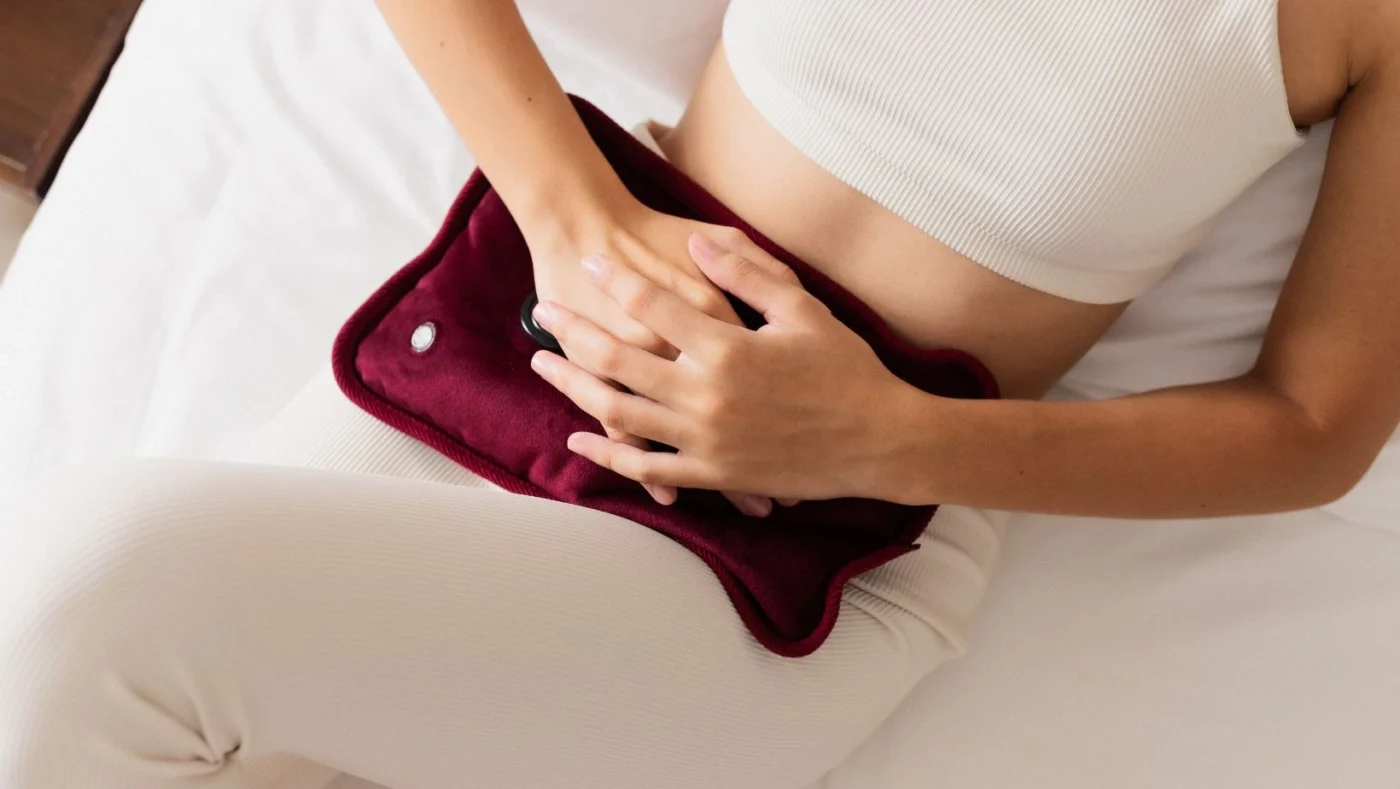
A heating pad or hot water bottle can ease cramps and relax the lower abdomen. It helps comfort, sleep, and movement. Methods to lighten periods quickly should not promise that heat will shorten bleeding, because it mainly lowers pain.
Managing inflammation and stress
Less stress can mean less tension and fewer cramps. Relaxation, sleep, and gentle movement help the body recover. To make your period end faster becomes harder when stress keeps the body on alert.
Stress Affecting Menstrual Duration
Stress affecting menstrual duration \does not affect every person the same way. Stress can make periods late, light, or irregular. Long-lasting stress can change bleeding patterns.
Cortisol and hormonal imbalance
Stress raises cortisol. That can disrupt the brain signals that control ovulation and the monthly cycle. When ovulation shifts, bleeding can become shorter, longer, or more uneven.
Delayed or prolonged bleeding patterns
Short stress can delay a period. Long stress can keep cycles irregular. If the bleeding stays long time, stress affecting menstrual duration is not the only cause. Fibroids, PCOS, or a bleeding disorder should be checked.
Sleep and emotional health effects
Poor sleep makes pain feel worse and raises fatigue. Anxiety can also make cramps and bloating feel stronger. Rest and regular sleep do not stop a period, but they help the body handle it better.
Bloating During Menstruation Treatment
For bloating during menstruation treatment, the aim is less water retention and better digestion. Salt pulls in more water. Better hydration, steady meals, and potassium and magnesium rich foods can help the body release extra fluid.
Reducing excess salt intake
Packaged snacks, instant noodles, chips, and fast food can raise water retention. Cutting salt for a few days can reduce puffiness and belly pressure. This is one of the fastest fixes for period puffiness.
Hydration and digestion support
Drink enough water through the day. It helps the gut move better and can reduce the stuck, swollen feeling. Warm drinks may also help some people feel less crampy.
Foods rich in potassium and magnesium
Bananas, yogurt, beans, spinach, and nuts give potassium or magnesium. These nutrients help balance fluid shifts and muscle tightness. Bloating during menstruation treatment works best when food choices stay simple and low salt.
Things That Can Make Periods Last Longer
Some habits and health problems make bleeding drag on. Heavy flow, skipped ovulation, fibroids, endometriosis, and bleeding disorders can all extend a period. If bleeding lasts more than 7 days, or gets heavier over time, do not treat it as normal.
- Skipping birth control pills can trigger breakthrough bleeding.
- Big stress can disrupt ovulation.
- Very low body weight or sudden weight change can affect hormones.
- Fibroids, PCOS, and endometriosis can make bleeding longer.
Heavy bleeding can also cause anemia. If you feel tired, weak, dizzy, or short of breath, that needs attention.
FAQs
Can exercise actually help shorten menstrual bleeding?
No. Exercise does not usually stop bleeding faster the same day. It can reduce cramps, improve mood, and help you function better while the period runs its normal course.
Why does stress sometimes make periods last longer?
Stress changes cortisol and can disrupt ovulation. That can make cycles late, irregular, or longer than usual. Long-lasting bleeding still needs a medical check.
What foods may help reduce bloating during menstruation?
Lower salt foods and potassium-rich foods help most. Bananas, spinach, beans, and yogurt can reduce water retention more than sugary snacks or salty packaged food.
Can hormonal birth control make periods lighter or shorter?
Yes. Combined pills, progestin-only pills, the shot, implants, and hormonal IUDs can make bleeding lighter and sometimes stop periods. A clinician should match the method to the person.
Is it safe to try natural remedies to stop periods quickly?
No natural remedy has strong proof that it stops a period fast. Heat, hydration, and movement can ease symptoms, but they do not reliably shorten bleeding.
Why do some periods naturally last longer than others?
Hormone shifts, puberty, perimenopause, PCOS, fibroids, endometriosis, and bleeding disorders can all change period length. A period of over 7 days needs review.
Can dehydration worsen menstrual symptoms and bloating?
Yes. Dehydration can make fatigue, constipation, headache, and bloating feel worse. Water does not end a period, but it supports comfort and digestion.
What symptoms during periods may require medical attention?
Bleeding that lasts more than 7 days needs medical care. So does soaking a pad or tampon every hour for 2 to 3 hours. Large clots, dizziness, or pelvic pain also matter.
Are heavy periods always a sign of a health problem?
No, but they are not something to ignore. Heavy periods can come from ovulation problems, fibroids, endometriosis, PCOS, or a bleeding disorder.
How can menstrual cycles be tracked to identify irregularities?
Track the first day of each period, the last day, flow heaviness, clots, pain, and missed pills. Patterns matter more than one odd month. Cycles outside 21 to 35 days, or bleeding longer than 7 days, deserve review.