

“Spotting” instead of period means light vaginal bleeding that is not a normal monthly flow. It can happen before a period, after sex, during ovulation, after birth control changes, or in pregnancy. In the U.S., unusual bleeding should be checked if it repeats, gets heavier, or causes lower back pain.
Many people see spotting instead of period and think about pregnancy first because light bleeding can come from implantation, hormone imbalance, or contraception changes. It can also come from infection, PCOS, and perimenopause.
This guide covers spotting instead of period causes, pregnancy signs, brown blood, birth control, cycle issues, and warning signs. It stays simple and focused on the next step.
What Is Spotting?
Spotting instead of period is light bleeding that does not fill a pad or tampon. It may show up on toilet paper, underwear, or as drops in the toilet. A normal period is usually heavier.
Difference between spotting and a menstrual period
Spotting is light enough that a pad may not be needed. A period has steadier flow for several days. Spotting can happen alone or before a period starts.
Light pink, red, or brown discharge
Spotting can look pink, red, or brown. Brown blood is older blood left slowly. Red blood is fresher.
How long spotting typically lasts
Spotting often lasts a few hours to two days. Implantation bleeding is usually brief and light. Bleeding that lasts longer or gets heavier needs review.
Causes of Spotting Without a Full Period
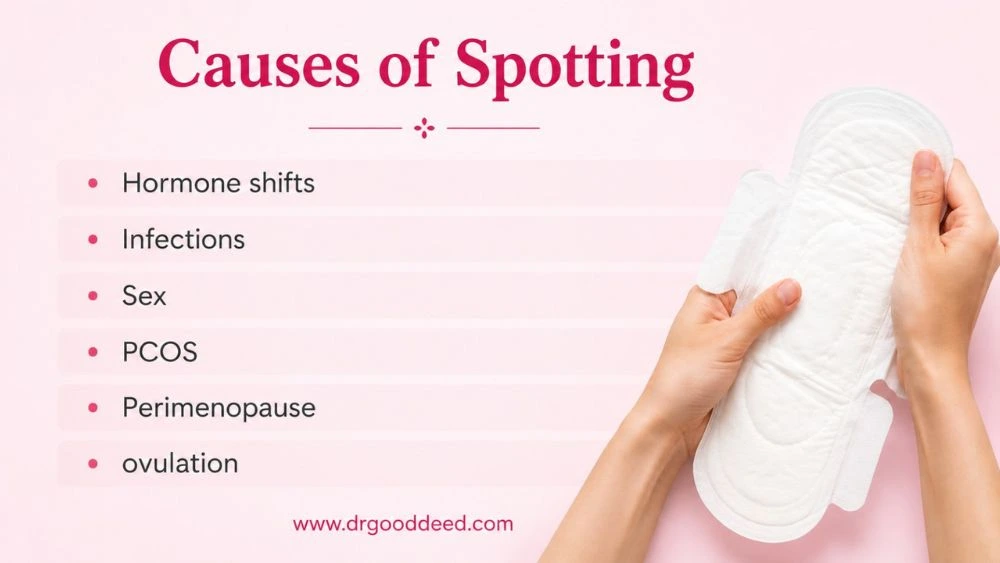
Causes of spotting without a full period include hormone changes, early pregnancy, birth control, ovulation, infections, PCOS, and perimenopause. A short, light bleed near ovulation, after a missed pill, or near a missed period points to different causes.
- Hormone shifts can disturb the uterine lining and cause light bleeding.
- Sex can trigger spotting.
- Yeast Infections can cause spotting, pelvic pain, or unusual discharge.
- PCOS can cause irregular ovulation.
- Perimenopause can make periods skip or turn into spot bleeding.
Spotting With Pregnancy Symptoms
Spotting with pregnancy symptoms can happen in early pregnancy, but light bleeding alone does not prove pregnancy. A late period plus nausea, breast tenderness, or tiredness matters most. A home test comes next.
Implantation bleeding possibilities
Implantation bleeding can happen about 10 to 14 days after conception. It is usually light, brief, and pink or brown. It should not soak pads or last long.
Early pregnancy hormonal changes
Early pregnancy raises hormones fast. That can cause breast soreness, tiredness, mild cramps, and a small amount of bleeding. Strong pain, shoulder pain, or dizziness needs urgent care.
Pregnancy symptoms linked with spotting
A late period plus light spotting, tiredness, nausea, or breast tenderness raises suspicion. It does not confirm pregnancy. More urination and food dislike can add to the pattern.
Brown Spotting Instead of Period
Brown spotting instead of period usually means old blood is leaving slowly. It can happen at the start or end of a cycle, after sex, or during hormone shifts. Brown color alone is not the problem. Timing and symptoms matter more.
Old blood leaving the uterus
Old blood turns brown as it stays longer before leaving the body. This often happens when flow is light or slow. Brown spotting at the end of a period is common.
Hormonal shifts and delayed bleeding
When ovulation is delayed, the lining may shed later and look brown first. Stress, PCOS, perimenopause, or birth control changes can do that.
When brown spotting may need evaluation
Brown spotting that keeps returning, follows sex, or comes with pain should be checked. So should any bleeding after menopause, or bleeding during pregnancy.
Birth Control Causing Spotting
Birth control causing spotting is common after starting, switching, or missing doses of hormonal contraception. It also happens with extended cycle pills, implants, and hormonal IUDs. The body often settles, but ongoing bleeding needs review.
Hormonal contraceptive adjustments
New hormones can make the uterine lining unstable at first. That is why light bleeding is common in the first months of use. It often gets better as the body adjusts.
Missed pills and breakthrough bleeding
Missed pills, late pills, vomiting, diarrhea, or medicine interactions can trigger breakthrough bleeding. This is a common reason for unexpected spotting on the pill. The issue starts here.
IUD-related spotting patterns
Hormonal IUDs can cause spotting for 3 to 6 months after placement. Some people later get lighter periods or none at all. Longer or heavier bleeding should be checked.
Common Reasons for Spotting Between Periods
Causes of spotting without a full period also include PCOS, perimenopause, and major body stress. These causes often affect ovulation. When ovulation changes, the period can come late, come early, or show up as spotting.
Polycystic ovary syndrome (PCOS)
PCOS often causes irregular or missed ovulation. That can lead to long gaps, random spotting, or skipped periods. Other clues include acne, weight gain during period, or extra facial hair.
Perimenopause hormonal changes
Perimenopause often starts with irregular cycles. Periods may come closer together, get farther apart, or turn into spotting before stopping. Any heavy bleeding or bleeding after menopause needs evaluation.
Intense exercise or rapid weight changes
Hard exercise, low body weight, or quick weight loss can affect the signals that control ovulation. That can lead to missed periods or light spotting. It is common with low calorie intake or high training load.
How to Manage Spotting Between Periods
Manage spotting between periods by tracking the bleed, checking pregnancy risk, and watching for red flags. Mild spotting may settle on its own. Spotting that repeats for two cycles should not be ignored.
Tracking cycle patterns and symptoms
Write down the date, color, amount, pain level, sex, birth control use, and pregnancy test results. This makes the cause easier to spot. A cycle note gives the clearest clue. Tracking starts with patterns.
Managing stress and sleep quality
Stress and poor sleep can disturb ovulation and delay a period. Regular sleep, less late caffeine, and steady routines help the cycle settle. These changes do not fix every cause, but they help when hormones are the problem.
Maintaining balanced nutrition and hydration
Eating enough calories, protein, iron, and fluids supports normal hormone function. Extreme dieting can make bleeding irregular. If spotting follows fatigue, weight loss, or missed meals, the body may be under strain.
Symptoms That May Occur Along With Spotting
Spotting instead of period can happen with mild cramps, bloating, breast tenderness, or fatigue. Those signs can come from PMS, early pregnancy, or hormone shifts. The pattern matters more than one symptom alone.
Mild cramps and bloating
Mild cramps and bloating fit both PMS and early pregnancy. They are less worrying when the bleed is light and short. Severe pain is different and needs care.
Breast tenderness and fatigue
Breast tenderness and fatigue are common when hormones change. They also appear in early pregnancy and after birth control changes. These signs do not confirm the cause.
Pelvic pain or dizziness warning signs
Pelvic pain, fainting, dizziness, or shoulder pain with bleeding can point to ectopic pregnancy or another urgent problem. Heavy bleeding also needs prompt help.
When Spotting Instead of Period May Be a Sign of Pregnancy
Spotting with pregnancy symptoms is more likely when the bleed is light, short, and near the time a period is due. Pregnancy becomes more likely if the period is late, the test is positive, or the bleeding comes with nausea, breast soreness, and tiredness.
Implantation bleeding vs a period
Implantation bleeding is usually lighter than a period and lasts less time. It often appears 10 to 14 days after conception. A normal period usually has a stronger, steadier flow.
When to take a pregnancy test
Take a home test when the period is late, or 21 days after unprotected sex if the cycle is irregular. Test again in 48 hours if the first result is negative.
When bleeding in pregnancy needs urgent care
Pregnancy bleeding with severe pain, heavy flow, clots, fainting, or pain on one side needs urgent medical help. That can signal miscarriage or ectopic pregnancy.
FAQs
What is the difference between spotting and a normal period?
Spotting is a few drops or light smears. A normal period has steady flow for several days. Spotting often shows on wiping.
Can pregnancy cause spotting instead of a full period?
Yes. Spotting instead of period can be an early pregnancy sign, especially 10 to 14 days after conception. It is usually light and brief. A missed period makes pregnancy more likely.
Why does brown spotting happen before or after a missed period?
Brown spotting instead of period usually means old blood is leaving slowly. It can happen when ovulation is delayed or when hormone levels shift. If it keeps happening, get checked.
Can stress delay periods and cause light spotting?
Yes. Stress can delay ovulation and cause light spotting. Sleep loss and major stress can do the same. Repeated episodes deserve review.
How does birth control lead to breakthrough bleeding?
Birth control can thin the uterine lining, so light bleeding appears before the body adjusts. Missed pills, vomiting, diarrhea, or new medicines raise the chance. Birth control causing spotting is common here.
Is spotting during ovulation considered normal?
Yes. Some people spot around ovulation because estrogen shifts can change the lining. It should be light and brief. Pain, fever, or bad-smelling discharge point to another cause.
When should spotting between periods become a concern?
Managing spotting between periods becomes urgent when it repeats, gets heavier, or comes with pain, dizziness, or pregnancy risk. Bleeding after menopause also needs evaluation.
Can hormonal imbalance cause repeated spotting cycles?
Yes. PCOS diet, perimenopause, and other hormone shifts can cause repeated spotting. The pattern often includes irregular periods or cycle gaps, plus acne or hot flashes.
What symptoms together with spotting may indicate pregnancy?
Late period, breast tenderness, nausea, tiredness, and light cramps raise suspicion. Light spotting with pregnancy signs is more likely when the bleed stays brief.
Should pregnancy testing be done after unusual spotting?
Yes. Test after a late period, or repeat in 48 hours if the first test is negative. A test is the fastest way to separate causes.