
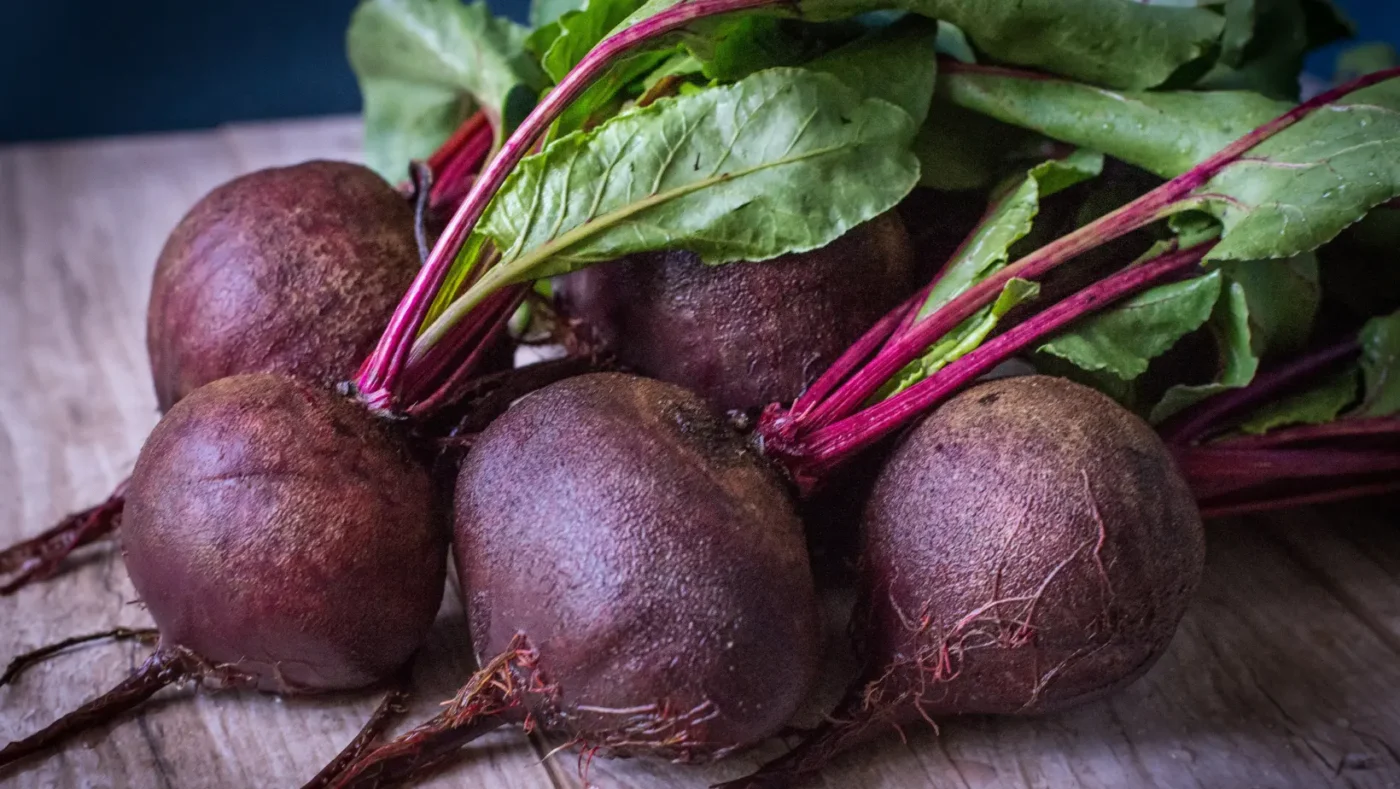

The health benefits of beets come mainly from a natural compound called dietary nitrate. Your body turns this nitrate into nitric oxide, a molecule that relaxes blood vessels and improves blood flow. This one reaction explains most of the beetroot benefits that dietitians and sports doctors talk about, from heart support to workout stamina.
Beets also carry fiber, folate, manganese, and potassium, so the full beets nutrition picture goes beyond nitrates alone. This guide breaks down the science-backed benefits of eating beets, compares juice to whole beets, and covers who should be careful with this vegetable.
Health Benefits of Beets
The health benefits of beets are nitrates for blood flow, betalains for antioxidant support, and fiber for gut and blood sugar health. Below are the six effects with the strongest research behind them.
Support Heart Health
Beets for heart health work through nitric oxide. This gas relaxes the endothelium, the thin inner lining of your blood vessels, so blood moves with less resistance. A 2024 meta-analysis in Nutrition, Metabolism and Cardiovascular Diseases pooled results from multiple trials and found beetroot juice lowered clinical systolic blood pressure by about 5 mmHg compared to placebo. That is a real, clinically meaningful drop, not a rounding error. Betalains, the pigment that gives beets their deep red color, also calm the low-grade inflammation linked to artery stiffening. This is one reason beet health benefits show up so often in heart-focused nutrition research.
May Help Improve Exercise Performance
Beets for exercise performance is one of the most studied uses of this vegetable. Nitrate lowers the oxygen cost of muscle contraction, meaning your muscles use less oxygen to do the same work. A large review published in a sports medicine journal in 2022 found that dietary nitrate improved time-to-exhaustion and time-trial results across cycling, running, and rowing studies.
The effect is strongest in activities lasting under 40 minutes. This is the science behind beetroot before workout benefits that many endurance athletes rely on. For beetroot for stamina and endurance, timing matters. Most trials use juice two to three hours before exercise, giving the body time to convert nitrate into nitric oxide.
Support Healthy Blood Pressure Levels
Beetroot for blood pressure support is backed by some of the strongest evidence in this entire field. Multiple systematic reviews, including one covering studies from 2009 to 2017, consistently found systolic pressure drops between 4 and 5 mmHg with regular beetroot juice intake. Diastolic pressure, the lower number, changes far less. Researchers link this specifically to beetroot for nitric oxide production, since nitric oxide is the exact molecule your blood vessels use to widen and lower resistance.
Promote Digestive Health
Beets for digestive health benefit from fiber, mostly the type your gut bacteria ferment into short-chain fatty acids. One cup of cooked beets has about 3.4 grams of fiber. This fiber feeds beneficial gut bacteria and adds bulk to stool, which helps prevent constipation. Beets also contain betaine, a compound that supports normal liver function and bile flow, both important for smooth digestion.
Provide Antioxidant Protection
Beets owe their color to betalains, a class of plant pigment found in almost no other common vegetable. Lab and animal studies show betalains neutralize free radicals and reduce markers of oxidative stress. Beetroot for inflammation control is one area researchers are actively studying, since chronic low-grade inflammation is tied to heart disease, joint pain, and metabolic issues.
Support Brain Health
Beets for brain health work through the same nitric oxide pathway that helps your heart. Better blood flow means more oxygen and glucose reaching brain tissue. A small study in older adults found that a nitrate-rich diet increased blood flow to the frontal lobe, the brain region tied to decision-making and focus. Researchers have not confirmed long-term cognitive benefits yet, but the blood flow mechanism is well documented.
Beet Juice vs. Whole Beets: Which Is Better?
Whole beets and beet juice serve different goals, and your choice should match what you want from the vegetable.
| Whole Beets | Beet Juice |
| More fiber | Higher nitrate concentration per serving |
| Better satiety | Faster absorption |
| Better for digestion | Popular before endurance exercise |
| Lower glycemic impact | Less filling |
If your goal is general health benefits of eating beetroot daily, whole beets are the better everyday choice. They fill you up, support digestion, and come with a lower sugar hit per bite. If your goal is a short-term nitrate boost before a race or hard workout, juice delivers more nitrate in a smaller volume, which is why it dominates sports nutrition research.
Raw vs. Cooked Beets: Does Preparation Affect Nutrition?
Cooking changes beets more than most vegetables. Boiling beets in water for 25 to 30 minutes can pull a meaningful share of nitrate and vitamin C into the cooking water, so some nutrients get lost if you toss that water out. Roasting and steaming keep more nutrients intact because the beet has less direct water contact.
Raw beets keep the highest nitrate and vitamin C levels, but they are harder to chew and digest, and their earthy taste is stronger. Grating raw beets into salads is one workaround. Most people get the best mix of taste, digestibility, and nutrient retention by roasting or steaming beets instead of boiling them.
How to Add Beets to Your Diet
Eat Cooked or Roasted Beets
Wrap whole beets in foil and roast at 400°F for 45 to 60 minutes until a fork slides in easily. This method concentrates their natural sweetness without nutrient loss from boiling water.
Pair Beets with Vitamin C-Rich Foods
Vitamin C helps your body convert plant nitrate into nitric oxide more efficiently. Add orange segments, lemon juice, or bell pepper to a beet salad to get more out of every serving.
Choose Whole Beets Most of the Time
Whole beets give you fiber alongside the nitrate, which slows sugar absorption and keeps you fuller longer. Save juice for days when you specifically want a fast nitrate dose, like before a long run.
Eat Beets Regularly Rather Than Occasionally
Nitric oxide levels rise and fall within hours. Research on beetroot nutrition and blood pressure shows the biggest benefits come from consistent intake, not a single serving here and there. Two to three servings a week is a reasonable starting point for most healthy adults.
Things to Consider Before Eating Beets
Natural Sugar Content
Beets carry more natural sugar than most non-starchy vegetables, about 9 grams per cup cooked. This is not a reason to avoid them, but people managing blood sugar closely should count beets as a carbohydrate source, not a free food.
Beeturia (Red or Pink Urine After Eating Beets)
Some people notice red or pink urine after eating beets. This happens because betalain pigments pass through the digestive tract without fully breaking down, and it is completely harmless. It affects an estimated 10 to 14 percent of people, largely based on stomach acid levels and iron status.
Kidney Stone Risk for Some People
Beets are high in oxalates, compounds that can bind with calcium to form kidney stones in people prone to them. Anyone with a history of calcium oxalate stones should talk to a doctor or dietitian before eating beets regularly.
FAQs
What are the main health benefits of beets?
The health benefits of beets include lower blood pressure, improved exercise stamina, better digestion, and antioxidant protection from betalains, driven mainly by dietary nitrate converting to nitric oxide in your blood vessels.
Are beets good for blood pressure?
Yes. Beetroot juice lowers systolic blood pressure by roughly 4 to 5 mmHg in clinical trials, according to multiple meta-analyses. This makes beetroot benefits for blood pressure among the best-documented in vegetable research.
Can beets improve exercise performance?
Yes. Nitrate in beets lowers the oxygen cost of exercise, improving time-to-exhaustion and time-trial results in activities under 40 minutes, especially cycling and running.
How often should you eat beets?
Two to three servings weekly gives measurable beet health benefits for blood pressure and stamina. Daily intake works too, since nitric oxide effects fade within hours of eating.
Are beets safe for everyone?
Mostly yes, but people with a history of kidney stones, low blood pressure, or those on blood pressure medication should check with a doctor first, since beets can amplify these effects.
Sources
- Nutrition, Metabolism and Cardiovascular Diseases: Beetroot juice and blood pressure meta-analysis (2024)
- Advances in Nutrition: Nitrate-independent blood pressure effect of beetroot juice
- American Journal of Clinical Nutrition: Inorganic nitrate and beetroot juice supplementation reduces blood pressure
- PMC: Effects of beetroot juice on physical performance, umbrella review
- Journal of the International Society of Sports Nutrition: Dietary nitrate and endurance exercise performance meta-analysis
- PMC: Beetroot ingestion and high-intensity interval training review
- USDA FoodData Central: Beets, cooked, boiled, drained
- National Kidney Foundation: Oxalate and kidney stones
- Mayo Clinic: Blood pressure and diet
- Journal of Agricultural and Food Chemistry: Betalains and antioxidant activity







2 Comments
Comments are closed.