
Chocolate does not cause constipation for most people, no. But for specific groups, yes, and the reason depends entirely on which type of chocolate, how much, and the individual’s digestive baseline. Chocolate does not cause constipation in everyone uniformly. The answer splits by chocolate type, fat content, dairy content, and gut sensitivity. This guide covers each mechanism, which chocolate types carry the most risk, and how to prevent constipation after eating chocolate without giving it up entirely.
How Chocolate May Affect Digestion
Chocolate is is a mixture of cocoa solids, fat (cocoa butter), sugar, and often dairy. Each component interacts with the digestive system differently. The net digestive effect depends on which ingredients dominate.
Fat Content and Digestive Function
Fat slows gastric emptying. Chocolate, especially milk and white varieties, carries 30–55% fat by weight. High-fat foods delay the rate at which stomach contents pass into the small intestine, extending the transit window.
For people already prone to slow gut motility, this compounds the slowdown. Michigan Medicine gastroenterologists confirm that milk chocolate’s fat content is one of the primary reasons it triggers digestive symptoms in susceptible individuals.
Sugar Content and Gut Health
Chocolate products, particularly processed bars and candy-coated varieties, contain high amounts of refined sugar. Refined sugar feeds gut bacteria that produce gas through fermentation.
In a sluggish gut, fermented gas accumulates, producing bloating and discomfort. The sugar slows transit indirectly by altering gut microbiome composition over time, reducing populations of motility-supporting bacteria.
Dairy Ingredients in Chocolate Products
Milk chocolate and white chocolate both contain lactose. Per EU food standards (European Directive 2000/36/EC), milk chocolate must contain at least 14% dry milk solids per 100g. That translates to roughly 7 grams of lactose per 100g bar.
For the approximately 36% of Americans with some degree of lactose intolerance, that amount triggers gas, bloating, and sometimes diarrhea, not constipation. But in IBS-constipation-predominant cases, the same dairy can slow transit further.
Individual Sensitivities and Digestive Responses
Two people eating the same chocolate bar experience different outcomes. One gets loose stools from the caffeine; another gets harder stools from the fat and low fiber. The difference lies in baseline gut motility, existing conditions like IBS, and genetic lactase enzyme activity. Whether chocolate causes constipation depends on these individual variables, not on chocolate itself as a universal cause.
Types of Chocolate and Constipation Risk
Not all chocolate carries equal constipation risk. Cocoa percentage determines fiber, fat, sugar, and dairy ratios, and those ratios determine the digestive effect.
Milk Chocolate
Milk chocolate contains 10–50% cocoa solids, significant added sugar, and dairy. It is the highest-risk type for constipation in people with lactose intolerance or IBS. Fat content ranges from 30–35%. Fiber content is under 1 gram per ounce.
Dark Chocolate
Dark chocolate at 70%+ cocoa contains 12–25 mg of caffeine per ounce and meaningful theobromine concentrations, both stimulating intestinal contractions.
A 2012 study in International Journal of Environmental Research and Public Health found a cocoa beverage with roughly 50 mg of caffeine significantly increased bowel movement frequency in constipated elderly patients.
Michigan Medicine researchers confirm cocoa flavonoids promote beneficial gut bacteria including Lactobacillaceae and Bifidobacterium. Dark chocolate is the least constipating type.
White Chocolate
White chocolate contains no cocoa solids, no fiber, no caffeine, and no theobromine. It is cocoa butter, sugar, and dairy. Does chocolate cause constipation more reliably? White chocolate comes closest, especially for people with slow gut baseline.
Sugar-Free Chocolate Products
Sugar-free chocolates use maltitol or sorbitol. Sugar alcohols draw water into the colon osmotically. Above 20–30g of maltitol, they produce diarrhea and cramping. They are a loose-stool risk for most people. However, some with IBS-C experience paradoxical constipation from these additives.
Processed Chocolate Snacks
Processed chocolate products replace cocoa with hydrogenated fats and emulsifiers. Processed foods and digestive health interact poorly: hydrogenated fats slow gastric emptying, and emulsifiers like carrageenan disrupt the gut mucosal barrier. A 2015 Nature study by Chassaing et al. found two common emulsifiers altered gut microbiome composition and promoted intestinal inflammation in mice.
Stomach Pain After Eating Chocolate
Stomach pain after eating has several distinct causes, not all related to constipation.
Digestive Sensitivities to Chocolate
Theobromine, a methylxanthine in cocoa, relaxes the lower esophageal sphincter (the valve between esophagus and stomach). When it relaxes, stomach acid refluxes upward, producing a burning sensation that many people misidentify as general stomach pain. This is acid reflux, not constipation.
Lactose Intolerance and Dairy Ingredients
Undigested lactose reaches the colon, where bacteria ferment it and produce hydrogen, methane, and carbon dioxide. This causes bloating and cramping within 30–120 minutes of eating milk or white chocolate. The discomfort is crampy and gas-driven, distinct from the dull pressure of backed-up stool.
Acid Reflux and Chocolate Consumption
Chocolate’s fat slows gastric emptying, keeping acid in the stomach longer. Combined with theobromine’s sphincter-relaxing effect, this makes chocolate a well-documented reflux trigger. The American College of Gastroenterology identifies chocolate as a common acid reflux trigger food alongside citrus and caffeine.
When Stomach Pain May Signal Another Condition
Persistent pain after eating chocolate that does not track with portion size warrants evaluation. Celiac disease, SIBO, Crohn’s disease, and gastroparesis all produce post-eating pain patients sometimes attribute to specific foods. If removing chocolate does not resolve symptoms, see a gastroenterologist.
Other Foods That May Cause to Constipation
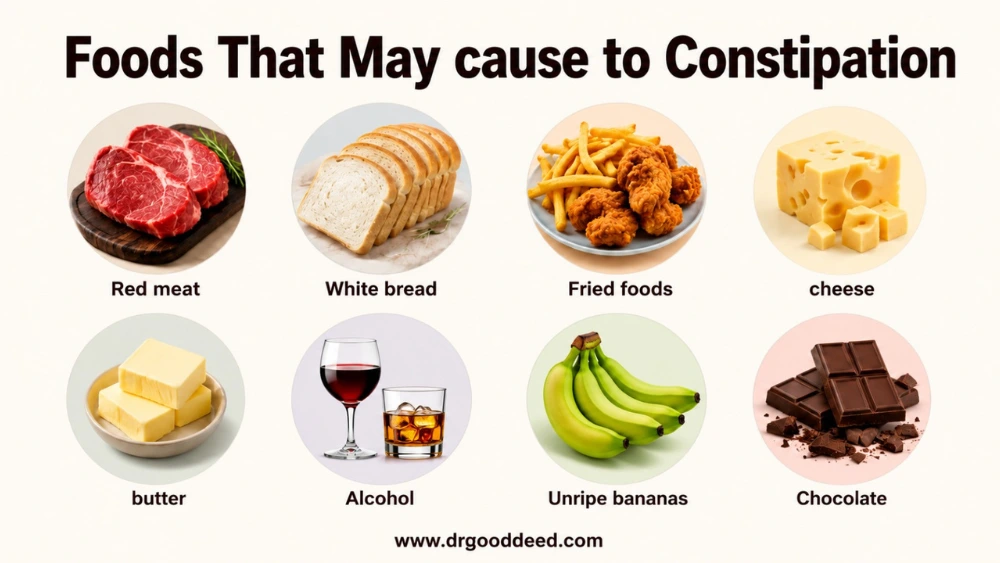
Low-fiber foods causing constipation is the most common dietary driver of chronic constipation in the USA. Most Americans consume 10–15g of fiber daily against a recommended 25–38g. Chocolate is rarely the sole cause. These food categories combine with chocolate to raise total constipation risk.
Foods that slow transit and reduce stool bulk:
- Red meat and processed meats: High in fat, low in fiber. Slow gastric emptying significantly.
- White bread and refined grains: Low-fiber foods cause constipation by providing no bulk for stool formation.
- Fried foods: High-fat, low-fiber combination slows transit through multiple mechanisms.
- Full-fat dairy (cheese, butter): Constipating in people with lactose sensitivity, especially in large quantities.
- Alcohol: Dehydrates the body and draws water from stool, hardening it.
- Unripe bananas: Contain resistant starch that slows transit in some people.
Low-fiber foods causing constipation is a dietary pattern problem. Chocolate eaten as part of a low-fiber, high-fat diet compounds existing slow transit. Eaten alongside adequate fiber and hydration, the risk drops substantially.
How to Prevent Constipation After Eating Chocolate
How to prevent constipation after eating chocolate is a practical question with specific answers. These steps address the mechanisms chocolate uses to slow transit.
Increase Daily Fiber Intake
Target 25g of fiber daily. Pair chocolate consumption with a fiber-rich food: two kiwifruits, a pear, or 1 tablespoon of psyllium husk stirred into water. Soluble fiber forms a gel in the colon, keeping stool soft and hydrated even when fat intake temporarily slows transit.
Drink More Water
Fat in chocolate slows gastric emptying, which allows more water to be absorbed from stool sitting in the colon. Drinking 500ml of water with or after chocolate counteracts this. Total daily hydration target of 2.5–3 liters during higher chocolate consumption days is the clinical standard for constipation prevention.
Choose Higher-Cocoa Chocolate Options
Dark chocolate at 70% cocoa or higher provides more fiber per serving than milk or white chocolate. A 1-ounce serving of 70% dark chocolate provides roughly 2 grams of fiber. It also contains caffeine and theobromine, which stimulate intestinal contractions.
Switching from milk chocolate to 70%+ dark chocolate is one of the most effective single dietary swaps for reducing chocolate-related constipation risk.
Practice Portion Control
Limiting chocolate to 20–30 grams per day reduces the fat and sugar load on the digestive system. This is the portion threshold below which most people with intact gut motility do not experience transit slowing.
Above 50 grams daily, the cumulative fat content is significant enough to measurably slow gastric emptying even in people without IBS.
Stay Physically Active
30 minutes of brisk walking stimulates peristalsis through mechanical movement. Processed foods and digestive health worsen when combined with sedentary behavior. Physical activity offsets some of the motility slowdown from high-fat foods, including chocolate.
When Chocolate Is Unlikely to Be the Main Cause
Does chocolate cause constipation when you already have chronic constipation? Probably not as the primary cause. Chronic constipation (fewer than 3 bowel movements per week for more than 12 weeks) has structural or systemic causes that chocolate does not create. These include:
- Slow transit constipation (prolonged colonic transit time from nerve or muscle dysfunction)
- Pelvic floor dysfunction (structural inability to relax the rectum properly during defecation)
- Hypothyroidism (systemic metabolic slowing affecting gut motility)
- Medication-induced constipation (opioids, iron supplements, calcium channel blockers, anticholinergics)
- Irritable bowel syndrome with constipation (IBS-C), a functional gut disorder
Chocolate can aggravate existing slow transit, but it does not cause these conditions. Eliminating chocolate while the underlying driver remains untreated produces minimal improvement. If constipation persists despite removing chocolate and increasing fiber and hydration, a gastroenterologist evaluation for these conditions is the appropriate next step.
FAQs
1. Does chocolate cause constipation?
Chocolate does not cause constipation in most people. Milk and white chocolate can slow transit due to high fat and low fiber. Dark chocolate (70%+ cocoa) often mildly stimulates bowel movement via caffeine and theobromine. The type and quantity consumed determines the outcome, not chocolate as a category.
2. Is chocolate a cause of constipation in everyone?
No. Chocolate does not cause constipation universally. People with lactose intolerance, IBS-C, or slow-transit constipation are most at risk, specifically from milk chocolate. Healthy individuals eating 20–30g of dark chocolate daily are unlikely to experience any transit slowing.
3. Can dark chocolate cause constipation?
Dark chocolate at 70%+ cocoa rarely causes constipation. It contains 12–25 mg of caffeine per ounce, which stimulates intestinal contractions. The 2012 International Journal of Environmental Research and Public Health study found cocoa-based beverages increased bowel movement frequency in constipated patients, not decreased it.
4. Why do I experience stomach pain after eating chocolate?
Stomach pain after eating chocolate has three main causes: lactose intolerance (from dairy in milk or white chocolate), acid reflux (from theobromine relaxing the esophageal sphincter), or high-fat gastric slowing. Each produces different pain: gas-cramping, burning, or dull pressure respectively.
5. Are processed foods linked to constipation?
Yes. Processed foods and digestive health are directly linked. A 2015 Nature study by Chassaing et al. found two common emulsifiers in processed foods altered gut microbiome composition and reduced gut motility. Processed chocolate snacks with hydrogenated fats and emulsifiers compound constipation risk compared to plain dark chocolate.
6. Can low fiber foods cause constipation?
Yes. Low-fiber foods causing constipation is the most documented dietary driver in the USA. Americans average 10–15g of fiber daily against a 25–38g recommendation. Without adequate fiber, stool lacks bulk and moisture, making it harder and slower to pass regardless of other dietary choices.
7. Does milk chocolate affect digestion differently than dark chocolate?
Yes. Milk chocolate has up to 35% fat, at least 7g of lactose per 100g, and minimal fiber. Dark chocolate at 70% provides caffeine, theobromine, cocoa flavonoids, and roughly 2g of fiber per ounce. They produce opposite digestive effects in many people.
8. How can I prevent constipation after eating chocolate?
The most effective way to prevent constipation after eating chocolate: choose 70%+ dark chocolate, limit to 20–30g per serving, drink 500ml of water alongside it, and eat a high-fiber food with it. These four steps address fat-slowing, dehydration, and fiber deficit simultaneously.
9. Can chocolate worsen IBS symptoms?
Yes, specifically milk and white chocolate. Michigan Medicine gastroenterologists confirm that milk chocolate’s lactose, fat, and milk proteins can trigger IBS symptoms. Dark chocolate is low-FODMAP in small portions (30g or less), making it a safer option for most IBS patients.
10. What foods should I eat to offset constipation risk?
Kiwifruits (2 daily), psyllium husk (1 tablespoon in water), prunes (4–6 daily), and oats are the highest-evidence foods for improving stool frequency. A 2020 Nutrients review confirmed kiwifruits and psyllium husk as the most effective single-food interventions for constipation management.
Sources:
- Felber J et al. “Cocoa beverage consumption increased bowel movement frequency in constipated elderly patients.” International Journal of Environmental Research and Public Health. 2012.
- Michigan Medicine. “Is Chocolate Safe for People with IBS?”
- Chassaing B et al. “Dietary emulsifiers impact the gut microbiota.” Nature. 2015.