
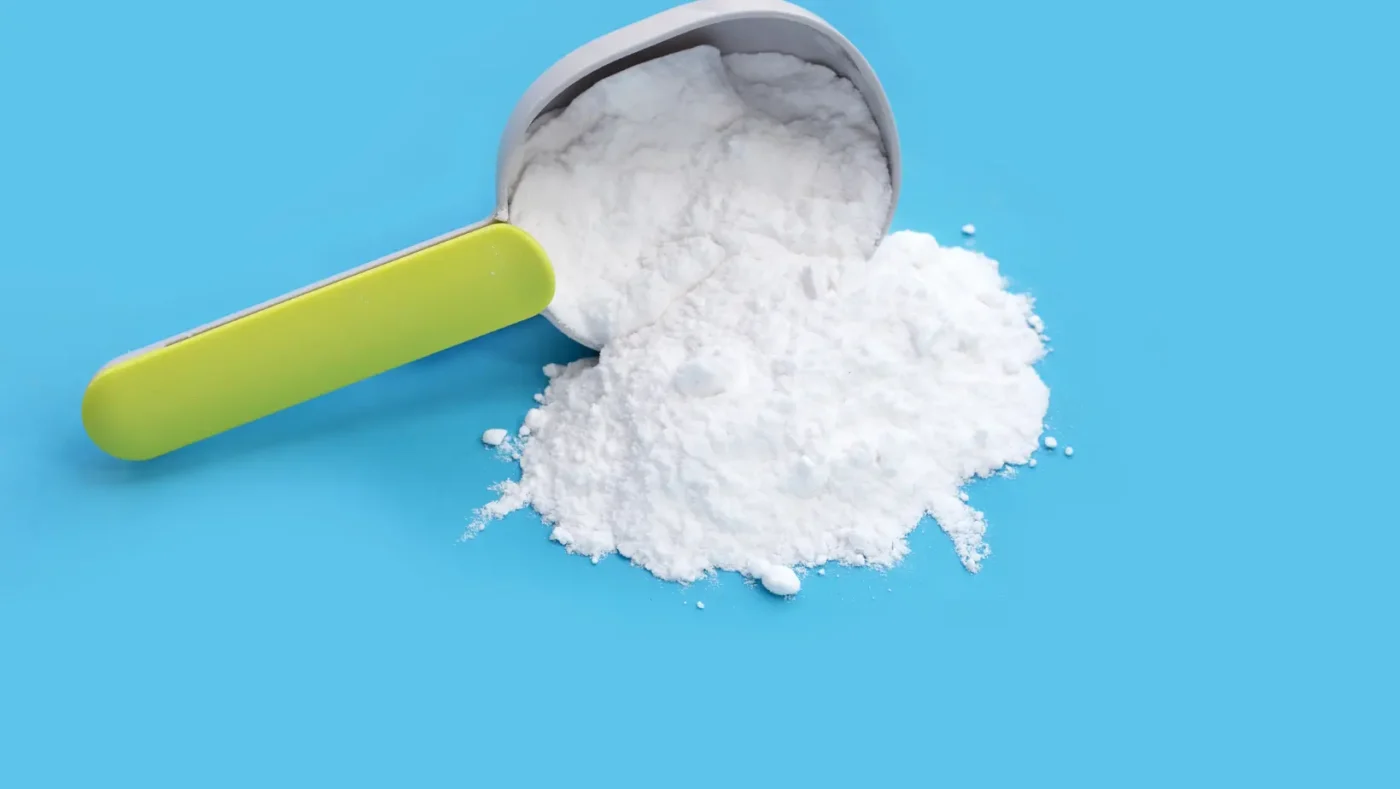

Health benefits of baking soda come mainly from one simple fact: it is sodium bicarbonate, a natural acid buffer that your kidneys already use to keep your blood at the right pH. This gives it real, tested uses for heartburn, exercise, oral care, and even certain kidney conditions. But not every claim about it holds up, so knowing what actually works matters as much as knowing what doesn’t.
What Is Baking Soda and Why Is It Used for Health?
Baking soda is not just a baking ingredient sitting in your pantry. It’s sodium bicarbonate, a compound your body already makes and uses every day to control acid levels in your blood and organs.
Chemically, baking soda is a base. When it meets an acid, it neutralizes it and gives off carbon dioxide gas, which is why it fizzes in vinegar or in your stomach.
There’s a difference between the food-grade box in your kitchen and the medical-grade sodium bicarbonate given through an IV in a hospital. Food-grade baking soda is fine for oral use in small, occasional amounts, but it is not sterile and not dosed for injection. Doctors control medical sodium bicarbonate carefully because too much or too little can cause serious problems.
“Natural” doesn’t mean risk-free either. Baking soda is high in sodium, and swallowing large amounts can throw off your body’s fluid balance, raise blood pressure, or interact with medications. So while sodium bicarbonate health benefits are real, they come with limits you shouldn’t ignore.
How Baking Soda Works Inside the Body
Baking soda works by donating bicarbonate ions, which grab onto excess hydrogen ions (the source of acidity) and turn them into water and carbon dioxide. This is the same buffering system your kidneys and lungs use around the clock to keep your blood pH in a tight, safe range.
Neutralizing Acid Without “Changing Your Body’s pH”
A common myth is that drinking baking soda water changes your overall body pH. It doesn’t, at least not in a healthy person. Your kidneys and lungs correct pH shifts within minutes to hours. What baking soda actually does is neutralize acid locally, like in your stomach, urine, or muscle tissue during exercise, without meaningfully shifting your blood’s tightly controlled pH level.
Health Benefits and Uses of Baking Soda
Research and clinical use point to several specific situations where sodium bicarbonate helps, each with a different level of supporting evidence.
Temporary Relief from Heartburn and Acid Indigestion
Baking soda neutralizes stomach acid on contact, which is why it’s classified as an over-the-counter antacid. It works fast, usually within minutes, for occasional heartburn or acid indigestion. People with mild, infrequent symptoms benefit the most. The evidence here is strong and well established in pharmacology references. The limitation is that it doesn’t treat the underlying cause of reflux, and frequent use can backfire due to sodium load and rebound acid production.
Supports High-Intensity Exercise Performance
During intense, short bursts of exercise like sprinting or heavy weightlifting, your muscles produce lactic acid, which contributes to that burning, fatigued feeling. Some athletes use sodium bicarbonate loading before competition because it can buffer acid buildup in the blood, potentially delaying fatigue. Trained athletes doing high-intensity, short-duration events seem to benefit most. Evidence from sports science research is moderate and results vary by person. Gastrointestinal discomfort is a common limitation, and this practice should happen under a coach or sports dietitian’s guidance, not on a whim before a big event.
May Help Soothe Minor Skin Irritation
A diluted baking soda paste or bath soak may calm mild skin itchiness, insect bites, or minor irritation because of its buffering effect on skin surface acidity. People with occasional, minor irritation are the main ones who benefit. Evidence is mostly based on traditional use and dermatology observation rather than large clinical trials. It should never go on broken skin, open wounds, or rashes that are infected or worsening.
May Help Certain People with Chronic Kidney Disease
In people with chronic kidney disease, the kidneys often struggle to clear acid properly, a condition called metabolic acidosis. Nephrologists sometimes prescribe sodium bicarbonate tablets to correct this, and research published in kidney health journals has linked this approach to slower kidney function decline in some patients. This benefit applies specifically to diagnosed CKD patients under medical supervision. Dosage and monitoring must come from a doctor, since kidney patients are especially sensitive to sodium and fluid shifts.
Can Be Used as a Mouth Rinse
Swishing a baking soda and water solution can temporarily raise the pH inside your mouth, making it less friendly to the acid-producing bacteria that cause cavities and bad breath. Dental associations recognize baking soda as a mild, safe cleaning agent in many toothpaste formulas. People with everyday oral hygiene needs benefit most, while people with sensitive gums should avoid aggressive brushing. Evidence supports short-term plaque acid neutralization, though it’s not a replacement for fluoride toothpaste and regular dental checkups.
May Help Reduce Body Odor
Body odor mostly comes from bacteria breaking down sweat on your skin. Baking soda’s mild antibacterial and acid-neutralizing action may reduce the odor-causing bacteria in armpits for some people, which is why it appears in several natural deodorant recipes. Evidence is limited and mostly anecdotal, and some people experience skin irritation from direct contact, especially with repeated use.
Supports Household and Personal Care Uses
Beyond direct health applications, baking soda is widely used for gentle exfoliation, foot soaks, and neutralizing odors in shoes or fabric. These aren’t medical treatments, but they connect to overall hygiene and comfort, and they explain why so many households already keep it stocked for more than baking.
How to Use Baking Soda Safely
Knowing the benefits of baking soda matters less if it’s used incorrectly, since the same compound that soothes heartburn can cause problems at high doses. The table below breaks down safe, practical use by goal.
| Goal | Typical Use | Safety Note |
| Occasional heartburn | Oral antacid | Follow label directions; avoid frequent use |
| Oral hygiene | Toothpaste or rinse | Avoid aggressive brushing |
| Skin irritation | Paste or bath | Avoid open wounds |
| Athletic performance | Evidence-based protocols under guidance | GI side effects common |
Dilute Baking Soda Before Using on Skin or Mouth
Undiluted baking soda is abrasive and can irritate skin or gum tissue. Mixing it with water into a paste or rinse reduces this risk while keeping its buffering benefit intact.
Avoid Excessive Consumption
Swallowing large amounts, especially repeatedly in one day, can lead to sodium overload, swelling, or in rare cases a condition called metabolic alkalosis, where the blood becomes too basic.
Follow Recommended Amounts
Product labels for antacid use give general guidance for adults, but doctors usually prescribe specific amounts based on age, weight, and health condition rather than a one-size-fits-all number. Don’t guess your own dose for medical purposes.
Consider Possible Medication Interactions
Baking soda can change how your body absorbs certain drugs, including some antibiotics, iron supplements, and heart medications, by altering stomach acidity. Anyone on regular prescriptions should check with a pharmacist before regular use.
Risks and Side Effects of Baking Soda
Even natural remedies carry risk when misused, and understanding why is baking soda good for you in the right context also means understanding when it isn’t good for you at all.
High Sodium Intake Concerns
One teaspoon of baking soda contains a notable amount of sodium, roughly comparable to a large pinch of table salt. For people managing high blood pressure or heart failure, this add-on sodium can worsen fluid retention and blood pressure control.
Digestive Discomfort
Bloating, gas, and stomach cramping are common after drinking baking soda water, especially on an empty stomach, because of the carbon dioxide gas it releases during the neutralizing reaction.
When to Avoid Baking Soda Use
People with kidney disease not under a doctor’s bicarbonate protocol, uncontrolled high blood pressure, heart failure, or those on a sodium-restricted diet should avoid regular oral use. Pregnant women and children should only use it for medical purposes with a doctor’s guidance, since evidence in these groups is limited.
FAQs
What are the main health benefits of baking soda?
The core health benefits of baking soda include fast heartburn relief, mild antibacterial mouth rinsing, possible slower kidney decline in CKD patients under supervision, and short-term acid buffering during intense exercise.
Can baking soda help with heartburn?
Yes. Baking soda neutralizes stomach acid within minutes, making it a recognized over-the-counter antacid for occasional heartburn, though it shouldn’t be used daily without a doctor’s input.
Is baking soda safe to drink every day?
No. Daily use raises sodium intake significantly and can cause fluid imbalance, elevated blood pressure, or metabolic alkalosis over time, particularly in people with kidney or heart conditions.
Can baking soda improve oral health?
It can help temporarily. Baking soda raises mouth pH and reduces acid-producing bacteria, supporting plaque control, but it doesn’t replace fluoride toothpaste for cavity prevention long term.
Who should avoid using baking soda?
People with high blood pressure, heart failure, kidney disease outside medical supervision, or sodium-restricted diets should avoid regular use. Pregnant women and young children need a doctor’s guidance first.











2 Comments
Comments are closed.