
A headache from air conditioner cold air can happen when sudden temperature changes, cold airflow, dry indoor air, or prolonged exposure to a chilled environment triggers muscle tension or aggravates an existing headache or migraine. Direct airflow toward the face, neck, or head may also contribute to discomfort, especially in people who are sensitive to cold or environmental changes.
Key Takeaways
- A headache from air conditioner cold air usually starts through a documented nerve reflex.
- Sitting directly under a vent for 20 minutes or longer can trigger neck and scalp muscle tension.
- Dry AC air below 30% humidity dries the sinus lining and raises sinus pressure.
- Jumping from a hot outdoor temperature into a cold room forces blood vessels to constrict, then rebound.
- Quick fixes include moving away from the vent, adjusting the temperature to a more comfortable level, staying hydrated, and avoiding sudden transitions between very cold and hot environments.
- Recognizing the different types of headaches, tension, sinus, migraine, and cluster, helps match the AC trigger to the right fix.
- Most AC-related headaches ease within 30 minutes, but pain with fever or one-sided headache and ear pain needs medical review.
How Cold AC Air Triggers Headaches (The Brain Freeze Effect)
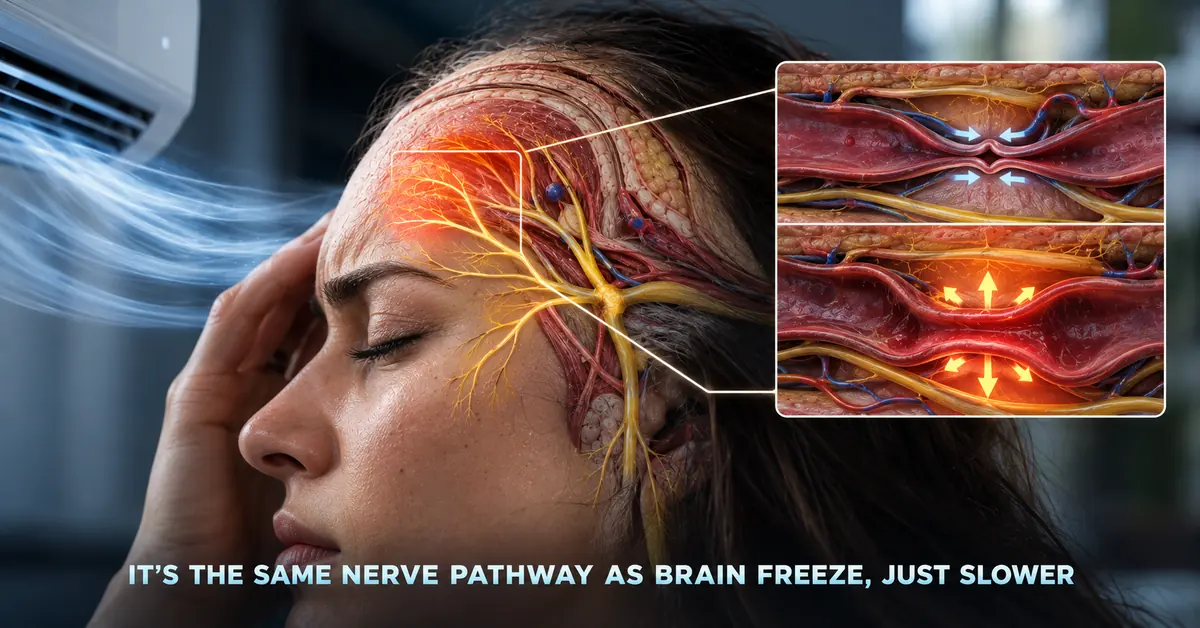
A headache from cold air conditioning happens through the same nerve pathway as brain freeze from ice cream. Cold air striking the forehead, scalp, or nasal lining activates trigeminal nerve fibers, which sets off rapid blood vessel changes the brain interprets as pain. Neurologists classify this as a cold-stimulus headache.
- External cold application (ICHD-3 4.5.1): This covers cold striking the outside of the head, the exact mechanism behind AC vent exposure. Pain typically resolves within 30 minutes once the cold stimulus is removed, and it can show up as a sharp, stabbing sensation in the forehead, temple, or behind the eye.
- Inhaled cold stimulus (ICHD-3 4.5.2): This is the classic “ice cream headache,” caused by cold air or cold substances crossing the palate and throat. It resolves faster, usually within 10 minutes, and is more common in people who already have migraine.
- Why AC differs from a quick ice cream headache: Air conditioning delivers a lower-intensity but sustained cold signal over minutes, so the ache builds gradually and lingers longer than a typical brain freeze spike.
- Overlap with migraine: ICHD-3 notes that cold-stimulus pain can appear on the same side as a person’s usual migraine, which is why migraine sufferers often report AC air feeling more painful than it does for others.
This differs from a migraine or cluster headache, both of which can also cause one-sided headache and ear pain and need separate clinical evaluation rather than a simple temperature fix.
3 Hidden Reasons Your Air Conditioner is Causing Head Pain
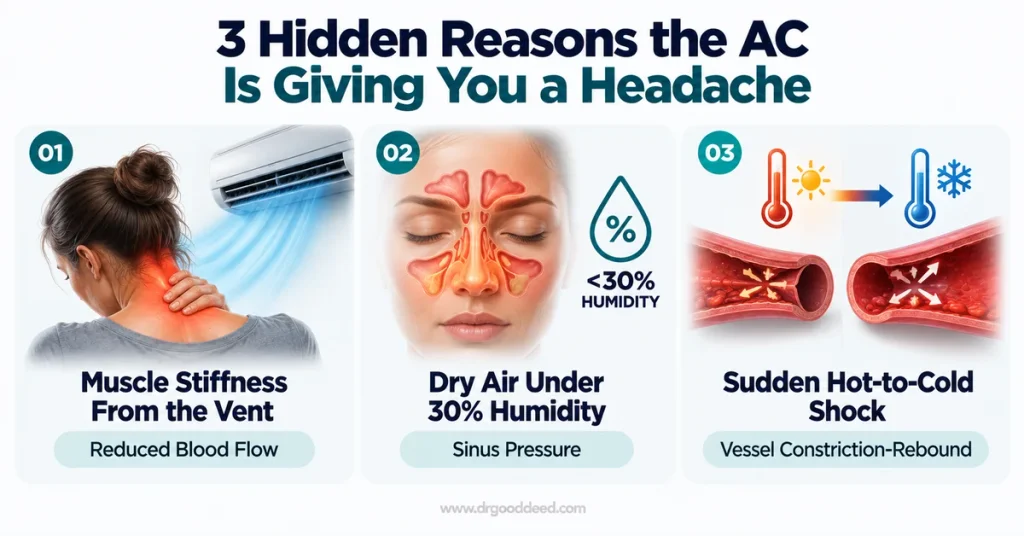
Beyond the brain freeze reflex, three overlooked mechanisms explain why a headache from air conditioner cold air develops during long exposure. Vent position, humidity level, and how fast the temperature shifts each play a distinct role, and identifying which one applies determines the fastest fix.
1. Muscle Stiffness from Sitting Under the Vent
Constant airflow on the neck and shoulders drops local skin temperature, prompting nearby muscles to contract as a protective reflex.
- Sustained muscle contraction for 20 minutes or more reduces local blood flow, a known trigger for tension-type headache, one of the most common types of headaches reported by adults.
- Desk workers with an overhead vent often describe a band-like pressure across the forehead and back of the head after one to two hours.
- Repositioning the vent or adding a desk-level airflow deflector often relieves this type faster than medication alone.
2. Dry Air Irritating Your Sinuses
Air conditioners remove moisture from indoor air, frequently pushing relative humidity below 30%, under the 30 to 50% range the EPA considers optimal for indoor comfort and health.
- Dry nasal and sinus membranes swell and thicken mucus, raising pressure inside the sinus cavities.
- That pressure refers pain to the forehead, cheeks, and the area behind the eyes, closely mimicking a sinus headache.
- A cool-mist humidifier set to hold 30 to 50% humidity reduces this specific trigger within a few days of consistent use.
3. Sudden Temperature Shock (Going from Hot to Cold)
Walking from 90°F outdoor heat into a 68°F room forces scalp and meningeal blood vessels to constrict rapidly, then rebound and dilate.
- This vasomotor swing is the same vascular mechanism implicated in migraine, which explains why people with a migraine history feel AC transitions more intensely.
- A temperature gap larger than 20°F between outdoor and indoor air raises headache risk more than the absolute indoor temperature does.
- Standing near a doorway for a minute before entering a cold room lets blood vessels adjust gradually and reduces this vascular shock.
A headache from air conditioner cold air also comes from muscle tension, dry sinuses, and temperature shock frequently overlapping.
How to Prevent AC Headaches at Home and the Office
Preventing a headache from air conditioner cold air requires controlling airflow direction, humidity, and the temperature gap. Small adjustments, rather than avoiding air conditioning altogether, resolve most cases within days. The table below matches each trigger to its fix.
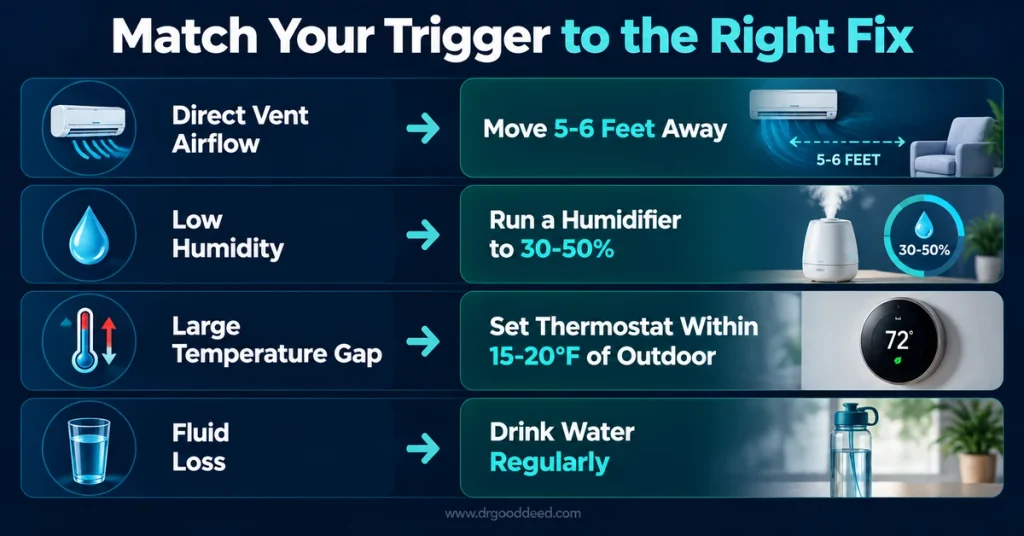
| Trigger | Practical Fix | Why It Works |
| Direct vent airflow | Move seating five to six feet from the vent or redirect the louver | Reduces sustained muscle contraction in the neck and scalp |
| Low humidity | Run a humidifier to maintain 30 to 50% indoor humidity | Prevents sinus membrane drying and pressure buildup |
| Large temperature gap | Set the thermostat no more than 15 to 20°F below the outdoor temperature | Limits rapid vasomotor constriction and rebound dilation |
| Fluid loss | Drink water regularly in air-conditioned rooms | Cold, dry air increases fluid loss through breathing and skin |
| Prolonged exposure | Step outside the airflow for five minutes every two hours | Allows trigeminal nerve signaling to reset |
Pro Tip: Keep a small thermometer near your workspace and note the exact temperature when your headache starts, since most AC-triggered headaches begin at a specific personal threshold. Many people find their trigger sits between 65°F and 70°F, and raising the thermostat two to three degrees above that point prevents the headache instead of just treating it afterward.
Consistent humidity control, vent positioning, and gradual temperature transitions address the three mechanisms behind most cases. A headache from air conditioner cold air that persists despite these changes points toward an unrelated cause that deserves a medical evaluation.
FAQs
Why do I get a headache every time I enter a cold room?
Cold air rapidly stimulates trigeminal nerve endings in your face and scalp, triggering blood vessel constriction. This cold-stimulus reflex, the same one behind ice cream headaches, causes pain within minutes of cold exposure.
Can sitting under an AC vent cause chronic headaches?
Yes. Daily direct airflow causes repeated neck and scalp muscle tension, which can progress from occasional to chronic tension-type headache, one of several different types of headaches linked to constant AC exposure.
Can air conditioning trigger a migraine attack?
Yes. Rapid temperature shifts trigger the same vascular changes implicated in migraine. A one-sided headache and ear pain after AC exposure may instead signal cluster headache, which needs separate evaluation.
Sources
- International Classification of Headache Disorders, 3rd Edition (ICHD-3), Section 4.5 link
- ICHD-3, 4.5.1 Headache Attributed to External Application of a Cold Stimulus link
- ICHD-3, 4.5.2 Headache Attributed to Ingestion or Inhalation of a Cold Stimulus link
- American Migraine Foundation, Weather Triggers and Migraine link
- National Institute of Neurological Disorders and Stroke, Headache Information link
- U.S. Environmental Protection Agency, Indoor Air Quality and Humidity Control link
- American Academy of Neurology, Headache Classification Resources link
Medical Disclaimer: This article is for general education only and does not replace diagnosis or treatment from a licensed healthcare provider. Talk to a doctor about any headache that is severe, sudden, or paired with fever, stiff neck, or vision changes.