Nodular acne vs cystic acne is based on what’s inside the bump. A nodule is a solid, inflamed lump with no fluid inside. A cyst is a softer lesion filled with pus. Both form deep in the dermis, both hurt, and both count as severe, inflammatory acne in the United States.
This guide breaks down nodular acne vs cystic acne by texture, pain pattern, scarring risk, and evidence-based treatment, using terminology from the American Academy of Dermatology (AAD) and peer-reviewed dermatology literature.

Nodular Acne vs Cystic Acne at a Glance
| Feature | Nodular Acne | Cystic Acne |
| Internal content | Solid, no fluid | Filled with pus |
| Texture | Firm, hard | Soft, fluctuant |
| Visible center | No head or pointing | Often white or yellow center |
| Typical size | Can exceed 5mm | Often exceeds 2cm |
| Formation | Ruptured follicle wall, deep dermis | Trapped oil, dead cells, bacteria |
| Duration | Weeks to months | Days to weeks, sometimes longer |
| Scarring risk | High | High |
| First-line prescription | Oral isotretinoin, intralesional steroids | Oral isotretinoin, intralesional steroids |
What Is Nodular Acne?
Nodular acne forms when a hair follicle wall ruptures deep under the skin, spilling oil, dead cells, and bacteria directly into surrounding tissue without forming a distinct pus pocket. The immune system reacts with intense, localized inflammation, which is why nodules feel like hard knots rather than soft blisters.
- Formation: A clogged pore builds pressure until the follicle wall tears internally, scattering debris into the dermis instead of containing it in a pocket.
- Texture: Nodules sit deep, feel rock hard, and rarely develop a visible whitehead since there is no fluid pocket to break through.
- Pain: Pain often radiates rather than staying localized, since inflammation spreads through solid tissue instead of one contained area.
- Location: Jawline, cheeks, chest, back, and shoulders, areas dense with sebaceous glands.
- Duration: Nodules frequently persist four to eight weeks untreated, since there is no pus reservoir for the body to drain naturally.
What Is Cystic Acne?
Cystic acne develops when a blocked follicle becomes infected, and the body builds a fluid-filled sac around the trapped material. That sac fills with pus, giving cysts a soft, fluctuant feel compared to a nodule’s hard texture.
- Formation: Cutibacterium acnes bacteria multiply inside a clogged follicle. White blood cells rush in, and the resulting pus collects inside a membrane the body forms around the lesion.
- Texture: Cysts feel soft or squishy, and many develop a visible white or yellow center as pus rises toward the surface.
- Size: Cystic lesions commonly grow larger than nodules, sometimes exceeding two centimeters across.
- Rupture risk: Fluid pressure inside a cyst raises the risk of internal rupture if picked or squeezed, spreading inflammation and worsening acne scarring.
- Who it affects: Teenagers and people with a family history of severe acne show higher rates of cystic lesions, and hormonal shifts commonly trigger flares.
Nodular Acne vs Cystic Acne: Key Differences
The nodular acne vs cystic acne distinction becomes clearest once you compare texture, pain quality, and long-term skin damage side by side.
Appearance and Texture
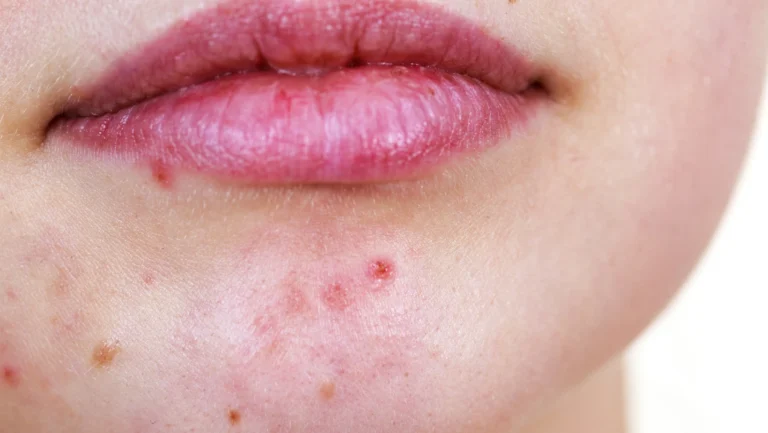
A nodule looks like a firm, deep red bump with no visible head. Press on it and it feels almost like a marble under the skin. A cyst looks more swollen, often with a paler or yellowish center where pus has collected near the surface.
Pain and Inflammation
Nodules tend to produce a deep, aching, pressure-like pain because inflammation spreads through solid tissue. Cysts often produce throbbing pain that intensifies with touch, since fluid pressure builds inside the sac. Neither should be squeezed; manipulating either lesion pushes inflammatory material deeper and raises the odds of permanent scarring.
Scarring Risk
Both lesion types damage collagen deep in the skin, not just the surface layer. Untreated or repeatedly picked lesions of either kind can leave atrophic or hypertrophic scars, and in darker skin tones, both can trigger lasting post-inflammatory hyperpigmentation. Acne scarring correlates more strongly with lesion depth and duration than with whether a lesion is technically a nodule or a cyst.

Why They’re Often Called Nodulocystic Acne
Ask a dermatologist to examine a deep, painful facial lesion, and most will not pause to decide whether it is technically a nodule or a cyst before treating it. Clinically, both fall under nodulocystic acne, a term used throughout peer-reviewed dermatology literature.
- Shared grading: Both map to grade 4 or 5 on the Investigator’s Static Global Assessment (IGA) scale, the system dermatologists use to classify severe acne.
- Frequent overlap: A single flare rarely produces only nodules or only cysts. Most patients with deep acne develop a mix of both on the same area of skin.
- Same treatment pathway: Since 1982, oral isotretinoin has been the only FDA-approved medication for severe recalcitrant nodular acne, and it treats cystic lesions under the same classification.
- Rare severe variant: Acne conglobata produces interconnecting nodules, cysts, and abscesses across the trunk, and can be linked to hidradenitis suppurativa.
- Diagnostic caveat: Persistent, treatment-resistant lesions in older adults occasionally turn out to be something else entirely. Rare case reports describe cutaneous lymphoma mimicking nodulocystic acne, which is why non-responsive lesions need dermatologist evaluation rather than repeated over-the-counter attempts.
Expert Insight: Dermatologists often skip the nodule-versus-cyst distinction entirely because the IGA severity scale and treatment algorithm are identical for both. A patient does not need to know which one they have; they need a clinician who recognizes grade 4 or 5 severity and starts systemic treatment before scarring sets in.
How Are Nodular and Cystic Acne Treated?
Over-the-counter washes and spot treatments rarely reach the depth where these lesions form. The 2024 AAD acne vulgaris guidelines strongly recommend oral isotretinoin for severe acne, acne causing psychosocial burden, or acne that has failed standard therapy.
- Oral isotretinoin: The only FDA-approved treatment specifically for severe recalcitrant nodular acne. It shrinks sebaceous glands, reduces oil production, and normalizes cell turnover, often clearing lesions over four to six months.
- Intralesional steroid injections: A dermatologist injects diluted triamcinolone acetonide directly into a single lesion, often shrinking it within 24 to 48 hours. A lower concentration of 0.63 mg/mL works as effectively as 2.5 mg/mL with fewer side effects.
- Oral antibiotics: Doxycycline or minocycline reduce inflammation and bacterial load, typically used short-term alongside topical therapy.
- Hormonal therapy: Combined oral contraceptives or spironolactone are recommended when flares track with hormonal fluctuations, particularly around menstrual cycles.
- Aspiration before injection: A tense, fluid-heavy cyst sometimes needs fluid drawn out before steroid injection, since a full dose can leak back out through the needle track otherwise.
Pro Tip: If a dermatologist recommends a steroid injection for a stubborn lesion, ask whether it needs aspiration first. Tense, fluid-heavy cysts sometimes need fluid drawn out before injection so the medication does not leak back out.
When Should You See a Dermatologist?
Deep, painful bumps lasting more than a week without improvement fall outside what topical products can fix.
- A bump stays firm, deep, and painful for more than seven to ten days.
- Several nodules or cysts appear at once across the jawline, chest, or back.
- Acne is affecting your confidence or willingness to go out, since psychosocial burden alone qualifies a patient for isotretinoin under AAD guidelines.
- A lesion keeps recurring in the same spot, raising the chance of a permanent scar.
- A lesion is unusually large, spreading fast, or accompanied by fever, which can signal a deeper infection needing urgent care.
FAQs
How can you tell if acne is nodular or cystic?
Press gently on the bump. A nodule feels hard with no give. A cyst feels soft and fluctuant, often with a visible white or yellow center where pus has collected near the surface.
Which is worse: nodular acne or cystic acne?
Neither is definitively worse. Both carry equal scarring risk and need the same prescription treatment. Severity depends more on lesion size and duration than lesion type.
Can nodular acne turn into cystic acne?
Yes. A nodule can become secondarily infected with bacteria, causing pus to accumulate and the lesion to soften into a cyst. This is why both are often diagnosed as nodulocystic acne.
Do both types of acne leave scars?
Yes. Both damage collagen deep in the dermis, causing atrophic or hypertrophic scars and, in darker skin tones, prolonged post-inflammatory hyperpigmentation if left untreated.
Can nodular or cystic acne be treated without a dermatologist?
No. Over-the-counter treatments rarely penetrate deep enough. Both require prescription options like oral isotretinoin or intralesional steroid injections from a dermatologist.
Sources
- Cleveland Clinic: Cystic Acne link
- Cleveland Clinic: Nodular Acne link
- Journal of the American Academy of Dermatology: Guidelines of Care for the Management of Acne Vulgaris (2024) link
- DermNet NZ: Nodulocystic Acne link
- MedlinePlus Medical Encyclopedia: Acne link
- NCBI StatPearls: Isotretinoin link
- JAMA Dermatology: Intralesional Corticosteroids in the Treatment of Nodulocystic Acne link
- PubMed: Therapeutic Efficacy of Intralesional Triamcinolone Acetonide Versus Triamcinolone Acetonide Plus Lincomycin in Nodulocystic Acne link
- Dermatological Reviews: Steroid Injection Treatment for Nodulocystic Acne, A Literature Review (2025) link
- NCBI StatPearls: Acne Conglobata link