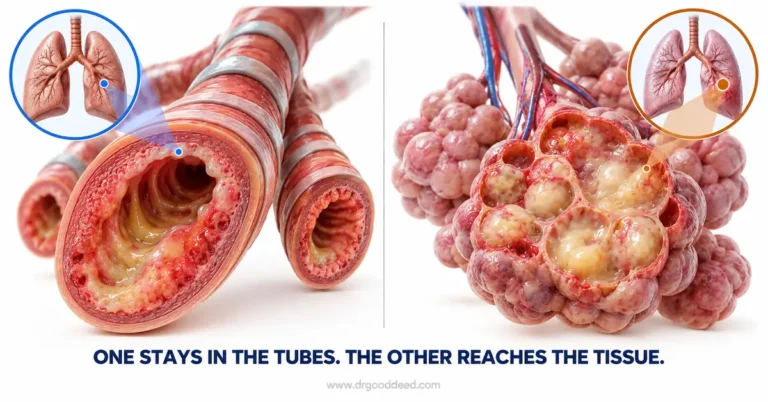
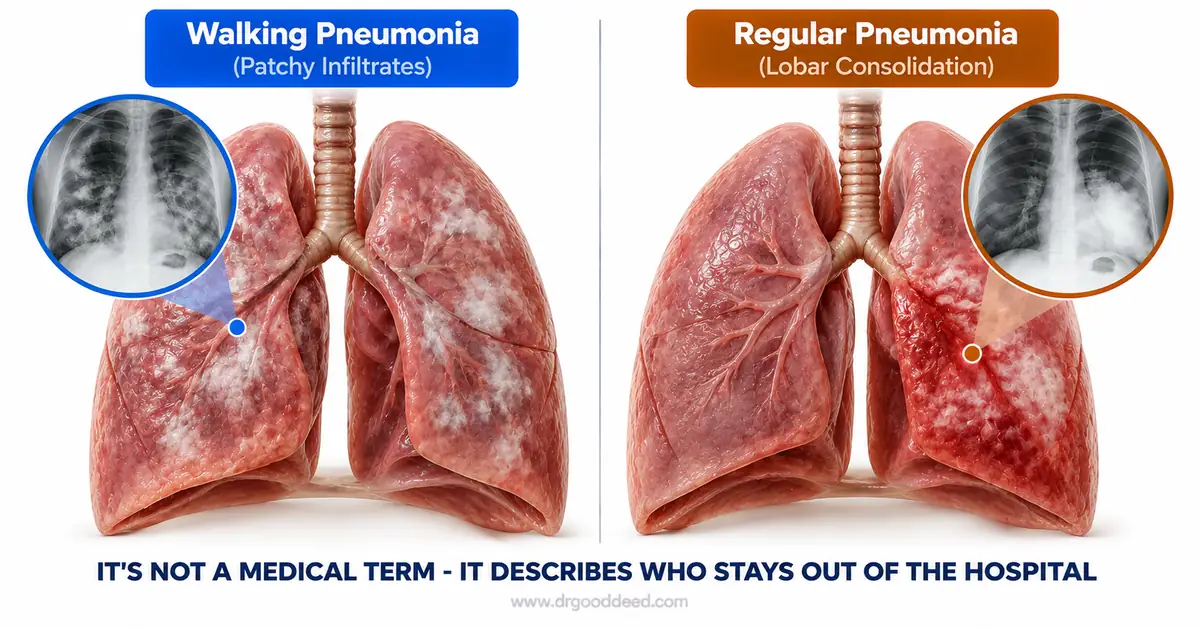

Walking pneumonia is a mild form of pneumonia, usually caused by the bacterium Mycoplasma pneumoniae, mild enough that most patients stay out of the hospital and keep walking around. Regular pneumonia, often called community-acquired pneumonia, tends to hit harder, with higher fevers, chest X-rays showing dense lung fluid, and a real chance of needing hospital care.
In the United States, M. pneumoniae infections rose sharply starting in 2023 and stayed elevated through 2024 and into 2025, especially among children ages 2 to 4, a group not historically linked to this pathogen. This guide breaks down the walking pneumonia vs regular pneumonia symptoms, causes, recovery time, and when antibiotics actually help.
Walking Pneumonia vs Regular Pneumonia at a Glance
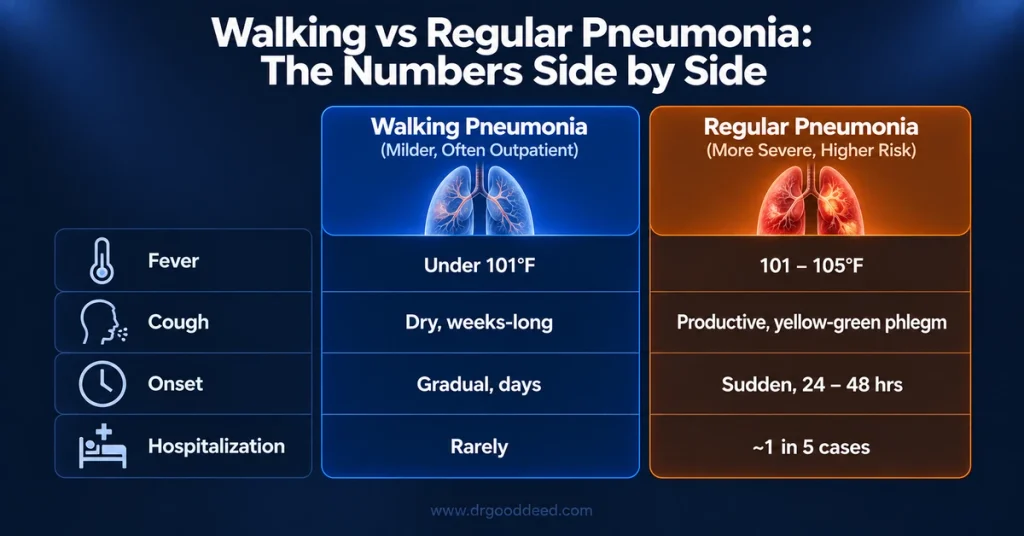
Doctors distinguish these two forms using clinical severity scores. The table below lines up the practical differences a patient actually notices, from fever pattern to how long the cough lingers.
| Feature | Walking Pneumonia | Regular Pneumonia |
| Common cause | Mycoplasma pneumoniae (bacteria) | Streptococcus pneumoniae, influenza, RSV, COVID-19 |
| Fever | Mild, usually under 101°F | High, often 101°F to 105°F |
| Cough | Dry, persistent, can last weeks | Produces yellow or green phlegm |
| Onset | Gradual, over several days | Sudden, within 24 to 48 hours |
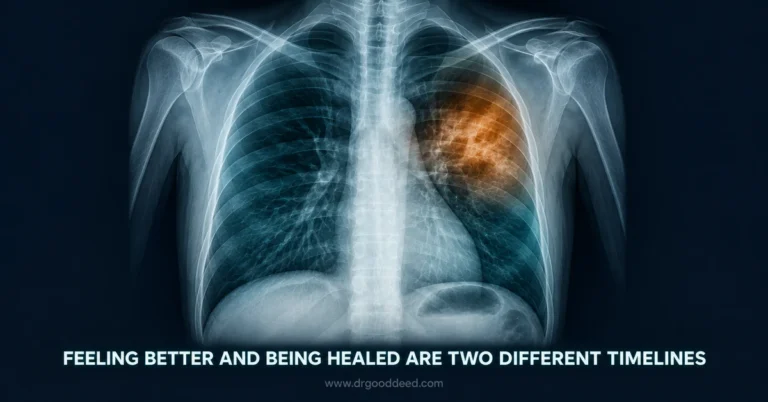
| Chest X-ray pattern | Patchy, scattered infiltrates | Dense, consolidated area of one lobe |
| Hospitalization | Rarely needed | Needed in roughly 1 in 5 diagnosed cases |
| Typical antibiotic | Azithromycin or another macrolide | Amoxicillin, penicillin-class, or macrolide |
What Is Walking Pneumonia?
Walking pneumonia is a lay term for mild atypical pneumonia, most often caused by Mycoplasma pneumoniae, a bacterium without a cell wall that spreads slowly through respiratory droplets. Symptoms build gradually and rarely confine a person to bed.
- Origin of the term: “Walking pneumonia” is not an official medical diagnosis. It describes patients well enough to walk around and stay home instead of being hospitalized, a distinction doctors once made informally before validated scoring tools existed.
- Primary cause: Mycoplasma pneumoniae accounts for most cases, though Chlamydophila pneumoniae and some viruses can produce a similarly mild course.
- Who gets it: Historically most common in school-age children and young adults in group settings, but CDC surveillance found infections rising among children ages 2 to 4 during 2024, a shift from prior patterns.
- Incubation period: Symptoms typically appear 1 to 4 weeks after exposure, longer than the 1 to 3 days typical of viral or pneumococcal pneumonia.
- Contagious window: A person can spread M. pneumoniae for several weeks if untreated, which explains why it moves efficiently through schools and households.
What Is Regular Pneumonia?
Regular pneumonia, clinically termed community-acquired pneumonia (CAP), is a lung infection severe enough to inflame and fill air sacs with fluid, producing sudden, high-fever illness. It is diagnosed and staged using validated severity tools rather than gut impression alone.
- Common pathogens: Streptococcus pneumoniae remains the leading bacterial cause, alongside influenza, respiratory syncytial virus (RSV), and SARS-CoV-2.
- Severity scoring: Clinicians use the Pneumonia Severity Index (PSI), a 20-variable validated tool, or the simpler CURB-65 score, to decide whether a patient needs hospital admission.
- CURB-65 factors: Confusion, blood urea nitrogen above 19 mg/dL, respiratory rate of 30 or higher, low blood pressure, and age 65 or older each add one point toward a 0 to 5 score.
- Radiographic finding: Chest imaging typically shows one dense, consolidated lobe rather than the scattered pattern seen in atypical cases.
- Risk groups: Adults over 65, infants, and people with COPD, heart failure, diabetes, or weakened immunity face higher complication rates.
Walking Pneumonia vs Regular Pneumonia: Key Differences
Symptom pattern, causative organism, and healing timeline separate these two conditions more reliably than severity alone.
Symptoms and Severity
- Walking pneumonia brings a dry, nagging cough, mild fatigue, headache, and low-grade fever that builds slowly over days.
- Regular pneumonia arrives fast, with chills, high fever, chest pain that worsens with breathing, and a productive cough within a day or two.
- Shortness of breath at rest points toward regular pneumonia; shortness of breath only during exertion is more typical of the atypical form.
- Both can cause fatigue lasting well beyond the acute illness, though walking pneumonia rarely causes the dangerously low oxygen levels seen in severe CAP.
Common Causes
- Mycoplasma pneumoniae and Chlamydophila pneumoniae drive most walking pneumonia cases and respond to macrolide antibiotics like azithromycin.
- Streptococcus pneumoniae causes an estimated 30% of bacterial community-acquired pneumonia cases requiring hospitalization in the US.
- Viral causes, including influenza and RSV, account for a growing share of regular pneumonia diagnoses, particularly in children and older adults.
- Co-infections happen: a person can carry M. pneumoniae alongside a virus, which can push a mild case toward a more severe one.
Recovery Time
- Walking pneumonia symptoms often ease within 1 to 2 weeks with treatment, though the dry cough can linger for 4 to 6 weeks afterward.
- Regular pneumonia recovery typically takes 2 to 4 weeks for mild cases and up to 6 to 8 weeks for patients who were hospitalized.
- Fatigue after either type can outlast the infection itself by several weeks, a pattern clinicians call post-pneumonic asthenia.
Expert Insight: A patchy chest X-ray alone does not confirm walking pneumonia, since early regular pneumonia can look identical before consolidation fully develops. Clinicians increasingly rely on symptom timeline and PCR testing for Mycoplasma pneumoniae rather than imaging alone to separate the two conditions accurately.
Can Walking Pneumonia Become More Serious?
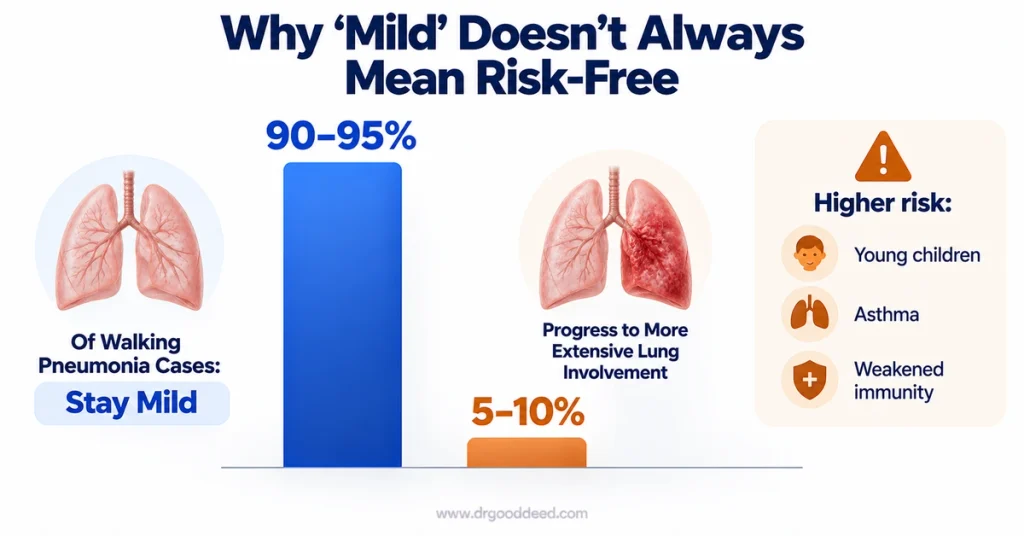
Walking pneumonia usually stays mild, but it is not risk-free, and treating the walking pneumonia vs regular pneumonia distinction as absolute can delay needed care. Roughly 5% to 10% of walking pneumonia cases progress to more extensive lung involvement requiring closer monitoring.
- Uncommon but real complications: severe pneumonia, new or worsening asthma flares, and rarely encephalitis, a brain inflammation reported in a small percentage of M. pneumoniae cases.
- Who is more likely to progress: young children, people with underlying asthma, and those with weakened immune systems.
- Macrolide resistance: some Mycoplasma pneumoniae strains show resistance to first-line macrolide antibiotics, which can prolong illness if the initial drug does not work.
- CDC 2024 to 2025 data: infections peaked in August 2024 across all age groups and have declined since early 2025, though some US regions still report elevated case counts into 2026.
Do You Need Antibiotics for Walking Pneumonia?
Not every case of walking pneumonia requires antibiotics, since mild symptoms in otherwise healthy people sometimes resolve without them. When treatment is warranted, the antibiotic choice differs sharply from regular pneumonia because Mycoplasma pneumoniae lacks a cell wall.
- First-line drugs: Azithromycin or another macrolide is standard, since penicillin and amoxicillin, common choices for regular pneumonia, do not work against M. pneumoniae.
- When doctors hold off: Mild, non-worsening symptoms in a healthy adult may be monitored for a few days before starting antibiotics.
- Regular pneumonia treatment: Amoxicillin or a penicillin-class drug is typically first-line, with macrolides or respiratory fluoroquinolones reserved for penicillin allergy or resistant infections.
- Full course matters: Stopping antibiotics early, even when symptoms improve, raises the risk of relapse and contributes to antibiotic resistance.
Pro Tip: A cough that persists past 3 weeks despite finishing antibiotics deserves a follow-up visit, since prolonged cough after Mycoplasma pneumoniae treatment can signal reinfection, macrolide resistance, or an unrelated cause like reactive airway disease rather than treatment failure alone.
When Should You See a Doctor?
Certain warning signs separate a cough that can wait from one that needs same-day evaluation, regardless of which side of the walking pneumonia vs regular pneumonia spectrum a person suspects they fall on.
- Fever above 102°F lasting more than 2 days
- Difficulty breathing or breathlessness at rest
- Chest pain that worsens with deep breathing or coughing
- Bluish tint to lips or fingertips
- Confusion or unusual drowsiness, particularly in older adults
- Cough producing blood or persisting beyond 3 weeks without improvement
- Any symptoms in infants, adults over 65, or people with chronic lung or heart disease
Key Takeaways
- Walking pneumonia vs regular pneumonia is a matter of severity and cause, not two unrelated diseases.
- Mycoplasma pneumoniae drives most mild cases; Streptococcus pneumoniae and viruses drive most severe ones.
- Doctors use the Pneumonia Severity Index or CURB-65 score, not guesswork, to decide on hospitalization.
- A dry cough lasting weeks after treatment is common and does not always mean the antibiotic failed.
FAQs
Is walking pneumonia less serious than regular pneumonia?
Yes. Walking pneumonia causes milder fever and rarely requires hospitalization, while regular pneumonia can involve high fever, low oxygen levels, and lobar consolidation needing inpatient care.
How can you tell the difference between walking pneumonia and regular pneumonia?
Onset speed is the clearest clue. Walking pneumonia builds over days with a dry cough; regular pneumonia strikes within 24 to 48 hours with high fever and phlegm-producing cough.
Can walking pneumonia turn into regular pneumonia?
Yes, in an estimated 5% to 10% of cases. Progression is more likely in young children, people with asthma, and those with weakened immune systems.
Does walking pneumonia go away on its own?
Sometimes, in healthy adults with mild symptoms. Most clinicians still prescribe a macrolide antibiotic like azithromycin to shorten illness and lower spread to others.
How long does walking pneumonia usually last?
Fever and fatigue typically improve within 1 to 2 weeks. The dry cough often persists for 4 to 6 weeks even after successful antibiotic treatment.
Sources
- CDC: Mycoplasma pneumoniae Infection Surveillance and Trends link
- CDC: Mycoplasma Pneumoniae Infections Have Been Increasing link
- American Academy of Pediatrics: Mycoplasma pneumoniae infections increasing among children link
- CIDRAP: CDC reports rising levels of Mycoplasma pneumonia and RSV in young kids link
- MDCalc: CURB-65 Score for Pneumonia Severity Calculator link
- ScienceDirect Topics: Pneumonia Severity Index overview link
- PMC: Mycoplasma pneumoniae Outbreak in 2023, Post-pandemic Resurgence link
- PMC: Characteristics of the 2023-2024 Mycoplasma pneumoniae epidemic in adults, Southeast France link
- PMC: The Return of Mycoplasma pneumoniae, an Atypical 2024-2025 Season link
- PMC: Evaluation of PSI, CURB-65, and CRB-65 as prognostic tools in hospitalized patients link
Medical Disclaimer: This article is for general information only and is not medical advice. It does not replace a diagnosis, treatment plan, or guidance from a qualified healthcare professional. Always talk to your doctor about your own symptoms and before starting, stopping, or changing any treatment. If you think you may be having a medical emergency, call 911 or go to your nearest emergency room.