
A gut health diet plan built on the best diet for gut health principles feeds beneficial gut bacteria, reduces intestinal inflammation, and supports regular bowel movements. The American Gut Project found people eating 30 or more different plant foods weekly had significantly more diverse gut microbiomes. In the US, poor gut health links directly to bloating, fatigue, and anxiety.
Why Gut Health Matters
The gut microbiome contains roughly 39 trillion bacteria that regulate digestion, immunity, and mood. Diet shapes which bacteria thrive more than genetics, per a 2022 Cell study. A poorly structured gut health diet plan, even a basic 7-day gut health diet plan done wrong, leads to dysbiosis, where harmful bacteria outnumber beneficial ones.
- 70% of the immune system sits in the gut lining
- Dysbiosis links to IBS, type 2 diabetes, obesity, and depression
- Low microbiome diversity correlates with higher chronic disease rates in US adults
- Butyrate, produced when bacteria ferment fiber, fuels colon wall cells
Best Diet for Gut Health
The best diet for gut health prioritizes plant variety, fiber, and fermented foods while limiting added sugar and ultra-processed items. The Mediterranean diet scores highest in microbiome research, combining high fiber with anti-inflammatory fats and consistent plant diversity.
High-Fiber Foods for Digestion
US adults average only 15g of fiber daily, below the recommended 25 to 38g. High-fiber foods for digestion feed Bifidobacterium and Lactobacillus, the two most studied beneficial bacteria.
Fiber and Probiotics Improving Digestion
Fiber and probiotics improving digestion work through different pathways. Fiber acts as a prebiotic, feeding existing bacteria. Probiotics add new beneficial strains directly. Together they lower intestinal pH and suppress pathogenic bacteria like Clostridium difficile.
Anti-Inflammatory Eating Patterns
Omega-3 fatty acids in salmon, walnuts, and flaxseed reduce gut inflammatory markers (CRP, IL-6). Curcumin in turmeric and polyphenols in blueberries reduce gut mucosal inflammation within 4 to 8 weeks.
Balanced Meals Supporting Gut Bacteria
Each meal in a gut health diet plan needs protein, fiber-rich carbohydrate, and plant-based fat. This prevents blood sugar spikes that suppress beneficial bacterial activity.
High-Fiber Foods for Digestion
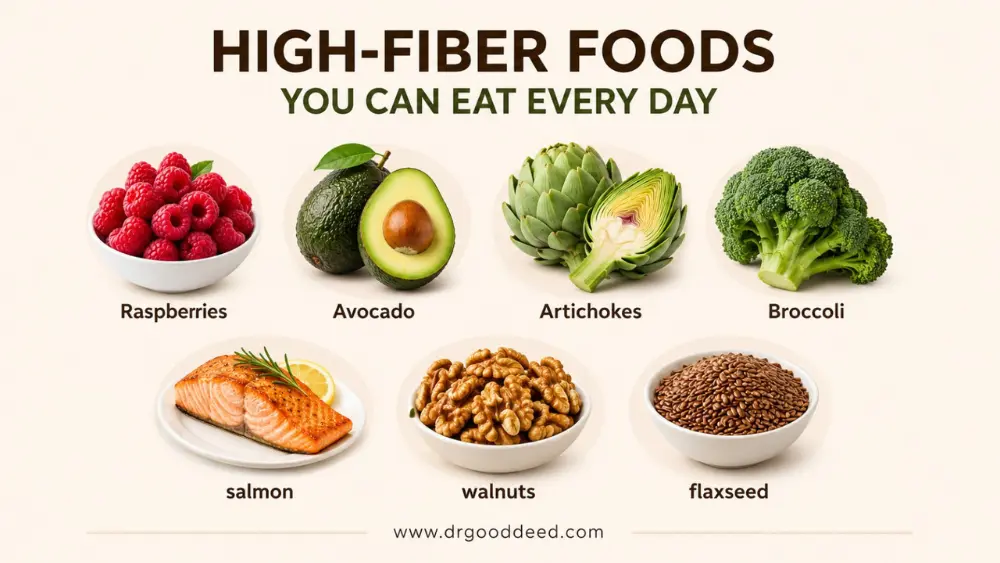
High-fiber foods for digestion fall into two types: soluble fiber (dissolves in water, feeds bacteria, slows digestion) and insoluble fiber (adds stool bulk, speeds colonic transit). Both types are necessary.
Fruits and Vegetables Rich in Fiber
- Raspberries: 8g fiber per cup
- Avocado: 10g per whole fruit, also provides gut-supporting monounsaturated fats
- Artichokes: 10g per medium vegetable, rich in inulin (a potent prebiotic)
- Broccoli: 5g per cup, contains sulforaphane, which reduces gut inflammation
Whole Grains Supporting Bowel Movements
Oats contain beta-glucan, which raises Bifidobacterium counts by up to 40% in 4 weeks. Barley contains more beta-glucan per gram than oats. Brown rice and quinoa provide insoluble fiber for regularity.
Legumes, Beans, and Digestive Health
Lentils and black beans each provide 15g of fiber per cooked cup. Both contain resistant starch that produces butyrate in the colon, fueling colon cells and reducing cancer risk.
Gradually Increasing Fiber Safely
Increase fiber by 5g per week with an additional 250ml of water per 5g added. Moving from 15g to 35g too fast causes severe bloating. A 4 to 6 week ramp-up is the standard clinical recommendation.
Probiotic and Prebiotic Foods for Gut Health
Probiotics are live bacteria in foods. Prebiotics are fibers that feed those bacteria. A gut health diet plan needs both probiotic and prebiotic categories, not just supplements.
- Kefir: 12+ live bacterial strains; 4x the probiotic concentration of yogurt
- Kimchi: Contains Lactobacillus kimchii; reduces gut inflammation clinically
- Sauerkraut: Unpasteurized versions contain 10 billion CFUs per serving; pasteurized versions contain none
- Garlic (prebiotic): Contains fructooligosaccharides (FOS), selectively feeding Bifidobacterium
- Asparagus and onions: Both high in inulin, the most studied prebiotic fiber
Heat destroys probiotics. Add fermented foods to cooled dishes only.
Foods That May Harm Gut Health
Ultra-Processed Foods and Digestion
Emulsifiers in ultra-processed foods (polysorbate 80, carboxymethylcellulose) disrupt the gut mucus layer. A 2015 Nature study confirmed these increase intestinal permeability directly.
Excess Sugar and Gut Bacteria Imbalance
High sugar intake feeds Candida albicans while suppressing Lactobacillus. Adults consuming more than 50g of added sugar daily show measurable microbiome diversity loss within 3 weeks.
Excess Alcohol and Digestive Irritation
More than 14 alcohol units per week increases intestinal permeability by 40% and reduces Lactobacillus counts within 48 hours of heavy intake, per a 2017 Alcohol and Alcoholism study.
Low-Fiber Diets Affecting Bowel Health
When gut bacteria run out of fiber, they consume the gut’s own mucus layer. This weakens the intestinal barrier and raises infection risk. High-fiber foods for digestion prevent this by keeping bacteria consistently fed.
7-Day Gut Health Diet Plan
This 7-day gut health diet plan delivers 30 to 35g of fiber daily across diverse plant sources, matching the core requirements of any clinical gut health diet plan.
| Day | Breakfast | Lunch | Dinner | Snack |
| 1 | Oats, raspberries, flaxseed | Lentil soup, whole grain bread | Grilled salmon, broccoli, brown rice | Greek yogurt, banana |
| 2 | Kefir smoothie, banana, spinach | Black bean tacos, whole wheat tortilla | Tofu stir-fry, garlic, bok choy, quinoa | Walnuts, apple |
| 3 | Avocado toast, eggs | Lentil curry, brown rice | Baked chicken, artichoke, barley | Kefir, mixed berries |
| 4 | Overnight oats, chia, blueberries | Chickpea spinach salad, olive oil | Miso salmon, soba noodles, asparagus | Sauerkraut, rye crackers |
| 5 | Greek yogurt, granola, strawberries | Turkey avocado whole wheat wrap | Turmeric lentil stew, whole grain bread | Banana, almond butter |
| 6 | Kefir smoothie bowl, mango, hemp seeds | Black bean roasted veggie quinoa bowl | Grilled sardines, broccoli, sweet potato | Apple, hummus |
| 7 | Oats, boiled egg, kimchi side | Tomato lentil soup, whole wheat roll | Baked cod, asparagus, brown rice | Mixed nuts, pear |
Hydration and Digestive Health
Water Supporting Bowel Movements
Drinking 500ml of water immediately upon waking increases colon motility within 30 minutes. Adults need 2 to 2.5 liters daily. Fiber and probiotics improving digestion, both require adequate water; without it, fiber worsens constipation.
Dehydration Worsening Constipation
The colon pulls water from stool when hydration is low. Even 1% dehydration (0.7 liters in a 70kg adult) increases constipation risk by 30%.
Herbal Teas and Digestive Comfort
Peppermint tea relaxes colonic smooth muscle, confirmed in a 2014 meta-analysis. Ginger tea stimulates gastric emptying. Chamomile tea reduces intestinal spasms and is used clinically for functional dyspepsia.
Lifestyle Habits That Support Gut Health
Sleep and Gut Microbiome Balance
Two consecutive nights of sleep under 6 hours reduce Lactobacillus counts measurably. Consistent 7 to 9-hour sleep preserves circadian signals that regulate gut motility.
Stress Affecting Digestion
Cortisol from chronic stress reduces gut blood flow and disrupts the mucosal barrier. Diaphragmatic breathing for 5 minutes before meals measurably reduces cortisol impact on digestion.
Exercise Supporting Bowel Regularity
30 minutes of moderate exercise 5 days per week increases microbial diversity and reduces intestinal transit time. Fit individuals show higher Faecalibacterium prausnitzii counts, a bacterium that reduces gut inflammation.
Consistent Meal Timing and Digestion
Eating at consistent times trains the migrating motor complex (MMC), a muscular wave that clears bacteria between meals. Irregular timing disrupts MMC cycles and raises SIBO risk.
Common Mistakes People Make With Gut Health Diets
Most people fail a gut health diet plan even when following best diet for gut health principles, due to avoidable process errors.
- Adding fiber too fast: Jumping from 15g to 35g in one week causes severe bloating. Ramp up by 5g per week over 4 to 6 weeks.
- Probiotics without prebiotics: Supplements without fiber offer significantly reduced effectiveness.
- Relying only on commercial yogurt: Most US yogurts contain 2 live strains. Kefir contains 12 or more with 4 times the concentration.
- Repeating the same foods: Eating 10 identical foods weekly limits diversity below the 30-plant threshold the American Gut Project identified.
FAQs
What foods are best for improving gut health naturally?
Kefir, unpasteurized sauerkraut, artichokes, lentils, oats, garlic, and raspberries have the strongest clinical evidence. A gut health diet plan using 30 or more plant foods weekly produces the highest microbiome diversity per American Gut Project data.
How do fiber and probiotics support digestion?
Fiber and probiotics improving digestion work together: fiber ferments to produce butyrate, fueling colon wall cells. Probiotics directly increase beneficial bacterial counts. Together, they lower intestinal pH, suppress pathogens, and strengthen the mucosal barrier within 4 weeks.
Why is hydration important for bowel regularity?
The colon pulls water from stool during dehydration. Even 1% fluid loss increases the risk of constipation by 30%. Drinking 500ml of water at waking stimulates colon motility within 30 minutes. High fiber without enough water worsens constipation.
Can stress and poor sleep affect gut health?
Yes. Cortisol from chronic stress reduces gut blood flow and damages the mucosal barrier within days. Two nights of sleep under 6 hours reduce Lactobacillus counts measurably. A gut health diet plan alone cannot fully compensate when sleep and stress remain unmanaged.
What are common signs of an unhealthy gut?
Bloating after most meals, fewer than 3 bowel movements weekly, excessive gas, undigested food in stool, chronic fatigue, and eczema signal dysbiosis. A gut health diet plan consistently improves these markers within 6 to 8 weeks.
How quickly should fiber intake be increased?
Increase by 5g per week. Starting at the US average of 15g, reach 35g over 4 to 6 weeks. Every 5g increase needs 250ml more water. Faster increases cause bloating severe enough to quit the 7-day gut health diet plan before seeing results.
Which fermented foods help support healthy digestion?
Kefir shows measurable Bifidobacterium increases within 4 weeks. Kimchi and unpasteurized sauerkraut follow closely. Pasteurized fermented foods contain no live cultures. Heat-processed miso loses most bacterial activity.
Can processed foods negatively affect gut bacteria balance?
Yes. Emulsifiers in ultra-processed foods degrade the gut mucus layer, confirmed in Nature (2015). Within 2 weeks, measurable reductions in Lactobacillus and Bifidobacterium occur alongside increased gut permeability markers.
What lifestyle habits improve digestion besides diet?
30 minutes of moderate exercise 5 days weekly increases microbial diversity. Consistent meal timing maintains the MMC cycle. These habits amplify every gut health diet plan significantly, alongside 7 to 9 hours of sleep.
When should digestive symptoms be medically evaluated?
Seek evaluation for blood in stool, weight loss over 5% in 30 days, abdominal pain lasting over 3 weeks, bowel changes over 2 weeks, or nighttime symptoms waking you from sleep. These suggest IBD, celiac disease, or colorectal cancer.