

Natural remedies can support asthma control, but they do not replace prescribed asthma medication. The most effective natural approaches reduce airway irritation, inflammation, or exposure to triggers rather than curing asthma outright.
Natural remedies for asthma work by cutting airway irritation, calming inflammation, and reducing trigger exposure, not by curing the underlying disease. Asthma is a chronic inflammatory airway condition affecting roughly 25 million people in the United States, according to the CDC. This guide covers 10 evidence-backed strategies that support standard treatment rather than replace it, drawn from clinical trials.
10 Natural Remedies for Asthma
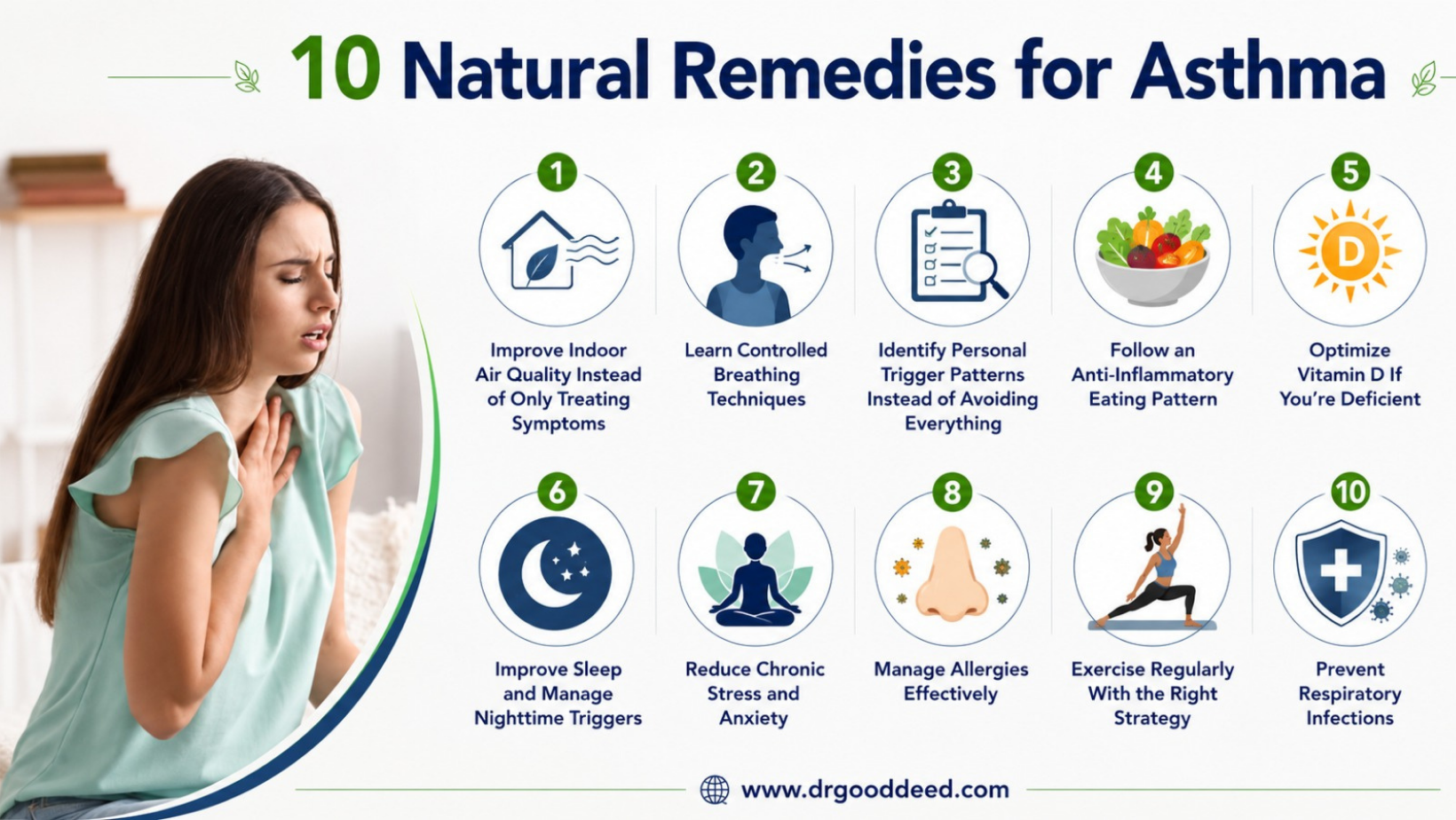
The 10 natural remedies for asthma below come from clinical trials, not folk tradition. Each targets a specific driver of flare-ups, from indoor air particles to stress hormones. None of them replace an inhaled steroid or rescue inhaler.
1. Improve Indoor Air Quality Instead of Only Treating Symptoms
Dust, pet dander, mold spores, and cooking smoke build up indoors and irritate airways daily. A HEPA air purifier, regular vacuuming with a sealed-filter vacuum, and fixing damp spots cut allergen load at the source. Most people treat symptoms without ever checking what triggers them at home. Among natural remedies for asthma, air quality control offers the most measurable, lasting payoff because it removes the irritant instead of just reacting to it.
2. Learn Controlled Breathing Techniques
The Buteyko breathing method trains slow, shallow nasal breathing to reduce over-breathing, a known asthma trigger. A 2024 randomized trial in the European Journal of Medical Research found participants who practiced Buteyko breathing at home for 3 months improved asthma control while using less medication. A separate randomized trial found the technique cut bronchodilator use significantly compared to a control group, without changing lung function test results.
3. Identify Personal Trigger Patterns Instead of Avoiding Everything
Broad avoidance rules waste effort and stress people out. A symptom diary tracking flare-ups against weather, food, exercise, and stress reveals which triggers actually matter for you. Most patients have two or three real triggers. This kind of personal tracking turns generic natural remedies for asthma advice into a plan built around your own lungs.
4. Follow an Anti-Inflammatory Eating Pattern
Diets heavy in fruits, vegetables, and omega-3 fats correlate with lower airway inflammation markers, while processed and fried foods correlate with worse asthma control. Swap fried snacks for nuts and fatty fish twice a week. This shift will not stop an attack, but it lowers baseline inflammation over months. Among natural remedies for asthma, diet changes take the longest to show results, often eight to twelve weeks before symptom scores shift.
5. Optimize Vitamin D If You’re Deficient
Vitamin D deficiency is common in asthma patients and is tied to more frequent flare-ups and higher steroid needs. A study of 119 asthma patients found those with deficiency who took supplements for one year cut their exacerbations from 2.6 to 1.6 per year and reduced oral steroid courses from 35 to 20. Ask your doctor for a blood test before starting supplements, since dosing needs vary by person.
6. Improve Sleep and Manage Nighttime Triggers
Nighttime symptoms often come from dust mites in bedding, reflux while lying flat, or cool dry air. Washing sheets weekly in hot water, raising the head of the bed, and running a humidifier in dry months reduce nighttime flare-ups. Poor sleep also raises stress hormones that worsen airway sensitivity, so fixing sleep is one of the more overlooked natural remedies for asthma for people with mostly nighttime symptoms.
7. Reduce Chronic Stress and Anxiety
Stress hormones can tighten airway muscles and increase inflammation, creating a cycle where anxiety about breathing makes breathing harder. Short daily practices like guided relaxation or a 10-minute walk lower that hormonal load. Patients with both asthma and anxiety report worse symptom control, according to case-control research linking asthma with higher anxiety scores.
8. Manage Allergies Effectively
Untreated seasonal or pet allergies keep airways inflamed year-round, even without an active asthma flare-up. Antihistamines, saline nasal rinses, and allergy testing to confirm exact triggers all reduce this background irritation. Treating the allergy often reduces how often the asthma acts up, which is why allergists rank allergy control among the top natural remedies for asthma for people with confirmed pollen or pet sensitivities.
9. Exercise Regularly With the Right Strategy
Regular moderate exercise strengthens lung capacity and improves long-term control, but jumping straight into intense activity without a warmup can trigger symptoms. A 10-minute gradual warmup, breathing through the nose when possible, and choosing warm humid environments over cold dry air all lower exercise-induced flare-ups. Swimming works particularly well due to the warm, moist air.
10. Prevent Respiratory Infections
Colds and flu are among the most common asthma attack triggers, since viral infections inflame airways that are already sensitive. Annual flu shots, frequent handwashing, and staying current on recommended vaccines cut this risk directly. This single step prevents more flare-ups than most supplement routines combined.
Cutting Nighttime Attacks Without Adding Medication
The name below has been changed to protect patient privacy.
Robert Chen, a 39-year-old teacher in Sacramento, California, kept waking up wheezing three nights a week despite using his inhaled steroid correctly. His allergist found dust mites in his mattress and low vitamin D on a blood test. He added a mattress cover, washed bedding weekly in hot water, and started vitamin D supplements under medical supervision. Within six weeks, his nighttime symptoms dropped to once every two weeks, and his rescue inhaler use fell by half. His case shows how natural remedies for asthma work best as an addition to medication, not a swap for it.
FAQs
Can asthma be controlled naturally?
Partially. Trigger reduction, breathing exercises, and vitamin D correction can lower flare-up frequency, but no natural method replaces inhaled corticosteroids for airway inflammation control.
Do breathing exercises help asthma?
Yes. Clinical trials on the Buteyko method show reduced bronchodilator use and improved symptom scores after 3 to 6 months of consistent daily practice.
Which foods are good for asthma?
Fatty fish, leafy greens, berries, and nuts supply omega-3s and antioxidants tied to lower airway inflammation. Fried foods and processed meats correlate with worse asthma control.
Are herbal remedies effective for asthma?
Evidence is weak. Most herbal supplements lack randomized trial data proving they reduce exacerbations, and some interact with asthma medications, so check with a doctor first.
Can weight loss improve asthma symptoms?
Yes. Excess weight increases systemic inflammation and reduces lung mechanics, and research links obesity to more severe asthma symptoms and weaker medication response.
Does yoga help people with asthma?
Yes, modestly. Trials combining yoga breathing with standard care show improved quality-of-life scores, though effects on lung function tests remain inconsistent across studies.
Should I stop using my inhaler if natural remedies help?
No. Stopping prescribed medication without medical guidance risks a severe flare-up, since natural remedies address triggers, not the airway inflammation medication controls.
Can stress make asthma worse?
Yes. Stress hormones tighten airway muscles and heighten inflammation, and studies link asthma patients to higher anxiety scores than people without the condition.
How can I reduce asthma triggers at home?
Use a HEPA air purifier, wash bedding weekly in hot water, fix damp areas that grow mold, and keep pets out of bedrooms if dander is a confirmed trigger.
Which vitamins may support lung health?
Vitamin D shows the strongest evidence, particularly in patients who are deficient. Omega-3 fatty acids and vitamin C show smaller, less consistent benefits in current research.
The Bottom Line
Natural remedies for asthma work best as a layer added on top of prescribed treatment, not a replacement for it. Breathing techniques, trigger tracking, vitamin D correction, and infection prevention all have real clinical trial support behind them. Combining a few of these 10 natural remedies for asthma with consistent medication use gives the most realistic path toward fewer flare-ups and better day-to-day control.
Sources
- FastStats: Asthma, CDC/NCHS
- Buteyko Breathing Method Research, European Journal of Medical Research 2024
- Buteyko breathing techniques in asthma: a blinded randomised controlled trial, PubMed
- Effect of two breathing exercises (Buteyko and pranayama) in asthma, PubMed
- Asthmatic Patients with Vitamin D Deficiency have Decreased Exacerbations after Vitamin Replacement, PMC
- Association of asthma with low serum vitamin D and related symptoms in adults, npj Primary Care Respiratory Medicine
- The Relationship Between Vitamin D and Asthma Exacerbation, PMC
- Investigating the Role of Obesity, Vitamin D Deficiency, and Eosinophilia in Pediatric Asthma Severity
- Breathing Exercises for Asthma, University of Michigan, ClinicalTrials.gov
- A Review on the Role of Vitamin D in Asthma, PMC
Medical Disclaimer: This article is for general education only. It does not replace medical advice from a doctor or pulmonologist. Never stop or reduce prescribed asthma medication without your provider’s guidance.