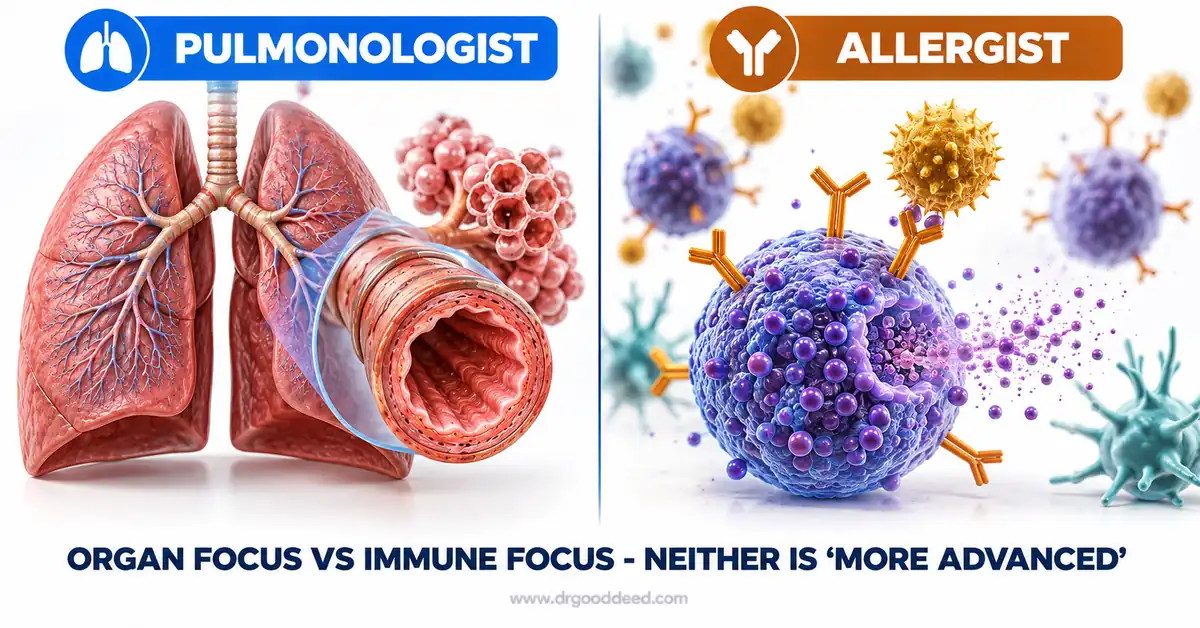

A pulmonologist specializes in diseases of the lungs and respiratory system, such as asthma, COPD, pneumonia, pulmonary fibrosis, and sleep-related breathing disorders, while an allergist specializes in allergies and immune-system conditions, including allergic rhinitis, food allergies, eczema, and allergy-related asthma.
In some patients with asthma, both specialists may be involved: a pulmonologist focuses mainly on airway and lung function, whereas an allergist focuses on identifying and managing allergic triggers and immune responses.
Key Takeaways
- A pulmonologist vs allergist comparison comes down to organ focus versus immune focus, not one doctor being more advanced than the other.
- Pulmonologists train in respiratory medicine and manage the mechanical and structural side of lung disease.
- Allergists train in allergy and immunology and manage the immune triggers behind asthma, hives, and food reactions.
- If your asthma flares mainly around pollen, pets, dust, or specific foods, pulmonologist vs allergist for asthma guidance usually points to the allergist first.
- If your asthma is severe, poorly controlled, or tied to structural lung changes, a pulmonologist typically leads your care.
- Many people with complex asthma end up seeing both specialists over time.
Pulmonologist vs Allergist at a Glance (Comparison Table)
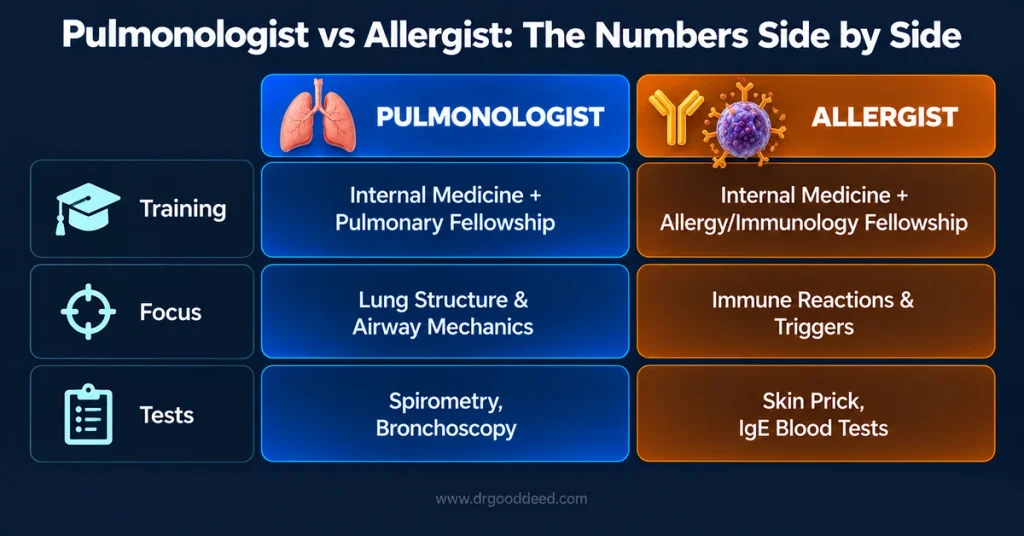
Before booking an appointment, it helps to see the practical differences side by side. This table breaks down training, focus, and typical testing for each specialist, based on standards from the American Board of Internal Medicine and the American Academy of Allergy, Asthma and Immunology.
| Factor | Pulmonologist | Allergist |
| Training path | Internal medicine residency plus a pulmonary and critical care fellowship | Internal medicine or pediatrics residency plus an allergy and immunology fellowship |
| Primary focus | Lung structure, airway mechanics, and breathing function | Immune system reactions and allergic triggers |
| Conditions treated | Asthma, COPD, pulmonary fibrosis, lung cancer, sleep apnea | Asthma, allergic rhinitis, food allergies, eczema, immune deficiencies |
| Typical tests | Spirometry, pulmonary function tests, bronchoscopy, imaging | Skin prick testing, specific IgE blood tests, patch testing |
What Does a Pulmonologist Treat?
A pulmonologist manages diseases of the lungs and airways, including asthma, COPD, pulmonary fibrosis, lung cancer, and sleep apnea. They rely on tools like spirometry and a pulmonary function test to measure how well air moves in and out of your lungs.
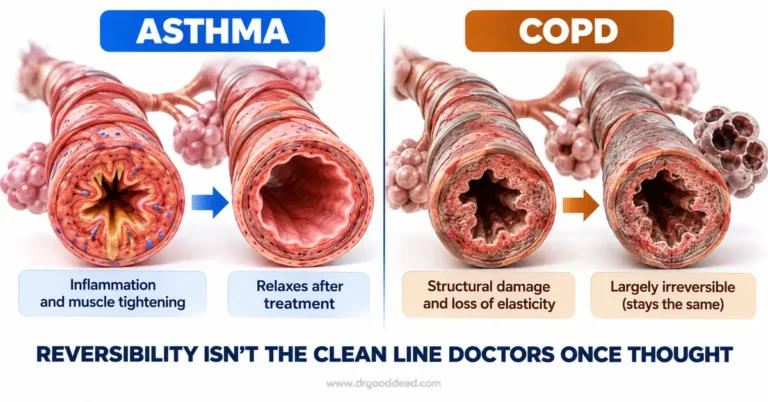
Because asthma and COPD share overlapping symptoms, many patients want a clear breakdown of asthma vs COPD symptoms before deciding on a specialist. Pulmonologists also handle bronchoscopy procedures and long-term management of chronic, structural lung conditions that go beyond allergic triggers.
What Does an Allergist Treat?
An allergist, formally called an allergist/immunologist, manages conditions rooted in immune system overreaction. This includes asthma triggered by allergens, allergic rhinitis, food allergies, drug allergies, chronic hives, eczema, and primary immunodeficiencies.
Their goal is identifying the specific trigger behind your symptoms, whether it’s pollen, dust mites, pet dander, or a food protein. Allergists also manage immunotherapy programs, including allergy shots, that gradually reduce your body’s reaction to a confirmed trigger over months or years.
Pulmonologist vs Allergist: Key Differences
These specialists differ in training length, scope of practice, and diagnostic tools, which can affect your care plan.
Training and Specialization
- An allergist/immunologist completes at least nine years of training after medical school, including a dedicated two-year allergy and immunology fellowship, according to the American Board of Allergy and Immunology.
- A pulmonologist completes a three-year internal medicine residency followed by a pulmonary and critical care fellowship, focused specifically on respiratory disease.
- Neither path is a subset of the other. They are separate, board-certified specialties with distinct curricula.
Scope of Practice
- An allergist’s scope extends well beyond the lungs to cover the entire immune system, including skin, sinuses, and digestive reactions to food.
- A pulmonologist’s scope stays organ-specific, focused on the respiratory tract from the trachea down to the smallest airways.
- This is why a person with both eczema and asthma often needs an allergist, while someone with asthma plus a chronic cough and abnormal chest imaging usually needs a pulmonologist.
Diagnostic Tools Each Uses
The two specialists rely on different diagnostic toolkits, and understanding this helps set expectations before your visit.
- Skin prick testing: An allergist places small amounts of allergens on your skin to check for a reaction within 15 to 20 minutes, commonly used for allergy testing for asthma triggers like pollen or pet dander.
- Specific IgE blood tests: These measure antibody levels against particular allergens when skin testing isn’t practical, often used in patients on certain medications.
- Spirometry: A pulmonologist uses this breathing test to measure lung capacity and airflow, a core pulmonary function test used to diagnose and monitor asthma severity.
- Bronchoscopy: A pulmonologist may use this camera-based procedure to directly examine the airways when imaging or symptoms suggest a structural issue.
Which One Should You See First for Asthma?
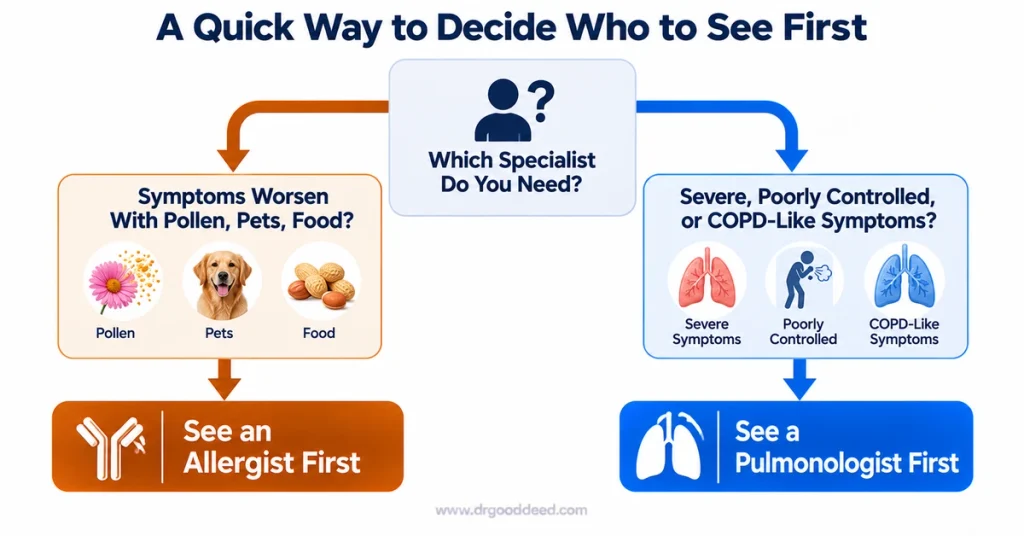
- If your symptoms clearly worsen with seasonal pollen, pet exposure, or specific foods, an allergist can pinpoint the trigger and start immunotherapy if needed.
- If your asthma is severe, doesn’t respond to standard inhalers, or overlaps with symptoms similar to COPD, a pulmonologist is usually the better first stop.
- Reviewing asthma vs COPD symptoms beforehand can help you describe your symptoms more precisely at your first appointment.
- When in doubt, your primary care doctor can help make this pulmonologist vs allergist call based on your history.
When You Might Need Both
Complex or poorly controlled asthma often benefits from co-management. This happens more often than most patients expect, especially when symptoms don’t fully resolve with single-specialist treatment.
- Allergic asthma with structural changes: Long-standing allergic inflammation can cause airway remodeling that needs a pulmonologist’s monitoring alongside an allergist’s trigger management.
- Severe asthma on biologic therapy: Newer biologic medications for severe asthma are often prescribed by allergists but may require pulmonary function monitoring from a pulmonologist.
- Unclear diagnosis: When symptoms don’t clearly point to either allergic or structural causes, both specialists working together can rule out overlapping conditions faster.
- Frequent flare-ups despite treatment: If inhalers and allergy management both fail to control symptoms, combined care often uncovers a missed trigger or a coexisting lung condition.
Pro Tip: Bring a symptom diary noting the time of day, season, and location of your flare-ups to your first appointment. This single detail often speeds up whether your doctor refers you to an allergist, a pulmonologist, or both at once.
How to Get a Referral
Most patients start with a primary care doctor, who reviews symptoms and directs the initial referral to the right specialist. Referral requirements vary by insurance plan, so check whether your plan needs a formal referral or allows direct scheduling with a specialist.
Some plans allow patients to see an allergist or pulmonologist without a referral, while others require primary care sign-off first. Confirming this with your insurer before booking saves time and avoids unexpected costs.
FAQs
Can an allergist treat COPD?
No. COPD stems from structural lung damage, usually from smoking, not immune reactions. Allergists don’t typically manage COPD directly. A pulmonologist handles COPD diagnosis, staging, and long-term treatment instead.
Do you need a referral to see a pulmonologist or allergist?
It depends on your insurance plan. Some HMO plans require a primary care referral first. PPO plans often allow direct scheduling. Check your specific plan’s rules before booking.
What tests does an allergist do that a pulmonologist doesn’t?
Allergists perform skin prick testing and specific IgE blood tests to identify allergen triggers. Pulmonologists don’t typically run these immune-focused tests, since their diagnostic tools target lung structure and airflow instead.
Can a pulmonologist diagnose allergies?
Not directly. Pulmonologists can rule out non-allergic causes of breathing symptoms using a pulmonary function test, but confirming a specific allergy trigger requires an allergist’s skin or blood testing.
Is an immunologist the same as an allergist?
Yes. Allergist and immunologist refer to the same board-certified specialty. The official title is allergist/immunologist, reflecting training in both allergic disease and broader immune system disorders.
Medical Disclaimer: This article is for general information only and is not medical advice. It does not replace a diagnosis, treatment plan, or guidance from a qualified healthcare professional. Always talk to your doctor about your own symptoms and before starting, stopping, or changing any treatment. If you think you may be having a medical emergency, call 911 or go to your nearest emergency room.