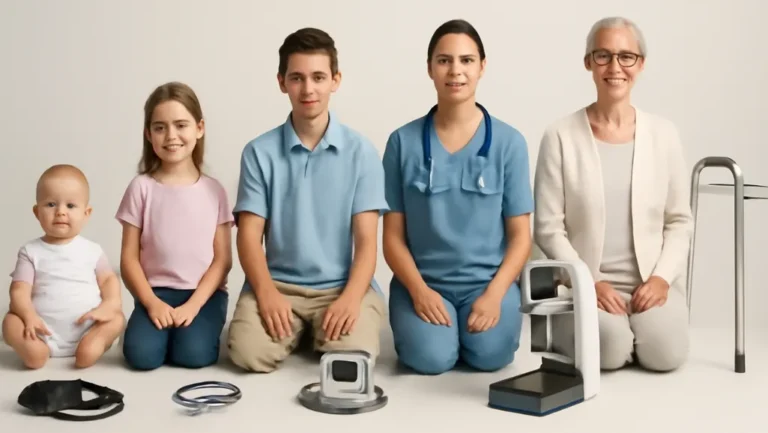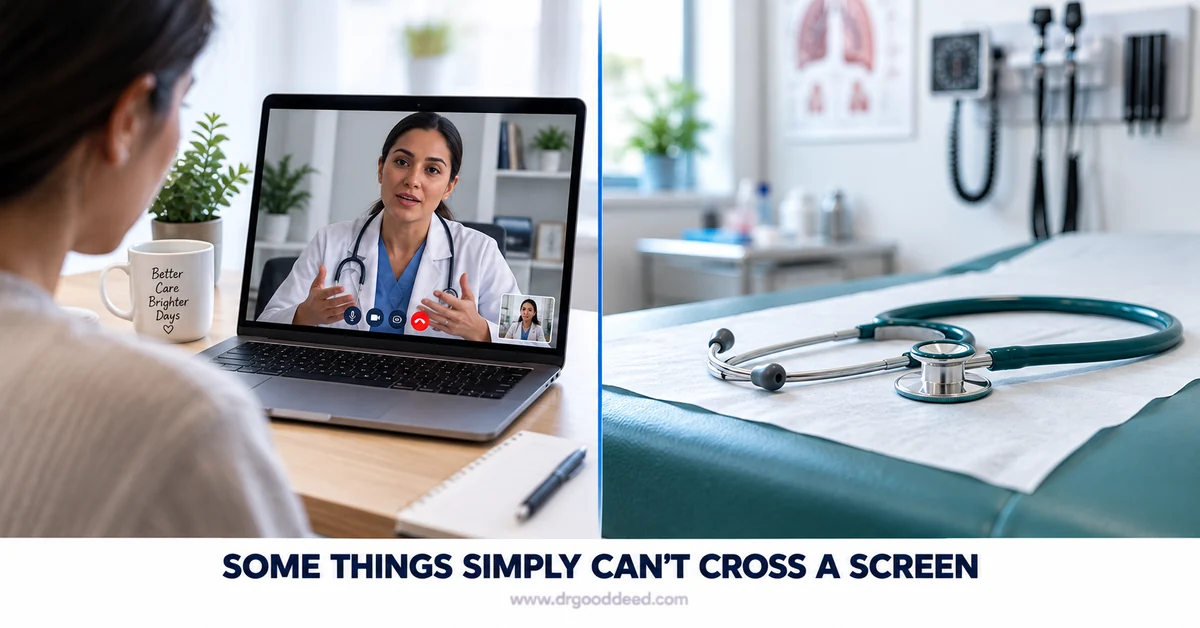

Telehealth care allows patients to consult healthcare professionals remotely through video or phone calls, offering convenience, reduced travel time, and easier access for routine follow-ups, medication reviews, and some chronic-condition management. In-person care requires visiting a clinic or hospital and is more appropriate when a physical examination, diagnostic testing, procedures, or urgent assessment is needed.
The best option depends on the patient’s condition, the purpose of the visit, and the healthcare provider’s recommendation.
Key Takeaways
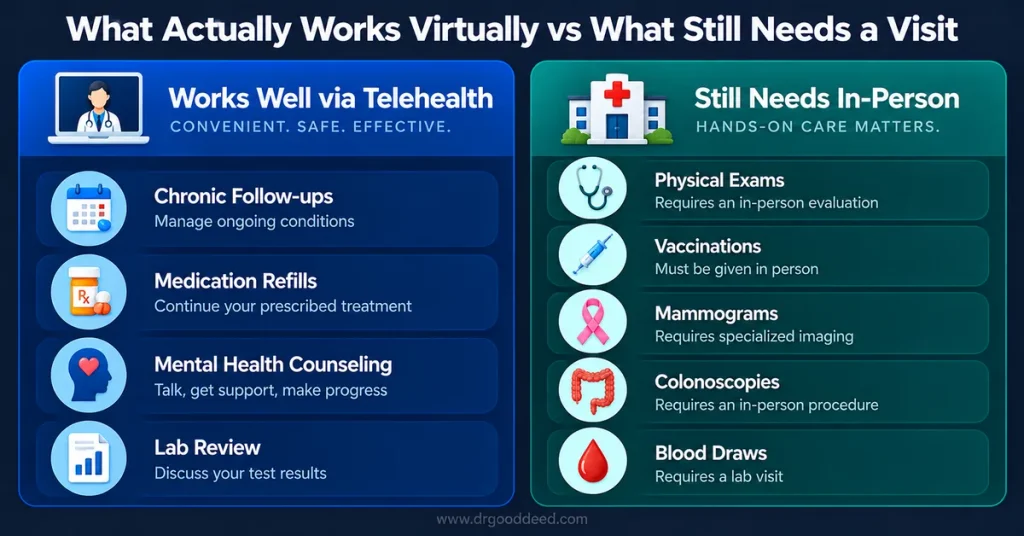
- Telehealth handles chronic disease follow-ups, medication refills, mental health counseling, lifestyle and nutrition coaching, and reviewing lab or imaging results well.
- In-person visits stay necessary for physical exams, vaccinations, blood draws, and equipment-based screenings such as mammograms, colonoscopies, and Pap smears.
- A hybrid model, alternating virtual check-ins with periodic office visits, is now standard at most U.S. health systems rather than an exception.
- Insurance coverage depends on your state and plan. As of 2026, 25 states require both coverage parity and payment parity for telehealth, while over 40 states and D.C. require coverage parity alone, per the National Conference of State Legislatures.
Telehealth vs In-Person Care at a Glance (Comparison Table)
This table lines up telehealth vs in-person care across the factors that matter most when you’re deciding how to handle a specific preventive need: what each format can actually assess, how convenient it is, and which preventive services commonly fit each one.
| Factor | Telehealth | In-Person Care |
| What it can assess | Symptoms you can describe or show on camera, mental state, medication response, self-reported vitals | Physical findings needing touch, auscultation, or specialized equipment |
| Convenience | No travel, same-day slots common, works from home or work | Requires travel, parking, and time away from work |
| Insurance handling | Often billed like a standard visit where parity laws apply; copay usually matches | Standard office copay, plus any separate lab, imaging, or procedure charges |
| Common preventive uses | Chronic disease follow-up, medication management, lifestyle counseling, lab review, mental health check-ins | Annual physical, vaccinations, mammograms, colonoscopies, Pap smears, blood draws |
What Is Telehealth?
Telehealth, as defined by the Health Resources and Services Administration, is the use of electronic information and telecommunications technology to deliver long-distance clinical care, patient education, and public health services.
That includes video calls, phone consultations, secure patient portal messaging, and remote monitoring devices that send your blood pressure or glucose readings straight to your provider.
- In the final quarter of 2024, 13% of all Medicare beneficiaries and 23% of people enrolled in both Medicare and Medicaid had a telehealth visit, according to federal data cited in a 2025 Senate resolution supporting Telehealth Awareness Week.
- Medicare also added CPT code 98016 in 2025 specifically for brief virtual check-ins under five minutes, giving short, low-complexity contact its own billing path separate from a full video visit.
For most preventive care, telehealth means a scheduled video call with your primary care provider, a phone conversation about a prescription refill, or a portal message where a clinician reviews your recent lab results and adjusts your plan.
What Is In-Person Care?
In-person care is the traditional office or clinic visit where a clinician physically examines you. This format allows palpation, auscultation with a stethoscope, direct visual inspection of skin or tissue, and any procedure that requires hands-on contact, like drawing blood, giving a vaccine, or performing a pelvic exam.
- In-person visits also give a clinician access to on-site equipment: exam tables, imaging machines, phlebotomy stations, and point-of-care testing that returns results the same day.
- For preventive health specifically, this is where mammograms, colonoscopies, Pap smears, and comprehensive physical exams happen, since none of these can be replicated through a camera.
Telehealth vs In-Person Care: Key Differences
Beyond the basic format, telehealth vs in-person care splits based on what each can actually assess, how convenient each one is, and how each gets paid for.
What Each Can Actually Assess
A clinician on a video call can observe your posture, skin color, breathing pattern, and general affect, and can ask you to demonstrate a movement or point to a symptom. What a screen cannot capture is anything requiring direct physical contact: blood pressure taken by cuff, heart and lung sounds through a stethoscope, abdominal palpation for tenderness or masses, or a manual joint exam. Complex or ambiguous new symptoms often need hands-on evaluation before a provider can rule out a physical cause.
Convenience and Access
Telehealth removes travel time, parking, and time off work, and same-day virtual slots are common for follow-ups. It also expands access for people in rural areas or with mobility limitations, since federally qualified health centers and rural health clinics can serve as Medicare telehealth sites without the geographic restrictions that applied before 2020. In-person care demands more logistics but gives immediate access to on-site testing and same-visit results.

Cost and Insurance Coverage
Twenty-five states currently mandate both service and payment parity, meaning insurers must cover telehealth the same way they cover in-person care and pay providers a comparable rate, according to 2026 state telehealth law tracking. Over 40 states and D.C. require coverage parity without necessarily requiring equal payment.
Medicare has extended most non-behavioral telehealth flexibilities through December 31, 2027, but coverage rules for Medicaid and private insurance still vary by plan and state, so confirming your specific benefits before booking matters more than assuming either format is automatically cheaper.
Which Preventive Care Needs Work Well via Telehealth
Telehealth genuinely handles a meaningful slice of preventive medicine, particularly anything centered on conversation, observation, or reviewing existing data rather than a physical exam.
- Chronic disease follow-ups: Routine check-ins for controlled diabetes, hypertension, or high cholesterol, where the visit focuses on reviewing home-monitored readings, symptoms, and treatment response rather than a new physical finding.
- Medication management and refills: Discussing side effects, adjusting dosages, and renewing long-term prescriptions for stable conditions. Current DEA and HHS flexibilities, extended through December 31, 2026, allow many controlled substance prescriptions via telemedicine without a prior in-person visit, though this varies by drug schedule and state law.
- Mental health counseling: Therapy, medication management for depression or anxiety, and psychiatric follow-ups, one of the strongest-performing categories for virtual care, with roughly half of Medicare psychotherapy visits already delivered by telehealth.
- Lifestyle and nutrition counseling: Weight management coaching, smoking cessation counseling, and dietary guidance, where the value lies in conversation and accountability rather than a physical exam.
- Reviewing lab or imaging results: A clinician discussing bloodwork, cholesterol panels, or imaging findings and explaining next steps, without needing to re-examine you in the room.
Which Preventive Care Still Requires an In-Person Visit
- Comprehensive physical exams: Blood pressure measurement, heart and lung auscultation, abdominal palpation, and reflex testing all require physical contact a screen cannot provide.
- Vaccinations and injections: Flu shots, shingles vaccines, and other immunizations require an in-person administration by a clinician or pharmacist.
- Equipment-based cancer and organ screenings: Mammograms, colonoscopies, Pap smears, and skin biopsies all depend on specialized equipment or direct tissue sampling that cannot be delivered remotely.
- Blood draws and point-of-care testing: Routine bloodwork for cholesterol, blood sugar, or thyroid function needs a phlebotomist or lab visit, even if the results are later reviewed by video.
- New, complex, or rapidly changing symptoms: A first-time complaint or a symptom that’s worsening quickly often needs hands-on evaluation before a provider can safely rule out a serious cause.
Telehealth alone genuinely cannot replace these categories. It can coordinate them, referring you to a lab, scheduling your mammogram, or reviewing your colonoscopy prep instructions, but the procedure itself still needs a physical location and trained hands.
Pro Tip: If your provider offers a pre-visit intake form before a telehealth appointment, fill it out with your home blood pressure or glucose readings from the past week rather than a single same-day number. A short trend line gives a remote clinician far more useful information than one isolated reading taken minutes before the call.
Getting the Best of Both: A Hybrid Approach
A hybrid model isn’t a compromise between telehealth vs in-person care, it’s how most U.S. primary care already runs. A typical annual cycle might include one in-person physical exam that covers bloodwork, vaccinations, and any due screenings, followed by two or three telehealth check-ins throughout the year for medication review, symptom updates, and lifestyle counseling.
Many U.S. health systems now default new patients into this pattern automatically, scheduling an in-person baseline visit first and offering virtual options for subsequent routine follow-ups. Ask your provider directly which of your specific preventive needs they’re comfortable managing virtually going forward, since this varies by practice and by condition.
FAQs
Can you get a prescription through telehealth?
Yes. Providers can prescribe most medications via telehealth. Controlled substances remain more restricted: DEA flexibilities extended through December 31, 2026 allow many Schedule II through V prescriptions without a prior in-person exam, though exact rules depend on the specific drug and your state.
Does insurance cover telehealth the same as in-person visits?
It depends on your state. Twenty-five states require both coverage and payment parity in 2026, while over 40 states and D.C. require coverage parity alone. Medicare covers most non-behavioral telehealth through 2027. Confirm your specific plan’s rules before booking.
Can telehealth replace your annual physical?
No. Can telehealth replace in-person care for your annual physical? Not fully. A video visit can cover history-taking and counseling, but blood pressure checks, physical exams, and any due bloodwork or vaccinations still require an in-person component.
Is telehealth as effective as in-person care?
For specific tasks, yes. Studies on chronic disease follow-up, medication management, and mental health counseling show comparable outcomes to telehealth vs in-person visit formats. For physical exams and equipment-based screenings, telehealth alone is not equivalent.
What do you need for a telehealth appointment?
A smartphone, tablet, or computer with a camera, a stable internet connection, and a private, well-lit space. Having your current medication list and any recent home-monitored readings, like blood pressure or glucose, ready speeds up the visit significantly.
Medical Disclaimer: This article is for general information only and is not medical advice. It does not replace a diagnosis, treatment plan, or guidance from a qualified healthcare professional. Always talk to your doctor about your own symptoms and before starting, stopping, or changing any treatment. If you think you may be having a medical emergency, call 911 or go to your nearest emergency room.