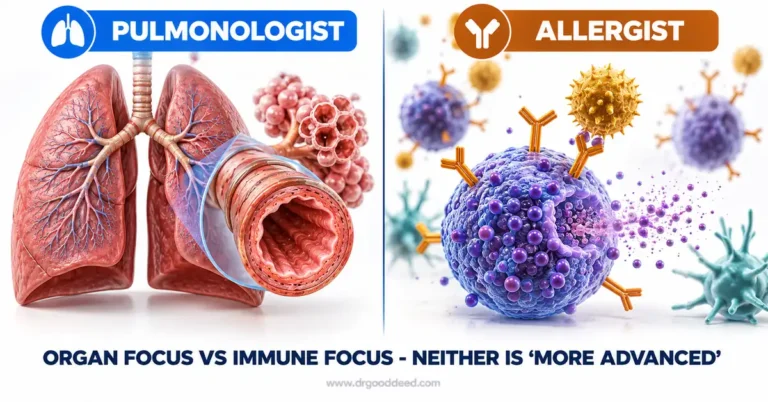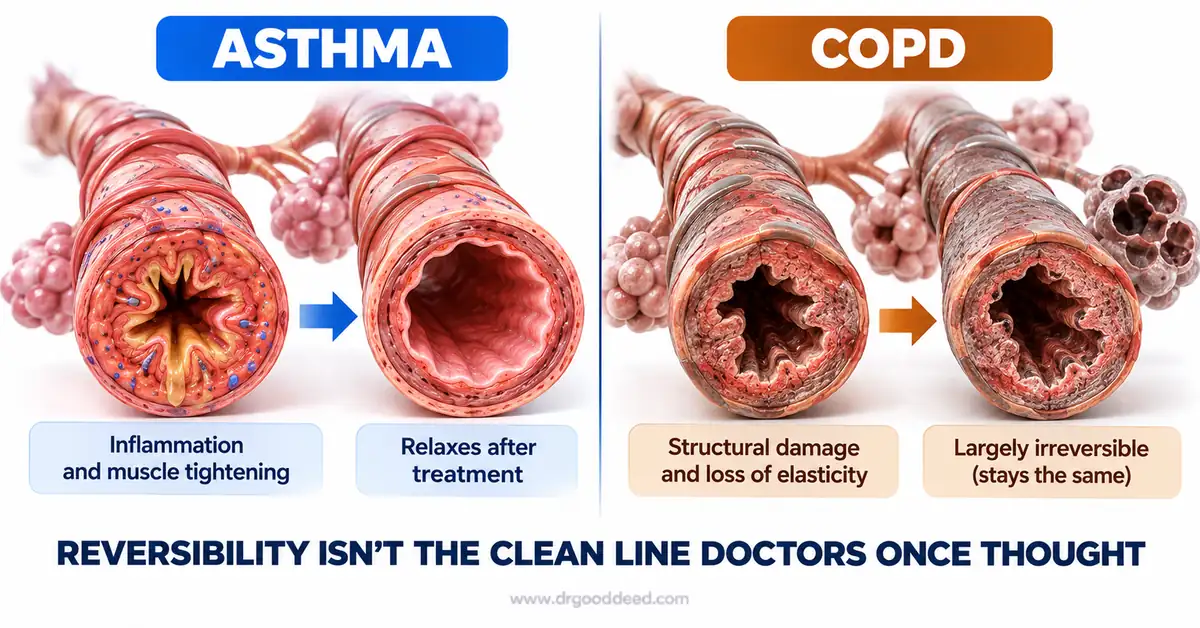

Asthma and COPD can both cause cough, wheezing, shortness of breath, and chest tightness, but their patterns differ. Asthma usually has intermittent symptoms that vary over time and may be triggered by allergens, exercise, cold air, or infections, with symptoms often worse at night or early morning.
COPD typically causes persistent, gradually worsening breathlessness, chronic cough, and sputum production, especially in people with a history of smoking or long-term exposure to lung irritants.
Key Takeaways
- Asthma shows up as episodic attacks with symptom-free stretches in between, while COPD symptoms stay fairly constant and slowly worsen over years.
- Asthma often starts in childhood; COPD typically develops after age 40, mostly in current or former smokers.
- Reversibility is not a clean line. Up to half of people with COPD show some improvement after a bronchodilator, a finding that overturns the old asthma-only assumption.
- Asthma-COPD Overlap Syndrome (ACOS) is common enough to matter, not a rare exception, and it carries worse outcomes than either condition alone.
- Only spirometry and pulmonary function testing, not symptoms alone, can confirm which condition you actually have.
Asthma vs COPD at a Glance (Comparison Table)
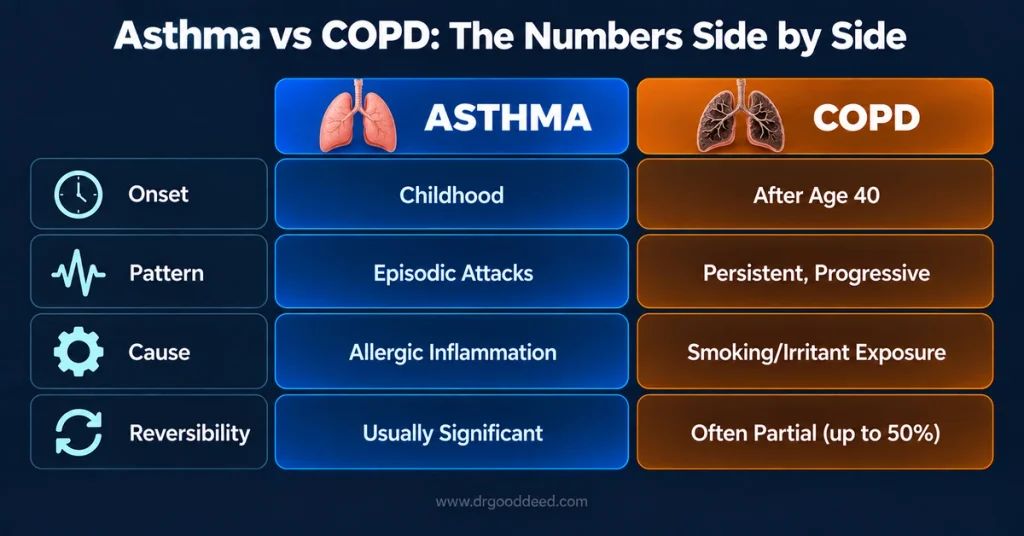
Symptoms alone rarely distinguish asthma from COPD. The table below lines up the features doctors weigh together, onset age, pattern, cause, and reversibility, so you can see where your own symptoms might fit before your appointment.
| Feature | Asthma | COPD |
| Typical onset age | Childhood or young adulthood | After age 40 |
| Symptom pattern | Episodic attacks, symptom-free periods between | Persistent, slowly progressive |
| Main cause | Allergic or non-allergic airway inflammation | Long-term smoking or lung irritant exposure |
| Reversibility | Usually significant with bronchodilators | Often partial; up to 50% show some response |
| Common triggers | Allergens, cold air, exercise, viral infections | Smoke, air pollution, occupational dust and fumes |
What Is Asthma?
Asthma is a chronic condition marked by inflamed, hyperreactive airways. The airway lining swells, the surrounding muscle tightens, and mucus production increases, all of which narrow the space air moves through. This produces wheezing, chest tightness, coughing, and breathlessness that come in flare-ups called asthma attacks.
- Common triggers include pollen, dust mites, pet dander, cold air, exercise, respiratory infections, and strong odors.
- Asthma frequently begins in childhood and is often linked to allergies or a family history of atopic disease, though adult-onset asthma also occurs.
According to the National Heart, Lung, and Blood Institute, asthma affects roughly 1 in 13 Americans, making it one of the most common chronic respiratory conditions in the US.
What Is COPD?
Chronic obstructive pulmonary disease, or COPD, is a progressive disease that permanently narrows the airways and damages lung tissue. It is an umbrella term covering emphysema, where the air sacs lose elasticity and rupture, and chronic bronchitis, where the airways stay inflamed and produce excess mucus most days for at least three months over two consecutive years.
- Cigarette smoking causes the large majority of COPD cases in the US, though long-term exposure to secondhand smoke, air pollution, and occupational dust or chemical fumes also contribute.
- Unlike asthma, COPD symptoms rarely disappear between episodes.
- Breathlessness, chronic cough, and mucus production tend to persist and gradually worsen, especially with continued smoke exposure.
Asthma vs COPD: Key Differences
Age of onset, symptom pattern, and reversibility form the three pillars doctors use to separate these conditions clinically.
Age of Onset and Triggers
Asthma commonly starts in childhood, often triggered by allergens like pollen or pet dander, though it can also first appear in adulthood. COPD, in contrast, almost always develops after age 40 and nearly always follows years of cumulative lung irritant exposure, most commonly smoking.
Symptom Pattern: Attacks vs Constant
Asthma symptoms typically come in distinct attacks, sudden wheezing, coughing, and chest tightness, followed by periods of completely normal breathing. COPD symptoms rarely go away entirely.
Daily cough, chronic mucus production, and breathlessness on exertion persist and slowly intensify over months and years, punctuated by flare-ups called exacerbations rather than resolving into normal breathing.
Reversibility
Reversibility refers to how much lung function improves after using a bronchodilator inhaler.
- Asthma airway narrowing is generally more reversible because inflammation and muscle tightening respond well to bronchodilators and inhaled steroids.
- COPD airway damage, especially the tissue destruction seen in emphysema, is largely fixed and improves less completely.
When Reversibility Isn’t a Clean Answer: Asthma-COPD Overlap
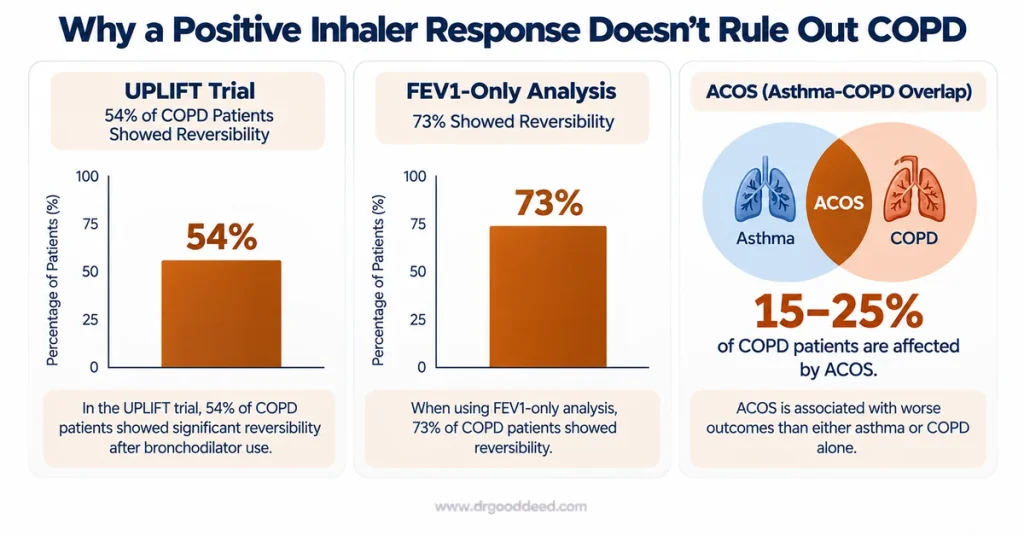
Bronchodilator reversibility, long treated as asthma’s defining trait, is not exclusive to asthma at all. Research published in the American Family Physician journal cites the UPLIFT trial, in which 54% of COPD patients showed significant bronchodilator reversibility by American Thoracic Society criteria.
A separate analysis using the sole FEV1 criterion found reversibility in 73% of COPD patients. Reversibility testing simply cannot reliably separate asthma from COPD.
- ACOS describes people who genuinely have features of both conditions at once, airway inflammation like asthma and fixed damage like COPD.
- Studies estimate ACOS affects up to roughly a quarter of people already diagnosed with COPD, and two systematic reviews found ACOS patients have higher healthcare utilization, more frequent exacerbations, and lower quality of life than either asthma or COPD alone.
- If your symptoms do not fit neatly into one box, ACOS may be why. This same honest, no-clean-answers approach is what we used in our piece on whether COPD can stay mild, where disease course is equally unpredictable.
Expert Insight: Reversibility testing was never designed to be a diagnostic dividing line between asthma and COPD, it was designed to guide treatment response. Clinicians who still use a positive bronchodilator response to rule out COPD are working from an outdated assumption that current pulmonary literature has repeatedly disproven.
How Doctors Tell Them Apart
Since symptoms and even bronchodilator response overlap, diagnosis relies on objective testing plus clinical context. Asthma or copd how to tell the difference for certain always comes down to combining test results with your history.
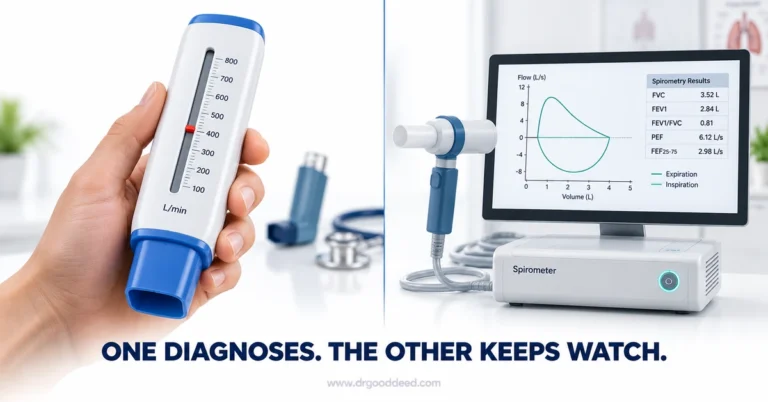
- Spirometry measures how much air you exhale and how fast, distinguishing the largely reversible obstruction of asthma from the fixed obstruction typical of COPD.
- FEV1/FVC ratio below 0.70 after a bronchodilator supports a COPD diagnosis, while a ratio that normalizes after treatment favors asthma.
- Smoking and exposure history carries major diagnostic weight, since heavy cumulative smoke exposure strongly favors COPD over asthma.
- Onset age and symptom timeline, including whether symptoms are episodic or constant, help place a patient’s presentation in context alongside test results.
- Allergy testing and eosinophil counts can support an asthma or ACOS diagnosis when allergic inflammation appears to be driving symptoms.
Our detailed breakdown of the 4 stages of COPD explains how spirometry results also determine COPD severity once a diagnosis is confirmed.
Treatment Differences
Treatment targets differ because the underlying damage differs. Asthma management centers on controlling inflammation before it flares, while COPD management focuses on slowing progression and easing daily symptoms since airway damage cannot be reversed.
- Asthma typically involves inhaled corticosteroids to control inflammation long-term, paired with short-acting bronchodilators for rescue relief during flare-ups.
- COPD typically involves long-acting bronchodilators as a daily foundation, sometimes combined with inhaled steroids, plus pulmonary rehabilitation and supplemental oxygen in advanced disease.
- ACOS often needs a combined approach, using both controller-type and rescue-type inhaled therapies under close specialist supervision.
- Smoking cessation is the single most effective intervention for slowing COPD progression, more impactful than any medication alone.
Pro Tip: Keep a simple symptom log noting whether breathlessness fully resolves between episodes or lingers daily, since this pattern detail often gives your doctor more diagnostic information than a single office visit ever can. For home-based strategies that support COPD symptom management day to day, see our guide on home remedies for COPD.
When to See a Doctor
See a doctor if breathlessness interferes with daily activities, if you need a rescue inhaler more than twice a week, or if a chronic cough lasts longer than eight weeks. Seek urgent care for severe breathlessness at rest, bluish lips or fingertips, or breathlessness that does not improve with a rescue inhaler. Anyone over 40 with a smoking history and persistent respiratory symptoms should ask specifically about spirometry testing.
FAQs
Can you have both asthma and COPD at the same time?
Yes. This is called Asthma-COPD Overlap Syndrome (ACOS). Studies show it affects roughly 15% to 25% of people already diagnosed with COPD and is linked to more frequent flare-ups than either condition alone.
Does childhood asthma turn into COPD?
Not directly, but poorly controlled childhood asthma can cause airway remodeling that increases COPD risk later, especially in smokers. Asthma itself does not become COPD; the two remain separate diagnoses even when they coexist.
Can a non-smoker get COPD?
Yes. Roughly 25% of COPD cases occur in people who never smoked, often from long-term secondhand smoke, occupational dust or chemical exposure, air pollution, or a genetic condition called alpha-1 antitrypsin deficiency.
Is COPD hereditary like asthma can be?
Partially. Alpha-1 antitrypsin deficiency is a confirmed genetic cause of COPD, though it accounts for a small share of cases. Asthma has a stronger, better-documented family and allergy-linked genetic pattern than typical smoking-related COPD.
Do asthma and COPD inhalers work the same way?
No. Both use bronchodilators to open airways, but asthma treatment relies more heavily on inhaled corticosteroids for inflammation control, while COPD relies more on long-acting bronchodilators as the daily foundation of treatment.
Medical Disclaimer: This article is for general information only and is not medical advice. It does not replace a diagnosis, treatment plan, or guidance from a qualified healthcare professional. Always talk to your doctor about your own symptoms and before starting, stopping, or changing any treatment. If you think you may be having a medical emergency, call 911 or go to your nearest emergency room.