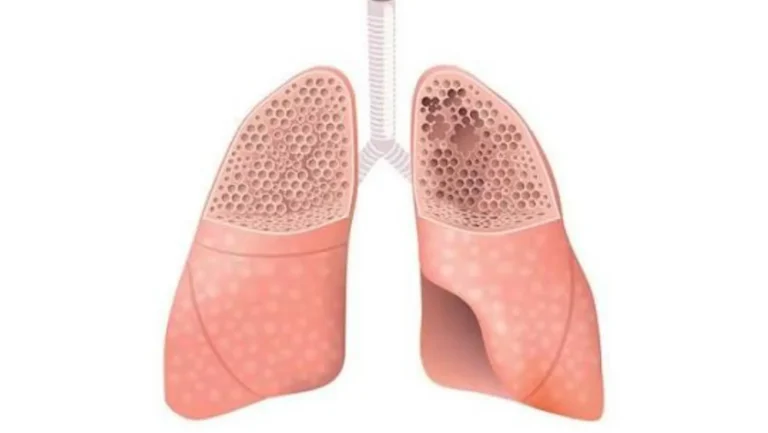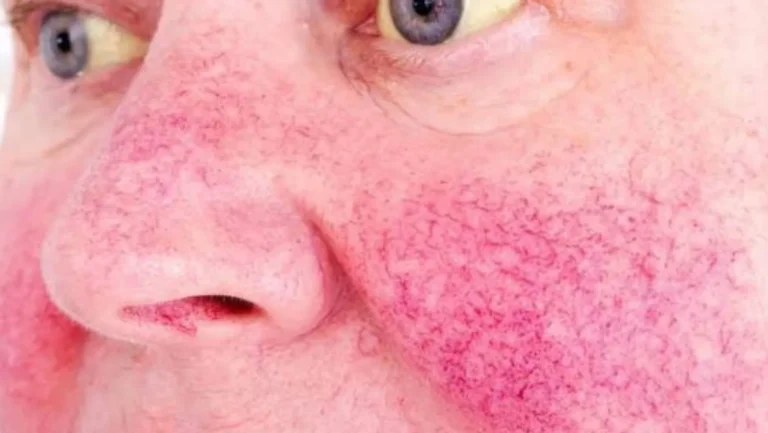

Asthma is usually reversible; COPD usually isn’t. Asthma often starts in childhood and flares up around triggers like pollen or cold air. COPD develops slowly, mostly in smokers over 40, and causes permanent airflow damage.
The Global Initiative for Asthma and the Global Initiative for Chronic Obstructive Lung Disease both classify these as separate conditions with different root causes, even though symptoms overlap. This guide covers how each disease affects your lungs, their symptoms, and evidence-based treatment for both.
Difference Between Asthma and COPD: Comparison Table
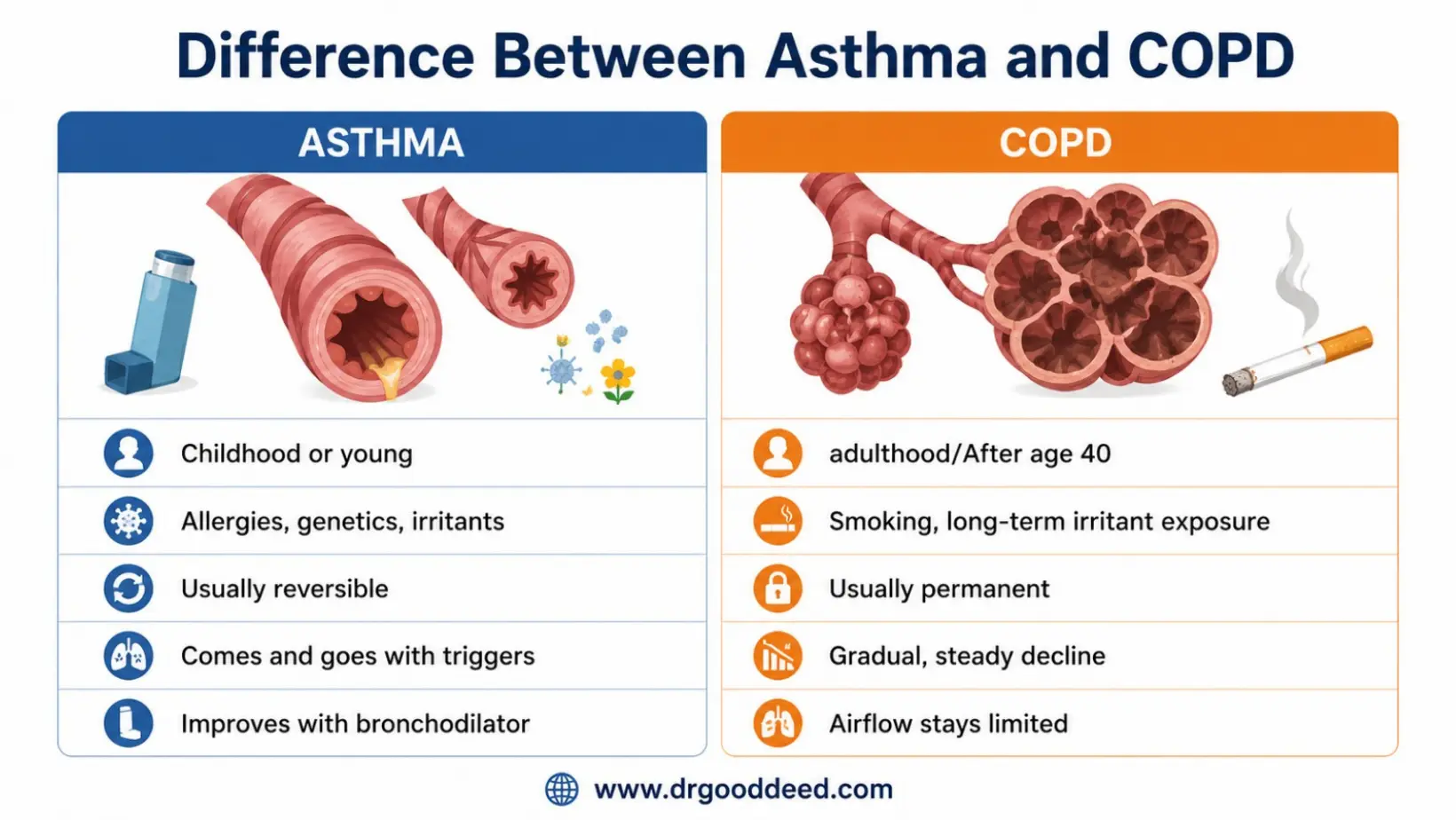
Comparing asthma vs COPD is important because both diseases cause wheezing and shortness of breath but for very different reasons. The table below breaks down the core difference between asthma and COPD across onset, cause, and reversibility.
| Feature | Asthma | COPD |
| Typical Onset | Childhood or young adulthood | After age 40 |
| Main Cause | Allergies, genetics, irritants | Smoking, long-term irritant exposure |
| Airflow Damage | Usually reversible | Usually permanent |
| Pattern | Comes and goes with triggers | Gradual, steady decline |
| Key Test | Improves with bronchodilator | Airflow stays limited |
Asthma and COPD Affect the Airways Differently
Asthma involves airway swelling that tightens and loosens, while COPD involves lasting structural damage to lung tissue itself.
What Happens in Asthma?
In asthma, the airways are overly sensitive. When triggered by allergens, exercise, or cold air, the muscles around the airways squeeze tight, the lining swells, and extra mucus forms. This narrows the airway suddenly, but it opens back up with treatment or once the trigger passes. Allergy-triggered asthma specifically follows this exact pattern, with symptoms clearing once the allergen is gone.
What Happens in COPD?
COPD involves two overlapping problems: emphysema, which destroys the tiny air sacs in the lungs, and chronic bronchitis, which thickens and inflames the airway lining long-term. Years of irritant exposure, mostly from smoking, cause this damage, and it doesn’t reverse once it happens. Smoking and COPD risk are tied so closely that the CDC attributes most cases directly to cigarette use.
Asthma Symptoms vs COPD Symptoms
Asthma symptoms swing between normal breathing and sudden flares. COPD symptoms build slowly and rarely fully disappear. Spotting this pattern is often the fastest way to sort out asthma vs COPD before any formal test happens.
Asthma Symptoms
- Wheezing that comes and goes, often at night or early morning, a pattern doctors call nocturnal asthma
- Chest tightness triggered by allergens or exercise
- Sudden shortness of breath during a flare
- A dry cough, especially after activity or cold air
- Symptoms that fully clear between flares
COPD Symptoms
- Chronic cough with mucus most days
- Shortness of breath that worsens with activity over the years
- Wheezing that persists even without a clear trigger
- Frequent chest infections
- Fatigue from the constant effort of breathing
Can You Have Both Asthma and COPD?
Yes, this is called asthma-COPD overlap, or ACO. Some people, especially long-term smokers who also had childhood asthma, develop features of both conditions at once. Asthma symptoms and COPD symptoms blur together in ACO, making it harder to treat with a single approach.
Doctors diagnose ACO when someone shows the reversible airflow pattern typical of asthma along with the persistent airflow limitation typical of COPD, so treatment usually combines inhaled corticosteroids with bronchodilators, since ACO responds differently than either asthma or COPD condition alone.
Research estimates on how common ACO is vary widely depending on the diagnostic criteria used, but many studies place it somewhere between 15% and 20% of people already diagnosed with a chronic airway disease. People with ACO tend to have more frequent flare-ups and faster lung function decline than those with asthma or COPD alone, which is why getting the right combined diagnosis matters so much.
What Should You Do If You Have Symptoms?
Your next move depends on how your symptoms behave and whether you already carry a diagnosis.
If symptoms are occasional and trigger-related:
- Track what sets off your symptoms, like pollen, pets, or exercise, since allergy-triggered asthma often follows a clear pattern
- See a doctor for allergy or lung function testing if symptoms repeat monthly
- Avoid known triggers where possible while you wait for testing
If symptoms are persistent:
- Book a spirometry test, which measures how much air you can exhale and how fast, the standard way doctors settle asthma vs COPD diagnosis questions
- Don’t wait for symptoms to worsen before getting checked, since early COPD often goes unnoticed
- Ask specifically whether smoking history or occupational exposure could explain your asthma symptoms or COPD symptoms
If diagnosed with asthma:
- Use your controller inhaler daily, even when you feel fine
- Keep a rescue inhaler with you for sudden flares
- Review your asthma action plan with your doctor every year
If diagnosed with COPD:
- Stop smoking immediately, since smoking and COPD risk are the single biggest factor slowing disease progression
- Get your recommended vaccines, since infections hit COPD lungs harder
- Ask about pulmonary rehabilitation to improve daily breathing capacity
Treatment Options for Asthma vs COPD
Treatment options for asthma vs COPD share some tools but differ heavily in daily approach, since asthma control aims to prevent flares while COPD care focuses on slowing decline and easing symptoms.
Rescue Inhalers
Both conditions use fast-acting bronchodilators for sudden symptom relief, though COPD patients often need them more frequently as the disease progresses.
Inhaled Corticosteroids
These reduce airway inflammation and are a core daily treatment for moderate to severe asthma. In COPD, they’re used more selectively, mainly for people with frequent flare-ups.
Long-Acting Bronchodilators
These keep airways open over a longer period and form the backbone of daily COPD treatment, while in asthma they’re usually added only when inhaled steroids alone aren’t enough.
Pulmonary Rehabilitation
This structured program combining exercise, breathing techniques, and education is a cornerstone of COPD care, and it’s proven to reduce hospital visits, according to the American Lung Association. Most programs run 6 to 12 weeks and are typically recommended starting at GOLD stage 2, once airflow limitation becomes moderate.
Oxygen Therapy
Reserved for advanced COPD when blood oxygen drops too low, usually measured through a test called pulse oximetry or an arterial blood gas, this treatment is rarely needed in asthma unless a severe attack requires emergency care.
Vaccinations
Flu, pneumonia, and COVID-19 vaccines matter far more in COPD care, since respiratory infections trigger dangerous flare-ups and hospitalizations in damaged lungs.
FAQs
Can asthma develop into COPD?
Not directly, but long-term uncontrolled asthma combined with smoking can lead to asthma-COPD overlap. Asthma itself doesn’t turn into COPD without added risk factors like smoking or chronic irritant exposure.
Is COPD always caused by smoking?
No. Smoking causes roughly 85% of COPD cases in the U.S., per the CDC. Occupational dust, air pollution, and genetic alpha-1 antitrypsin deficiency explain the rest.
Can allergies trigger asthma attacks?
Yes. Allergy-triggered asthma is one of the most common patterns, with pollen, dust mites, pet dander, and mold commonly sparking sudden flares in sensitive airways.
Which condition is more serious, asthma or COPD?
In the asthma vs COPD comparison, COPD generally carries a more serious long-term outlook, since airflow damage is permanent and progressive. Asthma, when controlled with treatment, rarely causes lasting lung damage.
Can a person have both asthma and COPD?
Yes, this is called asthma-COPD overlap (ACO). It’s most common in older adults with a childhood asthma history who also smoked, and it needs combined treatment.
Can COPD be reversed?
No. COPD causes permanent lung damage, but treatment and quitting smoking can slow progression significantly and improve daily symptoms, sometimes for many years.
How can I reduce my risk of COPD?
Quit smoking, avoid secondhand smoke, use protective equipment around workplace dust or chemicals, and get vaccinated against respiratory infections. Smoking and COPD risk drop sharply within a year of quitting.
What is asthma-COPD overlap syndrome (ACO)?
ACO describes patients showing features of both diseases at once, combining asthma’s reversible airway swelling with COPD’s permanent airflow damage, and it requires a tailored combination treatment plan.