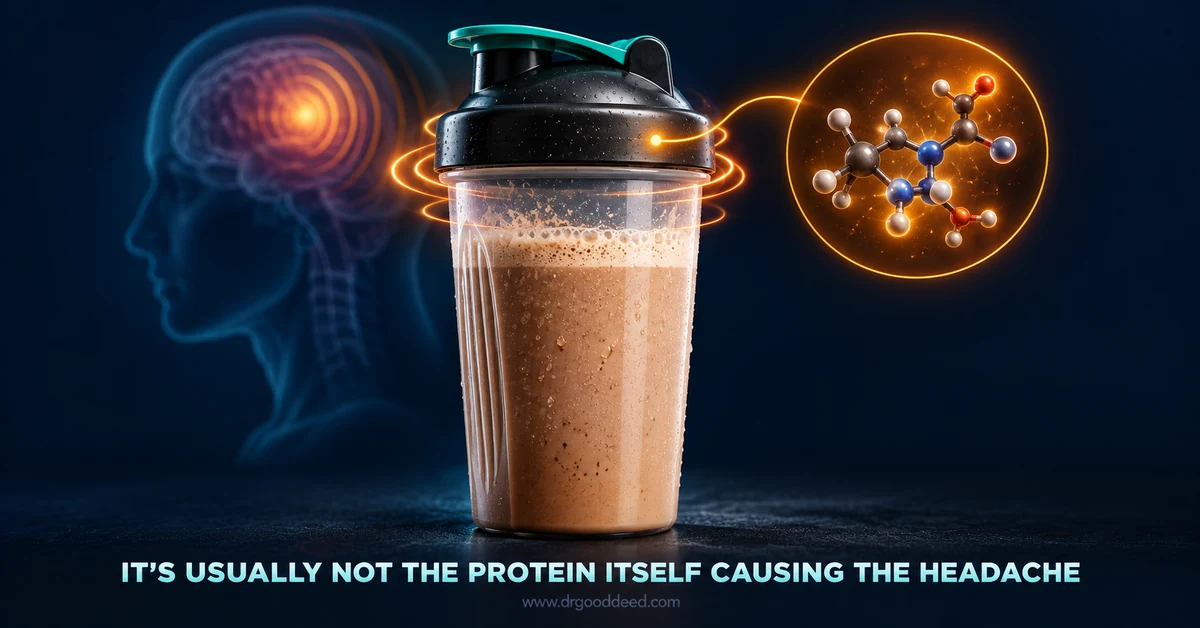

A headache after drinking protein shake consumption is usually due to artificial sweeteners, dehydration, dairy sensitivity, a blood sugar swing, tyramine content, or drinking the shake too fast while it is cold. Most people in the United States who mix protein shakes into a workout routine notice this pain within 15 to 45 minutes of finishing the drink.
Key Takeaways
- A headache after drinking protein shake intake is most often a chemical or dehydration reaction, not a sign of protein allergy.
- Sugar-free and “zero carb” shakes carry the highest sweetener-related headache risk.
- Consumer Reports found lead contamination in most tested protein powders, a separate long-term issue from the immediate post-shake headache.
- Pairing your shake with 8 to 12 ounces of plain water cuts headache frequency for most users.
- Recurring, severe, or one-sided pain needs a medical evaluation, not just a supplement swap.
Common Causes of a Headache After a Protein Shake
Six mechanisms explain nearly every case of a headache after drinking protein shake use, and they rarely overlap in one person. The list below moves from the most common trigger to the least common one seen in clinical practice.
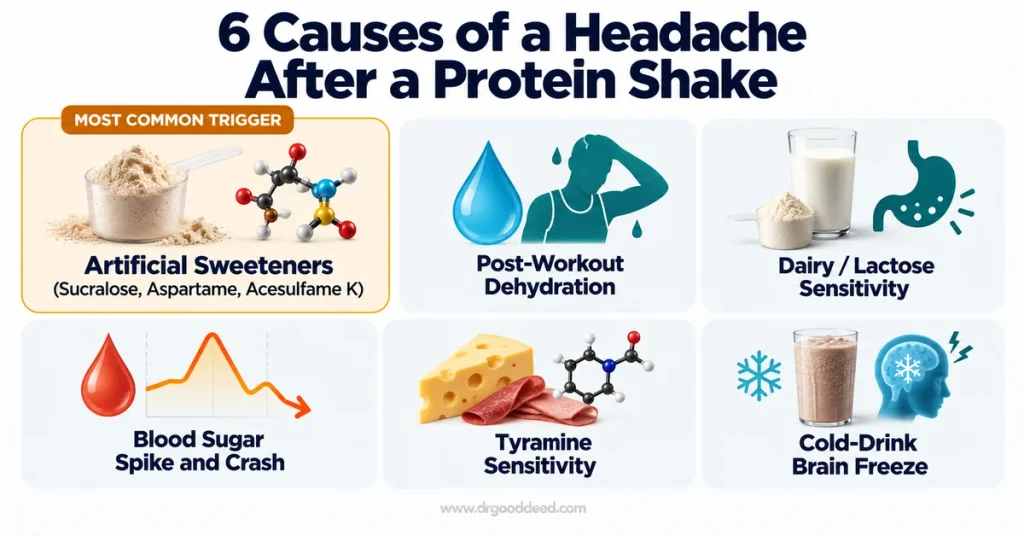
Artificial Sweeteners and Chemical Triggers (Sucralose, Aspartame, Acesulfame K)
- Sucralose and acesulfame potassium appear in nearly every “sugar-free” or low-carb protein shake sold in the US, and both compounds are linked to headache complaints.
- Aspartame breaks down into phenylalanine and methanol during digestion, and a subset of people report headache onset within 30 to 60 minutes of consuming it.
- Rotating between two or three different sweetened brands, rather than drinking the same one daily, makes it easier to isolate which sweetener is responsible.
- Unsweetened, plain isolate powder is the fastest elimination test available, since it removes every artificial sweetener variable at once.
Post-Workout Dehydration and Concentrated Protein Blends
- Exercise already reduces circulating blood volume through sweat loss, and drinking a thick, concentrated shake immediately afterward does not replace that lost fluid the way water does.
- Digesting a high-protein load pulls additional water into the gut to process amino acids, which can worsen an existing fluid deficit.
- Creatine and headaches are frequently linked because creatine draws water into muscle tissue, leaving less available for general hydration during the loading phase.
- Weighing yourself before and after a workout and replacing every pound lost with 16 ounces of water is the most reliable prevention method.
Dairy Sensitivities and Lactose Intolerance In Whey Isolates
- Whey concentrate contains measurable lactose, while whey isolate and hydrolysate contain far less, so the specific whey type matters for headache-prone users.
- Lactose intolerance itself does not directly cause head pain, but the resulting bloating, gas, and dehydration from GI distress commonly trigger a secondary tension headache.
- People with a known dairy sensitivity report fewer episodes after switching to a pea, egg white, or hydrolyzed whey isolate formula.
- A same-day headache paired with cramping or loose stool points toward a dairy or lactose issue rather than a chemical additive.
Blood Sugar Swings: The Insulin Spike and Crash Loop
- Many flavored shakes contain 15 to 25 grams of added sugar per serving, which spikes blood glucose and triggers a rapid insulin response.
- The subsequent glucose crash, sometimes called reactive hypoglycemia, is a documented headache trigger recognized in clinical nutrition literature.
- Sugar-related headache triggers overlap heavily with headaches after eating any large, fast-digesting carbohydrate load on an empty stomach.
- Choosing a shake with under 5 grams of sugar, or pairing it with a slower-digesting food like oats, blunts this swing.
Tyramine Content and Amino Acid Sensitivities
- Aged, fermented, or heavily processed protein isolates can accumulate tyramine, an amino acid byproduct known to trigger migraines in sensitive individuals.
- Tyramine works by affecting norepinephrine release in blood vessels, a mechanism listed among confirmed dietary migraine triggers.
- Fresh, short-shelf-life protein powders generally carry lower tyramine loads than products stored for extended periods after opening.
Temperature Shock: The Post-Workout “Gulping” Factor
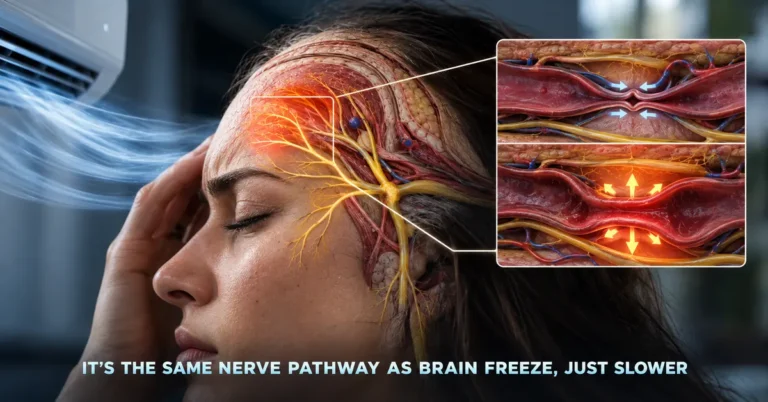
- Rapidly swallowing a very cold shake can trigger sphenopalatine ganglioneuralgia, the clinical term for what is commonly called brain freeze.
- This cold-stimulus headache activates nerve endings in the palate and typically resolves within 30 to 60 seconds without treatment.
- Drinking a shake slowly, or letting it sit for a few minutes after blending, reduces the sudden temperature contact that triggers this reflex.
- This cause is often mistaken for a food sensitivity when it is actually a temperature-triggered nerve response.
A Longer-Term Concern: Heavy Metals and Additives in Protein Powders
Beyond same-day symptoms, a 2025 Consumer Reports investigation raises a separate, longer-term concern about daily protein powder use. This finding does not explain a single headache after drinking a protein shake, but it matters for anyone using these products every day for months or years.
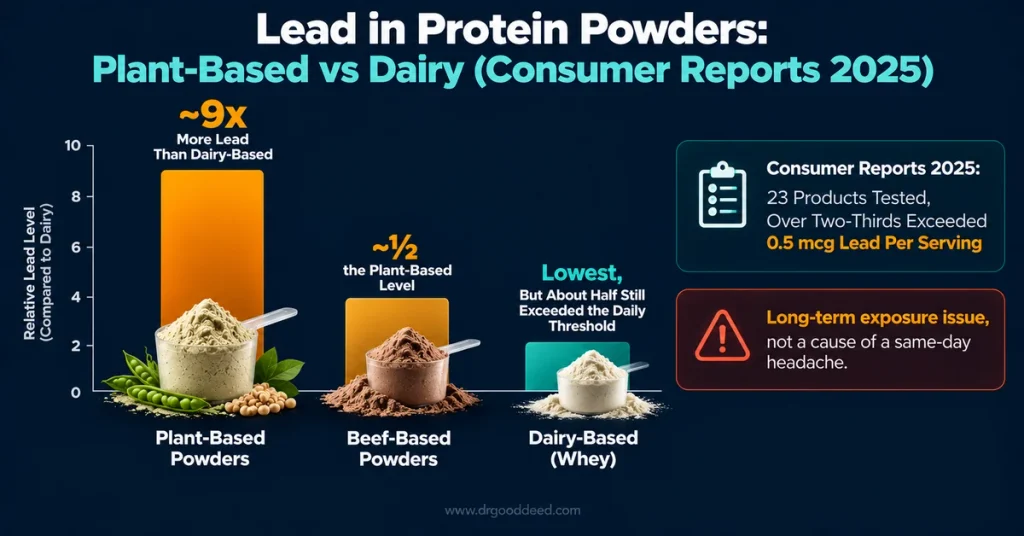
- Consumer Reports tested 23 popular protein powders and ready-to-drink shakes and found that more than two-thirds exceeded its 0.5 microgram daily lead safety threshold in a single serving.
- Plant-based protein powders averaged roughly nine times more lead than dairy-based options and about double the amount found in beef-based powders.
- Two products, Naked Nutrition’s Vegan Mass Gainer and Huel’s Black Edition, contained between 1,290% and 1,570% of the reference lead limit, according to the report.
- Cadmium and inorganic arsenic were also detected in select products, with one dairy-based sample showing arsenic at twice the daily safety reference.
- Dairy-based whey powders generally scored lowest for lead, though roughly half still exceeded the daily concern threshold, meaning no category is automatically risk-free.
This is a cumulative exposure issue tied to repeated daily servings, not an explanation for acute head pain after one drink. Choosing dairy-based or third-party-tested powders and avoiding daily use of the highest-lead products lowers long-term exposure risk.
The Daily Protocol: How to Make Your Protein Shakes Headache-Proof
A structured daily routine prevents most headaches after drinking protein shakes without requiring a full supplement change. This protocol combines hydration timing, ingredient auditing, and pacing into one repeatable habit.
- Drink 8 to 12 ounces of plain water alongside or immediately after your shake, separate from the shake’s own liquid base.
- Check the label for sucralose, aspartame, or acesulfame potassium if you use a “sugar-free” formula, and switch brands if symptoms track with one product.
- Let a blended shake sit for 3 to 5 minutes before drinking to avoid the cold-stimulus reflex from rapid gulping.
- Choose whey isolate or hydrolysate over whey concentrate if you have any degree of lactose sensitivity.
- Pair the shake with a small carbohydrate source, like half a banana, to prevent a fast insulin spike and crash.
- Keep a simple symptom log for two weeks, noting the brand, flavor, and timing of every headache episode.
Following this protocol for two to three weeks resolves the majority of shake-related headaches without needing further testing. If symptoms continue despite these changes, the cause likely sits outside the shake itself.
Pro Tip: Check the ingredient list for “sugar alcohols” like erythritol or xylitol, since these are a separate headache trigger from artificial sweeteners and are frequently overlooked because they sound natural on the label. Sugar alcohols can also cause bloating that compounds dehydration-driven head pain.
When Your Post-Workout Head Pain Signals a Deeper Issue
Not every headache that appears near a workout or meal is caused by the shake itself, and several unrelated conditions produce a similar pattern. The table below lists conditions worth ruling out if the protocol above does not resolve your symptoms.
| Condition | Distinguishing Feature |
| Headaches linked to acid reflux | Pain often accompanies burning chest discomfort or a sour taste, worsening when lying down soon after drinking a shake. |
| Allergy-related headaches | Appear with sneezing, nasal congestion, or itchy eyes, often seasonal rather than tied to any specific drink. |
| Headaches from constipation | Linked to straining and abdominal pressure, common in people who increase protein intake without adding fiber or water. |
| Toothache-related headaches | Radiate from jaw or tooth sensitivity, sometimes triggered by very cold shakes hitting a cavity or exposed nerve. |
| Headaches caused by dry eyes | Worsen with screen use after a gym session and improve with lubricating drops rather than dietary changes. |
| High cholesterol and headaches | Not directly causal, but poorly controlled cardiovascular risk factors are worth screening for in recurring headache patients. |
| Thyroid-related headaches | Accompany fatigue, weight change, or cold intolerance, and need bloodwork rather than a supplement swap to confirm. |
| One-sided headache and ear pain | Suggests a possible migraine or, rarely, a sinus or ear infection unrelated to diet. |
| Headaches with fatigue | Common with iron deficiency or poor sleep, both of which are worth addressing separately from shake ingredients. |
| Period-related headaches | Follow a menstrual cycle pattern and can coincide with, but are not caused by, a protein shake habit. |
| Headaches when lying down | Point toward sinus pressure or reflux rather than a shake ingredient, since position change should not affect a chemical trigger. |
| CBD for tension headaches | Some patients report relief with CBD for tension-type pain, though evidence remains limited and it should not replace identifying the actual trigger. |
Recognizing these different types of headaches prevents months of unnecessary elimination diets aimed at a shake that was never the actual cause. A headache diary that tracks timing, food, sleep, and cycle data alongside shake intake usually reveals the true pattern within two to three weeks.
When to See a Doctor
Most shake-related headaches respond to the changes above within days, but certain patterns require professional evaluation rather than continued self-adjustment.
- Sudden, severe head pain described as “the worst headache of your life” needs emergency evaluation to rule out serious vascular causes.
- A headache paired with fever, stiff neck, vision changes, or confusion is a red flag requiring same-day medical care.
- Pain that persists despite eliminating every suspected ingredient for three or more weeks warrants a neurology referral.
- New headaches in someone with high blood pressure, diabetes, or a personal migraine history deserve closer monitoring by their existing provider.
- Headaches that wake you from sleep or worsen when lying flat should be evaluated promptly rather than managed with dietary changes alone.
FAQs
Can whey protein concentrates specifically cause headaches?
Yes. Concentrate retains more lactose than isolate, and the resulting bloating and dehydration from lactose sensitivity can trigger a secondary headache in sensitive individuals within an hour.
Do plant-based vegan protein powders cause fewer headaches?
No. Plant-based powders show similar sweetener-related headache risk and, per Consumer Reports testing, carry roughly nine times more lead on average than dairy-based options.
Can high-protein shakes trigger severe neurological migraines?
Rarely, but tyramine-rich or artificially sweetened shakes can trigger true migraine in people already diagnosed with migraine disorders, distinct from milder, common tension-type reactions.
How can you tell if the artificial sweetener is the source of your headache?
Switch to an unsweetened isolate for one week. If headaches stop within that window, the sweetener was the likely trigger, confirmed by reintroducing it and tracking recurrence.
Is it safe to drink a dietary protein shake every single day?
Yes, for most healthy adults, if you rotate brands, choose lower-lead dairy-based options, and stay within your daily protein target rather than exceeding it.
Sources
- Consumer Reports: Protein Powders and Shakes Contain High Levels of Lead link
- California OEHHA: Proposition 65 Lead Exposure Limits link
- NIDDK: Lactose Intolerance link
- American Migraine Foundation: Tyramine and Migraine link
- Cleveland Clinic: Brain Freeze (Sphenopalatine Ganglioneuralgia) link
- FDA: Aspartame and Other Sweeteners in Food link
- MedlinePlus: Dehydration link
- National Institute of Neurological Disorders and Stroke: Headache Information link
Medical Disclaimer: This article is for general information only and is not medical advice. It does not replace a diagnosis, treatment plan, or guidance from a qualified healthcare professional. Always talk to your doctor about your own symptoms and before starting, stopping, or changing any treatment. If you think you may be having a medical emergency, call 911 or go to your nearest emergency room.