
The urge to poop soon after eating is often caused by the gastrocolic reflex, a normal digestive response in which food entering your stomach signals your colon to contract and move stool toward the rectum.
The reflex tends to be stronger after larger meals, particularly those containing fatty or spicy foods, and can be more noticeable in the morning. Stress, caffeine, irritable bowel syndrome (IBS), and certain digestive conditions can also make the urge stronger.
Key Takeaways
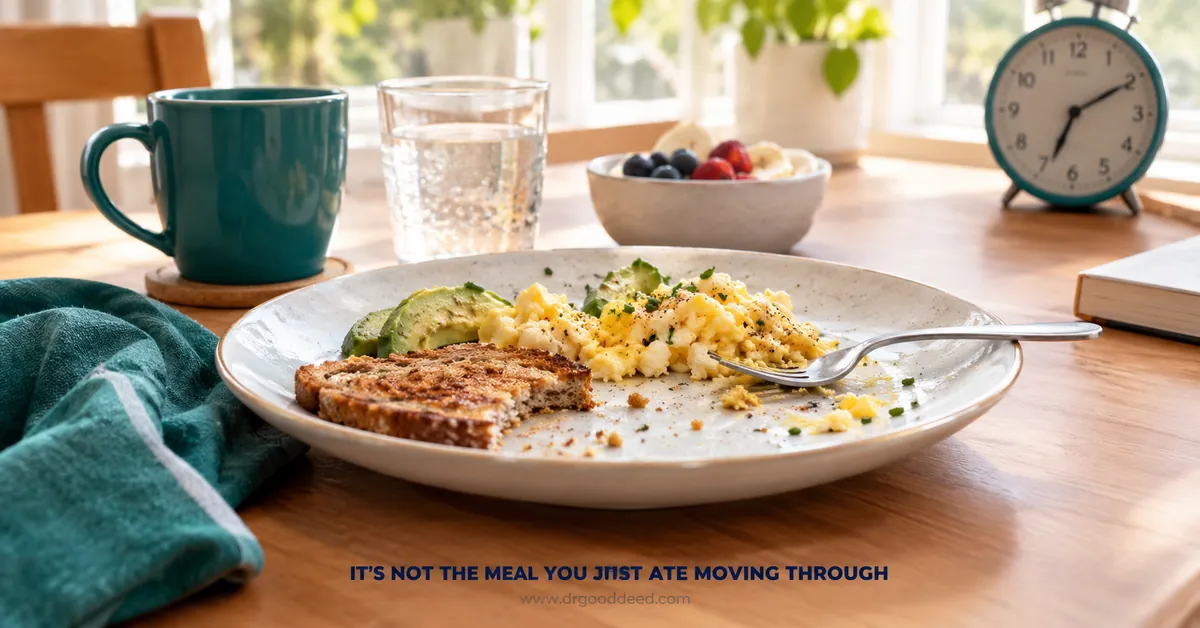
- The urge to need to poop right after eating isn’t your last meal moving through, it’s older, already-digested food being pushed out.
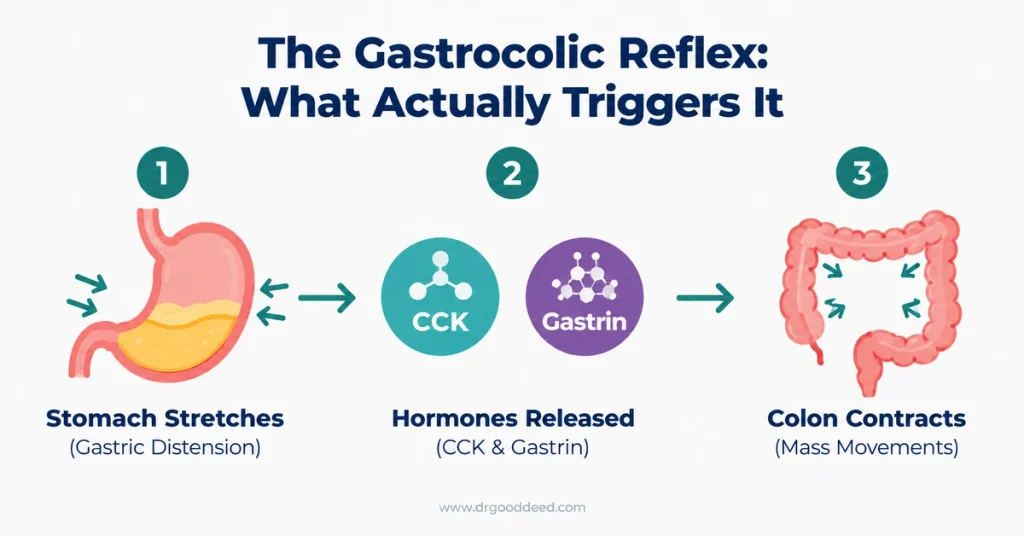
- This response is called the gastrocolic reflex, and it’s triggered when your stomach stretches after a meal.
- Two hormones, CCK (cholecystokinin) and gastrin, carry the signal from your stomach to your colon (large intestine).
- Fatty meals, large portions, and coffee tend to make this reflex stronger and faster.
- An exaggerated version of this reflex is a known feature of IBS (irritable bowel syndrome), especially IBS-D (diarrhea-predominant).
- You can actually use this reflex on purpose to retrain your bowel habits if you deal with constipation.
Why Aren’t You Digesting the Food You Just Ate?
Your digestive tract, from your mouth to your rectum, runs about 25 to 30 feet long when stretched out. Food you just swallowed is still sitting in your stomach or just entering your small intestine, nowhere close to being ready to leave. So when you need to poop right after eating, your body is making space, moving material from an earlier meal out of the colon to accommodate what’s coming in behind it.
What Is the Gastrocolic Reflex, and What Triggers It?
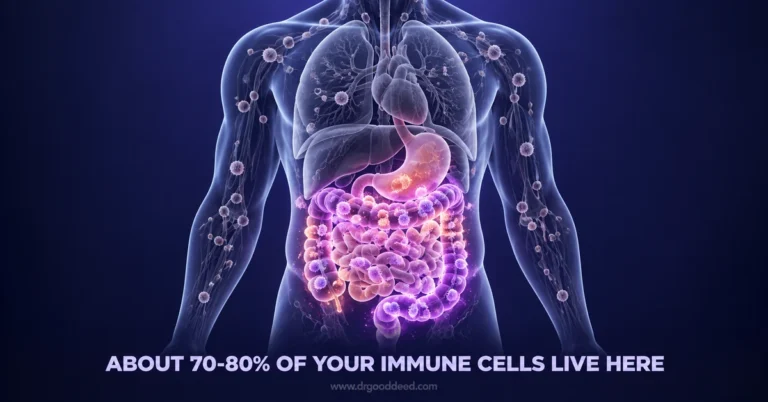
The gastrocolic reflex is triggered by gastric distension, meaning your stomach physically stretches as food and liquid fill it.
- That stretching sends a signal through your nervous system to your colon, telling it to start contracting (called mass movements) to clear space.
- CCK and gastrin, hormones released from cells in your stomach and small intestine, are the chemical messengers that help carry out this signal, working alongside the nervous system to speed up colon activity.
- This is why some people, particularly with sensitive guts, feel the urge within 30 to 60 minutes of eating, sometimes even sooner.
If instead of an urge to poop, you notice cramping or discomfort during this window, it may relate to why your stomach hurt after eating.
Expert Insight: A stronger gastrocolic reflex after breakfast than after dinner is common and expected, because your colon has been resting overnight and responds more forcefully to the first stretch signal of the day. This pattern alone is not a red flag unless it’s paired with pain, blood, or urgency severe enough to disrupt daily activities.
Why Do Fatty Meals, Large Portions, and Coffee Speed It Up?
Fatty foods slow stomach emptying but strongly stimulate CCK release, which intensifies colon contractions; this is why a greasy meal often triggers a faster, more urgent response than a light one.
- Larger portions stretch the stomach more, and since the reflex depends on distension, bigger meals generally mean a stronger signal.
- Caffeine stimulates gut motility independently of the gastrocolic reflex, meaning your morning coffee can trigger the urge to poop even without much food involved.
- Combining a large, fatty meal with coffee, a common breakfast pattern, tends to produce the most noticeable urgency.
For more on how coffee specifically affects your gut beyond this reflex, stomach pain after drinking coffee covers acid production, motility, and irritation separately.
Could This Be IBS Instead of a Normal Reflex?
An occasional need to poop right after eating is ordinary physiology. But when the urge is frequent, urgent, painful, or paired with loose stools most days, it starts to look less like a normal reflex and more like a heightened one.
- People with IBS, particularly IBS-D, tend to have visceral hypersensitivity, meaning their gut nerves react more intensely to normal stretching than a typical digestive system would.
- This means a completely average meal can trigger disproportionate urgency, cramping, or diarrhea in someone with IBS.
- Diagnosis of IBS relies on symptom pattern and duration rather than a single test, so a pattern of post-meal urgency lasting months is more meaningful than one bad day.
- Not everyone who feels the gastrocolic reflex strongly has IBS, most people with a fast post-meal urge have a normal, just more sensitive, digestive system.
If this pattern sounds familiar, diarrhea after eating goes deeper into the overactive, IBS-linked version of this same reflex.
Can You Use Gastrocolic Reflex to Help With Constipation?
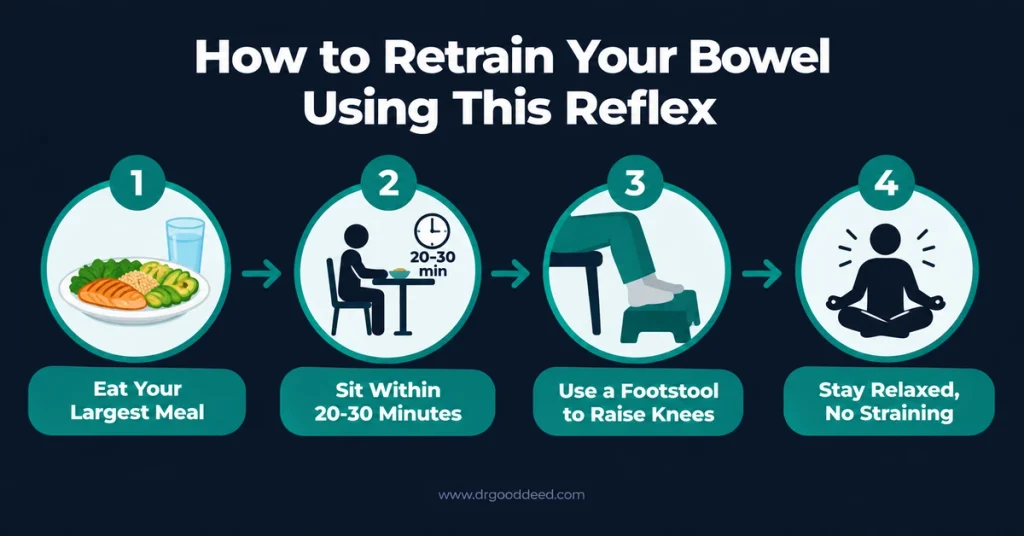
Sit on the toilet within 20 to 30 minutes after eating, ideally after your largest meal of the day, even if you don’t feel a strong urge yet.
- Doing this consistently, at the same time each day, helps retrain your colon to associate that post-meal window with a bowel movement.
- Using a footstool to raise your knees above hip level while sitting can straighten the angle of your rectum and make elimination easier.
- Avoid straining, give it a few relaxed minutes, and don’t force it if nothing happens, consistency matters more.
Pro Tip: Pairing the post-meal toilet window with a short 5 to 10 minute walk beforehand can add a second stimulus, since physical movement independently increases colon motility, making the retraining window even more effective for managing chronic constipation.
When Should You See a Doctor?
Talk to a doctor if the urge to need to poop right after eating comes with blood in your stool, unintentional weight loss, waking up at night to have a bowel movement, persistent abdominal pain, or a noticeable change in bowel habits lasting more than a few weeks. These aren’t typical of a normal gastrocolic reflex and deserve a proper evaluation rather than self-management.
FAQs
Is it normal to poop multiple times a day after every meal?
Yes, for some people. If you have three meals and a strong gastrocolic reflex, up to three bowel movements a day can be entirely normal, as long as stools stay formed and you’re not in pain.
Can stress make this reflex stronger?
Yes. Stress activates the gut-brain axis, increasing colon sensitivity and motility, which can make an already-normal gastrocolic reflex feel more urgent or trigger it after smaller meals than usual.
Does this happen more with certain foods specifically?
Yes, high-fat foods and caffeinated drinks trigger it most reliably because fat strongly stimulates CCK release and caffeine independently speeds colon motility, a combination many people notice most at breakfast.
Can babies and children have a stronger gastrocolic reflex?
Yes. Infants have an especially active gastrocolic reflex, often pooping during or right after nearly every feed, because their nervous system and colon regulation are still maturing compared to adults.
Is there a way to calm an overactive gastrocolic reflex?
Yes, smaller, lower-fat meals reduce stomach distension and CCK release, which lessens reflex intensity. Identifying trigger foods and managing stress through the gut-brain axis also meaningfully reduces urgency for many people.
Medical Disclaimer: This article is for general information only and is not medical advice. It does not replace a diagnosis, treatment plan, or guidance from a qualified healthcare professional. Always talk to your doctor about your own symptoms and before starting, stopping, or changing any treatment. If you think you may be having a medical emergency, call 911 or go to your nearest emergency room.