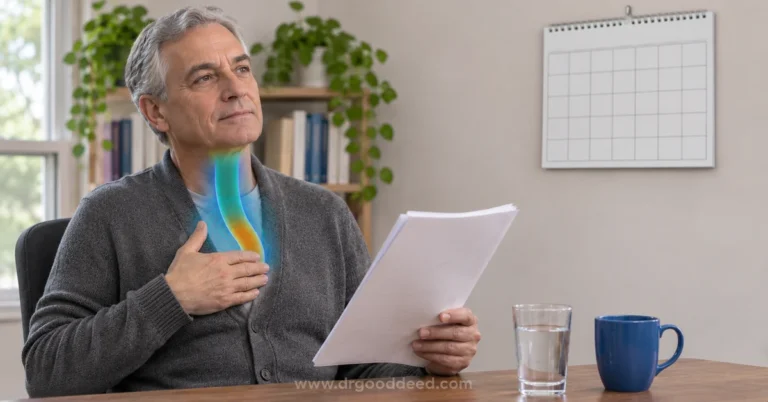


Excessive burping without eating is usually caused by swallowing air without noticing it or by a frequent belching habit. It can also be a symptom of a digestive condition such as acid reflux. Keeping track of your symptoms and other patterns can help you understand what may be causing it and when to seek medical advice.
Key Takeaways
- Excessive burping without eating usually comes from swallowed air or a belching habit, not from food in your stomach.
- Most people belch up to 30 times a day, according to the NIDDK (2021).
- Reflux, stomach inflammation, and certain digestive conditions can also cause frequent belching.
- Reducing swallowed air and tracking your symptoms may help improve belching.
- Chest discomfort or shortness of breath can signal an emergency. Call 911 if these symptoms occur.
How Many Burps a Day Is Normal?
People typically belch up to 30 times a day, according to the National Institute of Diabetes and Digestive and Kidney Diseases (NIDDK, 2021). The number alone does not always indicate a problem. However, frequent or bothersome belching, especially with other symptoms, may need medical attention.
Belching is the release of air from the upper digestive tract through the mouth. There are two main types:
- Gastric belching: Air that reaches the stomach is released through the mouth. The lower esophageal sphincter, a ring of muscle between the esophagus and stomach, relaxes to allow the air to move upward.
- Supragastric belching: Air enters the esophagus but is pushed out before reaching the stomach.
Most belching is related to swallowed air. However, much of the air involved in ordinary belching may be released before it reaches the stomach.
If your burps smell like rotten eggs, there may be a different explanation. Read our guide to sulfur burps to learn more.

What Causes Excessive Burping Without Eating?
The most common cause of excessive burping without eating is swallowed air, which some people take in as a nervous habit even when they are not eating or drinking. This can explain why you may burp frequently on an empty stomach.
Other possible causes include:
- Swallowing air: You may swallow air while talking, chewing gum, smoking, or drinking fizzy beverages. Excessive air swallowing is also called aerophagia. It can cause belching, bloating, and gas.
- Stress and anxiety: Some people swallow air without realizing it when they feel anxious or stressed. This can become a habit and lead to more frequent belching between meals.
- Acid reflux: This happens when stomach contents flow back into the esophagus. It can contribute to belching and may occur with heartburn, a bitter taste, or chest or upper abdominal discomfort. Reflux often gets worse at night and may cause stomach pain when lying down.
- Gastritis and H. pylori: Gastritis is inflammation of the stomach lining. H. pylori is a type of bacteria that can cause stomach inflammation and ulcers. You may experience belching alongside upper abdominal pain, nausea, or indigestion.
- Functional dyspepsia: This condition causes recurring indigestion symptoms, including upper abdominal discomfort, bloating, and feeling full sooner than expected.
- Gastroparesis: This condition slows the movement of food from the stomach into the small intestine. Symptoms may include nausea, bloating, and early fullness. Slow stomach emptying can leave you feeling really full after eating.
- Small intestinal bacterial overgrowth (SIBO): This occurs when too many bacteria grow in the small intestine. It can cause bloating, abdominal discomfort, and excess gas.
Pregnancy may also make belching more noticeable. Hormonal changes and pressure from the growing uterus can affect digestion.
If you experience constant burping and gas, pay attention to other symptoms, such as abdominal pain, nausea, changes in bowel movements, or heartburn. Belching alone cannot tell you what is causing the problem.
Supragastric Belching: The Burp That Never Reaches the Stomach
Supragastric belching is fast, repeated belching in which air is drawn into the esophagus and pushed out before reaching the stomach. Unlike gastric belching, it does not release air from the stomach.
It is often a learned behavior that can happen without you realizing it. Possible signs include:
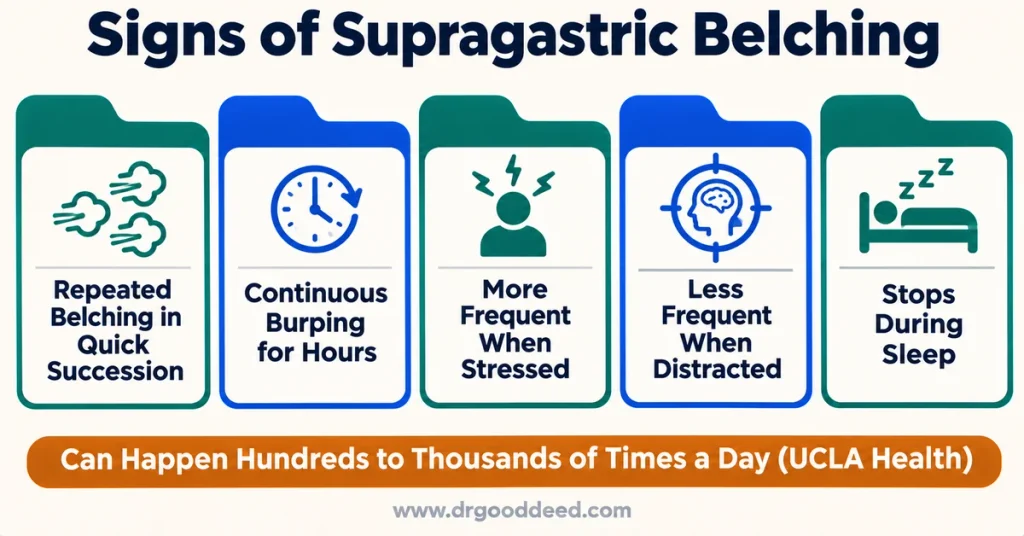
- Repeated belching in quick succession.
- Continuous burping for hours.
- More frequent belching during stressful situations.
- Belching that becomes less frequent when you are distracted.
- Belching that stops during sleep.
According to UCLA Health, supragastric belching can occur hundreds or even thousands of times a day. It does not occur during sleep and may improve when you are distracted.
Supragastric belching is different from aerophagia. Aerophagia involves swallowing excessive amounts of air, while supragastric belching involves drawing air into the esophagus and quickly pushing it back out.
Doctor’s Tip: If your belching stops during sleep or becomes less frequent when you are distracted, it may point to a learned belching habit rather than excess gas in your stomach. A healthcare professional can help determine the cause.
The American Gastroenterological Association (2023) identifies brain-gut behavioral therapies as the most effective treatment approach for supragastric belching. However, evidence is still developing, and UCLA Health notes that large controlled trials are lacking.
Burping Clues: What Your Pattern May Point To
The timing of your belching and any other symptoms can offer clues about its possible cause. The table below can help you decide what to discuss with a healthcare professional.
Table: Burping patterns, what they may point to, and what to do next
| What you notice | What it may point to | What to do |
| Belching while talking, chewing gum, or feeling nervous | Swallowing air without noticing it | Track the habit and try to reduce unnecessary air swallowing. |
| Belching that improves when distracted or stops during sleep | Supragastric belching | Discuss the pattern with a healthcare professional. |
| Belching with heartburn | Acid reflux | Ask your clinician whether reflux could be causing your symptoms. |
| Belching with upper abdominal pain | Gastritis, H. pylori, or another digestive condition | Arrange a medical assessment. |
| Belching with early fullness | Functional dyspepsia or delayed stomach emptying | Discuss your symptoms and eating patterns with your clinician. |
| Chest pressure, pain, or difficulty breathing | Possible cardiac emergency | Call 911. |
If pain is part of your pattern, read more about abdominal pain and burping.
How Doctors Find the Cause of Excessive Burping
Doctors usually start by asking about your medical history and symptoms. They may ask when you belch, how often it happens, and whether you also experience pain, bloating, heartburn, or nausea.
Depending on your symptoms, your doctor may recommend:
- H. pylori testing: A breath, stool, or other appropriate test can help check for an H. pylori infection.
- Upper endoscopy: A thin, flexible tube with a camera is used to examine the esophagus, stomach, and upper part of the small intestine. This can help identify inflammation, ulcers, or other abnormalities.
- Impedance-pH testing: This test measures the movement of liquid, gas, and acid in the esophagus. It can help determine whether symptoms are related to reflux or different types of belching.
- Esophageal manometry: This test measures muscle contractions and pressure in the esophagus. It may be used when your doctor needs to assess how your esophagus is functioning.
Not everyone needs these tests. Your doctor will decide which tests are appropriate based on your symptoms, medical history, and examination. Doctors may also use the Rome IV criteria, which describe bothersome belching on more than 3 days a week for 3 months, with symptoms starting at least 6 months before diagnosis (Sawada and Fujiwara, Digestion, 2024).
How to Relieve Excessive Burping
Reducing the air you swallow and treating the underlying cause usually helps most. The right approach depends on whether your belching is related to habits, reflux, or another digestive condition.
Try these steps:
- Eat and drink slowly: Take smaller bites and avoid rushing through meals. Eating slowly may reduce the amount of air you swallow.
- Limit fizzy drinks: Carbonated beverages can increase the amount of gas in your digestive system.
- Avoid chewing gum: Chewing gum can cause you to swallow more air, especially if you chew it frequently.
- Notice stress-related habits: Pay attention to whether you belch more when you feel nervous or anxious. You may be swallowing air without realizing it.
- Practice breathing techniques: A healthcare professional may teach you diaphragmatic breathing. This technique uses the diaphragm rather than shallow chest breathing and may help some people with supragastric belching.
- Discuss reflux symptoms: If belching occurs with heartburn or a bitter taste, ask your clinician about ways to manage reflux. Treatment depends on the cause and your health history.
- Follow professional guidance: If tests identify a digestive condition, treating that condition may help reduce belching.
The American Gastroenterological Association recommends brain-gut behavioral approaches for supragastric belching. These may include behavioral therapy and breathing exercises guided by a trained professional.
When to See a Doctor for Excessive Burping
If your symptoms are chronic, bothersome, or affecting your daily life, talk to your healthcare professional. You may need immediate medical attention if you experience any of the following warning signs:
Call 911: Seek emergency assistance if you experience chest discomfort, shortness of breath, cold sweats, or discomfort in your upper body. These symptoms can indicate a heart attack. Do not drive yourself to the hospital. If you are unsure, our guide on gas pain vs heart attack explains the difference, but call 911 first.
Visit the emergency room: Seek emergency care if you vomit blood or pass black, tar-like stools, as these can indicate gastrointestinal bleeding.
Seek immediate medical attention: Get same-day care at urgent care or the ER if you experience severe or worsening abdominal pain, frequent vomiting, or symptoms that are getting worse quickly.
Make an appointment with your primary care doctor or gastroenterologist: Schedule a visit if excessive belching happens regularly and interferes with your daily life. You should also seek medical advice if frequent burping occurs alongside heartburn, nausea, bloating, or unexplained weight loss.
Before your appointment, note when you burp, what you have been eating or drinking, whether you feel anxious, and any other symptoms you experience. This information can help your doctor identify possible causes and decide whether further tests are needed.
See a doctor if excessive burping without eating does not improve with simple changes or comes with any warning sign above.
Frequently Asked Questions
Is Burping on an Empty Stomach a Sign of Something Serious?
Burping on an empty stomach is rarely serious when it is your only symptom, but it needs a checkup if warning signs appear. Seek medical advice if regular belching occurs alongside abdominal pain, vomiting, unexplained weight loss, or changes in your bowel habits.
Is Burping a Lot a Sign of a Heart Attack?
Excessive belching alone is not a typical sign of a heart attack. However, if you experience chest discomfort, shortness of breath, cold sweats, or discomfort in your upper body, call 911. Do not assume that chest discomfort is caused by gas or indigestion.
Is Burping a Lot a Sign of Cancer?
Excessive burping is rarely a sign of cancer. However, seek medical attention if you regularly experience digestive symptoms alongside unexplained weight loss, black stools, vomiting, or feeling full sooner than usual. Your doctor can review your symptoms and determine whether further tests are needed.
What Is the Difference Between Burping and Acid Reflux?
Belching occurs when air is released from the upper digestive tract through the mouth. Acid reflux happens when stomach contents flow back into the esophagus. Acid reflux can also contribute to increased belching. If burping comes with heartburn or a sour taste, ask your doctor whether reflux is the cause.
Can Anxiety Make You Burp More?
Yes. Some people swallow extra air when they feel anxious, which can lead to more frequent belching. This may also occur alongside bloating or stomach discomfort. If your symptoms continue or affect your daily life, speak with your healthcare professional.
What Should I Track Before Seeing a Doctor?
Note when you burp, what you have been eating or drinking, whether you feel anxious, and how often the symptoms occur. Also, keep track of any heartburn, abdominal pain, nausea, bloating, or changes in your bowel habits. This information can help your doctor identify possible causes.
Sources
National Institute of Diabetes and Digestive and Kidney Diseases, Symptoms and Causes of Gas in the Digestive Tract (2021). link
Mayo Clinic, Belching, Gas and Bloating: Tips for Reducing Them (2024). link
UCLA Health, Belching Disorders. link
American Gastroenterological Association, New Clinical Practice Update: Belching, Bloating and Distention (2023). link
Cleveland Clinic, Belching (2024). link
American Heart Association, Warning Signs of a Heart Attack (2024). link
Sawada and Fujiwara, Belching Disorders and Rumination Syndrome, Digestion (2024). link
Medical Disclaimer: This article is for general information only and is not medical advice. It does not replace a diagnosis, treatment plan, or guidance from a qualified healthcare professional. Always talk to your doctor about your own symptoms and before starting, stopping, or changing any treatment. If you think you may be having a medical emergency, call 911 or go to your nearest emergency room.