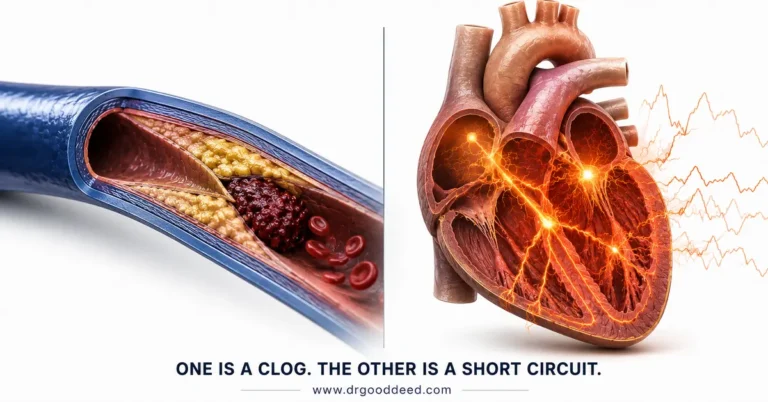

Gas pain and heart attack conditions can cause tightness in the chest. Gas pain builds in the digestive tract. It usually eases with burping, movement, or passing gas. A heart attack happens when blood flow to the heart gets blocked. It does not improve with position changes or rest. This guide breaks down the real differences, the common causes, and safe home remedies. By the end, you will know exactly when to relax and when to call 911.
Gas Pain vs Heart Attack at a Glance
Here is the fastest way to compare gas pain vs heart attack symptoms. Gas pain is sharp and shifts around the belly or lower chest. It fades after burping or passing gas. Heart attack pain is a steady pressure. It starts in the center of the chest. It often spreads to the arm, jaw, or back, and rest does not fix it.
| Feature | Gas Pain | Heart Attack |
| Location | Upper abdomen, lower chest | Center or left chest |
| Pain type | Sharp, cramping, bloated | Pressure, squeezing, heaviness |
| Duration | Minutes, comes and goes | Persists, often over 10 minutes |
| Movement | Changes with position or walking | Stays the same or worsens |
| Burping or passing gas | Often brings relief | No relief |
| Other symptoms | Bloating, belching | Sweating, nausea, shortness of breath |
Difference Between Gas Pain and Heart Attack
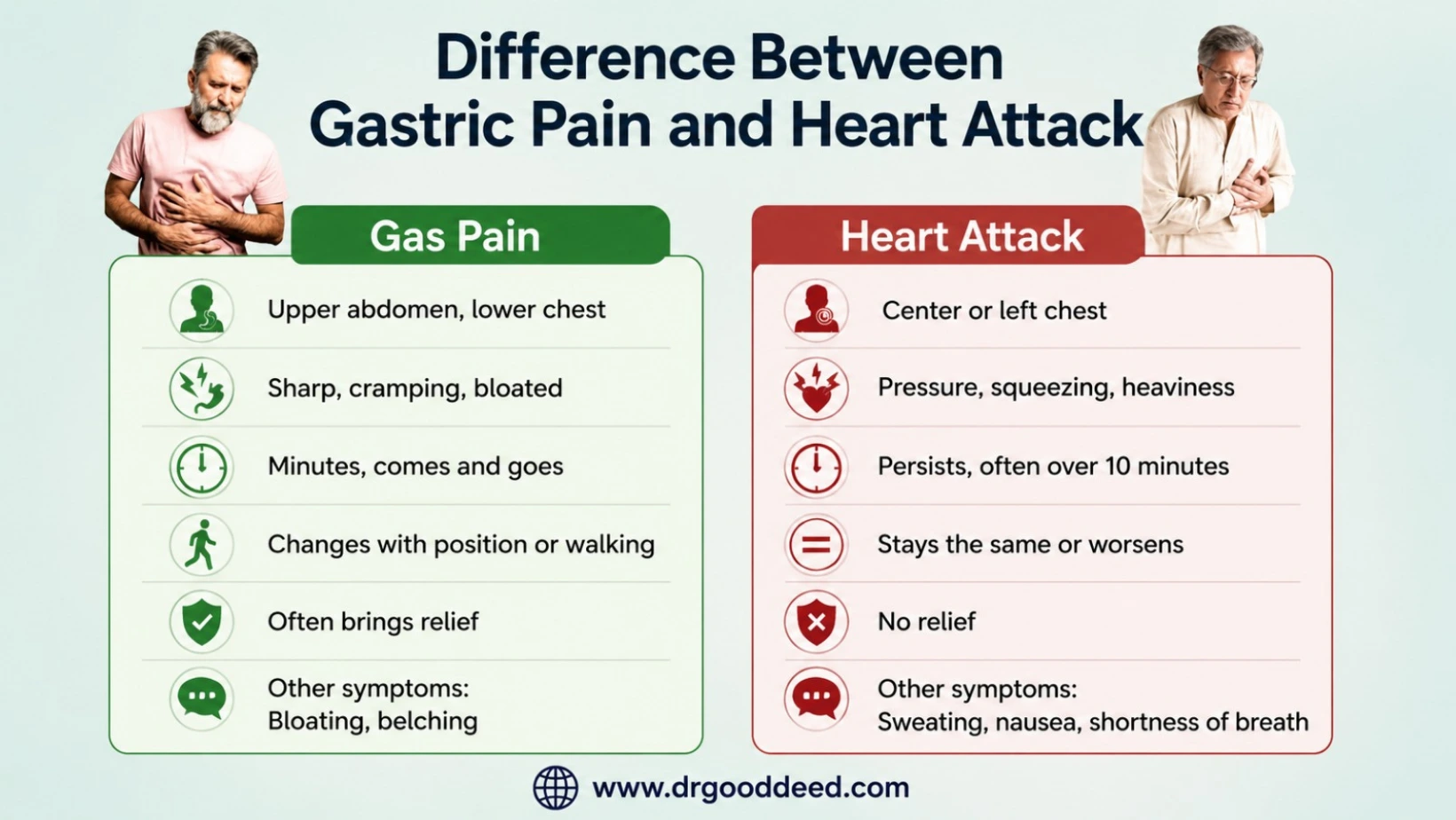
The difference between gas pain and heart attack comes down to six clear signals. These are location, pain type, duration, response to movement, response to burping, and other symptoms. Checking all six together beats judging chest pain by feel alone.
Location of the Pain
Gas pain usually sits in the upper abdomen or lower chest. It can shift as trapped air moves through the intestines. Heart attack pain centers in the middle or left side of the chest. It often spreads outward to the arm, neck, jaw, or back.
Type of Pain or Pressure
Gas creates a sharp, cramping, or knotted feeling. A heart attack feels like squeezing, heaviness, or a tight band across the chest. Survivors often describe it as an elephant sitting on their chest, not a stabbing pain.
Pain Duration
Gas pain comes in waves and usually clears within minutes. Heart attack pain lasts longer than 10 minutes. It tends to build instead of fading on its own.
Pain That Changes With Movement
Gas pain often shifts or eases when you walk or change position. Heart attack pain stays constant or worsens with activity. Exertion raises the heart’s demand for oxygen, which makes blocked blood flow more painful.
Response to Burping or Passing Gas
This is one of the clearest gas pain or heart attack symptoms tests you can do at home. If burping or passing gas brings real relief, the pain is almost certainly digestive. Heart attack pain does not respond to either action.
Associated Symptoms
Gas pain travels with bloating, belching, and a full stomach feeling. A heart attack more often brings cold sweats, nausea, and shortness of breath. Dizziness and pain radiating beyond the chest are also common. Spotting these gas pain or heart attack symptoms side by side makes the cause much easier to identify.
Causes of Gas-Related Chest Pain
Understanding the causes of gas-related chest pain helps you catch harmless triggers before panic sets in. Most cases trace back to diet, swallowed air, or a slow digestive tract, not anything dangerous.
Swallowed Air
Eating too fast, chewing gum, or talking while eating causes people to swallow extra air. Doctors call this aerophagia. This air collects in the stomach and intestines. It creates pressure that can radiate into the lower chest.
Carbonated Beverages
Soda, sparkling water, and beer release carbon dioxide once they hit the stomach. That gas needs to escape somewhere. Until it does, it can create noticeable chest tightness, a common cause of gas-related chest pain complaints.
High-Fiber Foods
Beans, broccoli, cabbage, and whole grains are healthy but ferment in the colon. This process produces gas as a natural byproduct. Adding fiber too fast to your diet often triggers this kind of chest pressure.
Food Intolerances
Lactose intolerance and sensitivity to certain sugars in wheat or fruit can cause extra gas during digestion. The discomfort often shows up an hour or two after eating trigger foods.
Constipation
A backed-up digestive tract traps gas that would normally pass through. This buildup can push against the diaphragm. That pressure can mimic pain felt higher in the chest, adding to the list of causes of gas-related chest pain.
Acid Reflux
Stomach acid moving into the esophagus can trigger burping, bloating, and a burning feeling. This overlaps closely with gas pain. Reflux and trapped gas often occur together after large or fatty meals.
How to Relieve Gas Pain Safely
Once a doctor rules out anything serious, most gas pain responds well to simple steps at home. Here is how to relieve gas pain safely without masking a symptom that needs real medical attention.
Gentle Walking
Light movement helps shift trapped gas through the intestines faster than sitting still. A slow five- to ten-minute walk after eating often brings real relief.
Passing Gas Naturally
Letting your body release trapped air through burping or passing gas is the fastest fix. Holding it in only prolongs the discomfort and adds pressure.
Drinking Water
Warm water can help move digestion along and ease bloating tied to constipation. Avoid gulping large amounts quickly, since that adds more swallowed air.
Over-the-Counter Gas Relief Products
Simethicone products break up gas bubbles in the stomach and intestines, making them easier to pass. Activated charcoal and certain digestive enzymes may also help with specific triggers. Both are part of relieving gas pain safely without a prescription.
Avoiding Trigger Foods
Cutting back on soda, beans, cabbage, and artificial sweeteners for a few days can reveal your triggers. Reintroduce them slowly to find your personal tolerance level.
When Home Care Is Appropriate
Home remedies work only after a heart attack has been ruled out. They also fit when gas pain follows a clear pattern tied to eating. Any new, severe, or unexplained chest pain still needs urgent evaluation first, since gas pain vs heart attack confusion can delay real emergencies.
FAQs
How can I tell if chest pain is gas or a heart attack?
Check if burping or moving eases the pain within minutes. Heart attack pain persists, often with sweating, nausea, or arm pain, and needs a 911 call.
Can gas pain feel like a heart attack?
Yes. Trapped gas beneath the diaphragm can create sharp, squeezing chest pressure. It mimics gas pain or heart attack symptoms closely enough to send healthy people to the ER.
Does gas pain improve after burping?
Yes, almost always. Burping releases trapped air directly. This typically brings noticeable relief within a minute or two if gas is the true cause.
Can a heart attack occur after eating?
Yes. Digesting a large meal diverts blood flow toward the stomach. This can trigger chest pain in people with narrowed coronary arteries; real chest pain after eating raises heart attack risk.
Can acid reflux mimic a heart attack?
Yes. Stomach acid irritating the esophagus produces a burning central chest sensation. It feels nearly identical to angina, which is why ER doctors always run cardiac tests first.
How do doctors distinguish gas pain from a heart attack?
Doctors order an EKG and troponin blood test within minutes of arrival. Normal results rule out a heart attack. Elevated troponin confirms heart muscle damage.
Can indigestion cause chest pain?
Yes. Indigestion irritates the stomach lining and esophagus. It produces burning or pressure sensations in the lower chest that people often mistake for heart trouble.
Is chest pain after eating always caused by gas?
No. Gas is common, but chest pain after eating can also signal acid reflux or gallbladder issues. In rarer cases, it signals a heart attack emergency triggered by digestion.
Sources
- Mayo Clinic: Heartburn or Heart Attack, When to Worry
- Mayo Clinic: Heart Attack Symptoms and Causes
- Mayo Clinic: Gas and Gas Pains
- Cleveland Clinic: Can Gas Cause Chest Pain?
- Cleveland Clinic: Chest Pain Symptoms
- American Heart Association: Warning Signs of a Heart Attack
- MedicalNewsToday: Gas Pain vs. Heart Attack, Differences and More
- Baptist Health: Difference Between Gas Pain and Heart Attack
- MedlinePlus: Gas
- National Institute of Diabetes and Digestive and Kidney Diseases (NIDDK): Gas in the Digestive Tract