
Caffeine affects your heart by blocking a brain chemical called adenosine, which normally slows things down, so your nervous system speeds up instead. This pushes your heart rate up, can raise blood pressure for a short time, and, in sensitive people, it can trigger palpitations. For most healthy adults, moderate coffee or tea intake is safe. People with existing heart rhythm problems need to watch their intake more closely.
Effects of Caffeine on the Heart
The effects of caffeine on the heart show up within 15 to 45 minutes of your first sip and fade over a few hours. Your body treats caffeine as a mild stimulant, and your heart is one of the first organs to respond. Here’s exactly what changes once caffeine enters your bloodstream.
Increased Alertness and Cardiac Activity
Caffeine wakes up your brain and your heart together. Your heart starts beating with slightly more force and speed, which is why coffee often feels like an instant energy switch. This jump in force is the clearest early sign of how caffeine affects your heart.
Temporary Blood Pressure Changes
Blood pressure can rise by 3 to 8 points systolic shortly after caffeine intake, especially in people who don’t drink it regularly. Regular drinkers build some tolerance, so the spike is usually smaller for them.
Increased Adrenaline Release
Caffeine triggers your adrenal glands to release adrenaline, the same hormone behind your fight-or-flight response. This adds to the jittery, wired feeling some people get after too much coffee.
Effects During Exercise
Caffeine before a workout can push your heart rate higher than usual for the same effort level. Athletes often use this to their advantage, but it means your heart is working harder at a given pace, another example of how caffeine affects your heart under physical stress.
Individual Responses
Genetics control how fast your liver breaks down caffeine. Some people clear it in two hours. Others take up to eight hours, so the same cup hits them much harder and longer.
What Happens in Your Body After You Consume Caffeine?
This section breaks down the biological chain reaction, step by step, so you understand exactly why your pulse picks up after that first cup and how caffeine affects your heart at the cellular level.
Blocks Adenosine Receptors
Adenosine is a chemical that builds up in your brain and makes you feel sleepy. Caffeine has a shape similar enough to adenosine that it locks onto the same receptors and blocks them, keeping you alert instead of drowsy.
Activates the Sympathetic (“Fight-or-Flight”) Response
With adenosine blocked, your brain signals your sympathetic nervous system to switch on. This system controls heart rate, blood pressure, and adrenaline release, all at once.
How Caffeine Affects Different Parts of Heart Health
Caffeine doesn’t affect your heart in just one way. It touches rate, pressure, rhythm, and blood vessels differently, and knowing each piece helps you understand your own reaction to coffee or energy drinks.
Heart Rate
A typical 95 mg cup of coffee raises heart rate by roughly 3 to 5 beats per minute in most people, though sensitive individuals see a bigger jump. A rapid heartbeat after drinking coffee that goes well beyond this range is a signal worth tracking, since it points to how your own body handles how caffeine affects your heart differently than average.
Blood Pressure
The rise is usually temporary and returns to normal within a few hours. Long-term studies haven’t linked moderate coffee drinking to permanent high blood pressure in healthy adults.
Heart Rhythm (Palpitations and Arrhythmias)
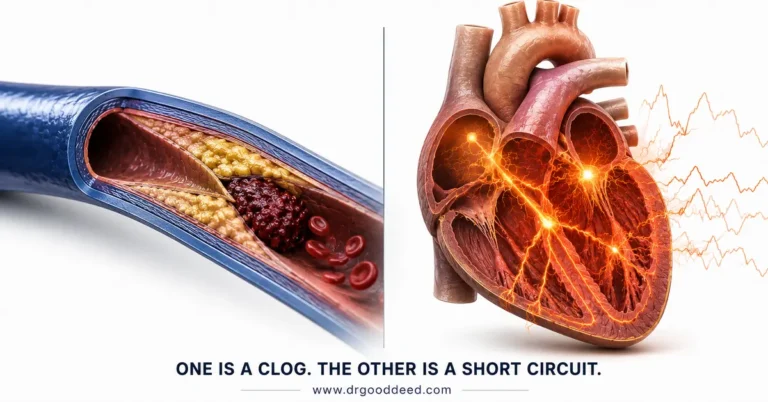
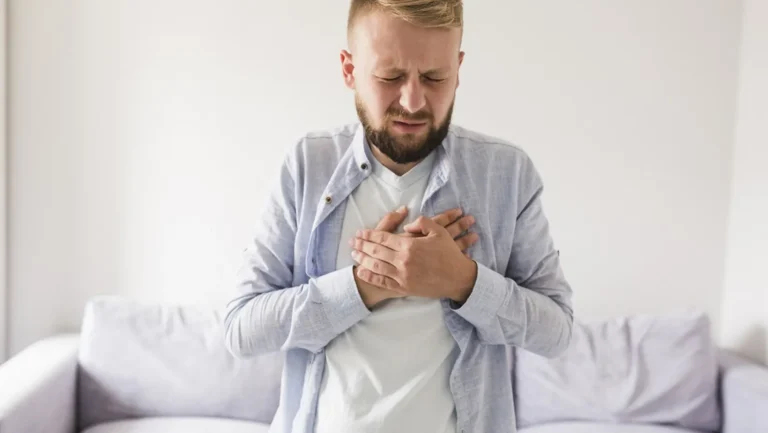
Caffeine causing heart palpitations is one of the most common complaints tied to high intake of energy drinks. The flutter feeling comes from extra electrical signals firing in the heart’s upper chambers.
Blood Vessels
Caffeine narrows blood vessels briefly, which is part of why it can raise blood pressure right after you drink it. This effect fades as your body processes the caffeine.
Can Caffeine Trigger Heart Rhythm Problems?
Yes, in some people, but not in the way most headlines suggest. Large research reviews have found no strong link between typical caffeine intake and dangerous arrhythmias in people with otherwise healthy hearts.
Arrhythmias and Caffeine
Occasional extra heartbeats after coffee are common and usually harmless. Sustained fast rhythms are rare and almost always tied to very high intake, not a single cup.
Current Research Findings
Large studies tracking coffee drinkers over the years have generally found no increased risk of atrial fibrillation from moderate intake. Some research even links moderate coffee drinking to a slightly lower risk.
People With Existing Heart Conditions
If you already have atrial fibrillation, supraventricular tachycardia, or another diagnosed rhythm disorder, caffeine can act as a trigger in some patients. Tracking your symptoms after caffeine helps your cardiologist tailor advice for you.
When to Limit Caffeine
Cut back if you notice a rapid heartbeat after drinking coffee that lasts more than a few minutes, feels irregular, or comes with chest discomfort, dizziness, or shortness of breath. This pattern is often an early form of caffeine causing heart palpitations, and it tends to repeat unless intake drops.
How Reducing Caffeine Fixed a Software Engineer’s Nightly Heart Flutters
Daniel Okafor, a 41-year-old software engineer from Austin, Texas, started getting an odd fluttering feeling in his chest every evening for about three weeks, along with a rapid heartbeat after drinking coffee that he’d never noticed before. He wasn’t drinking more coffee than usual, just his normal three cups a day, but he had recently switched to a pre-workout supplement that also contained caffeine. His cardiologist ran a 24-hour heart monitor and found short bursts of premature atrial contractions clustered in the evenings, right when his combined caffeine intake from coffee and the supplement stacked up.
Once Daniel dropped the supplement and moved his last coffee to before noon, the flutters disappeared within ten days. His case highlights something most articles miss: it’s often the hidden, stacked sources of caffeine, not the obvious cup of coffee, that push people past their personal limit.
(Name and identifying details have been altered to protect privacy.)
When Caffeine Can Become a Problem
Caffeine turns from a mild stimulant into a heart stressor once your intake crosses certain lines. These four situations are where most caffeine-related heart complaints actually start.
Large Single Doses
Drinking 300 mg or more in one sitting, roughly three strong cups of coffee, can spike heart rate and blood pressure sharply, especially if you rarely drink caffeine.
Mixing Multiple Caffeine Sources
Coffee plus energy drinks plus pre-workout supplements plus caffeine pills add up fast. Many people underestimate their total daily intake because they only count their morning coffee.
Taking Caffeine During Illness, Dehydration, or Poor Sleep
Your body is already under stress in these states. Adding caffeine on top can push heart rate and palpitations higher than it would on a normal day.
Combining Caffeine With Nicotine or Stimulant Drugs
Nicotine and caffeine both activate your fight-or-flight response. Combined, they create a stronger stimulant load on your heart than either one alone.
Safe Daily Caffeine Intake
Most health authorities agree that moderate caffeine intake is safe for the average healthy adult heart, but “moderate” has a specific number attached to it. Sticking to that number is the simplest form of how to reduce caffeine-related heart symptoms before they even start.
Recommended Daily Limits
Up to 400 mg per day, about four 8-ounce cups of brewed coffee, is generally considered safe for healthy adults. Pregnant women and people with certain heart conditions need lower limits, so check with your doctor.
Caffeine Content of Common Drinks
| Drink | Typical Caffeine |
| Brewed coffee (8 oz) | 95 mg |
| Espresso (1 oz) | 63 mg |
| Black tea (8 oz) | 47 mg |
| Green tea (8 oz) | 28 mg |
| Energy drink (8 oz) | 80 mg |
| Cola (12 oz) | 34 mg |
Know the Hidden Sources of Caffeine
Chocolate, some pain relievers, weight loss pills, and certain protein powders all contain caffeine. Check labels if you’re trying to track your true daily total.
Signs You May Be Consuming Too Much Caffeine
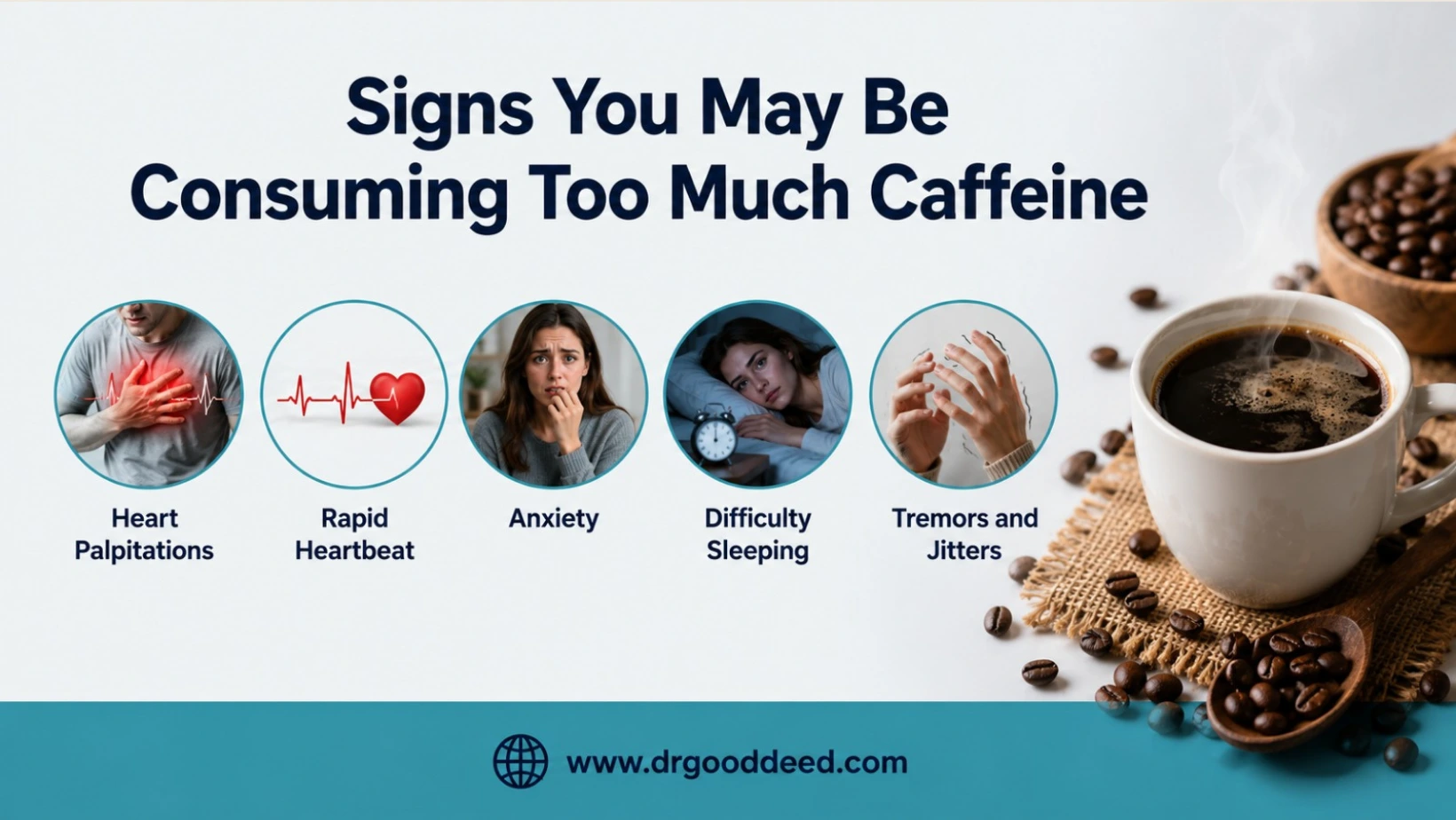
Your body sends clear warning signs before caffeine becomes a real problem for your heart. Catching these early is part of learning how to reduce caffeine-related heart symptoms before they get worse.
Heart Palpitations
A fluttering, pounding, or skipped-beat feeling in your chest, usually within an hour of a large caffeine dose, is one of the clearest warning signs to cut back. This is classic caffeine causing heart palpitations, and it’s usually the first symptom people notice before anything else changes.
Rapid Heartbeat
A resting heart rate noticeably above your normal baseline after caffeine, especially past 100 beats per minute, means your intake was likely too high for your body that day.
Anxiety and Restlessness
Caffeine mimics the adrenaline surge of anxiety, so it’s easy to confuse the two. If it fades a few hours after your last cup, caffeine is the likely cause.
Difficulty Sleeping
Caffeine can stay in your system for six hours or more. An afternoon cup can still be active in your body at bedtime, affecting both sleep and next-day heart rate.
Tremors and Jitters
Shaky hands and a wired, on-edge feeling usually mean you’ve had more caffeine than your body can comfortably process right now. Cutting your next dose in half is a fast, practical step in reducing caffeine-related heart symptoms like this.
Heart-Healthy Alternatives to Caffeinated Drinks
If you’re cutting back, these heart-healthy alternatives to caffeinated drinks still give you something warm and satisfying to hold onto without the stimulant load on your heart.
Herbal Tea
Chamomile, peppermint, and rooibos teas are naturally caffeine-free, and many people find them calming rather than stimulating.
Decaffeinated Coffee
Decaf still contains a small amount of caffeine, usually 2 to 5 mg per cup, but it’s low enough that most people don’t feel any heart effects.
Warm Lemon Water
A simple, zero-caffeine option that still feels like a deliberate morning ritual instead of just plain water.
Unsweetened Fruit-Infused Water
Adding sliced fruit to water gives natural flavor without caffeine or added sugar, which is useful if you’re also watching blood pressure.
Chicory Coffee Alternatives
Roasted chicory root has a coffee-like taste and zero caffeine, making it one of the closest swaps for people who miss the ritual of coffee more than the buzz, and one of the easiest heart-healthy alternatives to caffeinated drinks to adopt long term.
Managing how caffeine affects your heart comes down to knowing your personal limit and watching for the early warning signs listed above. The effects of caffeine on the heart are temporary for most healthy people, but stacking sources or drinking on an empty, stressed, or sleep-deprived body changes that equation fast.
FAQs
Can caffeine cause heart palpitations?
Yes. High doses or stacked sources trigger extra electrical signals in the heart’s upper chambers, causing a fluttering or skipped-beat sensation within about an hour.
Why does my heart beat faster after drinking coffee?
Caffeine blocks adenosine and triggers adrenaline release, both of which speed up your heart rate by roughly 3 to 5 beats per minute per cup.
Does caffeine raise blood pressure?
Yes, temporarily. Expect a 3 to 8 point systolic rise within an hour, returning to normal within a few hours, especially in people who drink caffeine infrequently.
Is caffeine safe for people with heart disease?
Moderate intake is generally safe, but people with atrial fibrillation or arrhythmias should track symptoms closely and follow their cardiologist’s specific limit.
Can caffeine trigger arrhythmias?
Rarely from a single cup. Large research reviews link sustained arrhythmias mainly to very high intake or stacked caffeine sources, not typical daily coffee habits.
What are the symptoms of too much caffeine?
Heart palpitations, rapid heartbeat past 100 bpm, jitteriness, anxiety, and trouble sleeping are the five clearest signs your intake crossed your personal limit.
Are energy drinks worse for the heart than coffee?
Often yes. Energy drinks combine caffeine with taurine and sugar, and studies link them to more emergency room visits for palpitations than coffee alone.
Can caffeine affect exercise performance and heart rate?
Yes. Pre-workout caffeine raises heart rate above your normal level for the same exercise intensity, which athletes use deliberately for a performance edge.
Who is most sensitive to caffeine?
Slow metabolizers with a specific CYP1A2 gene variant, pregnant women, and people with existing arrhythmias feel stronger heart effects from the same caffeine dose.
Disclaimer: This article is for general information only. It is not a substitute for medical advice. Talk to your doctor about caffeine intake if you have a heart condition.