
The 7-second trick to lower blood pressure refers to a controlled breathing method where you inhale slowly for 4 seconds and exhale for 7 seconds, activating the vagus nerve and slowing your heart rate within minutes.
According to the American Heart Association, nearly 47% of American adults have hypertension, and many don’t know that their autonomic nervous system, the system that controls heart rate and vessel tension, responds directly to how you breathe.
This guide covers the science behind the technique, what it actually does to your blood vessels, which lifestyle changes support it, and when your numbers need a doctor, not a breathing pattern.
How Breathing Affects Blood Pressure
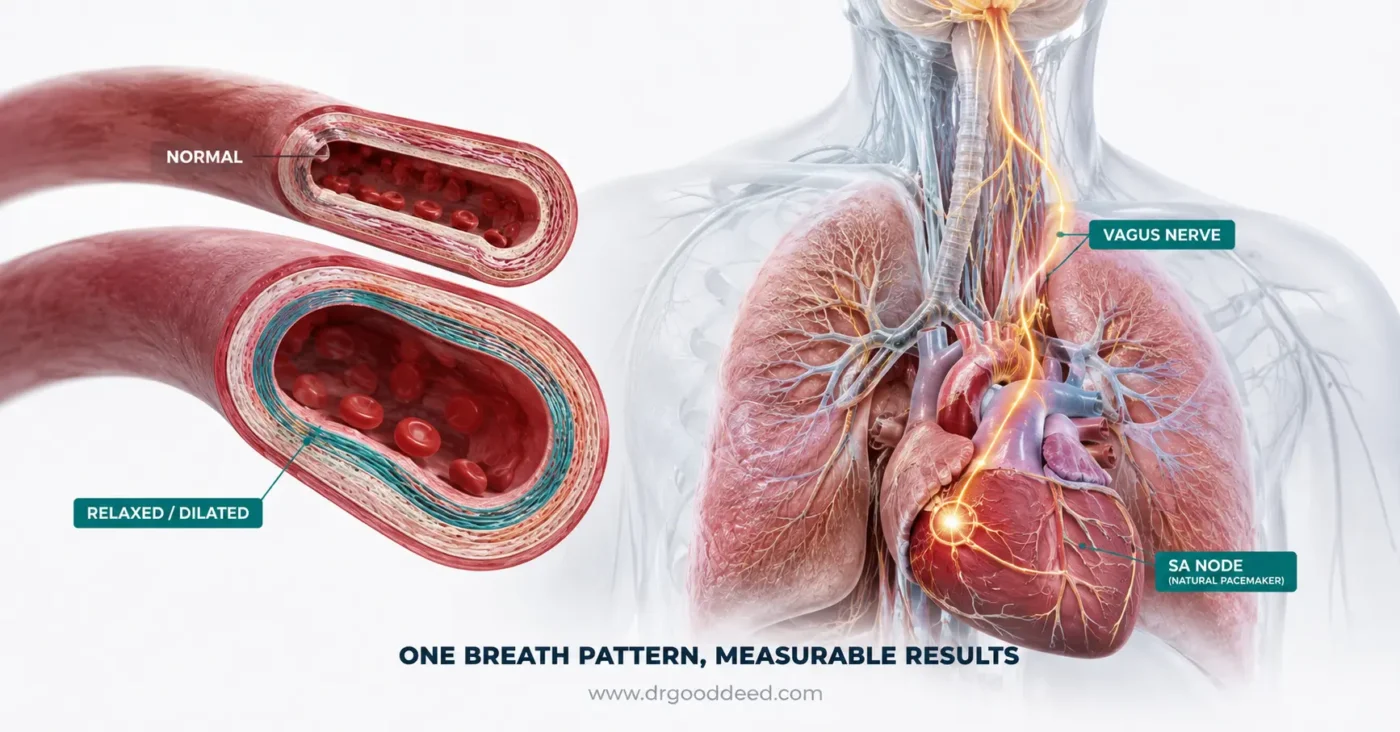
When you slow your breath deliberately, your body shifts from sympathetic mode (fight-or-flight) into parasympathetic mode (rest-and-digest). This shift causes blood vessels to relax, heart rate to drop, and systolic pressure to fall.
A 2021 study published in the Journal of the American Heart Association found that slow-paced breathing at five to six breaths per minute reduced systolic blood pressure by an average of 9 mmHg over four weeks in adults with Stage 1 hypertension.
Here’s what happens inside your body during a slow exhale:
- The vagus nerve gets stimulated, releasing acetylcholine
- Acetylcholine slows the sinoatrial node (your heart’s natural pacemaker)
- Peripheral blood vessels dilate slightly, reducing resistance
- Cortisol and adrenaline levels begin to drop within 60 to 90 seconds
This is measurable physiology.
Breathing Exercises for High Blood Pressure
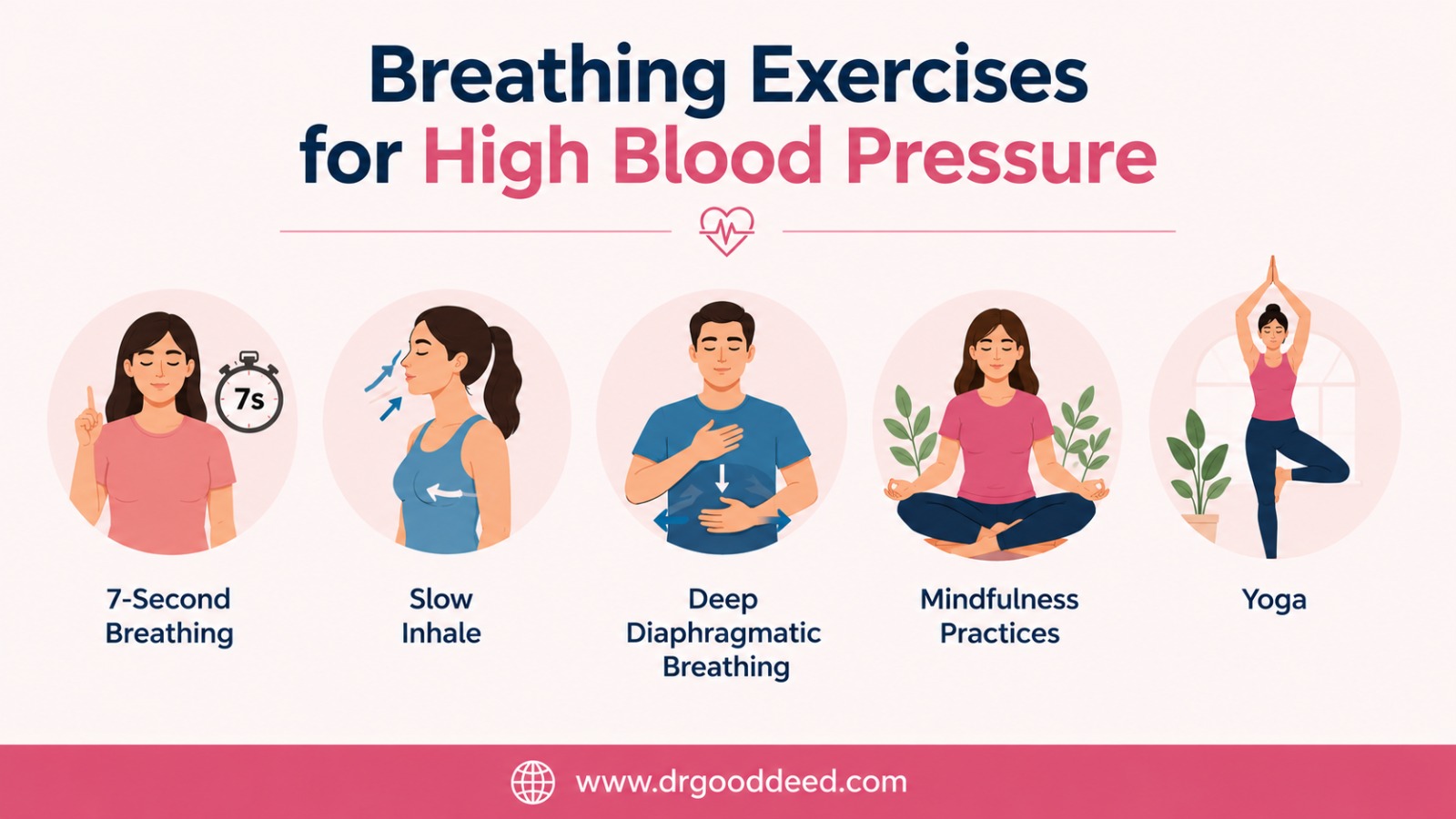
Breathing exercises for high blood pressure work because the respiratory system and cardiovascular system share direct neural pathways. Every breath you take affects baroreceptors, pressure sensors in your aorta and carotid arteries, that send signals to adjust vascular tension in real time.
The 7-Second Breathing Technique Explained
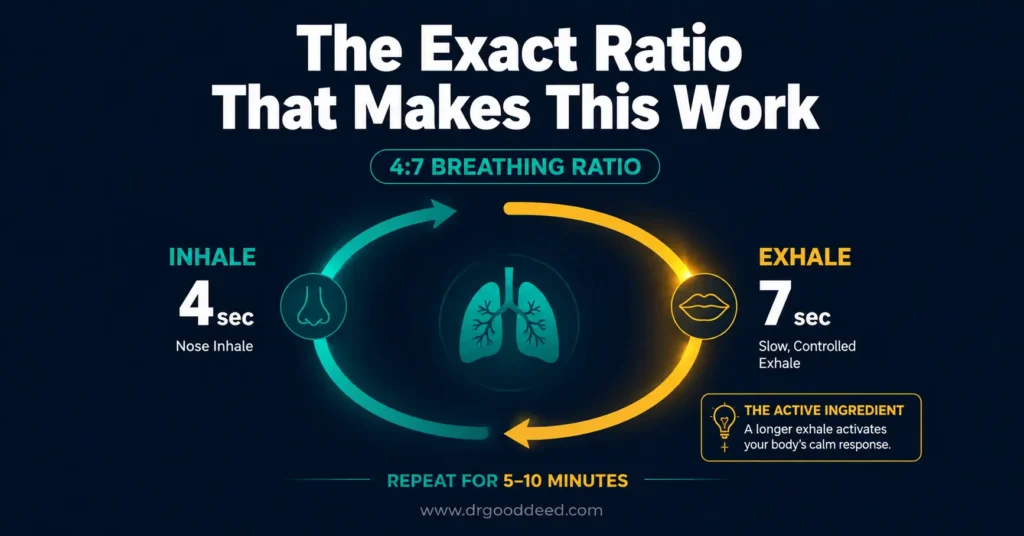
The 7-second trick to lower blood pressure works like this: inhale through your nose for 4 seconds, then exhale slowly through your mouth for 7 seconds. That exhale-longer-than-inhale pattern is the active ingredient. The extended exhale amplifies vagal tone more than the inhale does.
Do this for 5 to 10 minutes. Sit upright. Keep your shoulders relaxed. Don’t hold your breath between cycles.
A 2019 trial from the University of Arizona showed that participants who practiced 4-7-8 breathing (a close variant) for eight weeks saw their resting systolic blood pressure drop by 6 to 8 mmHg. That’s comparable to what some low-dose medications achieve.
Slow Inhale and Controlled Exhale Patterns
The ratio matters. Exhaling longer than inhaling (a 4:7 or 4:8 ratio) activates the parasympathetic branch more aggressively than equal-ratio breathing. A 1:2 ratio, where your exhale is twice as long as your inhale, is the minimum effective threshold based on heart rate variability research.
Resonance frequency breathing, practiced at exactly 5.5 breaths per minute, is the most studied version of slow breathing for blood pressure. That’s roughly a 5.5-second inhale and a 5.5-second exhale, slightly different from the 7-second version, but both work through the same vagal pathway.
Deep Diaphragmatic Breathing Benefits
Most people breathe from their chest. Diaphragmatic breathing uses the muscle below your lungs to draw air deeper, expanding the lower lobes. This matters because lower-lobe expansion presses against the vagus nerve’s thoracic branches more directly. The result: stronger parasympathetic activation per breath.
To check if you’re doing it right, put one hand on your chest and one on your belly. Your belly should rise first.
Why Breathing Helps Stress-Related Spikes
Stress causes a cortisol surge. Cortisol narrows blood vessels and raises sodium retention, which directly raises pressure. The 7-second trick to lower blood pressure interrupts this cascade by lowering cortisol within a single session.
Research from Stanford’s psychiatry department confirmed that cyclic sighing (a specific slow exhale technique) reduced self-reported stress faster than mindfulness meditation in a 2023 randomized trial.
Quick Ways to Reduce Blood Pressure Naturally
Quick ways to reduce blood pressure naturally include cold water on the face, slow breathing, and brief walks, all of which trigger measurable cardiovascular responses within minutes.
Relaxation and Calming Techniques
Progressive muscle relaxation, where you tense and release muscle groups one by one, reduces blood pressure by 5 to 7 mmHg in people with mild hypertension. It works because chronic muscle tension keeps the sympathetic nervous system partially activated.
Hydration and Circulation Support
Dehydration thickens blood and forces the heart to pump harder. Drinking 500 ml of water daily raises blood volume, which paradoxically stabilizes pressure in dehydrated individuals. This effect is measurable within 30 minutes.
Reducing Sodium and Processed Foods
Every 1,000 mg reduction in daily sodium intake lowers systolic pressure by 5 to 6 mmHg in sodium-sensitive individuals. Americans consume an average of 3,400 mg daily. The target per the 2020 USDA Dietary Guidelines is under 2,300 mg.
Light Physical Activity and Walking
A 10-minute brisk walk produces acute blood pressure reduction that lasts 45 minutes to an hour post-exercise. Three 10-minute walks spread throughout the day outperform one 30-minute session for keeping daily averages lower, according to a 2018 study in Hypertension journal.
Stress-Related High Blood Pressure Relief
Stress-related high blood pressure relief starts with recognizing that emotional stress and physical cardiovascular strain are the same event in your body. When you’re under pressure at work or in a difficult conversation, your systolic reading can spike 20 to 30 mmHg within seconds. And it’s reversible with direct intervention.
- Chronic job stress increases hypertension risk by 29% (Harvard School of Public Health, 2021)
- Acute emotional stress raises cortisol enough to narrow arteries for up to 40 minutes
- Perceived lack of control is a stronger predictor of hypertension than workload itself
The 7-second trick to lower blood pressure used immediately after a stressful event interrupts the cortisol spike before it sustains arterial constriction.
Relaxation Techniques for Hypertension
Relaxation techniques for hypertension reduce pressure through the autonomic nervous system, not through medication. They work best when practiced daily, not just during crises.
Meditation and Mindfulness Practices
Transcendental Meditation is the most clinically documented meditation style for blood pressure. A 2013 meta-analysis in the American Journal of Hypertension found it reduced systolic pressure by 4.7 mmHg and diastolic by 3.2 mmHg over three months.
Guided Relaxation and Muscle Release
Body scan meditation, where you mentally move through each body part and release tension, works within a single 20-minute session. Biofeedback-assisted relaxation (available through devices like Resperate, FDA-cleared for hypertension) uses real-time breathing feedback to guide patients into optimal respiratory rates.
Yoga and Breathing Coordination
Yoga styles that emphasize pranayama (controlled breathing) reduce blood pressure more than yoga styles focused on physical poses. A 2019 Cochrane review confirmed yoga reduced systolic pressure by 8 mmHg in people with hypertension when breathing was integrated.
Improving Sleep and Nervous System Recovery
Blood pressure naturally drops 10 to 20% during deep sleep, a phenomenon called nocturnal dipping. People who don’t experience this dip (non-dippers) have significantly higher cardiovascular risk. Improving sleep quality, particularly deep NREM sleep, restores this dipping pattern. Consistent sleep and wake times, avoiding screens an hour before bed, and cooling your room to 65 to 68°F all support this.
Anxiety and Blood Pressure Spikes
Anxiety and blood pressure spikes are directly linked, but not always in the way people assume. Anxiety doesn’t cause chronic hypertension on its own. What it does is trigger repeated acute spikes that, over months and years, damage arterial walls and raise baseline readings.
- Panic attacks spike blood pressure to 180/110 mmHg or higher temporarily
- Repeated spikes cause micro-damage to endothelial cells lining artery walls
- Generalized anxiety disorder increases long-term hypertension risk by 1.73x (American Journal of Psychiatry, 2018)
The 7-second trick to lower blood pressure during anxiety interrupts the spike cycle. But if anxiety is frequent, that’s a separate condition requiring separate treatment.
Lifestyle Habits That Help Support Healthy Blood Pressure
Regular Exercise and Heart Health
150 minutes of moderate aerobic exercise per week reduces systolic pressure by 5 to 8 mmHg in adults with hypertension. Resistance training adds an additional 2 to 4 mmHg reduction when combined with aerobic work.
Weight Management and Circulation
Every 2.2 pounds (1 kg) of body weight lost reduces systolic pressure by approximately 1 mmHg. In obese individuals with hypertension, a 10% body weight reduction produces results comparable to adding a second antihypertensive medication.
Potassium-Rich Foods and Hydration
Potassium counteracts sodium’s pressure-raising effect by promoting sodium excretion through kidneys. Adults need 4,700 mg of potassium daily. Most Americans get 2,500 mg. Bananas, sweet potatoes, spinach, and white beans are high-density sources.
Limiting Alcohol and Smoking
More than two alcoholic drinks per day raises systolic pressure by 7 to 9 mmHg. Smoking spikes blood pressure immediately after each cigarette and causes permanent arterial stiffening over time. Quitting smoking produces measurable blood pressure improvement within 20 minutes of the last cigarette.
Foods That Support Blood Pressure Control
Fruits and Vegetables Rich in Potassium
Beets contain dietary nitrates that convert to nitric oxide in the body. Nitric oxide relaxes blood vessel walls. A 2015 study in Hypertension found that 250 ml of beet juice daily reduced systolic pressure by 7.7 mmHg within six hours.
Fiber-Rich Whole Foods and Heart Health
Soluble fiber (from oats, flaxseeds, and psyllium) lowers LDL cholesterol, which reduces arterial plaque buildup and keeps arteries more flexible. Each 10g increase in daily fiber intake cuts cardiovascular mortality risk by 17%.
Reducing Excess Sodium Intake
Restaurant meals and packaged foods account for 71% of American sodium intake. Cooking at home with herbs like garlic, lemon, and rosemary instead of added salt reduces intake without sacrificing flavor.
Heart-Healthy Fats and Circulation Support
Omega-3 fatty acids (found in salmon, sardines, and walnuts) reduce arterial inflammation and lower triglycerides. A daily intake of 2 to 4 grams of EPA and DHA (combined omega-3s) reduces systolic pressure by 4 to 5 mmHg in people with elevated readings.
When High Blood Pressure Needs Immediate Medical Attention
A blood pressure reading above 180/120 mmHg is a hypertensive crisis. This requires emergency care, not breathing exercises.
Call 911 or go to the ER immediately if:
- Your reading is 180/120 mmHg or higher
- You have chest pain, vision changes, or severe headache alongside high readings
- You feel confused, short of breath, or have facial drooping
- You’re pregnant and your reading exceeds 140/90 mmHg (possible preeclampsia)
The 7-second trick to lower blood pressure is not a substitute for emergency treatment. It is a tool for managing mild to moderate elevations in people already under medical care.
FAQs
What is the 7-second trick commonly used for lowering blood pressure?
The 7-second trick to lower blood pressure is a breathing pattern where you inhale for 4 seconds and exhale for 7 seconds. The extended exhale directly stimulates the vagus nerve, which lowers heart rate and relaxes blood vessels. Blood pressure responds within 60 to 90 seconds. It works best for stress-triggered spikes, not chronic hypertension.
How do breathing exercises affect heart rate and circulation?
Breathing exercises for high blood pressure slow the sinoatrial node, your heart’s pacemaker, through vagal nerve stimulation. Slower heart rate means less force per minute on artery walls. At five to six breaths per minute (resonance breathing), baroreceptor sensitivity improves, making blood pressure regulation more efficient long-term.
Can anxiety temporarily increase blood pressure readings?
Yes. Anxiety activates the sympathetic nervous system within seconds, releasing adrenaline that constricts arteries and speeds the heart. During a panic attack, systolic pressure spikes to 180 mmHg or higher. These spikes are temporary, but repeated spikes over years damage arterial endothelium and raise baseline readings.
Why does stress contribute to hypertension over time?
Chronic stress keeps cortisol elevated. Cortisol increases sodium retention in the kidneys, raises blood sugar (which thickens blood), and keeps arteries partially constricted. Harvard research from 2021 confirmed chronic job stress raises hypertension risk by 29%, independent of diet and exercise habits.
Which relaxation techniques help lower blood pressure naturally?
Transcendental Meditation reduced systolic pressure by 4.7 mmHg in a 2013 American Journal of Hypertension meta-analysis. Biofeedback breathing (via FDA-cleared devices like Resperate) adds another 5 to 7 mmHg reduction. The 7-second trick to lower blood pressure works fastest for acute stress spikes.
Can deep breathing replace blood pressure medication?
No. Deep breathing lowers pressure by 6 to 9 mmHg at best. Stage 2 hypertension (above 140/90 mmHg) typically needs medication to prevent stroke and kidney damage. Breathing is a confirmed adjunct, not a replacement. Always consult a physician before adjusting medication.
What foods support healthy blood pressure levels?
Beet juice lowers systolic pressure by 7.7 mmHg within six hours due to dietary nitrates. Potassium-rich foods (spinach, sweet potatoes, white beans) help kidneys flush excess sodium. Omega-3s from salmon and sardines reduce arterial inflammation. These work cumulatively, not overnight.
How does sleep affect blood pressure regulation?
Blood pressure drops 10 to 20% during deep sleep. People who don’t experience this drop have 1.8x higher stroke risk. Consistent sleep timing restores nocturnal dipping. Each additional hour of sleep per night reduces systolic pressure by approximately 2 mmHg in sleep-deprived adults.
When should high blood pressure become a medical emergency?
Any reading at or above 180/120 mmHg is a hypertensive crisis. Add chest pain, vision loss, sudden severe headache, or shortness of breath and it’s a 911 call, not a home management situation. Preeclampsia (BP above 140/90 mmHg during pregnancy) is also an emergency.
What lifestyle habits matter most for long-term hypertension management?
150 minutes of weekly aerobic exercise, reducing sodium below 2,300 mg daily, maintaining potassium intake at 4,700 mg, sleeping 7 to 9 hours nightly, and practicing the 7-second trick to lower blood pressure during stress spikes. These combined produce better results than any single change alone.