
No. Cracking knuckles causes arthritis is one of the most repeated health myths in the U.S. Large studies comparing habitual knuckle crackers with non-crackers found no higher rate of hand osteoarthritis in the group that cracked their joints.
This guide covers what happens inside your joint, why the myth spread, what real research shows, and when knuckle pain signals something worth checking.
What Actually Happens When You Crack Your Knuckles?
The pop you hear comes from gas bubbles forming inside your joint fluid, not from bone rubbing on bone. Cracking knuckles is a normal fluid event, not joint damage.
Every knuckle joint sits inside a capsule filled with synovial fluid, which lubricates the joint and carries dissolved gases, mostly carbon dioxide. When you bend or pull a finger past its normal range, the capsule suddenly stretches, and pressure inside drops fast. The dissolved gas can’t stay dissolved, so it forms a bubble almost instantly. Scientists call this tribonucleation.
For years, textbooks taught that the pop happened when that bubble collapsed. Real-time MRI research changed that picture. Researchers at the University of Alberta pulled a finger joint apart inside an MRI scanner and filmed the crack as it happened. The imaging showed the sound occurs the moment the gas cavity forms, not later. It confirms the sound comes from a fluid shift, not cartilage grinding down.
You can’t crack the same knuckle again right away because the gas takes 15 to 20 minutes to redissolve. People who crack easily often have looser joint capsules or more flexible connective tissue, letting the joint stretch further before the bubble forms.
Knuckle Pain After Cracking Fingers
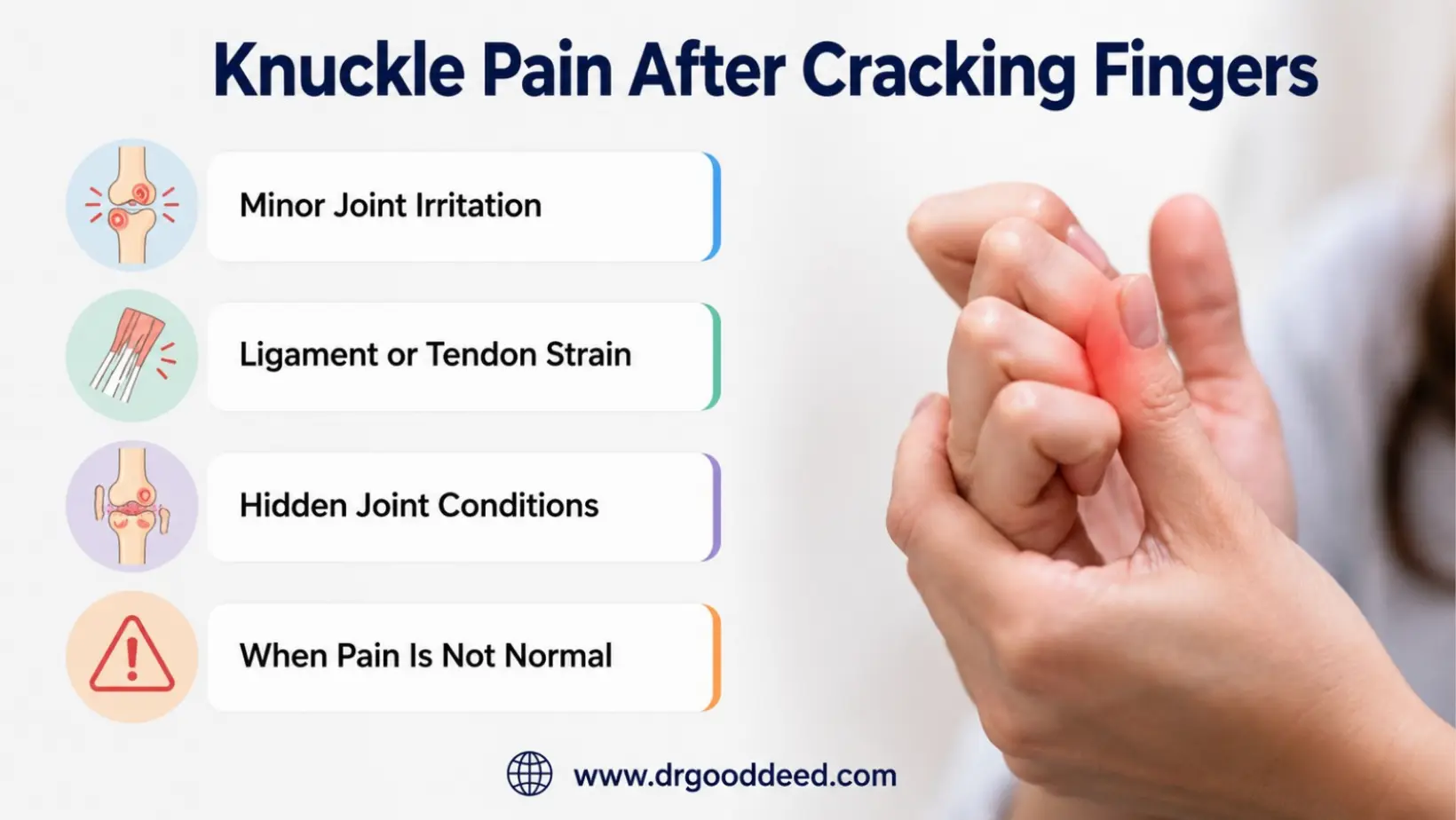
Knuckle pain after cracking fingers is uncommon but not impossible, and the cause almost always sits in soft tissue rather than bone. This soreness is a separate issue from arthritis concerns, since pain from a strained ligament heals on its own while arthritis does not. Below are the four situations that explain most cases, ranging from harmless to serious.
Minor Joint Irritation
Cracking a joint too hard or too often in one session can irritate the capsule lining. This feels like a dull ache that fades within an hour. It’s similar to overstretching any small connective tissue and doesn’t indicate joint breakdown.
Ligament or Tendon Strain
Forcing a finger into an unnatural angle to produce a pop can strain the small ligaments that hold the joint together. Repeated forcing, especially bending a finger sideways rather than along its natural line, raises this risk. The pain usually sits on one side of the knuckle.
Hidden Joint Conditions
Sometimes, cracking simply reveals pain that was already brewing from an unrelated issue, like an old sprain or early cartilage thinning tied to one of the common causes of arthritis in the hands. The cracking itself didn’t cause the problem. It just happened to be the moment you noticed it.
When Pain Is Not Normal
Pain that lasts past a day, comes with visible swelling, or shows up alongside stiffness every morning is not typical knuckle pain after cracking fingers. That combination points toward a joint condition that needs a medical exam rather than home care.
Why People Thought Knuckle Cracking Causes Arthritis
Cracking sounds mimic what people imagine bone-on-bone grinding would sound like, so parents assumed damage was happening. Also, some habitual crackers do get visibly larger, puffier knuckles over decades, which looks arthritic even though it usually comes from soft tissue and ligament changes, not joint destruction.
Older generations lacked imaging tools to check what was really going on inside a joint. Without MRI or ultrasound, a swollen-looking knuckle and an arthritic knuckle looked identical from the outside, even though the tissue underneath was completely different.
What the Research Actually Shows
Multiple lines of evidence, gathered over more than 30 years, cracking knuckles has no connection between cracking your knuckles and developing arthritis. Below is what the actual data shows, organized by type of study.
Long-Term Population Studies
A widely cited study in the Journal of the American Board of Family Medicine compared hand X-rays and grip strength between habitual knuckle crackers and people who never cracked. Arthritis rates came out nearly identical between both groups. Crackers did show slightly lower average grip strength and a bit more hand swelling, but not more arthritis.
The Famous Self-Experiment
Dr. Donald Unger ran an odd personal experiment starting in the 1970s. He cracked the knuckles on his left hand at least twice a day for over 60 years and left his right hand alone. He published his results in a short letter in Arthritis & Rheumatism in 1998, reporting no difference between his two hands, and later won an Ig Nobel Prize in 2009 for it.
What it demonstrated: six decades of one-sided cracking produced zero visible difference in joint disease, backing up the standard answer to whether cracking knuckles cause arthritis. What it did not prove: one person’s hands can’t stand in for population-wide evidence, and the experiment had no imaging or blinded review behind it.
What Researchers Still Can’t Say With Certainty
Scientists haven’t ruled out every long-term effect. Some smaller studies suggest very frequent, forceful cracking might loosen ligaments slightly and reduce grip strength, though results are mixed. Nobody has run a large randomized trial tracking cracking habits against joint imaging over decades, so uncertainty remains around grip strength specifically, even while the arthritis question looks settled.
Swollen Knuckles and Real Symptoms of Arthritis Symptoms
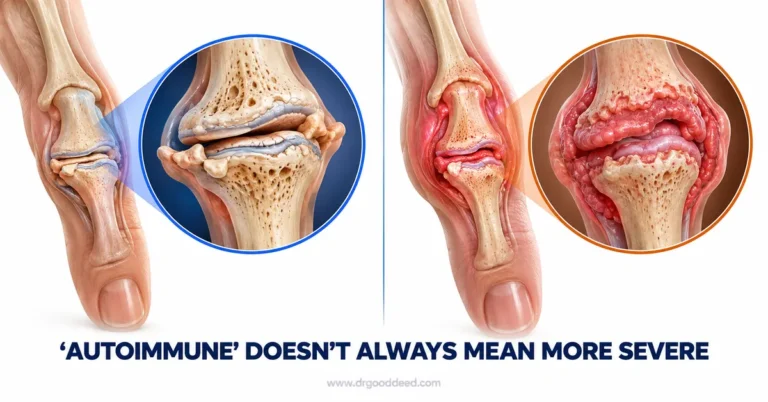
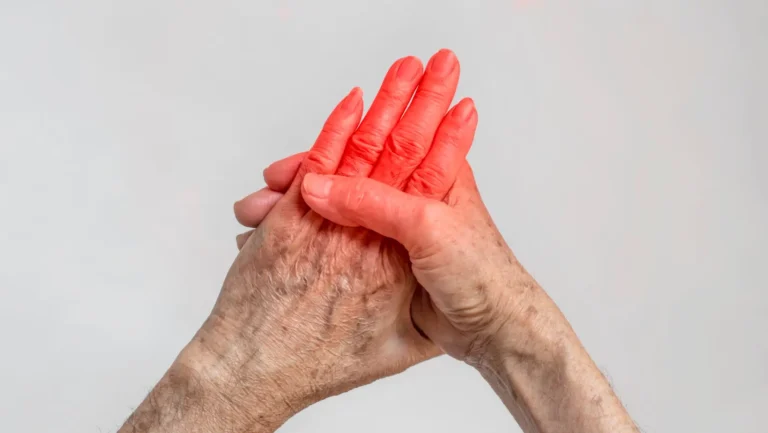
Swollen knuckles and arthritis symptoms look very different from the temporary puffiness some habitual crackers notice. True hand arthritis tends to show a specific pattern:
- Joint stiffness that is worse in the morning and eases after 30 to 60 minutes of movement
- Swelling that stays for days or weeks, not minutes
- Warmth or redness over one or more knuckles
- Joints that look bigger or knobby compared to a year ago
- Pain that increases with gripping, twisting jar lids, or typing
- Reduced range of motion when trying to make a full fist
- Symptoms appearing in the same joints on both hands at once, which is common in rheumatoid arthritis specifically
Doctors treat this cluster of swollen knuckles and arthritis symptoms as a diagnostic pattern, since it rarely shows up from cracking alone. Watching for this exact pattern of swollen knuckles and arthritis symptoms is more useful than watching how often you crack your fingers.
Causes of arthritis in the hands include normal cartilage wear from age (osteoarthritis), autoimmune attacks on joint tissue (rheumatoid arthritis), old fractures that changed joint alignment, and genetics that run in families. None of these causes of arthritis in the hands include cracking your knuckles.
What Should You Do If You Crack Your Knuckles Frequently?
Your next step depends entirely on whether cracking comes with actual symptoms or is just a habit. Here’s how to sort that out, whether you’re worried about cracking knuckles causing arthritis in your own hands or just dealing with occasional knuckle pain after cracking fingers.
If there’s no pain, no swelling, and normal hand function, you don’t need treatment. Cracking on its own, done at a normal frequency, is not linked to future joint damage based on current evidence.
If cracking has become a habit you want to break:
- Squeeze a stress ball instead when the urge hits
- Do slow finger-stretching exercises a few times a day
- Notice your triggers, boredom and anxiety are the two biggest ones, and swap in a different fidget
- Keep your hands occupied with a pen or small object during stressful moments
- Add light hand-strengthening exercises, like squeezing therapy putty, if you’ve noticed weaker grip
If cracking comes with real symptoms, here’s how to reduce finger joint pain:
- Rest the hand and apply a cold pack for swelling that appeared after cracking
- See a doctor if pain lasts more than a few days or returns often
- Ask for imaging, like X-ray or ultrasound, only if a doctor suspects structural damage, not as a routine check
- Get evaluated for inflammatory arthritis specifically if you notice morning stiffness lasting over 30 minutes plus visible swelling
Treatments for hand arthritis exist and work once a doctor confirms a diagnosis, and they usually start conservative before escalating. Options doctors commonly discuss for treatments for hand arthritis include anti-inflammatory medication, splinting during flare-ups, physical therapy, and disease-modifying drugs for rheumatoid arthritis specifically. Dosage and drug choice vary by age and overall health, so this needs a doctor’s input, not self-treatment.
FAQs
Why do knuckles make a popping sound?
Gas bubbles form suddenly inside the joint fluid when you stretch the joint capsule past its normal range. The pop happens the instant that gas cavity forms, not when it collapses, according to real-time MRI imaging research.
Is it harmful to crack your fingers every day?
No. Daily cracking at a normal, unforced pace has not been linked to arthritis, joint damage, or long-term disability in existing research. It may slightly lower grip strength over decades in some people.
Why do my knuckles hurt after cracking them?
Usually from mild capsule irritation or a strained ligament caused by bending the finger into an unnatural angle to force a pop. Pain lasting beyond a day is not typical and needs a check-up.
What are the early symptoms of hand arthritis?
Morning stiffness lasting over 30 minutes, joint swelling that doesn’t fade quickly, warmth over a knuckle, and pain while gripping objects. These symptoms differ clearly from the brief soreness some crackers feel.
How is arthritis in the hands diagnosed?
Doctors combine a physical exam, blood tests for inflammatory markers, and imaging like X-ray or ultrasound. Blood work helps separate rheumatoid arthritis, which is autoimmune, from osteoarthritis, which is mechanical wear. Confirmed diagnoses then guide treatments for hand arthritis, which range from splints to medication depending on severity.
Can cracking knuckles weaken grip strength?
Some studies found slightly lower grip strength in long-term habitual crackers compared to non-crackers, though results vary across research. It has not been shown to cause arthritis or joint destruction.
Should I stop cracking my knuckles if they hurt?
Yes. Pain is your signal to stop and let the joint rest. Continued forcing after pain starts raises your risk of straining a ligament, even though it won’t cause arthritis.
When should I see a doctor for finger pain?
See a doctor if pain lasts more than a few days, returns repeatedly, comes with swelling or warmth, or limits your ability to make a fist. Sudden severe pain also needs same-week evaluation.
Is knuckle cracking safe for healthy joints?
Yes, for joints with no existing disease or injury. Current evidence, including decades-long population studies and case reports, confirms that cracking knuckles does not cause arthritis, as long as cracking stays unforced and pain-free.