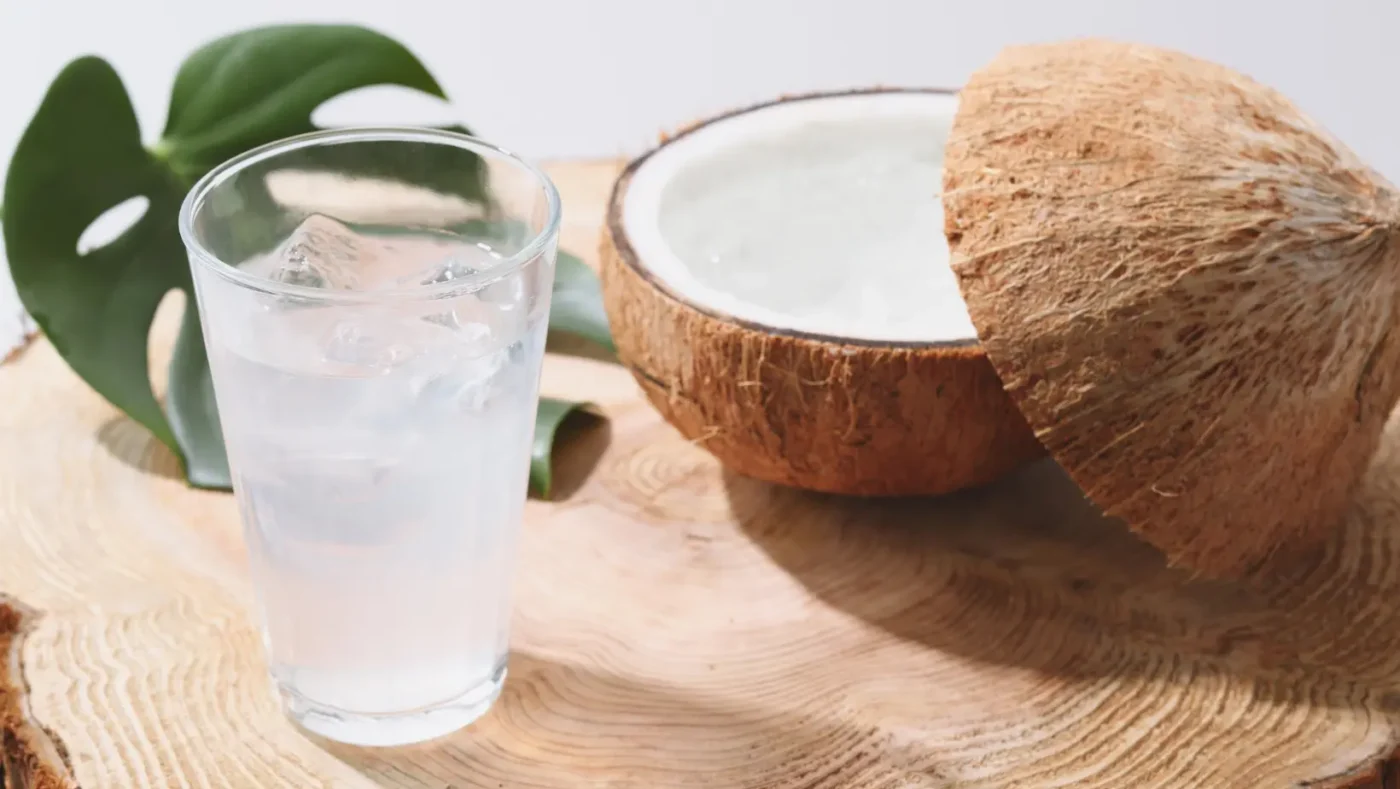

The benefits of coconut water for skin come mostly from hydration, electrolytes, and a small amount of vitamin C and antioxidants, not from any proven ability to clear or brighten skin on its own. Coconut water contains electrolytes and several potentially bioactive compounds. Drinking it can contribute to your overall fluid intake.
Laboratory research suggests antioxidant activity, but direct evidence that coconut water itself visibly brightens or clears human skin stays limited. This guide covers what the science actually supports, what it does not, and how to use coconut water safely on your face.
8 Benefits of Coconut Water for Skin
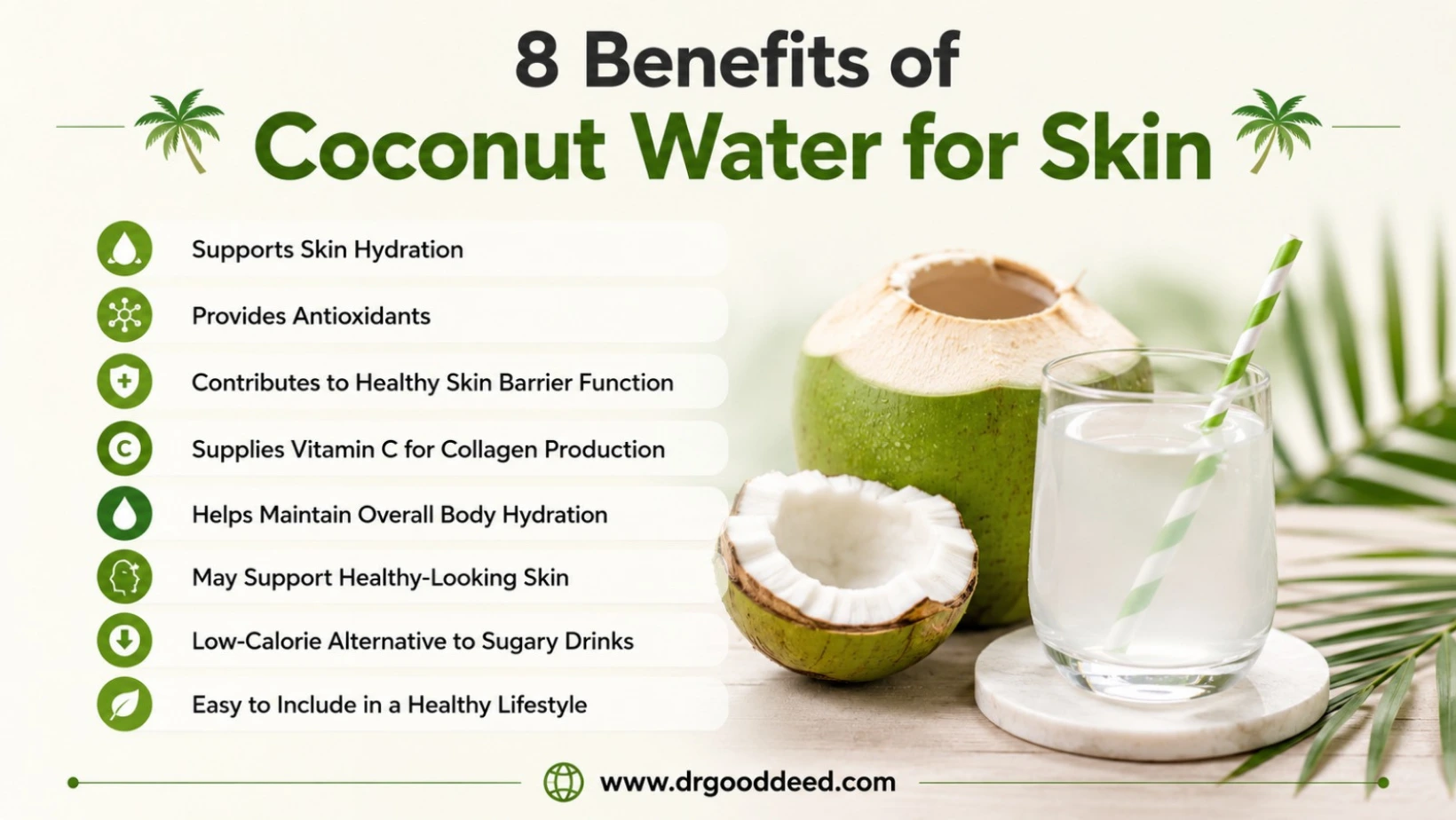
The 8 Benefits of Coconut Water for Skin center on hydration, antioxidant support, and nutrient intake rather than dramatic visible transformation.
1. Supports Skin Hydration
Skin needs adequate body hydration to stay supple and function well. Coconut water adds fluid and electrolytes like potassium and sodium, which help your body retain water more effectively than plain water alone in some contexts.
2. Provides Antioxidants
Coconut water contains small amounts of vitamin C and polyphenols, both antioxidants. Antioxidants help neutralize free radicals, unstable molecules that damage skin cells and speed up visible aging over time.
3. Contributes to Healthy Skin Barrier Function
Your skin barrier locks in moisture and blocks irritants. Proper hydration from fluids like coconut water supports this barrier indirectly, since dehydrated skin often shows a weaker, more reactive barrier.
4. Supplies Vitamin C for Collagen Production
One cup of coconut water provides roughly 2 to 24 mg of vitamin C, depending on the brand and processing method. Vitamin C is required for collagen synthesis, the protein that keeps skin firm.
5. Helps Maintain Overall Body Hydration
Coconut water contains around 95% water along with potassium and magnesium. This combination supports fluid balance throughout the body, which shows up in skin that looks less dry and dull.
6. May Support Healthy-Looking Skin
Well-hydrated, well-nourished skin often looks more even and less flaky. This effect comes from overall diet and hydration habits, not from coconut water working as a standalone treatment.
7. Low-Calorie Alternative to Sugary Drinks
At around 45 calories per cup, coconut water beats regular soda and sweetened juices in calories and added sugar. Cutting sugary drinks supports skin health indirectly by reducing inflammation linked to high sugar intake.
8. Easy to Include in a Healthy Lifestyle
Coconut water requires no prep and fits into most diets without effort. Swapping one sugary drink a day for coconut water is a simple, sustainable habit that supports hydration long term.
Drinking Coconut Water vs Applying Coconut Water: Which Makes More Sense for Skin?
Drinking coconut water supports your body’s hydration and nutrient needs from the inside, while applying it topically offers a mild, temporary refreshing feel with no strong clinical backing. For most people, drinking it delivers more measurable value than rubbing it on the face. Topical use is not harmful for most skin types, but do not expect it to replace proven skincare ingredients like retinoids, niacinamide, or sunscreen.
What Coconut Water Can’t Do for Skin
What coconut water can’t do for skin matters just as much as what it can do, since most product marketing overstates the evidence. Here is where the science draws a clear line.
It Doesn’t Cure Acne
Acne comes from clogged pores, excess oil, bacteria, and inflammation. Coconut water has no proven ability to treat these root causes, and no major clinical trial supports it as an acne treatment.
It Doesn’t Remove Wrinkles
Wrinkles form from collagen loss, sun damage, and repeated muscle movement over years. No amount of coconut water, applied or consumed, reverses this structural change in the skin.
It Doesn’t Eliminate Dark Spots
Dark spots come from excess melanin production, often triggered by sun exposure or inflammation. Coconut water lacks the proven depigmenting agents, like vitamin C serums at effective concentrations, needed to fade them.
It Doesn’t Replace Sunscreen
No drink or topical splash blocks UV rays the way a broad-spectrum sunscreen does. Sun protection remains the single most effective step for preventing premature skin aging and skin cancer risk.
It Doesn’t Reverse Skin Aging
Skin aging involves genetics, sun exposure, and collagen breakdown over decades. Coconut water may support general skin health, but it cannot reverse aging that has already occurred.
How to Use Coconut Water on Your Face
Safely using coconut water on your face comes down to simple methods, patch testing first, and realistic expectations about the results. None of these methods are backed by strong clinical trials, but they carry low risk for most healthy skin types.
As a Gentle Facial Rinse
Pour fresh, unsweetened coconut water onto a clean cotton pad and wipe it across your face after cleansing. Let it air dry before applying moisturizer.
As Part of a Homemade Face Mask
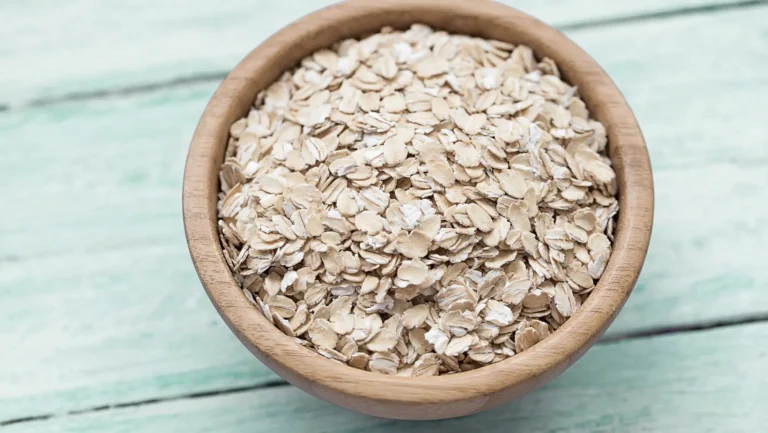
Mix coconut water with ingredients like oats or plain yogurt to make a simple mask. Leave it on for 10 to 15 minutes, then rinse with lukewarm water.
Patch Testing Before Use
Apply a small amount to your inner forearm and wait 24 hours before using it on your face. This step catches allergic reactions before they affect visible skin.
Hygiene and Safety Tips
Use fresh, unsweetened coconut water only, and store any leftover product in the fridge. Discard it after 24 hours, since bacteria grow quickly in sugary liquids at room temperature.
When to Avoid Topical Use
Skip topical coconut water if you have broken skin, active eczema flares, or a known coconut allergy. Stop use immediately if you notice redness, itching, or swelling.
Who Should Be Cautious About Drinking or Applying Coconut Water?
People with coconut allergies, kidney disease, or conditions requiring potassium restriction should talk to a doctor before drinking coconut water regularly. Athletes and people with diabetes should also watch portion size, since coconut water still contains natural sugar and calories that add up with frequent use.
FAQ
Can coconut water help improve skin hydration?
Yes. Its water and electrolyte content supports overall body hydration, which indirectly helps skin appear less dry, though it works no better than plain water for direct hydration.
What nutrients in coconut water support skin health?
Vitamin C, potassium, magnesium, and small amounts of polyphenol antioxidants. Vitamin C specifically supports collagen production, the protein responsible for skin firmness and structure.
Can coconut water clear acne?
No. Acne stems from clogged pores, bacteria, and hormones. Coconut water has no clinical evidence supporting acne treatment or prevention at any concentration.
How can I use coconut water on my face?
Apply it as a facial rinse with a cotton pad, or mix it into a homemade mask with oats or yogurt for 10 to 15 minutes.
Is it safe to apply coconut water directly to the skin?
Yes, for most people, after a 24-hour patch test on the forearm. Avoid it on broken skin, active rashes, or if you have a coconut allergy.
Can coconut water reduce wrinkles?
No. Wrinkles form from collagen breakdown and sun damage over years. No topical or oral coconut water use reverses this structural skin change.
Does coconut water brighten the skin?
Not directly. Any brightening effect likely comes from improved hydration and reduced sugary drink intake, not a special brightening compound unique to coconut water.
Is coconut water better than plain water for skin?
No strong evidence supports this claim. Plain water hydrates just as effectively for most healthy adults without the added natural sugar and calories.
Can I drink coconut water every day?
Yes, in moderation, around 1 to 2 cups daily for most healthy adults. Those with kidney issues or potassium restrictions need medical guidance first.
Sources
- U.S. Department of Agriculture, FoodData Central
- National Institutes of Health, Office of Dietary Supplements, Vitamin C Fact Sheet
- American Academy of Dermatology, Sunscreen FAQs
- Mayo Clinic, Water: How Much Should You Drink Every Day?
- Harvard T.H. Chan School of Public Health, Vitamin C
- National Kidney Foundation, Potassium and Your CKD Diet
- American Academy of Dermatology, Skin Aging Causes
- National Center for Biotechnology Information, Coconut Water Composition Review
- American College of Allergy, Asthma and Immunology, Food Allergy Overview