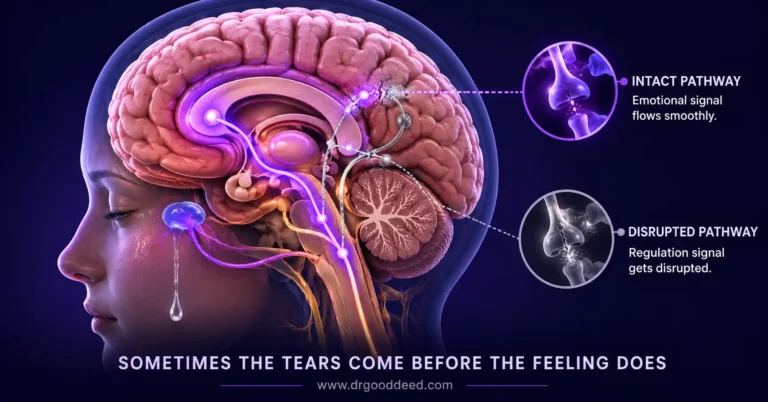

Signs of a nervous breakdown usually show up as a sudden inability to keep functioning: missing work, skipping meals, crying without warning, or feeling too overwhelmed to leave the house. Whatever this experience turns out to be clinically, it is real, exhausting, and worth taking seriously, not something to push through alone or wait out. This guide explains what the term actually covers, why psychological distress produces real physical symptoms, and when what’s happening needs urgent medical attention.
Key Takeaways
- A nervous breakdown is not a formal medical diagnosis, but the distress behind it is genuine and often points to an underlying, treatable condition.
- Nervous breakdown symptoms frequently signal an anxiety disorder, a depressive episode, or an acute stress reaction rather than a standalone illness.
- Physical symptoms like chest tightness or nausea are a real mind-body response to overwhelming stress, not something imagined.
- Severe symptoms, including thoughts of self-harm, always need immediate medical attention.
- Professional support, not waiting it out, is what actually shortens recovery time.
“Nervous Breakdown” Isn’t a Medical Diagnosis, Here’s Why That Matters
Signs of a nervous breakdown causes real problems in two opposite directions for the person living through it.
On one side, someone might dismiss what they’re feeling as “just stress” because there’s no official label attached, and delay getting help for a genuinely treatable condition like major depressive disorder or generalized anxiety disorder sitting underneath the crisis. On the other side, someone experiencing a sharp but time-limited stress reaction, the kind that eases once a deadline passes or a conflict resolves, might interpret the intensity of what they’re feeling as a full psychiatric emergency and spiral further into fear about it.
The term works as a description of severity and loss of function, not as a clinical category, which is exactly why professional evaluation matters more here than in conditions with a clear-cut diagnostic checklist.
Common Signs and Symptoms
Mental breakdown signs typically cluster into three overlapping categories: physical, psychological, and behavioral. Recognizing which category dominates can help a clinician narrow down what’s actually driving the crisis.
- Physical: chest tightness or heart palpitations, stomach pain or nausea, headaches, muscle tension, disrupted sleep (too much or too little), and noticeable changes in appetite.
- Psychological: persistent hopelessness, racing or intrusive thoughts, difficulty concentrating or making basic decisions, a constant sense of dread, and emotional numbness alternating with sudden distress.
- Behavioral: withdrawing from friends and family, missing work or appointments without a clear reason, neglecting hygiene or basic self-care, and sudden irritability or emotional outbursts over minor triggers.
- More severe presentations can include panic attacks, paranoia, or dissociative episodes, and, in some cases, thoughts of self-harm or suicide, which always require immediate attention rather than a wait-and-see approach.
These symptoms tend to build gradually over days or weeks, starting with subtle changes like slightly worse sleep or a shorter temper, before escalating into the more disruptive signs listed above.
Expert Insight: The absence of a single diagnostic marker for a nervous breakdown means clinicians rely on functional impairment, the inability to work, sleep, eat, or maintain relationships, as the practical threshold for intervention, rather than waiting for a specific symptom checklist to be met.
Why Psychological Distress Causes Physical Symptoms
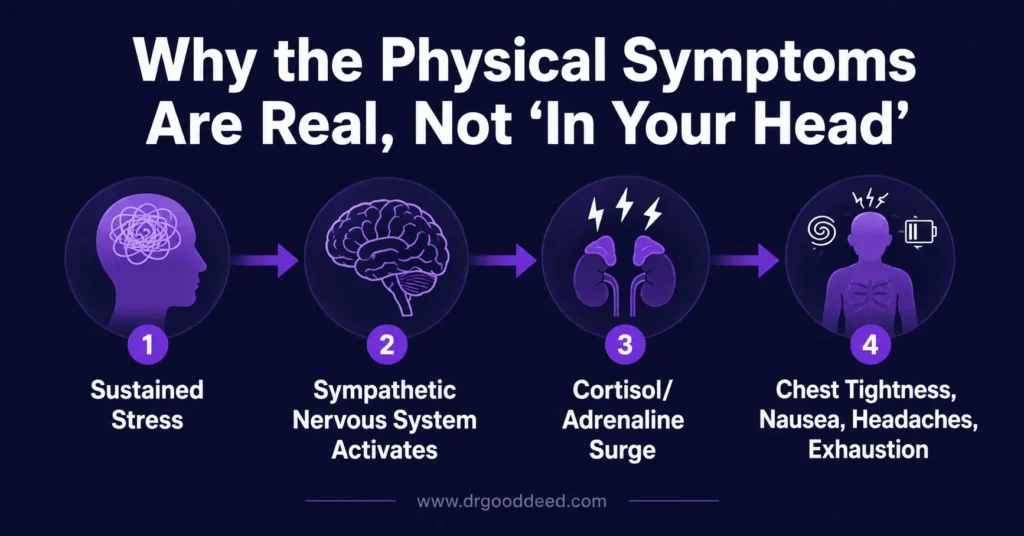
Physical symptoms of stress breakdown are the direct result of a real biological chain reaction that most overviews list without ever explaining.
- Sustained emotional distress activates the sympathetic nervous system, the body’s built-in alarm response, which raises heart rate, tightens muscles, and redirects blood flow away from digestion toward the limbs.
- This triggers a surge in cortisol and adrenaline, hormones designed for short bursts of danger, not for staying elevated across weeks of ongoing pressure.
- When that activation doesn’t switch off, the result is the chest tightness, stomach upset, headaches, and exhaustion people commonly describe during a breakdown, none of it is “in your head” in the dismissive sense.
- Chronic activation of this stress response also disrupts normal sleep architecture, which compounds fatigue and makes emotional regulation even harder the next day.
This mechanism reframes the physical symptoms as evidence of a real, measurable stress response rather than a character flaw or overreaction, which is often the first thing a clinician will explain during evaluation.
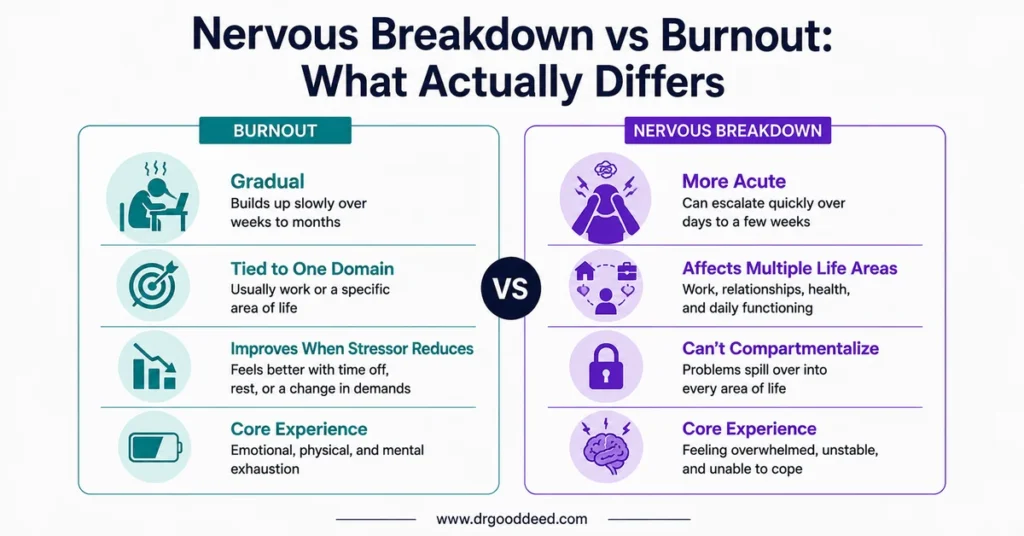
Nervous Breakdown vs Burnout: What’s the Difference
Nervous breakdown and burnout both involve exhaustion and reduced functioning.
Burnout develops gradually and is tied specifically to prolonged, unmanaged stress in one particular domain, usually work, and it tends to improve, at least partially, once that specific stressor is reduced or removed. A nervous breakdown, by contrast, is broader and more acute: it affects multiple areas of daily life at once, work, relationships, self-care, and can be triggered by a single overwhelming event rather than months of gradual grind.
Someone dealing with burnout might still manage to get through their personal life while struggling at work; someone experiencing a breakdown typically can’t compartmentalize that way. If prolonged workplace stress sounds closer to your situation, the site’s guide on managing burnout covers recovery strategies specific to that pattern.
What Might Actually Be Going On
A nervous breakdown almost always sits on top of something more specific, and figuring out what that underlying condition is changes the entire treatment approach.
- Generalized anxiety disorder: persistent, hard-to-control worry across multiple areas of life, often paired with physical restlessness and sleep disruption.
- Major depressive episode: prolonged low mood, loss of interest in previously enjoyable activities, and changes in sleep or appetite lasting two weeks or longer.
- Acute stress reaction: an intense but time-limited response to a specific traumatic or overwhelming event, typically easing within days to a few weeks.
- Adjustment difficulties: distress that emerges in direct response to a major life change, a job loss, divorce, or relocation, that exceeds what would typically be expected for that situation.
If the line between ordinary tension and something more clinical feels blurry, the article on the difference between stress and anxiety breaks down exactly where that boundary sits and what symptoms tip it from one into the other.
When It’s a Medical Emergency
Certain signs mean this stops being something to monitor and becomes something requiring immediate medical attention, not a conversation to schedule for next week.
If there are thoughts of self-harm or suicide, paranoia, hallucinations, or a complete inability to keep oneself safe, call or text 988 to reach the Suicide and Crisis Lifeline, available 24 hours a day across the United States, or go to the nearest emergency room. These symptoms are signs that the body and mind have reached a point where professional intervention can’t wait. The same urgency applies if someone is worried about a friend or family member showing these signs; treat it as a crisis and get them connected to help immediately rather than waiting to see if it passes.
Pro Tip: A useful marker for distinguishing a manageable rough patch from something requiring urgent care is duration combined with function: if the inability to work, eat, sleep, or care for basic needs stretches beyond a few days rather than easing, that persistence itself is a reason to seek same-week professional evaluation, not just self-care.
Getting Help
During a mental breakdown, starts reaching out to a primary care doctor, a therapist, or a psychiatrist. A first appointment usually involves a conversation about symptom history, current stressors, and any underlying conditions.
Treatment typically combines talk therapy, lifestyle changes around sleep and stress management, and sometimes short-term medication for anxiety or depression symptoms underneath the crisis. When to get help for stress is about recognizing that daily functioning has broken down and isn’t improving on its own after a few days of rest.