
During cancer treatment, focus on foods that help maintain strength, weight, hydration, and muscle, with an emphasis on adequate protein and calories; options can include eggs, yogurt, milk, fish, chicken, beans, lentils, nut butters, tofu, whole grains, fruits, vegetables, soups, and smoothies, depending on what you tolerate.
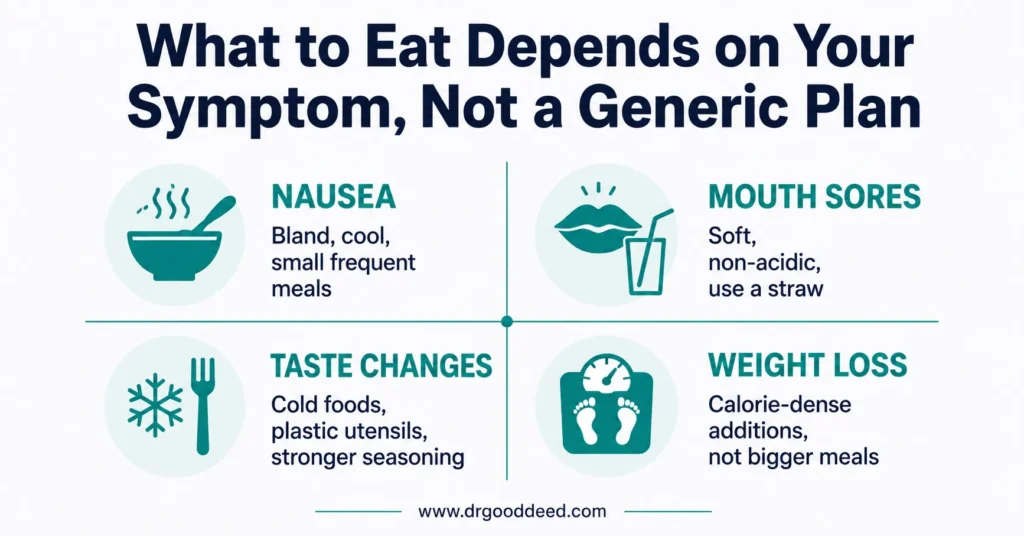
If nausea occurs, bland foods such as toast, rice, crackers, plain pasta, yogurt, or broth may be easier to tolerate, while soft foods and smoothies can help when mouth or throat soreness makes chewing difficult.
Food safety is especially important if treatment weakens your immune system, and dietary supplements or herbal products should be discussed with your oncology team because some can interfere with treatment.
Key Takeaways
- No single diet fits every patient. Needs differ by cancer type, treatment regimen, and which side effects show up, so what to eat during cancer treatment changes person to person and even week to week.
- Small, frequent meals beat three large ones. Five or six small meals a day put less strain on a stomach dealing with nausea, mucositis, or a suppressed appetite.
- Some foods interact with cancer drugs. Grapefruit is the best-documented example, and it matters enough to flag with your oncologist by name.
- Immune status changes food safety rules. Neutropenic patients need different precautions than patients with a normal white count.
- An oncology dietitian can build a plan around your labs, drugs, and symptoms, something no blog post can replace.
Why a Generic Meal Plan Isn’t the Right Approach
- A patient with head and neck radiation dealing with severe mucositis needs soft, cool, non-acidic food.
- A patient on an oral targeted therapy with a grapefruit interaction needs to avoid an entire fruit category that shows up in smoothies and juices everywhere.
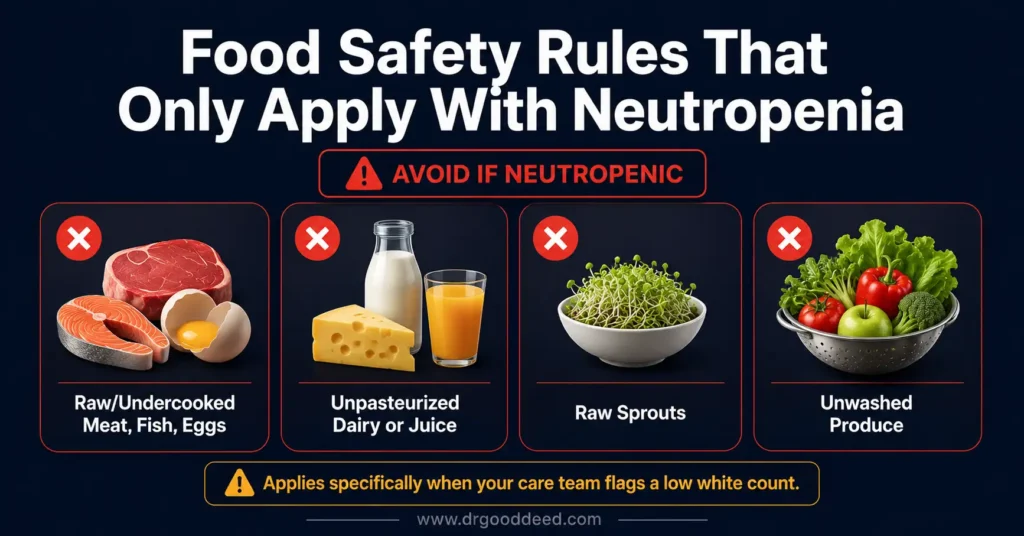
- A patient with neutropenia after a stem cell transplant needs food-safety precautions that a patient with a normal white blood cell count doesn’t.
- Stacking all of that into one universal plan risks giving someone advice that actively works against their treatment.
- Organizing guidance by symptom, the same approach the American Cancer Society and National Cancer Institute use, respects how different these situations really are.
Eating Through Nausea and Appetite Loss
Nausea and appetite loss are among the most common reasons eating during chemotherapy nausea feels impossible some days, and the fix usually is to “eat differently.”
- Eat before you’re starving. Waiting until hunger hits often makes nausea worse; grazing every two to three hours keeps the stomach from being empty or overfull.
- Choose bland, room-temperature, or cool foods. Crackers, toast, plain rice, and cold sandwiches tend to sit better than hot, greasy, or strongly seasoned meals, since strong smells can trigger nausea on their own.
- Try ginger in a form you can tolerate. Ginger tea, ginger candies, or flat ginger ale are common suggestions from oncology nutrition programs for mild nausea.
- Avoid eating in the kitchen while food is cooking. Cooking odors are a frequent nausea trigger; having someone else cook, or eating pre-made cold foods, sidesteps the problem entirely.
- Time meals around your infusion schedule. Many patients do better avoiding food for one to two hours before chemotherapy and choosing something light afterward rather than a full meal.
If appetite loss lasts more than a few days or nausea isn’t controlled by anti-nausea medication, tell your care team.
Eating Through Mouth Sores and Mucositis
Mucositis, the painful inflammation of the mouth and throat lining that chemotherapy and radiation can cause, changes what “edible” even means for a while.
- Stick to soft, moist foods. Scrambled eggs, mashed potatoes, oatmeal, smoothies, and soups spare a raw mouth from having to chew rough textures.
- Skip acidic and spicy foods entirely. Citrus, tomatoes, vinegar-based dressings, and anything spicy will sting an already inflamed mouth, sometimes badly enough to discourage eating altogether.
- Avoid sharp, crunchy, or dry foods. Chips, toast, raw vegetables, and crusty bread can physically scrape sore tissue.
- Rinse before meals, not just after. A gentle saltwater or baking-soda rinse before eating can numb irritation enough to make a meal tolerable.
- Use a straw for liquids when sores are near the front of the mouth, which limits contact with the most sensitive areas.
Mucositis usually improves within a few weeks of finishing the responsible treatment, but severe cases need medical attention, especially if swallowing becomes difficult or you can’t keep fluids down.
Eating Through Taste Changes
Dysgeusia, the clinical term for treatment-related taste changes, is one of the most disorienting side effects patients describe; a favorite meal can suddenly taste metallic, overly sweet, or like nothing at all.
- Try cold or room-temperature foods first. Heat intensifies smell and flavor, so chilled foods are often easier to tolerate when taste is distorted.
- Switch red meat for other proteins if it tastes off. Eggs, poultry, fish, beans, and dairy are common substitutes when meat develops a bitter or metallic edge.
- Use plastic utensils instead of metal ones. This small swap genuinely helps some patients whose mouths pick up a metallic taste from silverware.
- Experiment with stronger, not weaker, seasoning. Herbs, marinades, and acidic-but-tolerable flavors (if mouth sores allow) can cut through a flattened sense of taste.
- Give new foods more than one try. Taste perception can shift week to week during treatment, so something unappetizing on Monday might taste normal by Thursday.
Taste changes from chemotherapy side effects usually fade gradually after treatment ends, though full recovery can take months.
Expert Insight: A metallic or bitter taste is often worse with red meat and improves with cold, mildly sweet, or citrus-marinated proteins, but only if mouth sores aren’t present, since acidic marinades will irritate mucositis rather than help with taste. Clinicians typically treat taste changes and mouth sores as two separate problems that sometimes pull the diet in opposite directions.
Managing Unintentional Weight Loss
Weight loss cancer treatment side effects deserve attention early because unintentional weight loss during treatment is linked to worse treatment tolerance and slower recovery.
- Add calories and protein to what you’re already eating, rather than forcing large new meals. Stirring peanut butter into oatmeal or adding cheese to vegetables adds density without adding volume.
- Keep energy-dense snacks within reach. Nuts, full-fat yogurt, avocado, granola, and dried fruit pack more calories into smaller portions than most patients realize.
- Drink your calories when solid food is hard to manage. Smoothies, milk-based drinks, and nutrition shakes are easier to get down than a plate of food on a low-appetite day.
- Watch for cachexia, a distinct metabolic condition. Cancer cachexia involves muscle and fat loss driven by the disease itself and doesn’t always respond to eating more; it needs medical evaluation, not just dietary tweaks.
- Weigh yourself weekly if your team recommends it. Catching a downward trend early gives your dietitian more room to intervene before weight loss becomes severe.
This is general, non-restrictive guidance. Specific calorie or protein targets should come from your oncology dietitian, based on your weight history, labs, and treatment plan.
Food Safety and Interactions to Ask Your Care Team About
Two safety issues get missed in most general nutrition content, and both deserve a direct conversation with your oncology dietitian or oncologist.
- Neutropenic precautions, if your care team has told you your white blood cell count is low. This typically means avoiding raw or undercooked meat, fish, and eggs, unpasteurized dairy and juice, raw sprouts, and unwashed produce, since a suppressed immune system has a harder time fighting foodborne illness. This is not a universal rule; it applies specifically when your team has flagged neutropenia.
- Grapefruit and grapefruit juice can interact with certain chemotherapy and targeted drugs. Grapefruit compounds inhibit an intestinal enzyme called CYP3A4, which some cancer drugs, including etoposide and imatinib, rely on for normal metabolism. Drinking grapefruit juice alongside these drugs can raise blood levels of the medication higher than intended. Ask your oncologist specifically whether any of your medications carry this interaction before assuming grapefruit is off-limits or fine.
- Herbal supplements and “anti-cancer” foods are not automatically safe. Some interact with chemotherapy the same way grapefruit does; run any supplement past your oncology team before starting it, including ones marketed specifically to cancer patients.
- Food handling matters more during treatment. Washing produce thoroughly, cooking meat to safe internal temperatures, and avoiding buffets or self-serve food stations reduce exposure risk even for patients not formally classified as neutropenic.
Pro Tip: Ask your oncology pharmacist about food-drug interactions. Pharmacists often catch grapefruit, herbal supplement, and vitamin interactions that don’t come up in a routine oncology visit, and they can check your full medication list against known interactions in one pass.
Building Your Own Plan With an Oncology Dietitian
An oncology dietitian looks at your specific cancer type, treatment regimen, lab values, current symptoms, and medications.
Ask your oncology team for a referral; most cancer centers have a registered dietitian on staff, and the visit is often covered by insurance as part of standard cancer care. Bring a list of what you’ve been able to eat this week and what hasn’t worked; that detail helps a dietitian adjust faster than starting from scratch. Revisit the plan as treatment phases change, since needs during active chemotherapy often look different from needs during recovery.
Sources
- American Cancer Society: Nutrition for People with Cancer link
- American Cancer Society: Benefits of Good Nutrition During Cancer Treatment link
- American Cancer Society: Food Safety During Cancer Treatment link
- American Cancer Society: Taste and Smell Changes link
- National Cancer Institute: Mouth and Throat Problems and Cancer Treatment link
- National Cancer Institute: Nutrition in Cancer Care (PDQ) link
- National Cancer Institute: Cancer Therapy Interactions With Foods and Dietary Supplements (PDQ) link
- U.S. Food and Drug Administration: Grapefruit Juice and Some Drugs Don’t Mix link
- Memorial Sloan Kettering Cancer Center: Eating Well During Your Cancer Treatment link
- Memorial Sloan Kettering Cancer Center: Managing Taste Changes During Chemotherapy link