
Crying “for no reason” can happen even when you can’t immediately identify a specific cause. Stress, emotional exhaustion, hormonal changes, lack of sleep, feeling overwhelmed, loneliness, or emotions you’ve been holding in can all make tears come suddenly. Sometimes your body simply releases tension before your mind understands what’s happening. It doesn’t mean you’re weak or being dramatic.
If it happens frequently, feels uncontrollable, or comes with persistent sadness, hopelessness, anxiety, or changes in sleep or appetite, it may be worth talking to someone you trust or a mental-health professional.
Key Takeaways
- Occasional unexplained crying is often a normal, healthy emotional release, not a symptom of anything wrong.
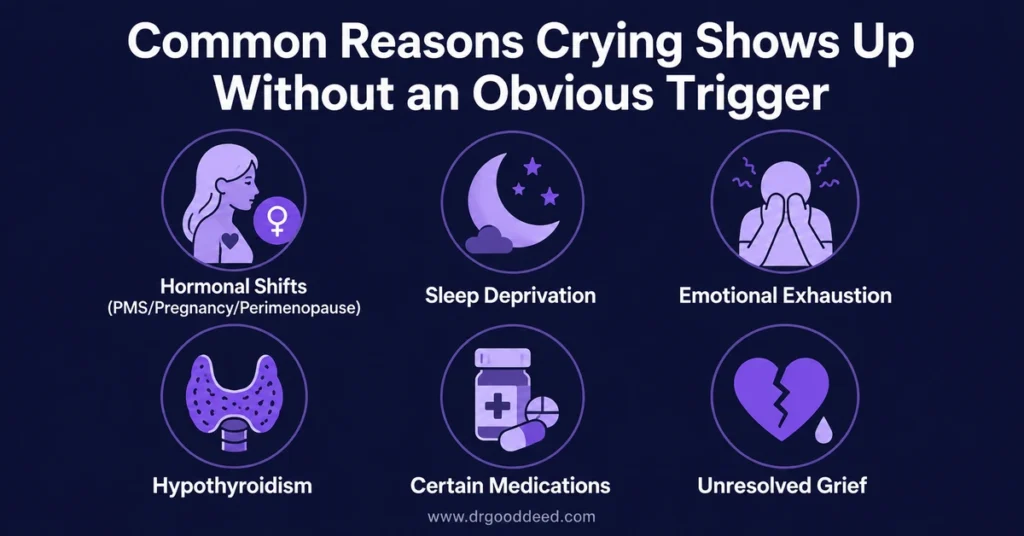
- Hormonal shifts from PMS, pregnancy, or perimenopause are among the most common causes of unexplained crying spells.
- A lesser-known cause is pseudobulbar affect, a neurological condition that triggers crying disconnected from actual emotional state.
- Crying alongside a persistent low mood lasting two weeks or more is worth discussing with a doctor.
- Support is available if crying is tied to something heavier, including the 988 Suicide and Crisis Lifeline.
Sometimes There’s No “Reason,” and That’s Okay
Crying for no reason is a genuine physiological release valve, and treating every unexplained bout of tears as a red flag misses what’s actually going on for most people most of the time.
Emotional tears carry stress hormones and other chemical byproducts out of the body, and you will feel calmer, lighter, or more settled after a good cry, even one that seemed to come out of nowhere.
Crying also functions as a social signal, it communicates distress or overwhelm to people nearby without requiring words, which is part of why it can feel involuntary even when nothing dramatic triggered it. A single stressful week, an accumulation of small unprocessed frustrations, or simple exhaustion can all tip someone into tears without one obvious cause. It usually just means the body found a release valve before the mind consciously identified what needed releasing.
Hormonal Causes: PMS, Pregnancy, and Perimenopause
Hormonal crying spells are one of the most under-discussed, drivers of unexplained tears, tied directly to fluctuating estrogen and progesterone levels across a woman’s reproductive life.
- PMS and PMDD crying: in the days before a period, dropping progesterone and estrogen levels affect serotonin regulation, which can trigger sudden tearfulness, irritability, or low mood. Premenstrual dysphoric disorder is a more severe, clinically recognized version of this pattern, involving mood symptoms intense enough to disrupt daily functioning.
- Pregnancy hormones: rapidly shifting estrogen and progesterone during pregnancy, especially in the first trimester and again close to delivery, are a well-documented cause of sudden, seemingly unprompted crying.
- Perimenopause mood changes: as estrogen levels fluctuate unpredictably in the years leading up to menopause, many women report increased emotional reactivity and crying spells, alongside other recognized symptoms. Because this transition varies so much in length, it helps to understand how long menopause tends to last so the mood shifts don’t feel indefinite.
If crying spells are frequent, severe, or disrupting work or relationships, a doctor can help sort out whether an underlying hormonal imbalance is worth addressing directly.
Expert Insight: Hormonal crying spells tend to follow a predictable pattern tied to a cycle or life stage, while crying linked to depression tends to persist regardless of timing; tracking whether tears cluster around a specific week of the month is one of the fastest ways to distinguish the two at home before a clinical visit.
Pseudobulbar Affect: A Lesser-Known Cause
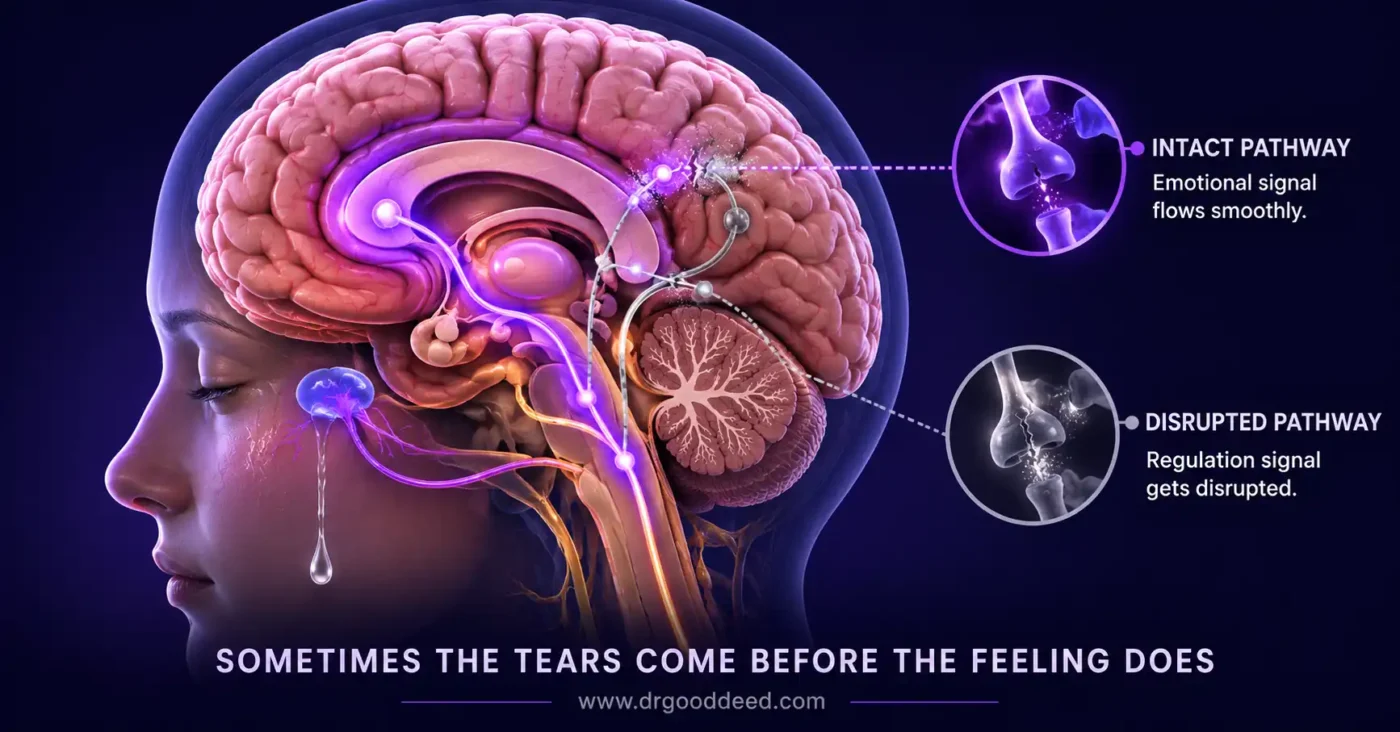
Unexplained crying occasionally trace back to a distinct neurological condition called pseudobulbar affect (PBA).
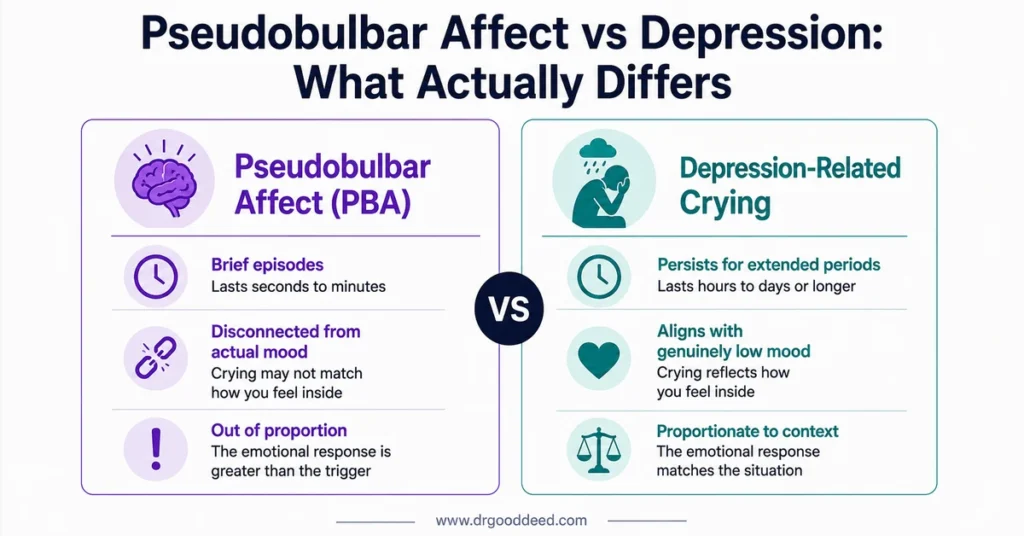
- PBA causes sudden, involuntary episodes of crying (or laughing) that are disconnected from a person’s actual internal emotional state, meaning someone can cry intensely without feeling sad at all, or laugh at something that isn’t funny to them.
- It results from damage to the brain pathways that regulate emotional expression, and it’s associated with neurological conditions including multiple sclerosis, stroke, traumatic brain injury, ALS, and Parkinson’s disease.
- Unlike depression-related crying, which tends to last for extended periods and align with a genuinely low mood, PBA episodes are typically brief, lasting seconds to a few minutes, and out of proportion to whatever minor trigger set them off.
- It’s frequently mistaken for depression, which delays the neurological evaluation that could actually address it.
- Anyone with a relevant neurological history who notices this specific pattern, crying that feels disconnected from how they actually feel inside, should raise it with a doctor directly.
When It Might Be Depression or Anxiety
Crying and depression are connected. A pattern worth discussing with a doctor generally includes crying that shows up alongside a low, flat, or hopeless mood most of the day, for most days, lasting two weeks or longer, often paired with changes in sleep, appetite, energy, or interest in things that used to feel enjoyable.
Tears tied to anxiety often arrive alongside racing thoughts, physical tension, or a sense of dread rather than flat low mood. Neither pattern is something to self-diagnose from a list, it’s a general shape worth bringing to a primary care doctor or therapist, who can sort out what’s actually driving it.
If crying is accompanied by thoughts of hopelessness that feel heavier than usual, the 988 Suicide and Crisis Lifeline can be reached by call or text, 24 hours a day, across the United States.
Other Possible Causes
A handful of other, less-discussed factors can also drive unexplained crying.
- Hypothyroidism: an underactive thyroid slows metabolism throughout the body, including brain chemistry, and commonly produces low mood, fatigue, weight changes, and increased emotional sensitivity that can present as unexplained crying long before someone thinks to connect it to a thyroid problem.
- Certain medications: some blood pressure medications, hormonal birth control, and even certain antidepressants during the first few weeks of a dose adjustment can affect emotional regulation as a side effect, sometimes in ways that feel like they came from nowhere.
- Sleep deprivation: even a few consecutive nights of poor sleep measurably reduces the brain’s emotional regulation capacity, making tears surface more easily over things that wouldn’t normally trigger them, a pattern that tends to resolve once sleep debt is paid down.
- Grief and unresolved loss: anniversaries, songs, smells, or small reminders can trigger crying tied to an earlier loss well after the initial grieving period has technically ended, without it signaling anything has gone wrong with the grieving process.
These causes are worth ruling out with a basic checkup, especially if crying spells appeared alongside a noticeable shift in energy, weight, or sleep patterns rather than in isolation.
Pro Tip: Keeping a brief note of when crying spells happen, time of day, day of cycle if relevant, and what preceded it, for two to three weeks reveals patterns that are easy to miss in the moment and gives a doctor far more to work with.
When to See a Doctor
Crying without reason is worth raising with a doctor when crying spells are frequent, intense, disrupting daily life, or paired with a low mood that is also worth mentioning if crying feels disconnected from actual emotion, brief, sudden, and out of proportion, since that pattern points toward something neurological rather than emotional.
A doctor can run basic bloodwork to check thyroid function, ask about cycle-related timing, and refer to a specialist if something beyond ordinary emotional processing seems to be going on. Most of the time, it’s manageable, and getting it named is often the first step toward feeling more in control of it.