


If you have ever asked how to recover faster from a migraine hangover (postdrome phase), rest in a quiet, comfortable environment and stay well hydrated. Eat a light, balanced meal if you can, avoid alcohol and other known triggers, and ease back into normal activities instead of pushing yourself.
Gentle stretching or a short walk may help if you feel up to it. Follow your prescribed migraine treatment plan, and prioritize good sleep, as fatigue and poor sleep can prolong postdrome symptoms.
Key Takeaways
- A migraine hangover (medically called postdrome) follows roughly 80% of migraine attacks, according to the American Migraine Foundation.
- Common symptoms include fatigue, brain fog, neck stiffness, scalp tenderness, and mood changes that show up after the headache pain itself has faded.
- Most people, including many patients, have never heard the term “postdrome,” which is why this phase gets dismissed or misread as laziness.
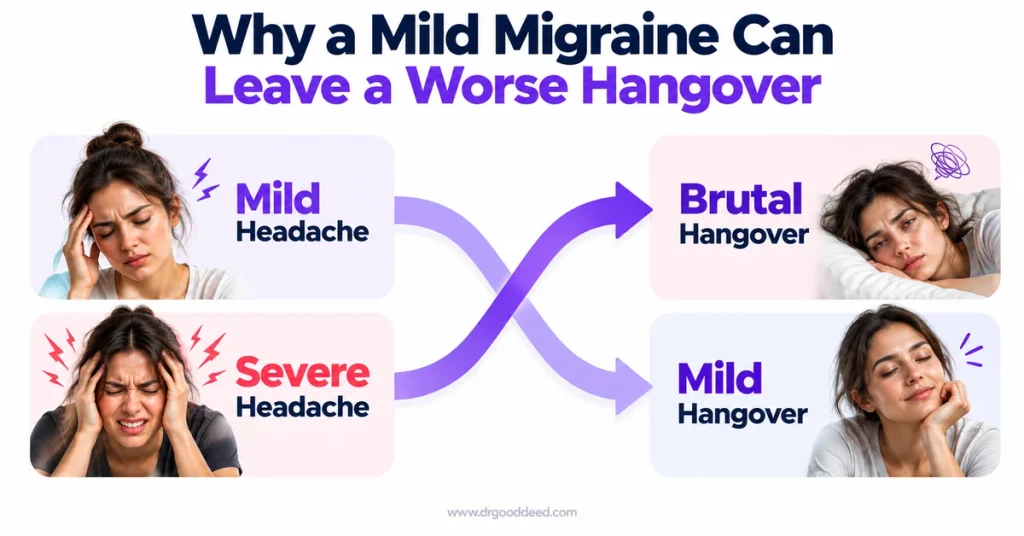
- A brutal headache does not predict a brutal hangover afterward. The two phases do not track each other reliably.
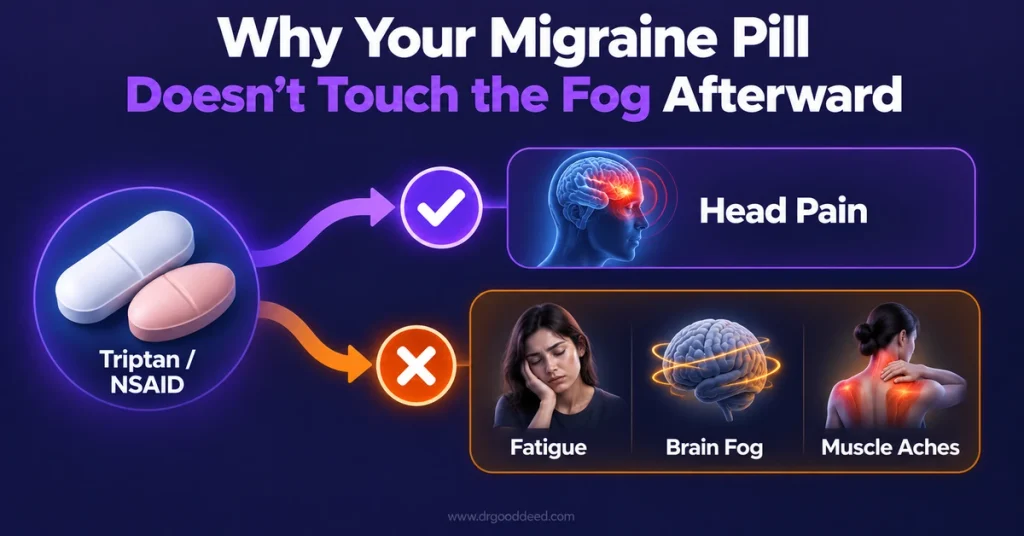
- Standard migraine medication targets head pain. It rarely touches the fatigue and fog that follow, so how to recover faster from a migraine hangover usually comes down to rest and supportive care rather than a pill.
What Is a Migraine Hangover?
A migraine hangover is the fourth and final phase of a migraine attack, arriving after the throbbing pain has already eased. Neurologists call it postdrome.
- It is a distinct stage that begins once peak head pain dissipates, separate from the headache itself.
- Migraine unfolds in up to four stages: prodrome, aura, headache, and postdrome, and this last one is often the least talked about.
Why Migraine Hangover Is So Often Underrecognized
Most people who go through postdrome never got a name for it. They describe it in scattered, confused terms instead, “I just feel off,” “my brain isn’t working right,” “I’m wiped for no reason.”
- Clinical attention to postdrome is genuinely recent. For decades, migraine research focused almost entirely on the headache phase, leaving the after-effects understudied and under-treated.
- Patients frequently normalize it, assuming grogginess after a migraine is just tiredness rather than a distinct neurological symptom cluster tied to the attack itself.
- Because postdrome symptoms rarely match the dramatic pain of the headache phase, they get waved off by employers, family, and sometimes doctors as “you should be fine now.”
- Even headache specialists have historically spent more consultation time on abortive medication for pain than on postdrome management, so patients rarely get asked about it directly.
Migraine Hangover Symptoms
Migraine hangover symptoms extend well past the head, and you may feel them as touching the entire body, not just the site of pain.
- Fatigue and exhaustion: a heavy, full-body tiredness that sleep alone does not always fix, distinct from ordinary sleepiness.
- Brain fog: slowed thinking, trouble finding words, and difficulty concentrating on tasks that are normally easy.
- Neck and shoulder stiffness: residual muscle tension that can linger even after head pain is gone.
- Scalp tenderness: sensitivity to touch on the scalp, sometimes described as the skin feeling bruised.
- Mood changes: irritability, low mood, or occasionally an unexpected sense of relief or mild euphoria as the pain lifts.
- Gastrointestinal symptoms: mild nausea or reduced appetite that can persist into postdrome from the headache phase.
- Dizziness and light sensitivity: a lingering unsteadiness or discomfort around bright light, milder than during the attack but still noticeable.
Does a Worse Migraine Mean a Worse Hangover?
No. Postdrome severity does not reliably track headache severity. A relatively mild migraine attack can leave someone with a brutal, day-long hangover, while a severe, debilitating headache sometimes resolves into only mild grogginess.
- Postdrome intensity appears to depend on individual physiology, hydration status, sleep debt, and stress load going into the attack, not purely on how bad the pain was.
- Some patients report a consistent postdrome pattern attack after attack, regardless of whether that particular migraine was mild or severe.
- Tracking your own pattern over several attacks is more useful than comparing headache intensity to hangover intensity, since the relationship is not linear.
Why Medication Often Doesn’t Help With Postdrome
Triptans, NSAIDs, and other abortive migraine medications are built to interrupt the headache pain pathway. They are not designed to resolve fatigue, brain fog, or muscle aches once the pain has already faded.
Expert Insight: Postdrome symptoms often persist even after a triptan or NSAID has fully resolved the headache, because these medications act on pain pathways rather than on the fatigue, cognitive slowing, and muscle stiffness that define postdrome. Clinicians sometimes see this mismatch confuse patients who assume the attack is fully over once the pain stops.
- Abortive medications like triptans work on trigeminal pain signaling, which explains their effectiveness for head pain and their limited effect on postdrome symptoms.
- No medication is currently approved specifically to treat postdrome, so management relies on supportive strategies rather than pharmacology.
- Preventive migraine treatments, taken regularly to reduce attack frequency, may indirectly shorten postdrome by reducing the overall severity of attacks over time, though this varies by patient.
- Because there is no dedicated drug for this phase, understanding how to recover faster from a migraine hangover means leaning on rest, hydration, and pacing rather than expecting a prescription to fix it.
How Long Does a Migraine Hangover Last?
Most migraine hangovers last between six and twenty-four hours, but postdrome can stretch up to two days in some patients.
- Duration varies attack to attack, even within the same person, and is not something migraine medication typically shortens.
- Keeping a simple log of your own recovery time is genuinely useful data.
- Comparing entries over a few months can help you notice early warning signs of a migraine attack before the next one fully sets in.
How to Recover From a Migraine Hangover Faster
A handful of supportive habits consistently help you reduce migraine attacks and shorten this phase and feel more like themselves again.
Diet and Hydration
- Electrolyte-rich fluids: plain water helps, but drinks with sodium and potassium, like an oral rehydration solution or diluted sports drink, address the fluid loss that often accompanies a migraine attack.
- Bone broth: a gentle source of sodium and easy-to-digest protein that many patients tolerate well when appetite is still low.
- Complex carbohydrates: foods like oatmeal, whole grain toast, or bananas provide steady energy without the blood sugar swings that can aggravate a still-sensitive nervous system.
- Small, frequent meals: postdrome nausea often makes large meals unappealing, so smaller portions spaced through the day tend to sit better.
Lifestyle Fixes
- Limit blue light: screens can reactivate light sensitivity that lingers into postdrome, so dimming devices or stepping away from them helps the nervous system settle.
- Gentle neck stretches: slow, low-intensity stretching can ease the muscle stiffness that builds up during the headache phase and carries into postdrome.
- Screen-free rest periods: even twenty to thirty minutes of quiet, low-stimulation downtime supports the cognitive recovery brain fog requires.
Pro Tip: Postdrome fatigue often responds better to lying down in a dark, quiet room than to caffeine or forced activity, since pushing through cognitive tasks too soon can prolong brain fog and, in some patients, trigger a rebound headache within the same day.
When to See a Doctor
Most postdrome symptoms resolve on their own within a day or two, but certain patterns are worth flagging to a neurologist or headache specialist.
- Postdrome lasting longer than three days or worsening instead of improving.
- New symptoms that were not part of your usual migraine pattern, especially confusion, slurred speech, or vision changes.
- Postdrome occurring after nearly every attack and significantly disrupting work or daily function.
- A pattern of neck stiffness paired with fever, which needs prompt medical evaluation to rule out other causes.
FAQs
Is migraine hangover the same as a regular hangover?
No. A migraine hangover shares symptoms with an alcohol hangover, like fatigue and nausea, but it stems from the neurological aftermath of a migraine attack, not from alcohol toxicity or dehydration alone.
Can you get a migraine hangover without having aura?
Yes. Postdrome can follow any migraine attack, with or without aura. Aura affects roughly a quarter of migraine patients, but postdrome is tied to the headache phase itself, not to whether aura occurred.
Does everyone with migraines get a hangover afterward?
No. Roughly 80% of migraine attacks include postdrome, per the American Migraine Foundation, but not every attack in every person produces it. Some people rarely notice it; others get it after nearly every attack.
Can tracking postdrome help with migraine management?
Yes. Logging postdrome duration and symptoms alongside headache details helps identify triggers and patterns your doctor can use to adjust treatment. A dedicated migraine tracker app makes this far easier than memory alone.
Is it normal to feel emotional after a migraine?
Yes. Irritability, low mood, and occasionally unexpected relief or mild euphoria are documented postdrome symptoms. These mood shifts are neurologically driven, not a sign of poor coping or personal weakness.
Sources
- American Migraine Foundation: The Timeline of a Migraine Attack link
- American Migraine Foundation: Migraine Hangover, What Is Postdrome? link
- American Migraine Foundation: The Science of Migraine, Dealing With Postdrome link
- Cleveland Clinic: Migraine Hangover (Postdrome) link
Medical Disclaimer: This article is for general information only and is not medical advice. It does not replace a diagnosis, treatment plan, or guidance from a qualified healthcare professional. Always talk to your doctor about your own symptoms and before starting, stopping, or changing any treatment. If you think you may be having a medical emergency, call 911 or go to your nearest emergency room.











1 Comment
Comments are closed.