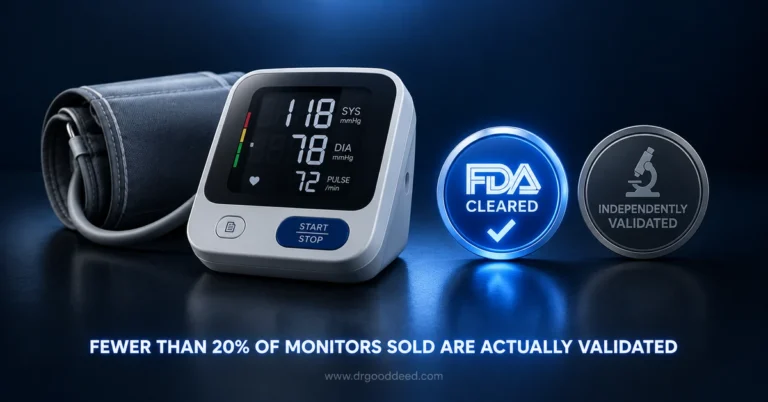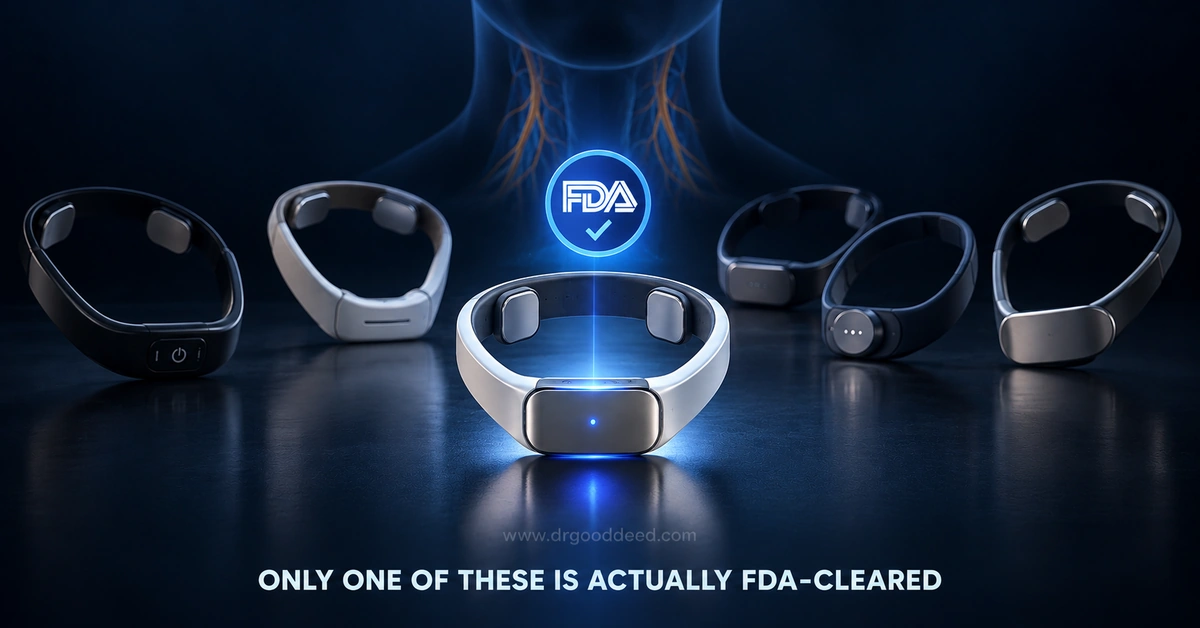
When choosing the best vagus nerve stimulation (VNS) devices, look for clinically validated, non-invasive devices with clear regulatory approval, appropriate indications, adjustable stimulation, ease of use, and strong safety evidence.
For migraine and cluster headaches, gammaCore is a leading prescription non-invasive VNS option; it delivers electrical stimulation through the skin on the side of the neck and is FDA-cleared for acute and preventive migraine treatment in people aged 12 and older.
Other consumer “vagus nerve” gadgets may use different stimulation methods and should not automatically be considered equivalent to medically cleared VNS devices, so it is important to check the device’s intended use and discuss suitability with a healthcare professional.
Key Takeaways
- Most vagus nerve stimulation devices sold today are general wellness products, not FDA-cleared for treating any medical condition.
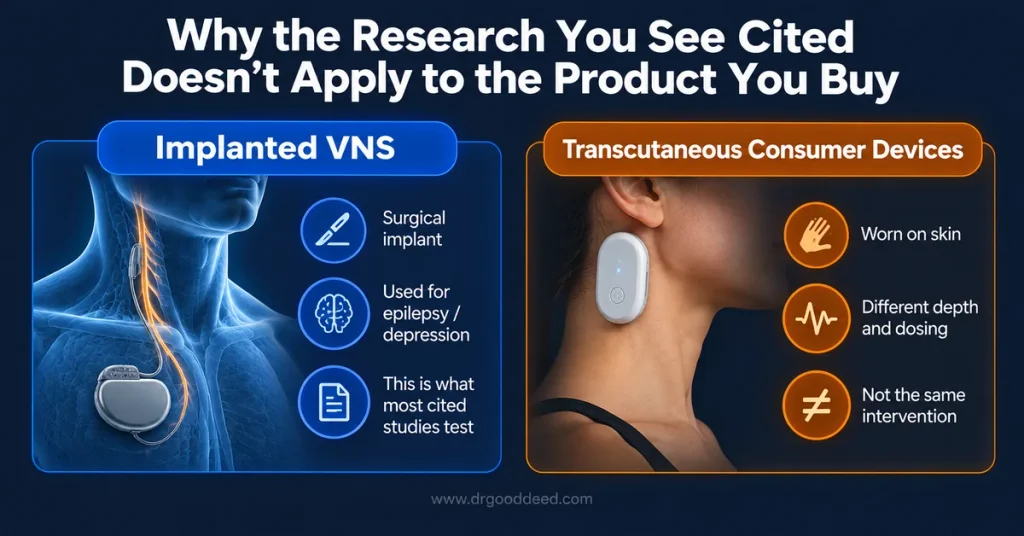
- Clinical research cited by most brands studies the vagus nerve stimulation mechanism generally, often through surgically implanted devices, not the specific consumer product being sold.
- gammaCore is the only FDA-cleared device in this category, and its clearance is specifically for migraine and cluster headache, not general stress or anxiety.
- This product space carries a documented sponsored-content problem, including a marketing controversy involving misused study imagery.
- Talk to a doctor before trying any device if you have a pacemaker, epilepsy, or are pregnant.
What Vagus Nerve Stimulation Actually Is (and Isn’t)
The vagus nerve runs from the brainstem through the neck and chest, and it plays a central role in activating the parasympathetic nervous system, the body’s “rest and digest” response that slows heart rate and supports recovery from stress.
- Vagus nerve stimulation, in its clinical form, involves electrical stimulation of this nerve pathway, either through implanted devices used for epilepsy and depression or through transcutaneous (through the skin) approaches at the neck or ear.
- What it is not is a proven, broadly effective treatment for anxiety, sleep, or general stress in the way it’s often marketed.
The Evidence Gap Most Reviews Don’t Mention
Most consumer vagus nerve stimulation devices have not been independently tested in peer-reviewed trials as standalone products. What gets cited instead is research on the general mechanism, frequently studies involving surgically implanted VNS devices used in clinical settings for epilepsy or treatment-resistant depression, which is a genuinely different intervention from a wearable neck or ear clip sold online.
Wikipedia’s documentation of non-invasive VNS devices states that independent reviewers found Pulsetto, a leading consumer brand, used imagery from unrelated scientific studies in its marketing, a pattern described as misleading.
Expert Insight: Research on implanted vagus nerve stimulation for epilepsy or depression cannot be extrapolated to predict how a transcutaneous consumer wellness device performs, since electrode placement, stimulation depth, and dosing differ substantially between an implanted lead and a device pressed against skin.
The One FDA-Cleared Option: gammaCore, for Migraine Specifically
Among every device marketed in this space, gammaCore stands alone as the one with genuine FDA clearance, and that clearance is narrow and specific. It’s cleared for treating migraine and cluster headache, stress relief, or sleep improvement, a distinction most “best of” lists blur or ignore entirely.
- gammaCore is a prescription-only handheld device used at the neck, and its clearance came through the FDA’s actual regulatory review process, not a general wellness claim.
- Readers curious about gammaCore’s mechanism, cost, and how it compares to other FDA-cleared neuromodulation options can find a full breakdown in our migraine devices compared guide, which covers it in its proper migraine-treatment context.
Popular Consumer Wellness Devices, and What to Know Before Buying One
The general wellness VNS market includes several device formats, each targeting the vagus nerve through a different location and delivery method, without FDA clearance behind any of them for the conditions they’re marketed toward.
- Cervical (neck) devices clip or press against the side of the neck, targeting the vagus nerve where it runs close to the skin surface, generally marketed for stress and relaxation.
- Auricular (ear) devices stimulate a branch of the vagus nerve accessible through the outer ear, a placement studied in some clinical research but not necessarily validated for the specific consumer product using it.
- Wearable and handheld formats vary in stimulation intensity, session length, and app integration, with pricing that can run into hundreds of dollars without insurance coverage, since none carry FDA clearance that would support reimbursement.
None of these formats has independently published, product-specific clinical data confirming effectiveness for the claims made in their marketing.
Red Flags to Watch For When Researching These Devices
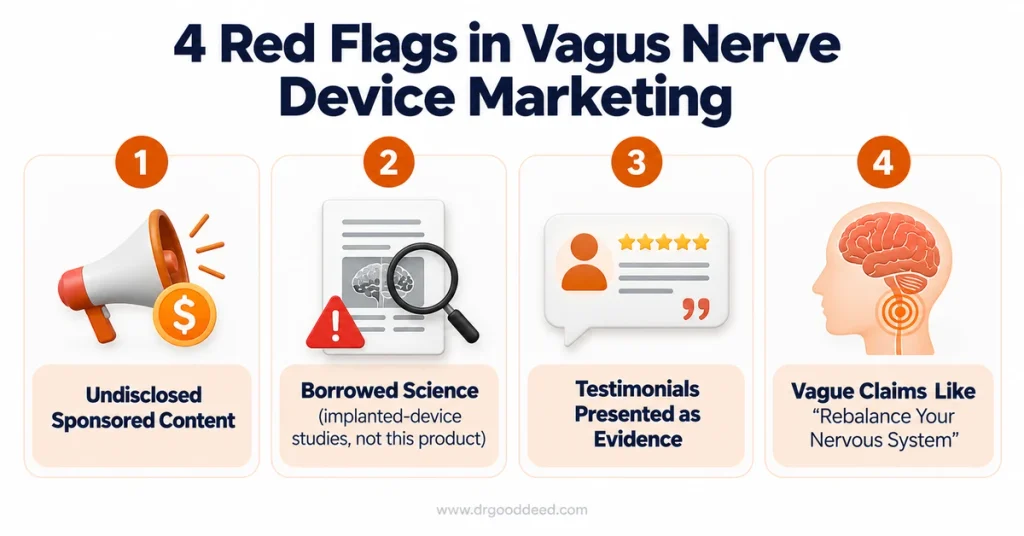
Recognizing manipulative marketing patterns matters as much as understanding the underlying science.
- Undisclosed sponsored content: several “best VNS device” articles circulating online are labeled paid promotional features while reading like independent reviews, so checking for disclosure statements before trusting a ranking is essential.
- Borrowed science: citing studies on implanted medical devices or general vagus nerve research to imply a specific consumer product has been clinically validated, when it hasn’t.
- Before-and-after testimonials presented as evidence: individual user stories are not a substitute for controlled clinical trials, regardless of how compelling they sound.
- Vague, sweeping claims: language promising to “rebalance your nervous system” or “reverse chronic stress” without defined, measurable outcomes or cited product-specific data.
Pro Tip: Search a device’s name alongside the FDA’s medical device database directly rather than trusting a brand’s own “FDA-registered” language, since registration only means a facility reported itself to the FDA, it does not mean the product was reviewed or cleared for any medical claim.
Who Might Reasonably Consider Trying One
Someone without a diagnosed medical condition, curious about general relaxation techniques as one part of a broader stress-management routine, might reasonably try a wellness-grade device, understanding it as an unproven addition rather than a treatment.
- It should never replace therapy, prescribed medication, or medical care for diagnosed anxiety, depression, or a migraine condition.
- Anyone considering one should set realistic expectations, track their own response honestly, and stop if they notice side effects like skin irritation, dizziness, or unusual changes in heart rate.
When to See a Doctor Instead
Persistent anxiety, panic symptoms, chronic insomnia, or frequent migraine attacks warrant a proper medical evaluation. A doctor can determine whether an evidence-based treatment, therapy, medication, or an FDA-cleared option like gammaCore for migraine specifically, fits the actual diagnosis. Self-treating a real medical condition with an unregulated wellness product risks delaying care that works.
Sources
- Wikipedia, non-invasive vagus nerve stimulation devices link
- U.S. Food and Drug Administration, medical device clearance database link
- Healthline, vagus nerve stimulation device testing link
- Migraine Wearables Compared: Cefaly vs Nerivio vs gammaCore link