
An early warning signs of a migraine attack checklist works because most migraine attacks announce themselves hours before the pain starts. This pre-headache stage, called prodrome, gives you the longest lead time of any migraine phase.
Common symptoms include frequent yawning, unusual tiredness, mood changes, irritability, difficulty concentrating, food cravings, increased thirst, neck stiffness, and sensitivity to light or sound.
Key Takeaways
- Prodrome symptoms typically start 24 to 48 hours before headache pain, according to a 2024 StatPearls clinical review.
- Prodrome and aura are separate phases. Prodrome is vague and slow. Aura is specific and fast, lasting only 5 to 60 minutes.
- Common warning signs include mood shifts, neck stiffness, yawning, food cravings, and trouble concentrating.
- Not everyone notices prodrome. Reported rates range from roughly 30% in clinic-based studies to over 70% when patients are asked directly and repeatedly.
- Using an early warning signs of a migraine attack checklist consistently is the single most practical step for catching a pattern you can act on early.
What Is Prodrome, and How Is It Different From Aura?
Prodrome is the premonitory phase of a migraine attack. It starts hours, sometimes a full one to two days, before head pain begins, and it can involve tiredness, irritability, and a stiff neck.
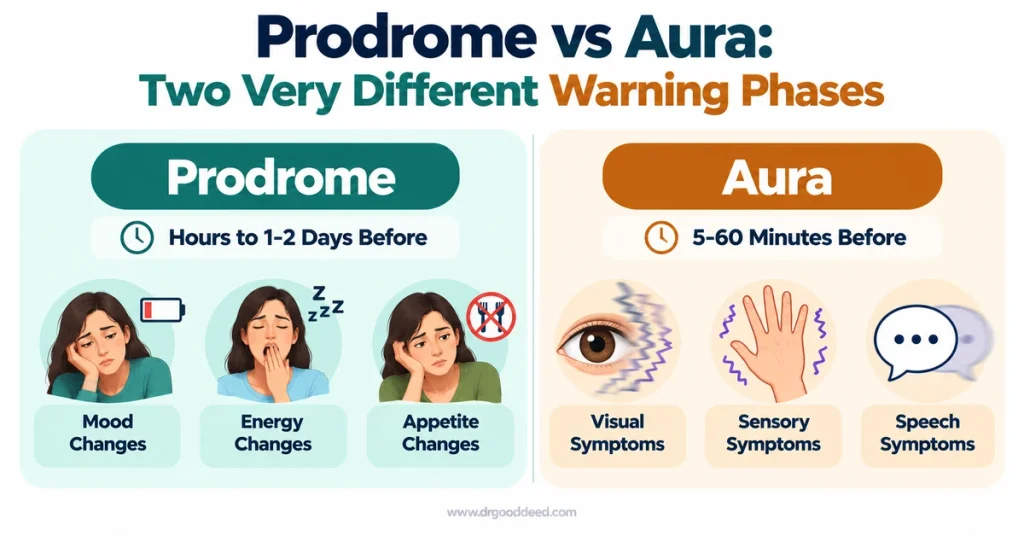
Aura is a short, specific neurological event, usually visual, lasting 5 to 60 minutes, that starts closer to the headache.
| Feature | Prodrome | Aura |
| Timing before headache | Hours to 1 to 2 days | 5 to 60 minutes |
| Symptom type | Mood, energy, appetite, cognition | Visual, sensory, speech, motor |
| Who gets it | Most migraine patients, at least sometimes | Roughly 1 in 4 to 1 in 3 patients |
| Reversible | Yes, gradual fade | Yes, fully reversible |
| Best use | Longest window for early treatment | Shorter, confirms attack is imminent |
The Early Warning Signs Checklist
Use this early warning signs of a migraine attack checklist the way you would a symptom diary. Check anything you notice in the hours before a typical attack, then compare notes across several episodes to find your personal pattern.
Mood and Cognitive Signs
- Sudden irritability or a short temper for no clear reason
- A low, flat mood or unexplained sadness
- An unusual burst of energy or elevated mood (euphoria)
- Trouble concentrating, reading, or finding words
- A foggy, slowed-down feeling in your thinking
Physical Signs
- Neck stiffness or a dull ache at the base of the skull
- Repeated yawning that feels out of place
- Fatigue that rest does not fix
- Increased sensitivity to light or sound before any pain starts
- Frequent urination or fluid retention
Food and Appetite Signs
- Strong cravings for specific foods, often sugar, salt, or chocolate
- Loss of appetite or nausea with no other explanation
- Unusual thirst
Why This Checklist Is Your Longest Warning Window
Prodrome gives you far more time to act than aura does.
- Research from the PRODROME clinical trial found that once prodromal symptoms appear reliably, headache follows within six hours in about 90% of cases.
- Aura, by contrast, closes that gap to under an hour.
- An early warning signs of a migraine attack checklist used during prodrome lets you medicate, adjust your environment, or cancel demanding plans well before pain limits your options.
- If the attack does progress past this stage, see our full guide on how to get rid of a migraine.
- Once the pain resolves, recognizing the warning signs early can sometimes shorten the whole cycle, including how to recover faster from a migraine hangover afterward.
Abort Strategy: What to Do the Moment You Notice a Warning Sign
Acting during prodrome is responding to specific migraine prodrome symptoms with steps that lower your overall trigger load before pain sets in.
- Move to a dim, quiet space and reduce screen brightness immediately.
- Drink water steadily; mild dehydration is a well-documented migraine amplifier.
- Eat a small, balanced snack if cravings or nausea appear, since blood sugar swings can worsen an attack.
- Take any doctor-prescribed acute or prodrome-stage medication exactly as directed, without adjusting the dose yourself.
- Rest or nap for 20 to 30 minutes if your schedule allows it.
- Avoid alcohol, strong perfumes, and known personal triggers for the next several hours.
How to Use This Checklist Over Time
A month of entries tells you everything about your personal migraine prodrome symptoms.
- Note the time each sign appeared, how many hours passed before the headache started, and what you did in response.
- Patterns emerge fast, often within four to six tracked attacks.
- Pairing this checklist with a migraine tracker app makes it much easier to spot your own pattern and share concrete data with your doctor instead of vague recollections.
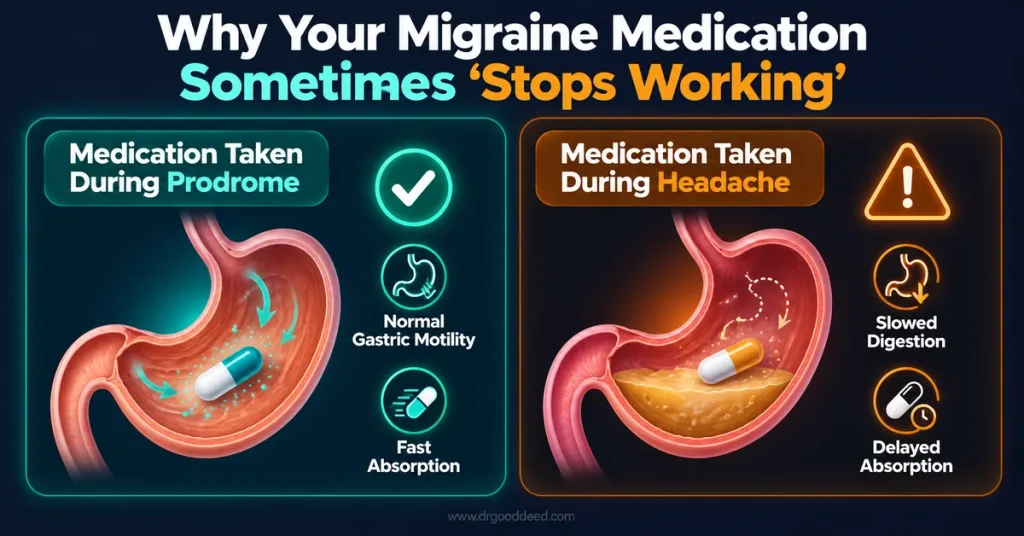
Expert Insight: Many patients dismiss prodrome as unrelated stress or a bad mood, then wonder why their acute medication “stopped working.” In practice, the medication often failed because it was taken during the headache phase instead of during prodrome, when gastric motility is still normal and absorption is faster.
When to See a Doctor
Prodrome symptoms are usually benign, but some headache patterns need urgent evaluation rather than home tracking. Contact a doctor promptly if you notice any of the following, based on the SNOOP red-flag criteria used in headache medicine:
- A sudden, severe “thunderclap” headache reaching peak intensity within a minute
- New headache pattern after age 50, or any headache with fever, stiff neck, or confusion
- Weakness, numbness, or slurred speech that does not fully resolve
- A headache that worsens with coughing, straining, or lying down
- A significant change in your usual migraine pattern or frequency
FAQs
Can you have these warning signs without getting a migraine?
Yes. Prodrome-type symptoms like fatigue or mood change can occur without a headache following, especially in silent migraine or when a mild trigger resolves before the attack fully develops.
Does everyone with migraine get warning signs?
No. Reported rates vary widely, from about 30% in some clinic studies to over 70% when patients are asked repeatedly using structured diaries rather than a single questionnaire.
Can these signs be mistaken for something else?
Yes. Neck stiffness, fatigue, and irritability overlap with stress, poor sleep, and viral illness, which is exactly why tracking recurring patterns over several weeks matters more than judging one isolated episode.
How long before a migraine do warning signs start?
Most prodrome symptoms begin 6 to 24 hours before headache pain, though some studies document a window stretching up to 48 hours in certain patients.
Can tracking these signs help prevent migraines?
Yes, indirectly. Tracking will not stop every attack, but early treatment during prodrome, guided by consistent checklist data, has been shown to reduce headache severity in some patients.
Sources
- American Migraine Foundation: The Timeline of a Migraine Attack link
- American Migraine Foundation: Migraine Prodrome: Symptoms and Prevention link
- American Migraine Foundation: Demystifying Migraine with Aura link
- American Migraine Foundation: Signs & Symptoms link
- Kelman L., Headache (2004): The Premonitory Symptoms (Prodrome), A Tertiary Care Study of 893 Migraineurs, PubMed link
- Neurology Clinical Practice: Characterizing Prodrome (Premonitory Phase) in Migraine, PRODROME Trial Screening Period link
- Cephalalgia: Premonitory Symptoms in Migraine, A REFORM Study (2024) link
- American Headache Society: Red Flags in Headache, What if it isn’t Migraine? link
Medical Disclaimer: This article is for general information only and is not medical advice. It does not replace a diagnosis, treatment plan, or guidance from a qualified healthcare professional. Always talk to your doctor about your own symptoms and before starting, stopping, or changing any treatment. If you think you may be having a medical emergency, call 911 or go to your nearest emergency room.