Nobody searches for low testosterone treatment because they feel great. You get there because something has been off for months. Tired in a way that sleep doesn’t touch. Less interested in sex and a bit ashamed of that. The gym stopped working. Your partner has noticed, even if nobody has said anything.
Then a friend mentions testosterone, or an ad does, and you end up reading forums at midnight. Half of what’s there is right. The other half is men selling each other injections.
This is the part worth knowing before you book anything: how low testosterone shows up, what causes it, how a doctor confirms it, and what the two treatment paths involve.
What low testosterone feels like
Testosterone falls slowly. After about 30, most men lose roughly one percent a year, according to the Baltimore Longitudinal Study of Aging. One percent is nothing you’d notice in any given year. Ten years of it is a different story.
That slow decline is why the symptoms get blamed on everything else first. Work. Kids. Just getting older.
The common early signs are low energy, lower sex drive, and erections that are fewer or weaker, especially in the morning. Mood goes flat rather than sad. Muscle gets harder to keep and belly fat gets easier to gain. Sleep breaks up at 3am for no reason, and focus goes with it.
One of those on its own means very little. Three or four together, getting worse over months, is worth a blood test. The Massachusetts Male Aging Study put the rate of symptomatic low testosterone at roughly six to twelve percent of men between 40 and 70, and higher again in men who already have type 2 diabetes, sleep apnea, or a BMI over 30. If any of those apply to you, the bar for getting checked should be lower.
What causes it
Testosterone is made in the testes, but the instruction to make it comes from the brain. The hypothalamus signals the pituitary, the pituitary releases LH and FSH, and those two hormones tell the testes to get on with it. Low levels happen when either end of that chain fails, and the blood test tells you which.
When the testes themselves can’t produce enough, doctors call it primary hypogonadism. Injury, mumps after puberty, chemotherapy or radiation, Klinefelter syndrome, and plain ageing of the tissue all cause it. The brain notices the shortfall and shouts louder, so LH and FSH come back high.
When the testes are fine but the signal is weak, that’s secondary. It’s more common in men under 60 and it’s the type lifestyle drives. Obesity is the big one, because fat tissue converts testosterone into estrogen and estrogen tells the brain to ease off. Untreated sleep apnea, type 2 diabetes, opioids, heavy drinking, and past use of anabolic steroids all do something similar. LH and FSH come back low or normal.
That distinction decides the treatment, which is why a clinic that doesn’t measure LH and FSH is guessing.
How it’s tested
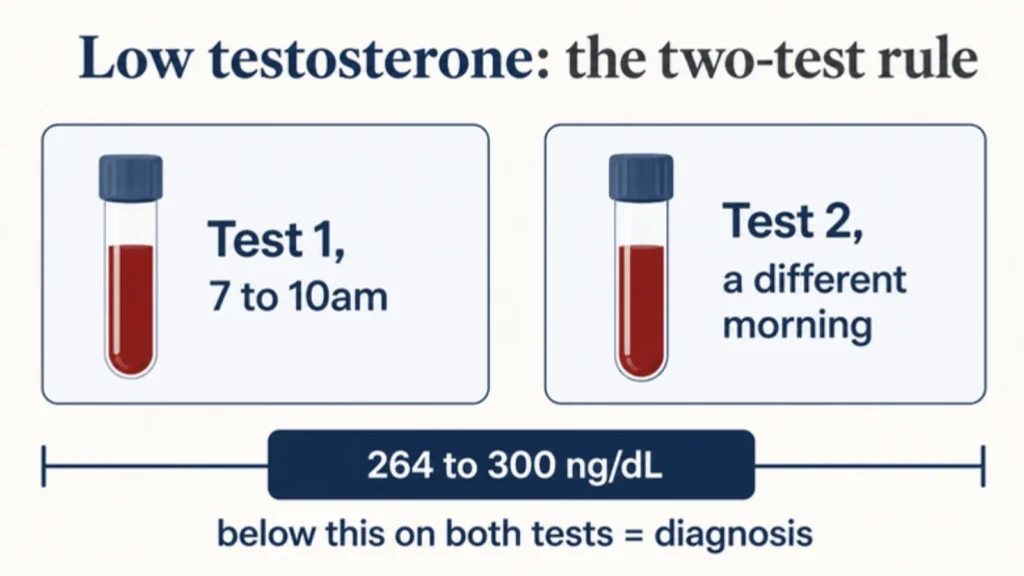
Alt text: Infographic showing the two-test rule: two morning blood tests on separate days, both below 264 to 300 ng/dL
One blood test is not a diagnosis. Testosterone peaks between 7 and 10 in the morning and can swing by a third from one day to the next. A single afternoon result that comes back a little low is close to meaningless.
Both the Endocrine Society and the American Urological Association say the same thing: total testosterone drawn in the morning, repeated on a second morning, both below the threshold before you call it low. The Endocrine Society uses 264 ng/dL, the AUA uses 300. The exact number matters less than whether it lines up with your symptoms.
A proper panel includes more than total testosterone. Free testosterone, because some men have a normal total but low usable hormone. LH and FSH, to tell primary from secondary. Estradiol and prolactin, because a high prolactin can mean a pituitary problem that needs its own workup. A PSA and a blood count, because both are checked again on treatment and you need the baseline. All of this comes before any prescription.
If the first test comes back low, expect to be asked back for the second. If a clinic prescribes from one draw, that’s a flag.
Low testosterone treatment options
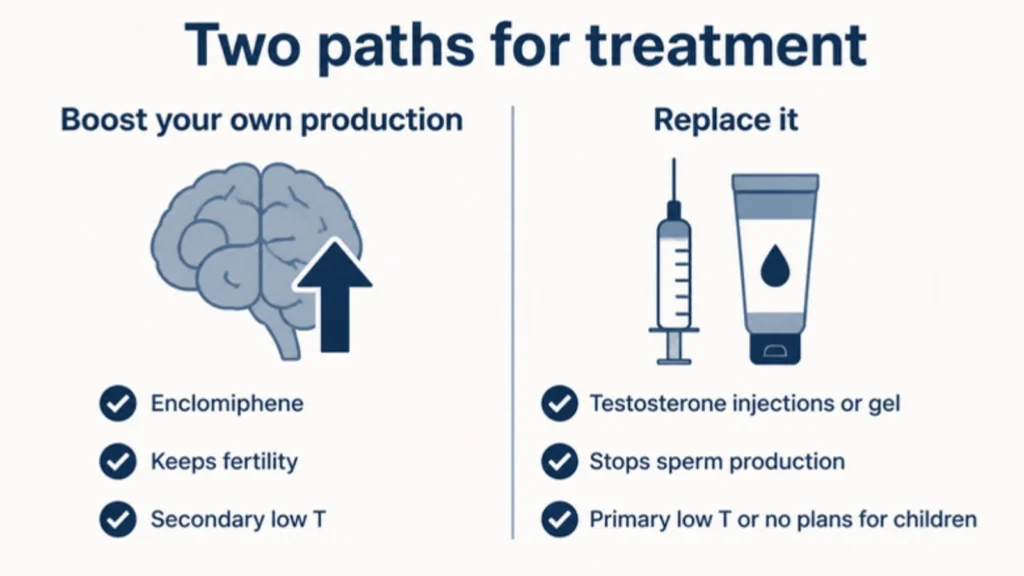
Alt text: Infographic comparing two treatment paths: boost your own production with enclomiphene, or replace it with testosterone injections or gel
If testing confirms the diagnosis, the first step in low testosterone treatment is fixing anything that caused it. Sleep apnea treated, weight down, diabetes under control, opioids reviewed. A 2013 trial in obese men found that losing around ten percent of body weight raised testosterone meaningfully without any drug at all. Some men come back to normal that way. Most don’t, but it’s the right place to start.
After that, there are two routes, and the fertility question decides between them.
For secondary low testosterone in a man who wants to keep his fertility, the usual option is enclomiphene. It blocks estrogen’s feedback at the brain, so the brain sends a stronger signal and the testes make more of their own testosterone. Sperm production continues. It’s prescribed off label in the US and a physician should tell you that plainly before you start. It won’t work for primary low testosterone, because there’s nothing left to stimulate.
For primary low testosterone, or for men who are finished having children, testosterone replacement is the standard. Injections, gels, patches, or pellets. Injections are the most common because the dosing is predictable and they cost less. The trade-off is that replacement switches off your own production. LH and FSH drop, the testes shrink, and sperm count can fall to zero within months. That’s reversible for most men who stop, but not all, and not quickly.
Whichever route, follow-up labs at six to eight weeks and then every six to twelve months aren’t optional. The physician watches testosterone, estradiol, hematocrit, and PSA. Hematocrit is the one men don’t feel. Testosterone thickens the blood, and the AUA guideline says to pause or reduce the dose above 54 percent. You won’t know yours is climbing unless someone checks.
What good medical guidance looks like
A few things separate careful care from a prescription mill. The labs come first, and there are two of them. Someone asks why your level is low, not just whether it is. You get a straight answer about fertility before you start anything. And nobody promises you a number.
Be wary of a clinic that prescribes from a single test, skips LH and FSH, or doesn’t ask about children. Testosterone is easy to start and much harder to stop, and the men who regret it are almost always the ones who were rushed.
If the symptoms above sound like you, get tested before you get treated. The men who do well on treatment are the ones who found out which type they had first.
About the author
Dr. Daniel Benhuri, MD is Medical Director at Every Ion, a physician-led telehealth platform for men’s health. He reviews every testosterone case against the full morning panel before treatment is discussed. This article is for education and does not replace an evaluation by your own doctor.