
Sweating while pooping is usually a vagus nerve reflex triggered by straining or pain. Seek urgent medical care if it occurs with fainting, black stools, or chest pain.
The sweating, nausea, dizziness, or weakness accompanying defecation can definitely sound alarming. Many times, it is just the body reacting to straining, pain, rectal stimulation, or lowering of blood pressure. At times, sweating can accompany some serious problems such as gastrointestinal bleeding or a heart cause for fainting.
Key Takeaways
- Sweating while pooping is often a vagus nerve reflex from straining or pain; black stool, chest pain, or fainting needs urgent care.
- Sweating and feeling faint can be due to a combined vagal reaction that slows down the heartbeat and reduces blood pressure.
- Fainting while passing stool is a kind of situational syncope, which makes up about 5% of fainting overall.
- The presence of symptoms like black, tarry stool, bleeding from the anus, chest pain, palpitations, quickening of pulse, and cold, sweaty skin suggests immediate attention.
- Causes of sweating or feeling dizzy could be acute constipation, dehydration, or sudden change in body position.
| Cause | Clue | Next step |
| Vagal reflex from straining or pain | Sweating, nausea, pallor, or tunnel vision that builds over seconds | Stop straining, lean forward or lie down, and discuss repeated episodes with a doctor |
| Constipation with hard stool | Hard stool, prolonged straining, or incomplete emptying | Increase fiber, fluids, and activity; seek care if constipation persists |
| Pain from hemorrhoids or a fissure | Sharp pain during a bowel movement, sometimes with bright blood | Address the cause and seek medical advice for ongoing bleeding |
| Low blood volume or standing too quickly | Feeling faint after standing, including away from the toilet | Hydrate when appropriate and stand slowly |
| GI bleeding | Black, tarry stool, blood, faintness, fast pulse, or cold clammy skin | Seek emergency medical care |
| Heart rhythm or coronary cause | Chest pain, palpitations before fainting, or fainting during exertion | Seek emergency medical care |
Important: The percentages used for situational and defecation syncope describe shares of people with syncope, not the percentage of the general population who faint while using the toilet.
Why Do I Sweat While Pooping?
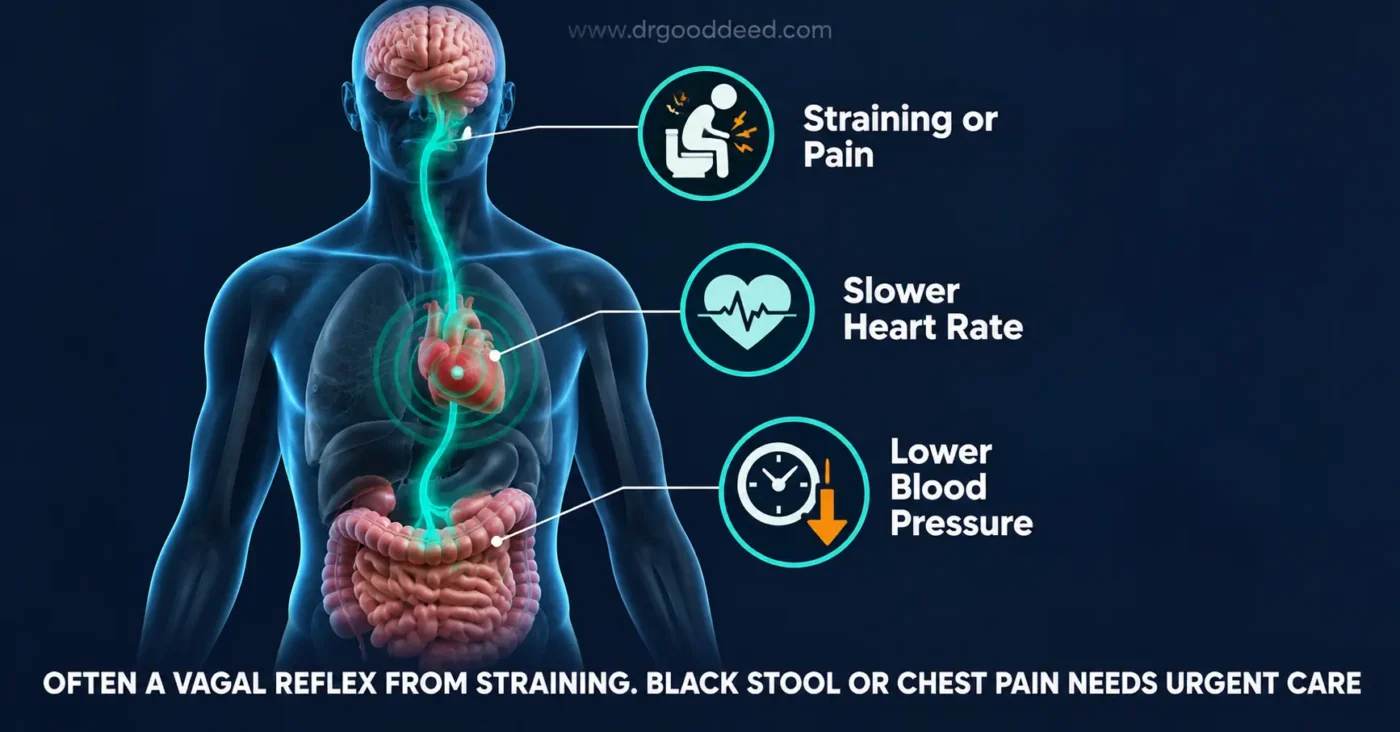
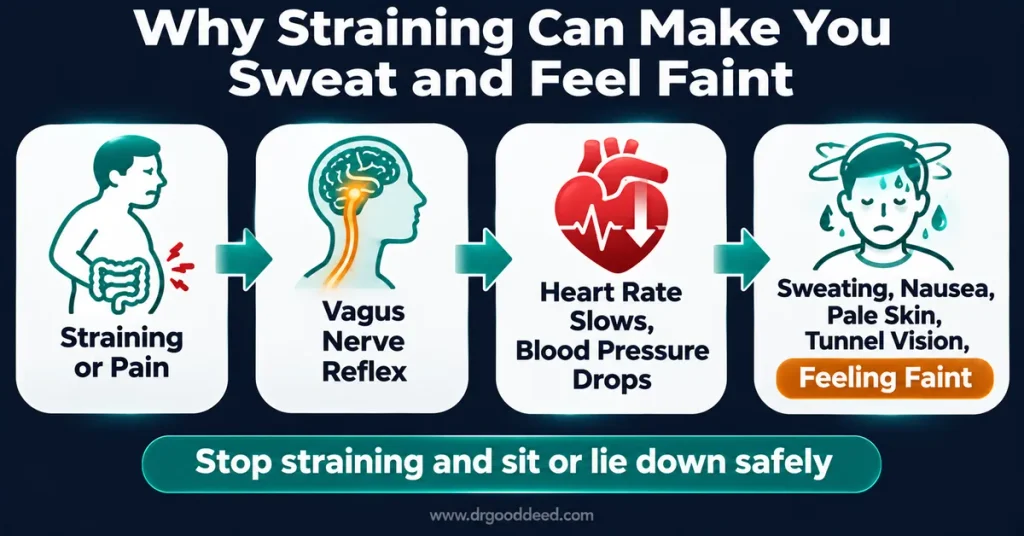
The act of sweating during the process of defecating has commonly been termed poop sweats. This reaction has been connected with stimulation of the vagus nerve, specifically when accompanied by pain or constipation.
The vagus nerve is responsible for controlling some functions like heart rate and digestion. The act of having a bowel movement may cause excessive straining, as well as passing stool that brings about a reflex that will cause variations in blood pressure and heart rate.
Some of the symptoms that may arise include:
- Nausea
- Excess sweating
- Feeling wet, hot, or sweaty
- Pale skin
- Feeling faint
- Visual impairment
- Fatigue
Mild sweating is common, but sudden dizziness, sweating, nausea, tunnel vision, and pale skin may be warning signs that you are about to faint. The medical implications of this are significant, seeing as the 2018 European Society of Cardiology guidelines recognize gastrointestinal stimulation due to defecation as a cause of situational reflex syncope.
Insight: The vagus nerve explanation is supported by clinical understanding and expert commentary, but it should not be turned into a claim that everyone with poop sweats has a specific vagal disorder.
For anyone experiencing difficulty with bowel movements due to stress, more information can be found in our article on whether stress can cause constipation.
As for the link between pain and nausea, refer to pain in the back and its relation to nausea.
Why Do I Feel Faint While Pooping?
Fainting during or soon after a bowel movement is known as defecation syncope. European syncope guidelines recognize defecation as a trigger for situational syncope. If you feel faint while pooping, stop straining and sit or lie down safely.
Straining at the bowel can induce the Valsalva maneuver, which raises pressure in the chest and reduces venous return to the heart. Nevertheless, straining on its own cannot explain all fainting attacks. There are many possible reflex responses as well as blood pressure changes, decreased blood volume, or other underlying contributory physiological mechanisms.
A typical warning sequence might consist of the following:
- Dizziness
- Sweating
- Nausea
- Paleness or clamminess of the skin
- Tunnel vision
- Weakness
- Feeling that you are about to faint
Situational syncope accounts for about 5% of fainting cases (range: 1% to 8%), while defecation syncope accounts for about 16% of situational syncope cases (AFP; MedLink). These figures refer to people who faint, not the general population.
Other Causes of Sweating While Pooping
Sweating while pooping may be triggered by straining, pain, dehydration, or sudden changes in position. People with spinal cord injuries at or above T6 are at risk of autonomic dysreflexia, a medical emergency that can be triggered by constipation or bowel movements. Warning signs include a severe headache, flushing, sweating above the injury, and dangerously high blood pressure. Seek emergency care if these symptoms occur.
Constipation
Straining during bowel movements can make them uncomfortable and may worsen constipation. Drinking enough water, eating fiber-rich foods, and staying physically active can help ease constipation and make bowel movements easier.
Pain Caused By Hemorrhoids Or Anal Fissure
Pain during bowel movement triggers a reflex action. Hemorrhoids and anal fissures can cause severe pain and can lead to visible bleeding. Bleeding must not always be assumed to be haemorrhoids.
Dehydration And Low Blood Volume
Fluid loss from diarrhea, vomiting or excessive sweating can lead to reduced body blood volume and lead to dizziness when standing. When a person stands up after sitting on the toilet, blood pressure can drop temporarily.
More information can be found in “Can dehydration cause constipation.”
For more information about haemorrhoids and other causes of rectal symptoms, see Hemorrhoids vs polyp.
When Sweating or Fainting While Pooping Is Serious
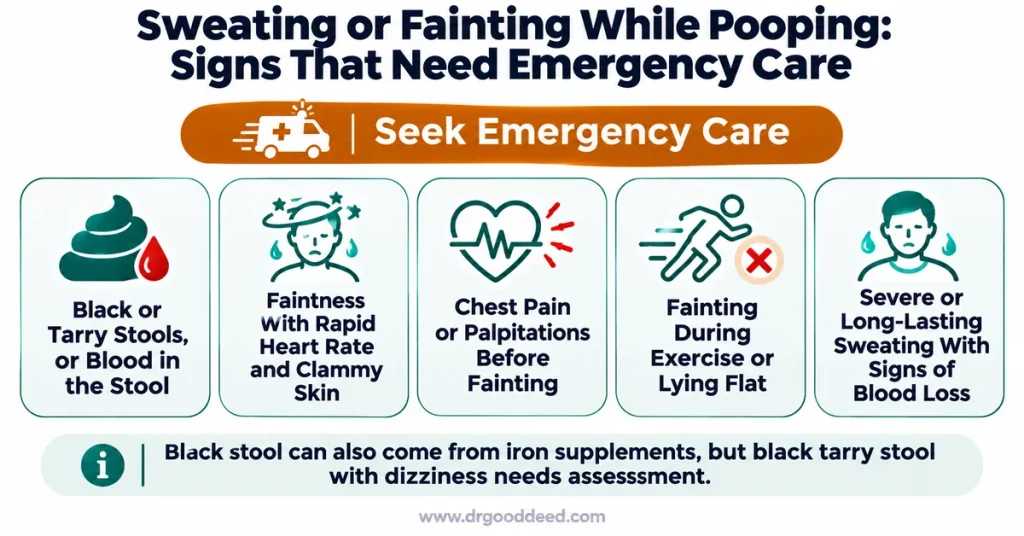
Faintness or sweating during a bowel movement should be taken seriously when it occurs with signs of GI bleeding or a possible heart problem. Emergency medical care should be sought if you experience:
- Black or tarry stools or blood in the stool.
- Faintness with a rapid heart rate and clammy skin.
- Chest pain or palpitations before fainting.
- Fainting while exercising or lying flat.
Severe or long-lasting sweating with signs of blood loss is also an emergency. GI bleeding can cause black or tarry stool, visible blood, dizziness, fainting, fast heart rate, pale skin, and cold or sweaty skin. Severe bleeding can lead to shock and is an emergency.
In the US, call 911 or go to the ER for an emergency. For non-emergency concerns, contact your primary care provider. In the UK, call 999 or go to A&E in an emergency. For non-emergency advice, contact your GP or call NHS 111.
A heart complaint is especially serious when a first actual faint happens while exercising, when lying flat, or after symptoms like chest pain or palpitations. A small percentage of patients may have an underlying heart rhythm issue.
Important: Black stool is not always caused by bleeding; iron supplements can also darken stool. However, black, tarry stool, especially with dizziness, may indicate bleeding and should be medically assessed.
If you notice blood in your stool, consult a doctor to identify the cause. Read more on whether stress can cause blood in stool.
How to Prevent Poop Sweats and Faintness
As Soon As The First Signs Appear, Stop And Lie Down
If you feel symptoms like sweating, dizziness, nausea, tunnel vision, or weakness coming over you, stop straining. Lean forward, putting your head down toward your knees or go to the ground in case you feel like fainting.
Relax And Breathe
Do not keep straining. Straining can cause increased pressure in the chest, leading to changes in blood flow to the heart and back.
Determine What Causes Your Constipation
If you struggle with constipation that causes excessive straining, make sure to treat it properly. It usually involves increasing fiber intake, drinking water, and engaging in regular exercise.
Try Using A Footstool Or Squatting Posture
Use of a footstool may help some people reduce the straining during defecation. But the evidence comes from small studies and is not based on randomized clinical trials. One study showed differences in the amount of straining while sitting and squatting; however, it does not mean that using a footstool will prevent fainting.
Stand Up Slowly
If you feel dizzy after finishing, stay seated until it passes. Stand up slowly to reduce the risk of a head rush when standing up.
Do Not Trust Claims Of Vagus Nerve Exercises Or Devices
Thus far, we do not have any evidence that proves that vagus nerve exercises or devices are effective in preventing “poop sweats” or “defecation syncope.”
Practical takeaway: The safest immediate response is to stop straining and get into a position where you cannot fall if you faint.
FAQs
Why do I feel dizzy after pooping or when I stand up from the toilet?
Feeling dizzy after pooping is usually either the vagal reflex or a drop in blood pressure on standing. Dehydration, fluid loss, or prolonged straining make it more likely, and standing up slowly helps.
Why do I get cold sweats before a bowel movement?
Cold sweats before a bowel movement often come with a building cramp or urge and are usually the same vagal response, though sweating with black stool or chest pain is not.
Should I see a doctor after fainting on the toilet once?
Yes. A first-time faint should be assessed by a healthcare professional to check for possible underlying causes. The initial evaluation usually includes a medical history, a standing blood pressure check, and an ECG.
Is sweating while pooping a sign of IBS?
Not by itself. IBS is defined by belly pain with changes in bowel habits, and although some people report sweating during a flare, research on this symptom is limited, so it may instead come from stress, a rapid heart rate, IBS medications such as SSRIs, or vagus nerve stimulation triggered by pain or constipation. If episodes happen frequently, especially with urgency or loss of bowel control, consult a gastroenterologist to check for IBS, vasovagal syncope, or incontinence.
Medical Disclaimer: This article is for informational and educational purposes only and is not a substitute for professional medical advice, diagnosis, or treatment. Always consult a qualified healthcare professional about any medical concerns or changes in your bowel habits. Never ignore medical advice or delay seeking care because of information you have read in this article.
Sources
- Mayo Clinic. Vasovagal syncope: Symptoms and causes. link
- Brignole M, et al. 2018 ESC Guidelines for the diagnosis and management of syncope. Eur Heart J, 2018. link
- Brignole M, et al. Practical Instructions for the 2018 ESC Guidelines for the diagnosis and management of syncope. Eur Heart J, 2018. link
- National Institute of Diabetes and Digestive and Kidney Diseases (NIDDK). Symptoms & Causes of GI Bleeding. link
Medical Disclaimer: This article is for general information only and is not medical advice. It does not replace a diagnosis, treatment plan, or guidance from a qualified healthcare professional. Always talk to your doctor about your own symptoms and before starting, stopping, or changing any treatment. If you think you may be having a medical emergency, call 911 or go to your nearest emergency room.