
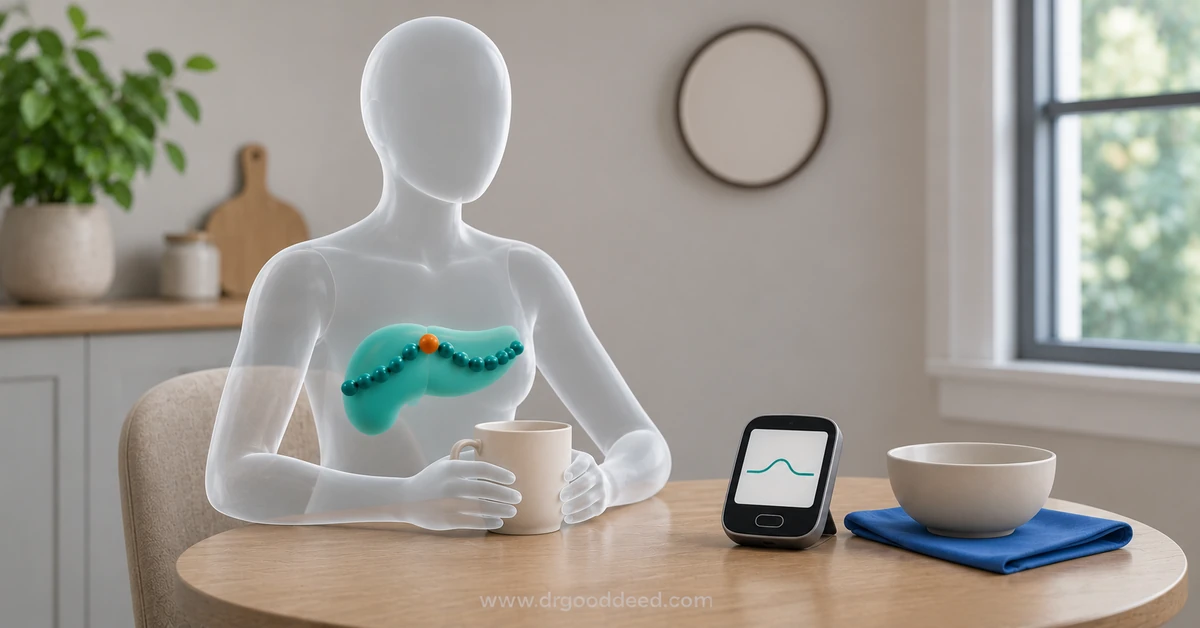

Does coffee raise blood sugar? For most healthy adults it doesn’t noticeably, but in people with diabetes, caffeine can push readings up for a few hours. How much it moves for you depends on your caffeine sensitivity, what you add to the cup and how much you drink.
Key Takeaways
- In healthy adults, black coffee raises blood sugar little if at all, but caffeine can raise it in people with diabetes.
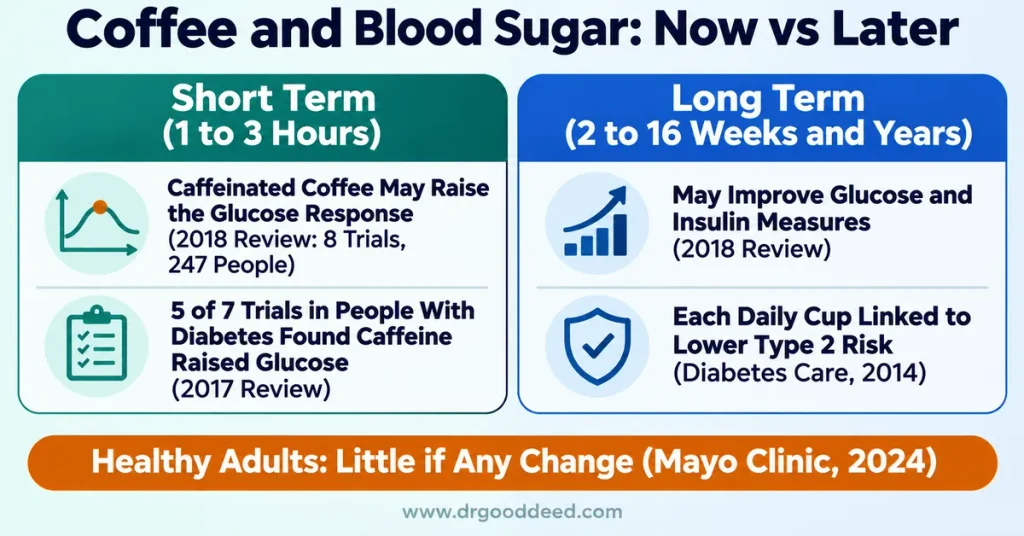
- In a 2018 review of 8 trials with 247 people, caffeinated coffee raised the glucose response for 1 to 3 hours.
- A 2014 Diabetes Care meta-analysis of 28 studies linked each daily cup of coffee, including decaf, to a lower type 2 diabetes risk.
- Up to 400 milligrams of caffeine a day is generally safe for most adults (FDA, 2024).
Does Black Coffee Raise Blood Sugar?
For most healthy adults, black coffee raises blood sugar so little that it isn’t noticeable, while in people with diabetes, caffeine can raise it for a few hours (Mayo Clinic, 2024). Studies also separate this short-term effect from the long-term diabetes risk link.
| Group or time frame | What studies found | Source |
| Healthy adults | Caffeine generally does not cause a significant increase. | Mayo Clinic, 2024 |
| People with diabetes | Caffeine may cause an increase or decrease. Five out of seven trials found that caffeine increased glucose levels. | 2017 review |
| Short term (1 to 3 hours) | Caffeinated coffee may cause a short-term increase in glucose. | 2018 systematic review |
| Long term (2 to 16 weeks) | May improve glucose and insulin levels. | 2018 systematic review |
| Long-term diabetes risk | Linked to a reduction in type 2 diabetes risk per extra cup consumed per day. | Diabetes Care, 2014 |
A 2018 systematic review analyzed eight clinical trials involving 247 people. It found that caffeinated coffee can increase glucose levels in the short term. However, longer-term trials showed improvement in glucose metabolism.
In a 2017 review of seven trials in people with diabetes, five found that caffeine raised blood glucose and kept it high for longer. This suggests that people with diabetes may react differently.
This does not necessarily mean coffee will increase your risk of diabetes in the long term. However, short-term glucose levels may increase.
Why Caffeine Can Push Blood Sugar Up
Caffeine may trigger the release of adrenaline and make your body respond less to insulin for a while, which can raise blood sugar (Duke Health, 2008; Mayo Clinic, 2024). This can make it harder for your cells to use glucose.
There are a few reasons why this can occur:
- Adrenaline: Caffeine can cause a release of adrenaline. This is a hormone involved in the body’s stress response. Adrenaline can cause your liver to release stored glucose.
- Insulin sensitivity: Caffeine can temporarily reduce insulin sensitivity.
- Individual differences: The effect depends on factors such as caffeine sensitivity, diabetes status, the amount of caffeine consumed, and your usual glucose control.
A small 2008 study reported by Duke Health followed 10 people with type 2 diabetes who were not using insulin, and caffeine capsules equal to about four cups of coffee raised their average daily glucose by 8%. After-dinner glucose rises were 26% higher on caffeine days (Duke Health, 2008).
This study was small and short term, so it cannot predict how everyone will react. The type of coffee you brew will also affect how much caffeine you consume. View our guide on caffeine in a cup of coffee for more information on common drinks.
Does Decaf Coffee Raise Blood Sugar?
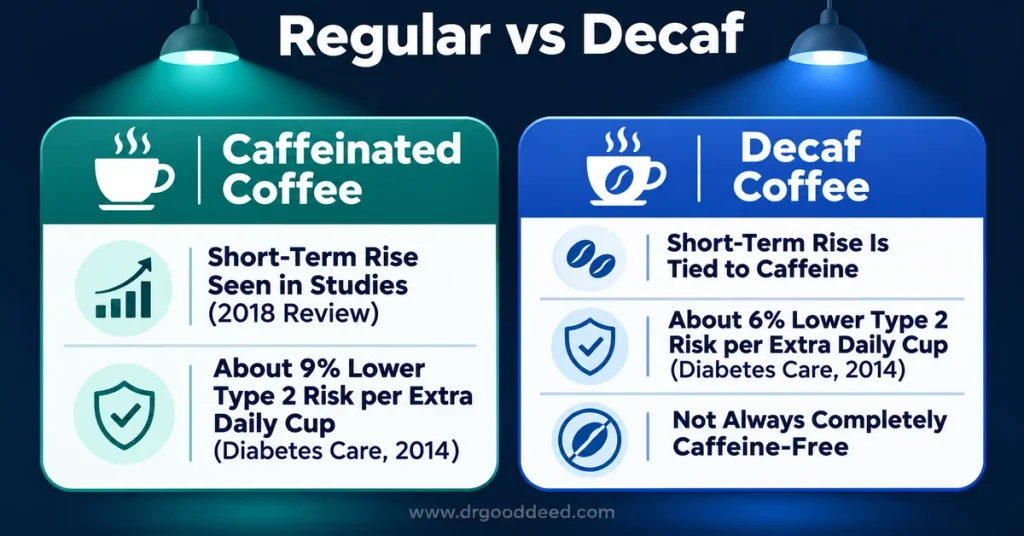
Decaf coffee is less likely to raise blood sugar, because the short-term rise seen in studies is tied to caffeine. Decaf was also linked to a lower type 2 diabetes risk over time (Diabetes Care, 2014).
Some things to note:
- Short-term increase: The 2018 systematic review found that caffeinated coffee can cause a short-term increase. This suggests caffeine may play an important role.
- Long term: A 2014 meta-analysis published in Diabetes Care found that both caffeinated and decaffeinated coffee were associated with a reduction in type 2 diabetes risk.
- Remaining caffeine: Decaffeinated coffee is not always completely caffeine-free. How much caffeine is in your drink will depend on the type of coffee and how it has been made.
If you regularly see an increase in your readings after coffee, you may want to discuss switching to decaf with your healthcare provider. However, the addition of sugar, flavored syrups, and other ingredients can still affect your blood glucose levels.
Milk, Cream, Sugar and Syrups: What Changes the Number
What you add to your coffee often matters more than the coffee itself, because sugar, syrups and many creamers add carbohydrates.
- Sugar and syrups: Adding sugar or sweetened syrups will increase the amount of carbohydrates. The more you add, the bigger the effect.
- Milk: Coffee with milk has some extra carbohydrates, because regular milk contains lactose, a natural sugar. The amount of milk you use will affect how many carbohydrates are in your drink.
- Creamers: Some creamers can contain added sugars or carbohydrates. Check the nutritional information.
- Plant-based milk: Unsweetened and sweetened versions can vary. Check the label for added sugars and total carbohydrates.
- Quantity: Adding a little may not have the same effect as adding several servings.
If you want to cut down on sweet drinks, view our list of the best drinks for diabetes.
Can Coffee Lower Your Risk of Type 2 Diabetes?
In large studies, coffee drinkers had a lower risk of type 2 diabetes, but these studies show a link, not proof that coffee prevents diabetes (Diabetes Care, 2014).
A 2014 meta-analysis in Diabetes Care pooled 28 prospective studies with 1,109,272 people, 45,335 of whom developed type 2 diabetes. For each extra daily cup, the researchers found a lower risk:
- Caffeinated coffee: About 9% lower risk per extra daily cup (Diabetes Care, 2014).
- Decaffeinated coffee: About 6% lower risk per extra daily cup (Diabetes Care, 2014).
This suggests there is an association with coffee and not just caffeine. Coffee contains active ingredients such as polyphenols and chlorogenic acid.
The 2018 systematic review can also help explain this. Caffeinated coffee can cause an increase in glucose in the short term. However, longer trials (2 to 16 weeks) found improvement in glucose and insulin levels.
This does not mean you should start drinking coffee to reduce your risk of diabetes. Black coffee may have health benefits beyond blood sugar levels, such as effects on the liver and alertness. Learn more about the health benefits of black coffee.
Can People With Diabetes Drink Coffee?
Most people with diabetes can drink coffee, but caffeine affects each person differently, and limiting it may help if your blood sugar is hard to control (Mayo Clinic, 2024). Cutting back or trying decaf for a while can show whether coffee is behind higher readings.
Things to note:
- Amount of caffeine: According to Mayo Clinic (2024), around 200 milligrams of caffeine may affect some people with diabetes. A regular cup of coffee can contain between 120 and 180 milligrams, depending on how it was made (Mayo Clinic, 2024).
- Recommended daily amount: According to the FDA (2024), most adults will not experience negative effects from up to 400 milligrams of caffeine per day. This is a general guideline and will depend on how sensitive you are.
- Test your reaction: If you are using a blood glucose meter or continuous glucose monitor (CGM), check your levels before and around two hours after your coffee on a few different days. Try to keep your breakfast the same to see if there is a pattern.
- Full drink: Note whether you had black coffee, decaf, milk, sugar, or creamer. This can help determine whether caffeine or additions are causing issues.
- Unusual readings: If a reading after coffee looks unusually high, note it and share it with your care team.
On average, US adults consume about two 8-ounce cups of coffee per day (Mayo Clinic, 2024). However, this can vary depending on how big your cup is and how much caffeine it contains.
When to Talk to Your Doctor About Coffee
Speak to your healthcare team if you regularly see an increase in your blood sugar levels after having coffee or if you are not sure how much caffeine you should be having. This is especially important if you are struggling to control your glucose or taking medicines that can cause low blood sugar (hypoglycemia).
Speak to your doctor about:
- Regular increases in glucose: If you regularly see an increase in your glucose levels after having coffee, speak to your doctor or diabetes educator. They can help determine whether caffeine, additions, meals, or something else may be causing it.
- Pregnancy, trying to get pregnant, or breastfeeding: The FDA (2024) recommends speaking to a healthcare provider about your caffeine intake if you are pregnant, trying to get pregnant, or breastfeeding.
- Concerns about your heart or sleep: Caffeine can affect individuals differently. Speak to your doctor about how much you are having if you are experiencing sleeping issues or a racing heart.
If your levels remain high without coffee, view our guide on high blood sugar without diabetes.
If you notice coffee raises blood sugar for you again and again, share your readings with your doctor or diabetes educator.
Frequently Asked Questions
How Long Does Coffee Affect Blood Sugar?
In short trials, coffee raised the glucose response for 1 to 3 hours (2018 review), and in one small study caffeine kept after-meal glucose higher across the whole day in people with type 2 diabetes (Duke Health, 2008). How long it lasts for you depends on how quickly your body clears caffeine (FDA, 2024).
Can Coffee Affect My A1C?
There is no clear answer yet, because the trials in a 2018 systematic review did not report A1C. Longer trials in that review (2 to 16 weeks) found coffee improved other glucose and insulin measures, but this does not prove coffee lowers A1C. Watch your own A1C trend with your doctor.
Does Quitting Caffeine Lower Blood Sugar?
It may for some people with type 2 diabetes. In a small 2008 study of 10 people with type 2 diabetes, average daily glucose was about 8% higher on caffeine days (Duke Health, 2008). Caffeine affects everyone differently (Mayo Clinic, 2024), so check your own readings and talk to your healthcare team.
Does Coffee Raise Blood Sugar in Type 1 Diabetes?
It can: coffee raises blood sugar in type 1 diabetes for some people, mostly through caffeine, while others see little change, so your own readings are the best guide. Caffeine affects each person differently (Mayo Clinic, 2024). If you regularly see a rise after coffee, speak to your diabetes care team.
Does Black Tea Raise Blood Sugar Too?
It can, but usually less. Black tea also contains caffeine (Mayo Clinic, 2024), so it can have a similar but usually smaller effect than coffee. Plain black tea adds no sugar, but adding sugar, honey or sweetened milk adds carbohydrates. Your own readings are the best guide.
Sources
- Mayo Clinic, Caffeine: Does It Affect Blood Sugar? (2024). link
- Journal of Traditional and Complementary Medicine, Effects of Coffee Consumption on Glucose Metabolism: A Systematic Review of Clinical Trials (2018). link
- Diabetes Care, Caffeinated and Decaffeinated Coffee Consumption and Risk of Type 2 Diabetes (2014). link
- Duke Health, Cutting Caffeine May Help Control Diabetes (2008). link
- U.S. Food and Drug Administration, Spilling the Beans: How Much Caffeine Is Too Much? (2024). link
- PubMed, The Effect of Acute Caffeine Intake on Insulin Sensitivity and Glycemic Control in People With Diabetes (2017). link
Medically reviewed by: Dr Anshu Alok, Endocrinology
Medical Disclaimer: This article is for general information only and is not medical advice. It does not replace a diagnosis, treatment plan, or guidance from a qualified healthcare professional. Always talk to your doctor about your own symptoms and before starting, stopping, or changing any treatment. If you think you may be having a medical emergency, call 911 or go to your nearest emergency room.