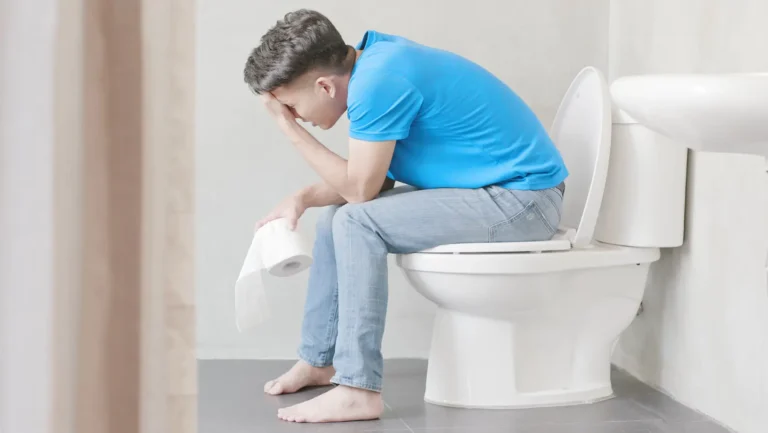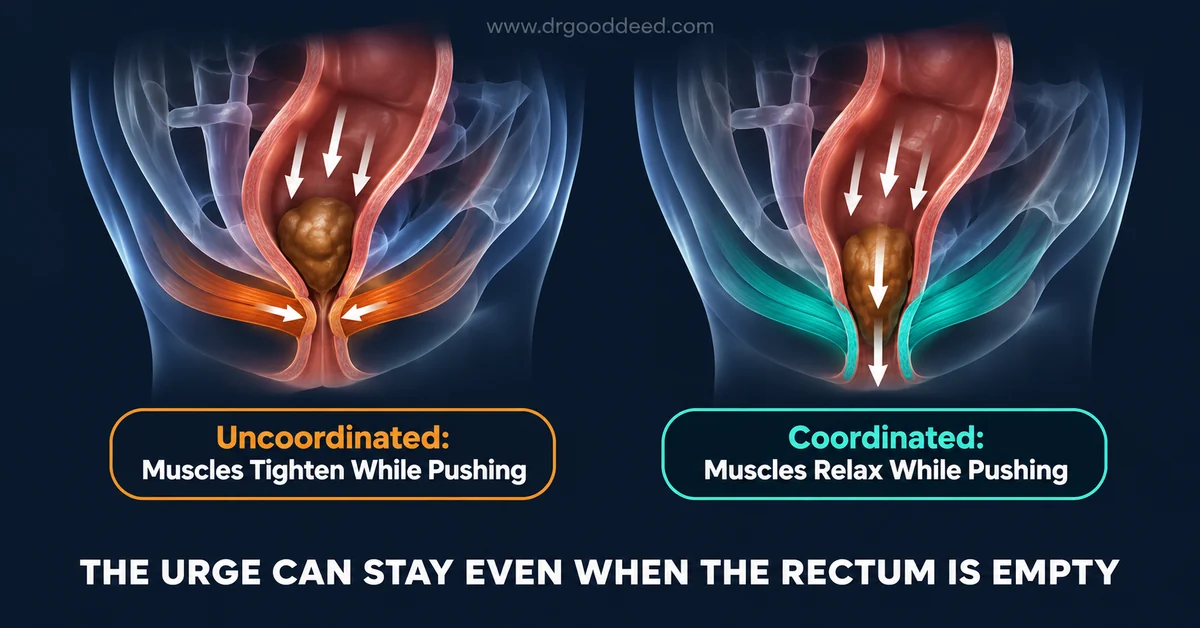

If you still need to poop after going, it is often caused by constipation or a problem with how the pelvic floor muscles work, which makes you feel like you still need to go. The feeling can continue even when the rectum is empty, so it does not always mean stool is left inside.
Key Takeaways
- A feeling of incomplete bowel movement often comes from constipation or pelvic floor muscles that do not relax, not leftover stool.
- The sensation can persist even when the rectum is empty. It may be associated with pelvic floor problems, such as dyssynergic defecation, when the muscles do not relax and coordinate properly during a bowel movement.
- Dyssynergic defecation may account for about a quarter of constipation cases, according to Healthgrades. Cleveland Clinic notes that up to half of people with long-term constipation also have pelvic floor dysfunction, although this figure does not refer specifically to dyssynergic defecation.
- A patient should consult a physician in case of blood in the stool, weakness caused by unknown reasons, stool narrowing, anemia, or change in bowel movement habits.
| Cause | What it may feel like | Next step |
| Constipation with hard stool | Hard stool, straining, or fewer bowel movements | Fiber, fluids, and activity may help |
| Dyssynergic defecation | Pushing without effective emptying, sometimes needing manual help | Rectal examination, balloon test, and biofeedback |
| IBS or rectal irritation | Persistent urge with little stool, sometimes with pain | Medical evaluation |
| Haemorrhoids, fissures, proctitis, or prolapse | Pain, bleeding, a bulge, or pelvic heaviness | Examination |
| Medicines | New or worsening symptoms after starting a medicine | Review medicines with your prescriber |
| Colorectal cancer | Persistent urge with bleeding, narrowed stool, weight loss, or anemia | Prompt medical evaluation |
What Is Incomplete Bowel Movement?
The feeling of incomplete bowel movements is the sensation that stool remains after a bowel movement. In medicine, this sensation is called incomplete evacuation.A related term, tenesmus, describes a strong urge to pass stool when little or nothing comes out. Medical sources sometimes use these terms interchangeably, with some using tenesmus to describe any feeling that the bowels have not fully emptied.
Even when the rectum has been emptied, the feeling of wanting to pass stool may persist after having used the toilet for various reasons. The presence of the feeling of wanting to use the toilet constantly may arise due to rectal infection and inflammation, the presence of IBS, dysfunction of pelvic floor muscles, constipation, and so on.
Tenesmus is a persistent, often painful feeling that you need to pass stool, even when little or nothing comes out. It is commonly linked to rectal inflammation, infections, or tumors. However, the presence of the feeling of wanting to pass stools does not directly indicate the presence of cancer in the person.
Another common cause of feeling like you need to use the toilet is functional constipation. Under the Rome IV criteria, symptoms may include hard stools, straining, a feeling of blockage, or incomplete emptying. These symptoms must occur in at least 25% of bowel movements for the last 3 months, with symptoms starting at least 6 months ago. Stress can also contribute to constipation by affecting bowel function. Read more about how stress can cause constipation.
Useful distinction: The sensation of incomplete emptying is a symptom, not a diagnosis. Finding the reason behind it is more important than assuming that stool is simply left behind.
Pelvic Floor Problems and Bowel Movements
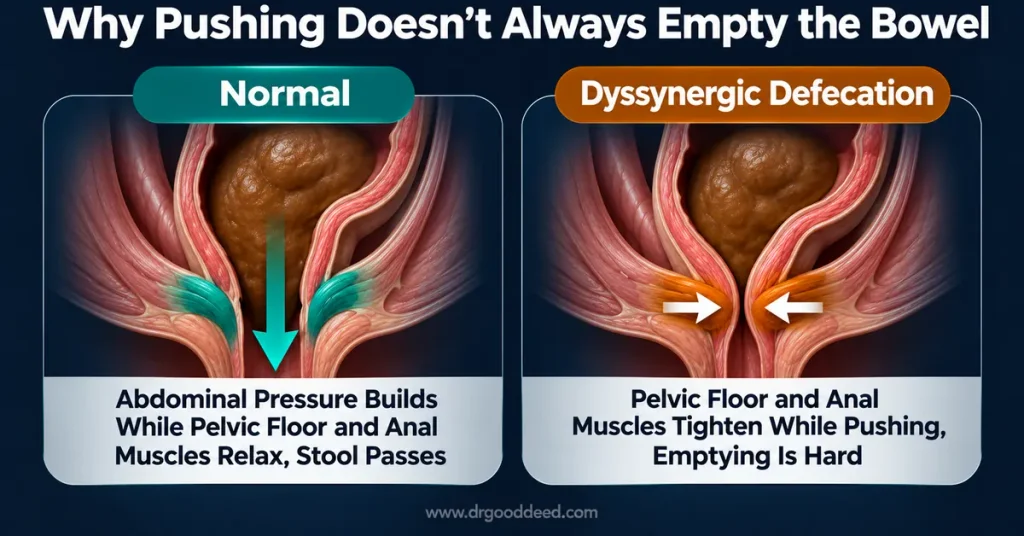
Pelvic floor dysfunction leads to difficulties in relaxing and coordinating the muscles required for passing stool. Dyssynergic defecation is a type of pelvic floor dysfunction characterized by poor coordination during bowel movements. Rather than passively collapsing, the pelvic floor or anal muscles may contract and tighten as one attempts to evacuate.
In a normal physiological process, the abdominal muscles generate pressure while the pelvic floor and anal muscles synchronize to allow the passage of stool through the rectum. However, with dyssynergic defecation, this sequence may get distorted. You may feel like you are straining without getting results, even when the stool is soft. Dehydration can also contribute to constipation. Learn more about how dehydration can cause constipation.
Some of the symptoms may include feeling that bowel movements are incomplete, excessive straining, hard stools, difficulty pushing soft stool out, manual disimpaction, vaginal splinting, pain in the anal or rectal area, and pressure in the perineum. About one-third of people with chronic constipation have difficulty emptying their bowels. Dyssynergic defecation accounts for around 27% to 59% of cases, depending on how it is diagnosed. One referral-center study reported 76.5%, but this may reflect the higher rate of symptoms among patients referred for specialist care.
Constipation can also worsen around menstruation. Learn more about constipation during the menstrual period.
In one study, 75% of people with dyssynergic defecation reported feeling that they had not fully emptied their bowels.
Important: This problem is about coordination and relaxation, not simply weak pelvic floor muscles. That is why treatment may focus on retraining rather than simply strengthening the muscles.
Common Causes of Incomplete Bowel Movement
Several factors may lead to incomplete bowel movement, and often more than one of these reasons may contribute to this unpleasant feeling at the same time.
- Constipation: Having dry or hard stools, having trouble passing them, defecating infrequently, and finding it hard to evacuate can cause the sense of incomplete evacuation.
- IBS: Irritable bowel syndrome may lead to changes in bowel habits, abdominal discomfort and bloating, and feeling unrelieved after defecating.
- Hemorrhoids and anal fissures: Pain or discomfort around the anus can make bowel movements uncomfortable and contribute to a feeling of incomplete emptying. Learn more about hemorrhoids and polyps.
- Radiation proctitis: Inflammation of the rectum after radiation therapy can cause rectal discomfort, urgency, and a feeling that you still need to pass stool.
- Fecal impaction: A hard mass of stool stuck in the rectum can cause difficulty emptying the bowels and a persistent feeling of needing to go.
- Inflammation or infection: Inflammatory bowel disease, proctitis, or some intestinal infections can trigger severe urgency or tenesmus.
- Rectocele or rectal prolapse: Some structural problems can interfere with normal defecation. Some people may experience the need to push their fingers into the vagina or use them for emptying the rectum.
- Nerve conditions: Conditions like spinal cord injury, multiple sclerosis, or diabetic neuropathy can severely affect normal defecation.
- Medications: Some medications, such as opioids, anticholinergics, or calcium-channel blockers, can also make the defecation process difficult.
Medicine tip: If the symptom started or became worse after a new medicine, do not stop the medicine on your own. Ask the prescribing clinician whether it could be contributing.
When Should You Be Concerned?
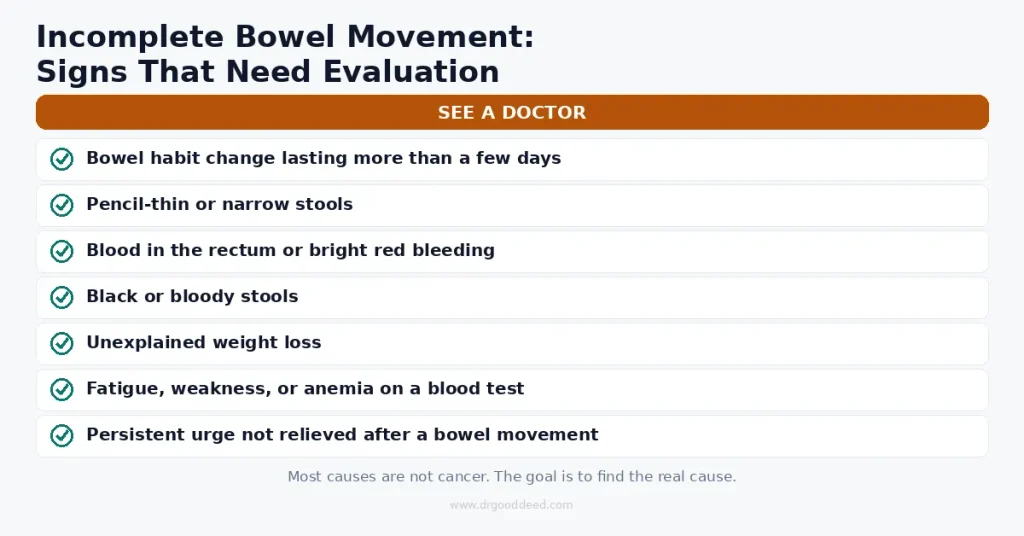
Most factors that lead to incomplete evacuation are not cancer-related. However, the persistent urge to have a bowel movement can be a symptom of colorectal cancer when it comes with other warning signs.
You should seek evaluation by a doctor if you:
- Experience a recent change in bowel habits lasting more than a few days.
- Experience stools that are pencil-thin or narrow.
- Notice blood in your rectum or bright red rectal bleeding.
- See black or bloody stools.
- Have unexplained weight loss.
- Feel fatigue or weakness.
- Have anemia on a blood test.
- Have a persistent urge that is not relieved after a bowel movement.
- Family history: A family history of bowel cancer or inflammatory bowel disease (IBD) warrants medical assessment of persistent or new bowel symptoms.
- New bowel symptoms after age 50: Anyone over 50 who develops new bowel symptoms should seek medical advice promptly, especially if the changes persist.
Although these symptoms are also present when one has hemorrhoids, infections, or IBS, it does not mean that you have colorectal cancer. The crucial point is to find the real cause.
The American Cancer Society recommends that average-risk adults should start regular colorectal cancer screening at age 45. People at higher risk may need to start screening earlier.
When to seek medical care: In the US, see your primary care doctor, a gastroenterologist, or a colorectal specialist. Seek emergency care for heavy rectal bleeding. In the UK, contact your GP, who can arrange an urgent referral if needed. Severe symptoms or other concerning changes should not be managed with home remedies alone.
How Is Incomplete Bowel Movement Diagnosed?
Typically, doctors ask about a patient’s medical history, stool characteristics, symptoms, the medicines they take, and a stool diary. Digital rectal examination helps to examine the functioning of the pelvic area and the functioning of the anal muscles when the patient wants to evacuate his or her rectum.
The balloon expulsion test is a type of medical test that checks whether the balloon filled with water can be evacuated or not. The balloon used in the examination must have 50 ml of capacity. It should be evacuated in one minute.
Depending on the symptoms, a doctor may recommend flexible sigmoidoscopy or colonoscopy, endoanal ultrasound, or anorectal physiology tests, such as anorectal manometry, to assess rectal and anal muscle pressure and coordination. This test can help define if there is impaired muscle coordination that is usual for dyssynergic defecation.
In one study of 130 people, a normal balloon expulsion test helped rule out pelvic floor dysfunction, with a 97% negative predictive value. However, a failed test was less reliable, with a 64% positive predictive value.
Physiological testing is needed mostly when constipation continues to be present after one has used traditional remedies such as fiber-based treatment or laxatives.
How to Relieve the Feeling of Incomplete Bowel Movement
Each one would work depending on the origin of the problem.
- Fiber and fluids: Increases in bulk and consistency of stool may improve constipation, but these remedies alone would not reverse a pelvic floor coordination condition.
- Biofeedback therapy: Biofeedback training helps people coordinate abdominal pushing with pelvic floor muscle relaxation during bowel movements. It is a first-line treatment for dyssynergic defecation, with clinical trials showing good results. However, access may be limited. Specialists may also consider other options, such as botulinum toxin injections or sacral neuromodulation, depending on the patient’s condition (2008 biofeedback review).
- Squatting position or footstool: Propping up feet or a squatting style may ease straining for some, but this evidence is limited. Studies are generally small, and one study looking at constipation showed no gain.
- Unhurried times in the toilet: Don’t sit for long and don’t strain repeatedly. Bowel movements should feel natural and not require sitting on the toilet for too long or straining excessively.
- Medicine review: Ask your prescriber to review medications you may be on to see if they involve opioids, anticholinergics, or calcium-channel blockers, which could contribute, allowing for a change or adjustment.
Treatment insight: Do not automatically treat this symptom with pelvic floor strengthening exercises. When dyssynergic defecation is present, the problem is often failure to relax and coordinate the muscles, making targeted biofeedback more appropriate.
FAQs
Why do I feel like I need to poop but nothing comes out?
Tenesmus is defined as a constant feeling of needing to pass stool even if doing so is not possible. It can be experienced due to rectal inflammation or infection, IBS, pelvic floor problems, or other situations. If one continues to feel this way, especially if accompanied by pain or bleeding, medical help should be sought out.
Does feeling like I still need to poop mean there is stool left inside?
Not always. The feeling may persist even if the rectum has been emptied. To determine the underlying cause of the condition, the doctor may perform either a rectal exam or a pelvic floor study.
Can anxiety cause a feeling of incomplete bowel movement?
Anxiety and stress can indeed aggravate symptoms of IBS. Persistent symptoms should not be dismissed as purely anxiety-related, and a full medical assessment should be carried out to rule out constipation, pelvic floor disorders, inflammation, structural problems, or other medical issues.
Can a rectocele or rectal prolapse cause the feeling of not being empty?
Yes. A rectocele or rectal prolapse can interfere with normal bowel emptying. You may need to press against the perineum or vaginal wall or use your fingers to help pass stool. A doctor can assess these symptoms and identify the underlying cause.
Medical Disclaimer: This article is for informational and educational purposes only and is not a substitute for professional medical advice, diagnosis, or treatment. Always consult a qualified healthcare professional about any medical concerns or changes in your bowel habits. Never ignore medical advice or delay seeking care because of information you have read in this article
Sources
- American Cancer Society. Colorectal Cancer Signs and Symptoms. link
- World Gastroenterology Organisation. A Global Cascade Approach to Diagnosis and Management of Chronic Constipation, 2025. link
- Rome Foundation. Rome IV Criteria. link
- Why Incomplete Bowel Movements Happen and How to Empty the Bowels. link
Medical Disclaimer: This article is for general information only and is not medical advice. It does not replace a diagnosis, treatment plan, or guidance from a qualified healthcare professional. Always talk to your doctor about your own symptoms and before starting, stopping, or changing any treatment. If you think you may be having a medical emergency, call 911 or go to your nearest emergency room.