
Loud stomach gurgling is usually normal digestion. Your gut keeps moving between meals, even when you’re not hungry, as it clears out leftover food and fluid. The intensity of these sounds could increase with the consumption of food, hunger, or even when gas is passing through the intestines. In some cases, the excessive sounds from the stomach may be suggestive of intolerances, indigestion, or other gastrointestinal disorders.
Therefore, knowing why your stomach is making all those noises can guide you in identifying the causes, symptoms, and also when it would be advisable to consult a doctor.
Key Takeaways
- Loud stomach gurgling is usually normal gut movement, such as the fasting cleaning wave. Pain, vomiting, bloating, or bowel changes make it worth checking.
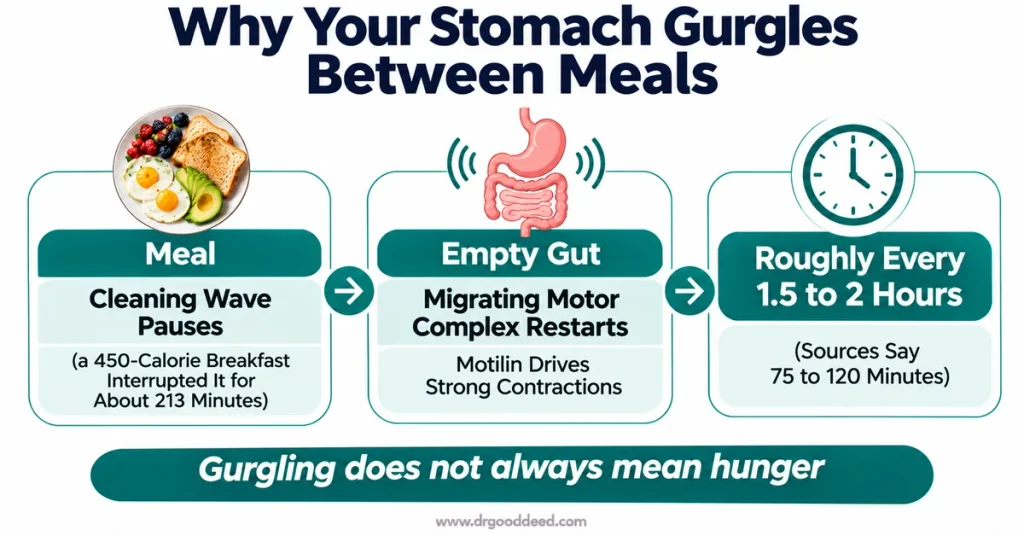
- Between meals, the migrating motor complex moves through the stomach and small intestine roughly every 1.5 to 2 hours, although sources vary, reporting intervals of 75 to 120 minutes.
- Borborygmi may be caused by a variety of factors, such as digestion and air swallowing.
- A 2014 study discovered that doctors could not determine whether bowel sounds were normal or pathological by listening to them.
- People with high-pitched sounds, stomach cramps, bloating, nausea, and inability to pass gas should seek immediate medical attention.
| Pattern | Likely explanation | What to do |
| Gurgling a couple of hours after eating without pain | Normal fasting digestive activity | Usually, no action is needed |
| Rumbling after beans, cabbage, fizzy drinks, or gum | Gas and swallowed air | Adjust eating habits and identify triggers |
| Gurgling with loose stools or cramps | Gastroenteritis, lactose intolerance, or IBS | Seek medical advice if symptoms persist |
| Gurgling with ongoing diarrhea, bloating, or weight loss | Possible celiac disease or another absorption problem | Arrange medical evaluation |
| Gurgling with blood in the stool, fever, or unexplained weight loss | A possible underlying condition | Contact a healthcare professional |
| High-pitched tinkling, severe cramps, swelling, vomiting, and no gas or stool | Possible bowel obstruction | Seek emergency care |
Why Is My Stomach So Loud? Borborygmi, Gas and Fluid in Motion
Bowel sounds are described as low rumbles in the loosely stretched intestines and high-pitched tinkling in the tightly stretched intestines, and they are referred to as “borborygmi.” According to the International Foundation for Gastrointestinal Disorders (IFFGD), bowel sounds are considered to be normal.
Borborygmi is the rumbling or gurgling made by gas, fluid, and food moving through the stomach and intestines (IFFGD).
Stomach Gurgling Without Hunger: The Migrating Motor Complex Explained
Reason:
Stomach gurgling without hunger is often caused by the migrating motor complex, a series of contractions that move through the stomach and small intestine between meals.
Reason behind the process: Its function is to clean the remains of food and other substances in the digestive tract.
Frequency: This phenomenon usually happens after 1.5 to 2 hours, although some sources talk of timeframes that vary between 75 and 120 minutes.
Hormonal function: The hormone motilin is responsible for intense contractions in one of the phases of this mechanism.
Effect of meals: By having a meal, a person interrupts the process of going through the fasting stage. For example, a 450-calorie breakfast was found to interrupt the cycle for about 213 minutes.
Loudness of sounds: The gurgling sounds become more audible with a decreased quantity of food in the digestive tract.
Key note: Loudness of the stomach’s gurgling does not mean that a person is hungry. A person may feel full but still hear their intestines working.
What Else Causes Loud Stomach Gurgling? Swallowed Air, Gas, Foods, Intolerances, and IBS
Increased gurgling sounds from the stomach could be caused by a variety of factors such as ingested air, foods high in gas, digestive diseases, food intolerances, and gastrointestinal disorders. However, you cannot rely on the sound alone to establish the root cause.
The root causes of such sickness could be:
- Air swallowed: Eating too fast, chewing gum, or drinking through a straw can cause more air to enter the stomach, which often leads to belching. See our guide on abdominal pain and burping for more on how swallowed air causes this.
- Gas-inducing foods: Beans, peas, broccoli, sorbitol and soft drinks may additionally produce more gas in the stomach.
- Diarrhea and gastroenteritis: Viral infections of the gastrointestinal tract may change the pattern of stomach sounds.
- Lactose intolerance: People without the capacity to digest lactose might experience excessive gas production, bloating and diarrhea after consuming dairy.
- Irritable bowel syndrome (IBS): IBS causes increased sensitivity to normal intestinal activity.
- Celiac disease and other malabsorption disorders: May cause excess gas, diarrhea, and bloating.
- SIBO (small intestinal bacterial overgrowth) and inflammatory bowel disease: Both these diseases are capable of producing gastrointestinal symptoms characterized by gas, bloating, and stooling changes.
- Stress: Added stress might increase awareness of normal stomach sounds, as well as affecting the activity of the gastrointestinal tract, but this should not be the first thought when trying to figure out the cause of gurgling.
When Loud Stomach Gurgling Is a Red Flag: Obstruction, Celiac Disease and Other Warning Signs
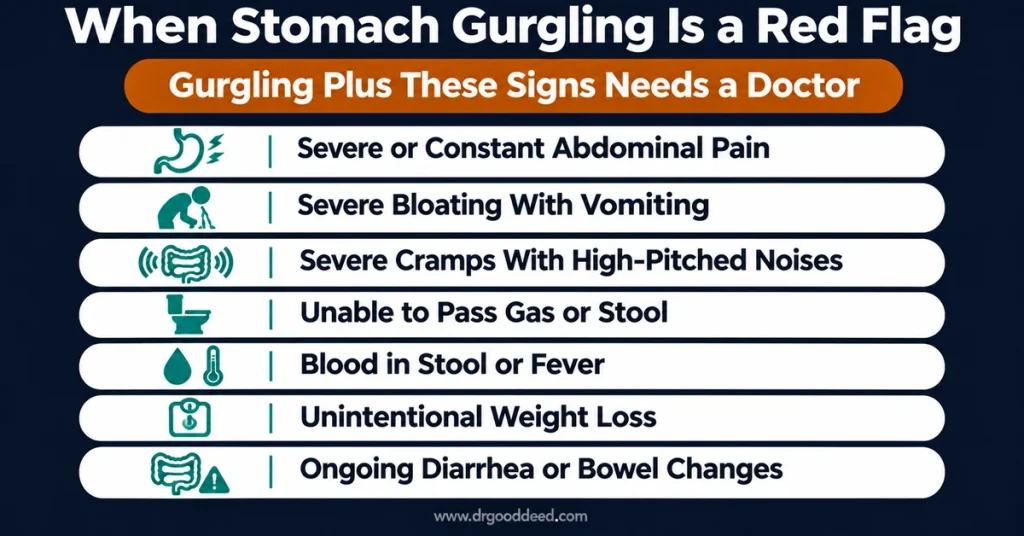
Gurgling by itself is not alarming, but if other symptoms are present, it could suggest a medical issue that needs immediate attention. Severe pain, vomiting that does not stop, severe bloating, blood in the stool, or losing weight for no reason are just some symptoms that should not be ignored.
Consult a physician if you experience the following signs:
- Severe/constant abdominal pain.
- Severe bloating as well as vomiting.
- Severe cramps and high-pitched noises coming from your stomach.
- Unable to pass gas or stool.
- Blood in the stool or a fever.
- Losing weight without trying.
- Ongoing diarrhea or change in bowel movements.
If other symptoms of bowel obstruction such as high-pitched noises, severe cramping pain, bloating, vomiting, and inability to produce gas or stool are present, then an emergency should be considered.
Tips: In the United States, you should contact a primary physician or a gastroenterologist in case of persistent digestive symptoms. A GP can be consulted in the UK. In case of a bowel obstruction, you should go directly to an emergency room (ER) in the US or to A&E in the UK.
Celiac disease and other malabsorption diseases should be ruled out if gurgling is present with ongoing diarrhea, bloating, and unintentional weight loss.
Can Doctors Diagnose Anything From Stomach Noises? What Listening Can and Cannot Tell
Stomach noises cannot help doctors accurately determine whether your digestive system is healthy or troubled. A 2014 study involving 177 people, including 19 with bowel obstruction and 15 with ileus, found that physicians could not reliably distinguish normal bowel sounds from abnormal ones.
- Bowel sounds may be hyperactive in some digestive conditions, but this does not happen in every case. In small bowel obstruction, approximately 40% of patients may have hyperactive bowel sounds, while around 25% may have absent sounds (McGee, Evidence-Based Physical Diagnosis, 4th edition, 2018).
- Loud stomach sounds do not necessarily indicate a problem, and quiet sounds do not rule one out. However, absent bowel sounds accompanied by abdominal pain can be more concerning because they may indicate that part of the bowel has stopped working.
Doctors tend to take into consideration the symptoms experienced by the patients, the medical history, the results of the physical examination, along with the other tests. So, people need to remember that symptoms and their course are important for doctors rather than sounds.
Hyperactive vs. Hypoactive Bowel Sounds: What Do They Mean?
The sounds produced by the bowels occur due to the interaction of gases, solids, and liquids with each other. These sounds can be classified by physicians to depict their activity and inactivity.
Hyperactive Bowel Sounds
Hyperactive Bowel Sounds occur when these sounds are louder than normal. This phenomenon can be found in cases of diarrhea, gastroenteritis, etc. Some persons note their stomach making abnormal noises after having a meal, as well as during the movement of gas in the intestines.
In spite of the fact that the bowel sounds have become louder, this does not mean that there is some medical problem. There are other symptoms that should be considered, such as abdominal pain, bloating, and changes in bowel movement.
Hypoactive Bowel Sounds
Consequently, hypoactive bowel sounds are produced by the bowels when their activity slows down. This is often the case after a surgical operation or in cases of using some kinds of medications. In addition, low intensities of bowel sounds can occur in cases of the ileus.
Bowel sounds should not be considered as proof of the seriousness of potential health problems.
Main idea: Although the pattern of bowel sounds might be useful in a medical examination, it should always be interpreted by a doctor along with other signs and symptoms, medical history, and other findings.
How to Quiet Loud Stomach Gurgling: What May Help and What Has No Evidence
It is possible to lessen loud stomach gurgling caused by digestion if one alters his or her eating habits and identifies certain foods that cause gas production. There are no tried and tested ways to quiet stomach noises, so treat these as practical tips.
- Smaller, more frequent meals: Food interrupts the gut’s cleaning wave, so the gut spends less time empty. This is practical clinical advice, not a strategy proven in clinical trials.
- Eating slowly
- Avoiding gum and straws
- Limiting some gas-inducing foods for a short time
- Do not skip meals to quiet it: an empty gut is often louder.
- It is believed that if one suffers from anxiety, stress management methods will also assist. However, one should keep in mind that there is no need to assume that severe or continuous symptoms are caused by anxiety.
Frequently Asked Questions
Why is my stomach so loud after I eat?
Once a meal is consumed, the fasting cleaning cycle of the stomach is momentarily interrupted; however, digestion continues. Both food and water, as well as gas, will be transported through the stomach and intestine, which generates gastric noises. Being prone to swallowing air while you eat or eating gas-generating foods will make gastric noise more noticeable. If the gurgling is associated with other more severe health symptoms, such as pain, vomiting, or diarrhea, any signs of medical attention should be considered.
Why is my stomach so loud at night?
The migrating motor complex is still functional even at night, and this will produce gastric sounds. The digestive tract will not be filled with food, and thus there will be room for movement of fluids and gases and creation of gastric noise. Loud noises in the bedroom are easier to hear compared to the day because of the lesser presence of loud sounds in the environment. If there are no other symptoms, nighttime rumbling is generally not a problem.
Can anxiety make my stomach gurgle?
Yes. Stress tends to change gut activity or at least perception of normal gut activity. However, anxiety should not be blamed for all digestive problems, as other triggers, including types of food, must be taken into account before making a diagnosis.
Does loud stomach gurgling mean I need to eat?
Not necessarily. Gurgling is connected to the hunger sensation but not identical to it. Actually, the migrating motor complex is responsible for gurgling sounds of the stomach. Thus, there may be gurgling noises both when the person feels full and when they feel hungry.
Is loud stomach gurgling normal or a sign of a healthy gut?
Usually, yes. Stomach gurgling means gas, fluid, and food are moving through your digestive tract. The sounds alone rarely indicate a problem, but if they occur with abdominal pain, bloating, vomiting, or persistent diarrhea, consult a doctor to identify the cause.
Sources
- Healthline. Why Does My Stomach Growl? link
- Harvard Health Publishing. Stomach growling and other digestive noise. link
- Patient.info. Why does your stomach rumble when you aren’t hungry? link
- Henry Ford Health. Why Does My Stomach Make Noises? What’s Normal And When To Seek Help. link
- International Foundation for Gastrointestinal Disorders (IFFGD). Abdominal Noises. link
- Felder S, Margel D, Murrell Z, Fleshner P. Usefulness of Bowel Sound Auscultation: A Prospective Evaluation. Journal of Surgical Education, 2014;71(5):768-773. link
- McGee S. Evidence-Based Physical Diagnosis. 5th ed. Elsevier; 2021. link
Medical Disclaimer: This article is for general information only and is not medical advice. It does not replace a diagnosis, treatment plan, or guidance from a qualified healthcare professional. Always talk to your doctor about your own symptoms and before starting, stopping, or changing any treatment. If you think you may be having a medical emergency, call 911 or go to your nearest emergency room.