
Noninfective gastroenteritis and colitis (also spelled noninfectious gastroenteritis and colitis) means inflammation of the digestive tract that is not caused by an infection. Medicines, food intolerances, toxins, reduced blood flow to the colon, radiation, and immune reactions are the main triggers.
The term is also a coding label. It is the name of ICD-10 category K52, so many people first see it on a medical bill or record. Symptoms range from mild cramps and diarrhea to chronic watery stools or sudden, severe abdominal pain. Treatment depends on the cause and can include fluids, diet changes, medicine changes made with your prescriber, or hospital care.
Key Takeaways
- Noninfective gastroenteritis and colitis means gut inflammation from medicines, poor blood flow, immune reactions or toxins, not from infection.
- It is a record label (ICD-10 K52), not one disease; the exact condition sits behind the code, and your doctor can name it.
- Noninfectious gastroenteritis and colitis usually settle once the trigger is found and removed, with a doctor’s help.
- Blood in stool, severe pain, or dehydration needs same-day care.
| Feature | Noninfectious gastroenteritis | Noninfectious colitis |
| Main symptoms | Nausea, vomiting, diarrhea, cramps | Diarrhea, cramps, urgency, sometimes blood |
| Common causes | Medicines, food intolerance, toxins | Reduced blood flow, immune reaction, medicines, radiation |
| How long it lasts | Often short-lived, a few days | Often longer-lasting, depending on the cause |
| Treatment | Fluids, rest, addressing the trigger | Depends on the cause: budesonide, bowel rest, other drugs |
| Seek care if | Symptoms persist, or dehydration develops | Blood in stool or severe pain occurs |
What Is Noninfective Gastroenteritis and Colitis?
Noninfective gastroenteritis and colitis is inflammation of the stomach, intestines or colon that is not caused by bacteria, viruses or parasites.
- Noninfective: No bacteria, viruses, or parasites have triggered the condition.
- Gastroenteritis: Inflammation of the stomach and intestines.
- Colitis: Inflammation of the colon (large intestine).
It is also a coding category, not a single disease. ICD-10 category K52 splits into radiation-related (K52.0), toxic (K52.1), allergic and dietetic (K52.2), indeterminate colitis (K52.3), other specified (K52.8) and unspecified (K52.9) types. The code is used in records and billing, and only your treating doctor can name the exact condition behind it.
Inflammatory bowel disease (IBD), such as ulcerative colitis and Crohn’s disease, is a separate group with its own codes.
The main symptoms may include abdominal cramping, diarrhea, bloating, nausea, and in some cases blood in the stool. For the infectious side of stomach upsets, read our guide to food poisoning vs stomach flu.
What Causes Noninfectious Gastroenteritis and Colitis?
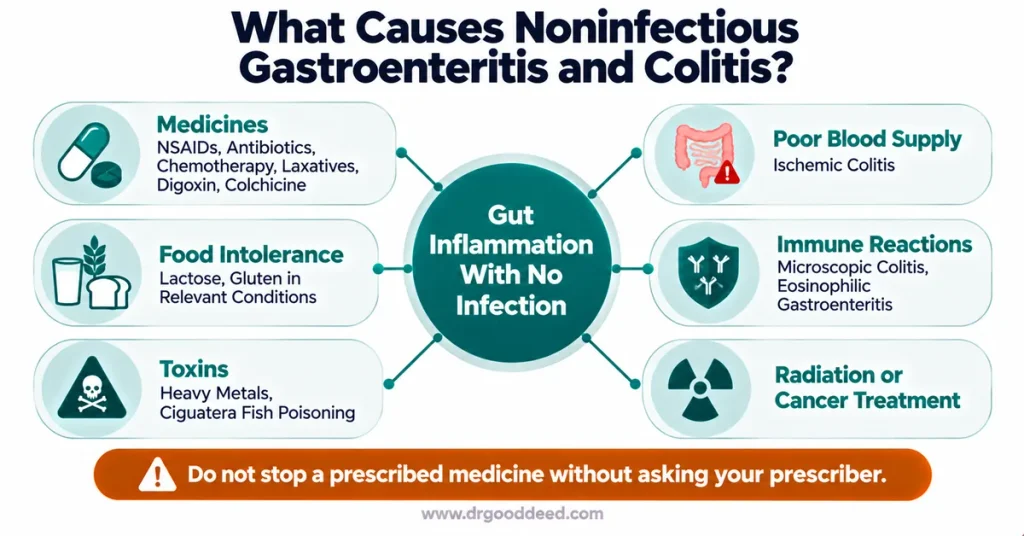
Noninfectious gastroenteritis and colitis may occur as a side effect of certain medicines, as a reaction to certain foods, from exposure to toxins, due to reduced blood flow, or because of inflammation caused by an immune response.
Common causes include:
- Drugs: Medicines such as nonsteroidal anti-inflammatory drugs (NSAIDs), antibiotics, chemotherapy, laxatives, digoxin, or colchicine can irritate the gut lining and cause inflammation.
- Food intolerance: Lactose intolerance and reactions to gluten in people with relevant conditions may cause gastrointestinal symptoms.
- Toxins: Heavy metals and ciguatera poisoning from contaminated reef fish can inflame the stomach and intestines.
- Poor blood supply: Reduced blood flow can injure the lining of the colon, as in ischemic colitis.
- Immune reactions: Some conditions cause inflammatory cells to build up in digestive tissue, such as microscopic colitis and eosinophilic gastroenteritis.
- Radiation or cancer treatment: Radiation to the abdomen or pelvis and some cancer drugs can damage the digestive tract lining.
Treatment and urgency depend on the cause. Do not stop or change a prescribed medicine without speaking to your prescriber. Tell your doctor about every prescription drug, over-the-counter medicine and supplement you take.
What Are the Symptoms of Microscopic Colitis?
Microscopic colitis causes chronic watery diarrhea without blood. Symptoms can go away for a while and then come back, which can make it hard to identify.
- Many people have 4 to 9 bowel movements a day, and some have more than 10 (NIDDK).
- Other symptoms include diarrhea at night, urgency, abdominal pain, fatigue, and weight loss.
- Some medicines are associated with a higher risk, including NSAIDs, proton pump inhibitors (PPIs), SSRIs, hormone therapy, beta blockers, and statins. Smoking is also linked to a higher risk. These are associations, and a link does not mean a medicine caused your symptoms.
Tip: Track how often you have diarrhea, whether it wakes you at night, and any weight changes, and share this with your healthcare provider. The colon lining often looks normal during a colonoscopy, so biopsies are needed to confirm microscopic colitis.
What Causes Ischemic Colitis, and How Does It Affect the Colon?
Ischemic colitis happens when blood flow to part of the colon drops, so the tissue does not get enough oxygen. It often causes sudden cramping pain, usually on the left side, along with diarrhea and blood in the stool.
Risk rises with age, especially after 60, and with atherosclerosis, diabetes, heart failure, clotting problems, and low blood pressure.
Medical News Today reports that ischemic colitis accounts for about 1 in 2,000 hospital admissions and that about 20% of people need surgery. Overall mortality is estimated at about 22%, falling below 5% when the bowel tissue has not died (nongangrenous disease). These figures come from a secondary source, and outcomes vary widely. Many mild cases settle within a few days with supervised medical care.
Important: Sudden severe abdominal pain with blood in the stool can be a medical emergency. In the US, call 911 or go to the emergency department. In the UK, call 999 or go to A&E. Do not wait for the symptoms to clear on their own.
Which Medications Can Cause Drug-Induced Colitis?
Drug-induced colitis is inflammation of the colon linked to taking certain medicines. Sources associate drug-induced colitis with NSAIDs, chemotherapy drugs, and immune checkpoint inhibitors, and PPIs are associated with microscopic colitis.
Symptoms include diarrhea, abdominal discomfort, urgency, and occasionally blood in the stool. Timing and severity vary with the medicine and the person’s health.
Your doctor will review every medicine you take and decide whether one of them could be the cause. If so, your prescriber may lower the dose, switch the medicine, or pause it under supervision.
Safety tip: Bring a current list of your medicines to the visit, including over-the-counter pain relievers. Do not stop a prescribed medicine without speaking to the prescriber first.
What Is Eosinophilic Gastroenteritis, and What Causes It?
Eosinophilic gastroenteritis is a rare condition in which eosinophils (a type of white blood cell) build up in the tissues of the digestive tract. An abnormal immune response, possibly to food allergens, may be involved, but the exact cause is not known.
- Symptoms can include abdominal pain, nausea, vomiting, diarrhea, and in some cases poor absorption of nutrients.
- Symptoms often come and go, and diagnosis can be delayed because other digestive conditions look similar. Healthline reports that about 80% of patients have symptoms for years before diagnosis, so persistent symptoms are a reason to ask for tests. Blood tests, endoscopy, and tissue biopsies help confirm the condition.
- Treatment may involve diet changes and medicines such as corticosteroids, supervised by a doctor. There is no cure, and no single treatment fits everyone.
How Is Noninfective Gastroenteritis and Colitis Diagnosed?
Doctors diagnose noninfective gastroenteritis and colitis by first ruling out infection and then looking for the specific cause behind the symptoms.
A doctor may recommend:
- A full history of symptoms, past illnesses, and every medicine you take.
- A physical exam to check for tenderness and dehydration.
- Blood tests to check for anemia and signs of inflammation.
- Stool tests to rule out infection.
- Colonoscopy or upper endoscopy, with biopsies when needed.
- A CT scan when reduced blood flow or complications are suspected.
Preparation tip: Be ready to report when symptoms started, how often they occur, any recent diet changes, and any new medicines. These details help plan testing and lower the chance of missing a trigger.
How Is Noninfective Gastroenteritis and Colitis Treated?
Treatment depends on the condition, its severity, and the cause. Mild symptoms often improve with supportive care, while severe inflammation may need hospital care.
- For uncomplicated gastroenteritis, a doctor may suggest rest, fluids, and bland food.
- Oral rehydration solutions replace lost fluids and electrolytes.
- If a medicine is the likely trigger, your prescriber can adjust or switch it safely.
- Budesonide, a corticosteroid, may help relieve the symptoms of microscopic colitis.
- Ischemic colitis may need bowel rest, intravenous fluids, monitoring and, in severe cases, surgery.
- Eosinophilic gastroenteritis is usually treated with specialist-guided diet changes and anti-inflammatory medicine.
Antibiotics do not help with these conditions, because no infection is involved.
Useful tip: Drink small amounts of fluid often. If vomiting keeps you from drinking enough, contact a doctor. When symptoms are persistent, severe, or include bleeding, do not rely on diet changes alone.
When Should You Seek Medical Care for Gastroenteritis and Colitis?
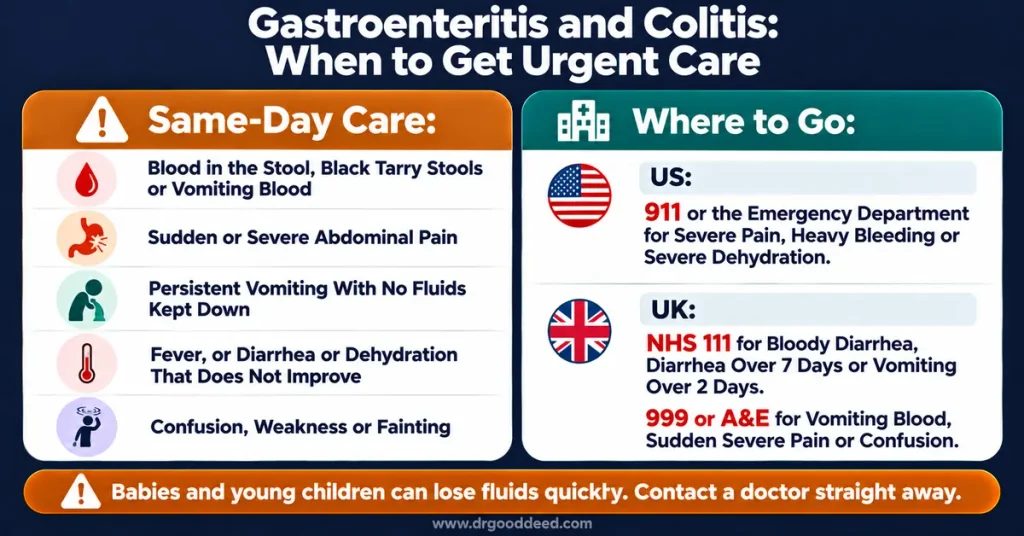
Seek urgent medical care if symptoms suggest bleeding, severe inflammation, or dehydration.
- Blood in the stool, black tarry stools, or vomiting blood.
- Sudden or severe abdominal pain.
- Persistent vomiting that makes it hard to keep fluids down.
- Fever, diarrhea, or dehydration that does not improve.
- Confusion, weakness, or fainting.
In the United States: Call 911 or go to the emergency department for severe abdominal pain, heavy bleeding, or severe dehydration. For milder symptoms that last more than a couple of days, see your primary care doctor.
In the United Kingdom: Call NHS 111 for bloody diarrhea, diarrhea lasting more than 7 days, vomiting lasting more than 2 days, or dehydration that does not improve with oral rehydration sachets. Call 999 or go to A&E for vomiting blood or vomit that looks like coffee grounds, sudden severe stomach pain, blue or grey skin, severe breathing difficulty, or confusion. For ongoing symptoms that are not urgent, book an appointment with your GP.
Babies and young children can lose fluids quickly. If you are worried about a child’s symptoms, contact a doctor straight away.
Frequently Asked Questions
Is noninfectious gastroenteritis the same as stomach flu?
No. “Stomach flu” usually means infectious gastroenteritis. Noninfectious gastroenteritis and colitis is not caused by an infection and can instead come from medicines, food intolerance, toxins, or reduced blood flow.
Is noninfective colitis the same as ulcerative colitis?
No. Ulcerative colitis is a type of inflammatory bowel disease, a separate group. A doctor tells them apart using your medical history, tests, and in some cases, colonoscopy with biopsies.
How long does noninfectious gastroenteritis last?
It depends on the cause. Mild cases often settle within a few days once the trigger is removed. Get medical advice if symptoms last more than a couple of days, get worse, or cause dehydration. In the UK, call NHS 111 if diarrhea lasts more than 7 days or vomiting more than 2 days.
Does ICD-10 code K52 mean I have a serious condition?
Not necessarily. K52 is a category used in medical records and billing, not a diagnosis of one specific disease. Ask your doctor which condition the code refers to and whether you need further tests or treatment.
Sources
- Healthline – Noninfectious Gastroenteritis and Colitis link
- NIDDK – Symptoms and Causes of Microscopic Colitis link
- Medical News Today – Ischemic Colitis: Causes, Symptoms, and Treatment link
- StatPearls (NCBI Bookshelf) – Eosinophilic Gastroenteritis link
- NORD – Eosinophilic Gastroenteritis link
- Cleveland Clinic – Colitis link
- NHS – Diarrhoea and Vomiting link
- World Health Organization – ICD-10 Version 2019, K52 Other Noninfective Gastroenteritis and Colitis link
Medical Disclaimer: This article is for general information only and is not medical advice. It does not replace a diagnosis, treatment plan, or guidance from a qualified healthcare professional. Always talk to your doctor about your own symptoms and before starting, stopping, or changing any treatment. If you think you may be having a medical emergency, call 911 or go to your nearest emergency room.